

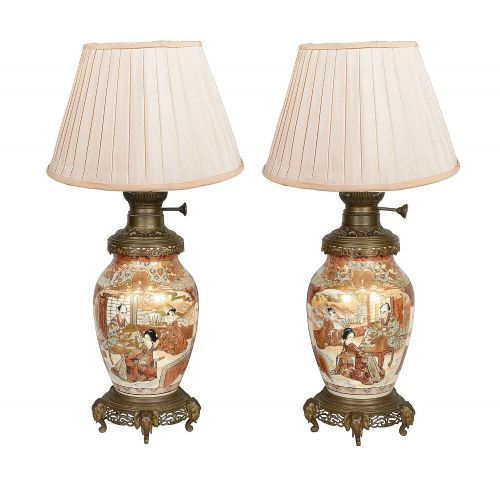


Meiji Bronze Lamp
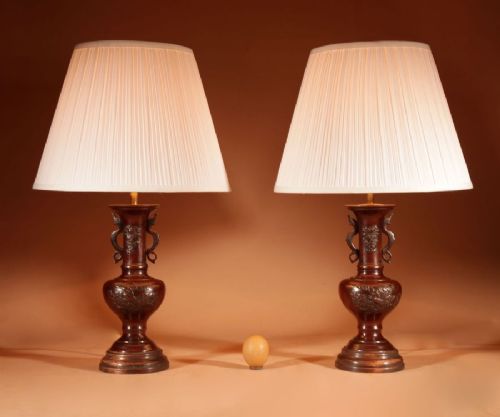
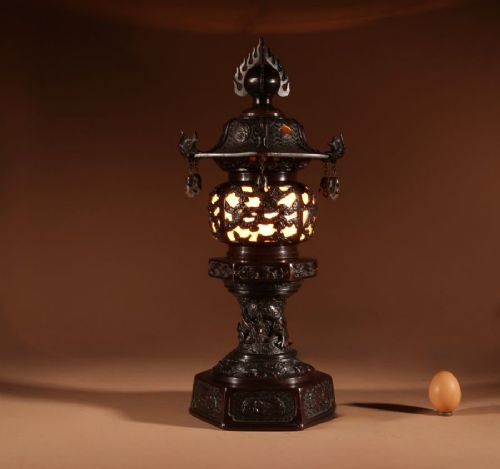
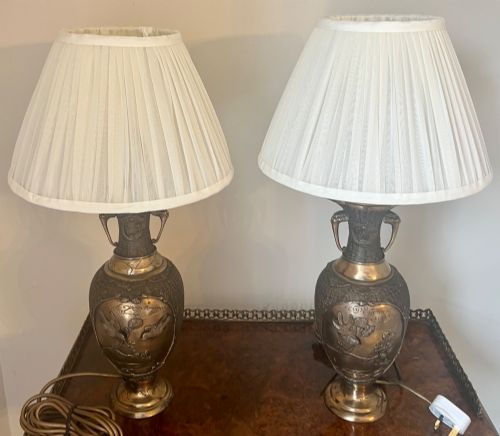
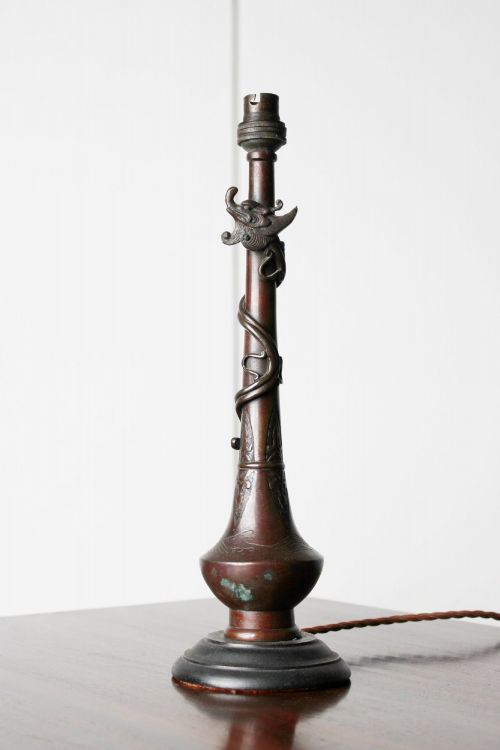
These meiji bronze lamp pieces bring sculptural weight and patinated depth to a room, cast in Japan during the late nineteenth and early twentieth centuries.
Meiji Bronze Lamp
A meiji bronze lamp unites traditional Japanese metalworking with Western lighting needs, originating primarily from the late nineteenth and early twentieth centuries. These pieces appear most frequently as table lamps or floor lamps, often converted from earlier vases, lanterns, and okimono figures.
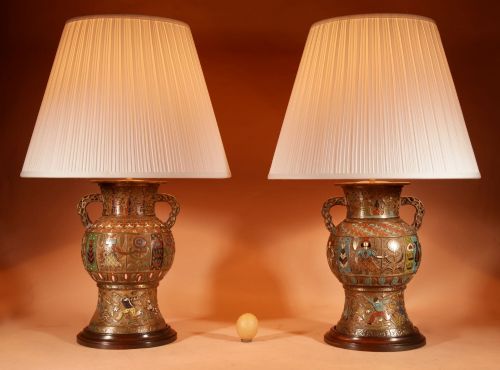
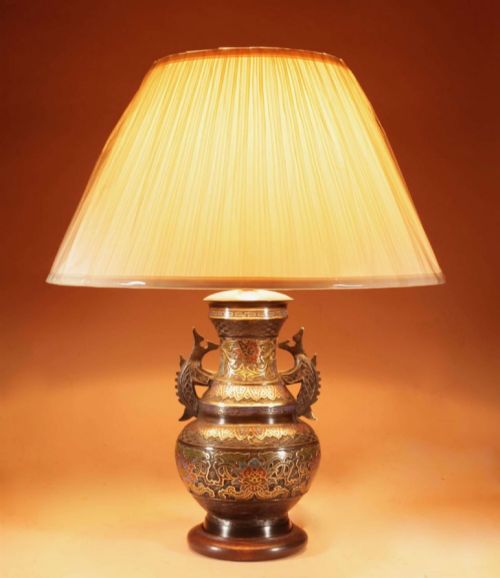
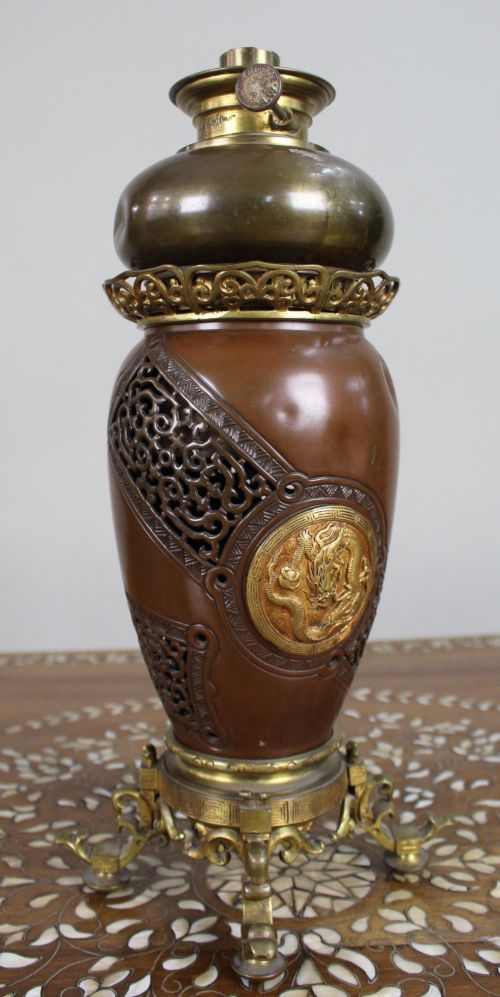
The selection ranges from simple bronze oil lamps to large pairs featuring intricate champlevé enamel work. Makers frequently utilised iconic motifs such as dragons, cranes, and elephants to form the body of the lighting.
Many examples date from the Meiji period itself, while others cross into the subsequent Taisho era or overlap with Victorian and Edwardian periods in British interiors. Buyers encounter both single statement pieces and matched pairs adapted for domestic illumination.
Materials and construction
Foundries cast these objects using bronze as the primary structural metal, frequently combining it with brass elements and wooden bases. Artisans applied coloured enamel using champlevé and cloisonné techniques to surface panels and decorative bands.
Lighting components such as fabric and silk shades, glass chimneys, and electrical or oil fittings were added later during period conversions. The underlying metalwork relies on traditional Japanese bronze casting methods developed over generations.
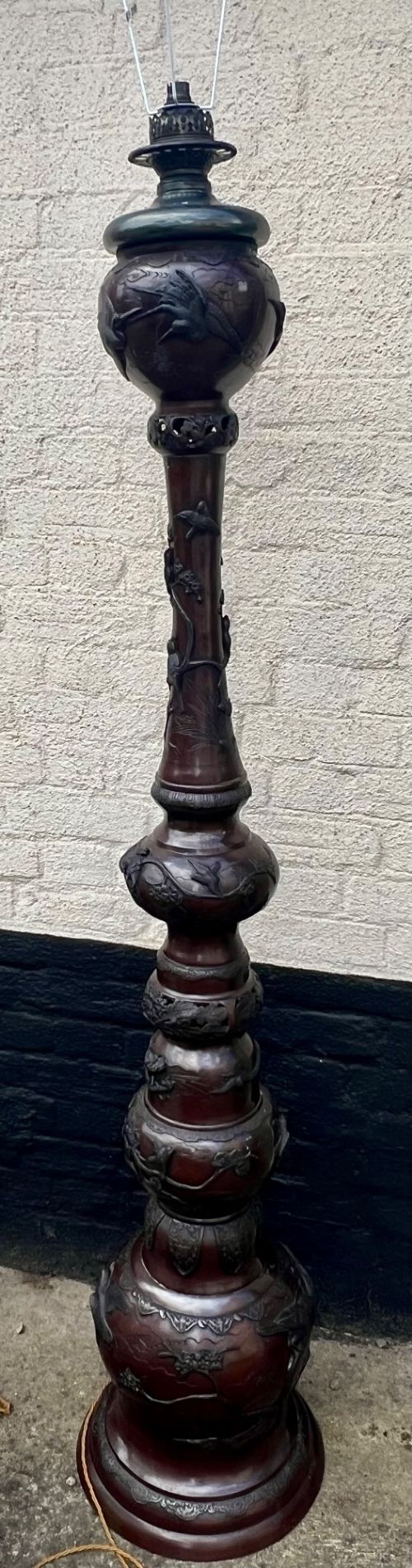
A lifesize bronze crane once stood quietly in a Japanese pond before finding a second career as a floor lamp.
Judgments of quality
Quality rests in the sculptural modelling of the bronze, seen in the crispness of a dragon's scales or the naturalistic stance of a crane. Superior examples display meticulous hand-finishing, deep patination, and precise enamel work without surface blemishes.
The integration of the lighting mechanism matters greatly, distinguishing professional period adaptations from clumsy alterations. Matched pairs and large-scale floor lamps command higher regard due to the scarcity of surviving uniform sets.
Yoshitani
The Meiji Bronze Lamp Glossary
- Champlevé
- Enamelling technique where troughs are dug into the bronze surface and filled with vitreous enamel before firing. This creates colourful decorative patterns that contrast with the dark metal.
- Okimono
- A small Japanese decorative sculpture meant for display on a shelf or tabletop. Many of these figures were later adapted into lamp bases.
- Cloisonné
- Decorative work in which enamel, glass, or gemstones are separated by strips of flattened wire placed upright on the metal backing. The pieces show intricate cellular patterns across the body.
- Chinoiserie
- European decorative style reflecting Chinese and broader East Asian artistic influences. Some lamps on this page combine these aesthetic traditions with Japanese bronze forms.
- Patina
- The deep surface sheen developed on bronze through age and handling. A rich patina signals genuine historical depth.
Meiji Bronze Lamp: Frequently Asked Questions
How do I wire an old bronze lamp?
Most antique lamps require rewiring to meet modern safety standards by a qualified electrician who can preserve the original metal body.
Wiring is typically run through existing internal channels or drilled outlets without compromising the antique bronze structure.
What periods do these lamps date from?
The pieces span the late nineteenth century and early twentieth century, encompassing the Meiji period, Victorian, and Edwardian eras.
Exact dating relies on stylistic indicators within the bronze casting and any accompanying conversion hardware.
Are these lamps converted from vases?
Many examples began as traditional Japanese bronze vases, lanterns, or okimono sculptures before receiving electrical or oil lighting fittings.
This adaptation practice was common in both Japan and Britain during the late nineteenth and early twentieth centuries.
How do I clean a bronze lamp?
Dust the surface gently with a soft dry cloth to protect the aged patina and any delicate enamel or cloisonné work.
Avoid chemical cleaners and metal polishes, which strip away the historical finish and diminish the value.