

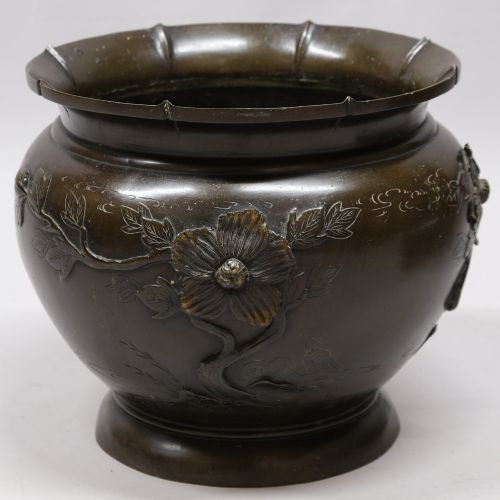


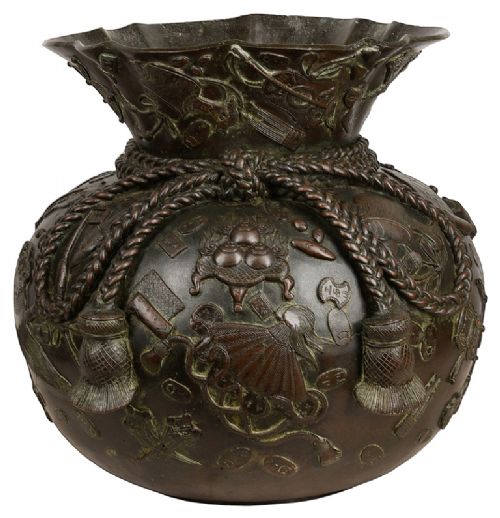


Meiji Bronze Cachepot
These Japanese bronze cachepot pieces bring heavy metalwork from the Meiji period straight into your interior.
Meiji Bronze Cachepot
A meiji bronze cachepot is a decorative vessel intended to hold potted plants or stand alone as a feature within a room. When you search for this phrase, you find heavy metal bowls and jardinières created during the late nineteenth century and associated eras.
The pieces on this page appear in forms such as jardinieres, planter bowls, and vases. They link closely to Japanese craftsmanship from the Meiji and Edo periods, often carrying Victorian era labels from their time in British homes.
What varies in quality
The depth and clarity of the cast surface decoration set the finer examples apart. Crisp relief work on the metal body requires skilled hand finishing after the initial casting process.
Weight and scale indicate the substance of the vessel, with larger pieces demanding greater technical skill from the foundry. The integration of enamel work or gilding introduces further variation in execution.
Meiji Bronze Cachepot Retail Price Guide 2026
Typical asking prices for meiji bronze cachepot among the pieces listed under this phrase on Sellingantiques today, from the lower quarter to the upper quarter. They describe what is for sale here now, not the wider market.
Listings combine nineteenth century dates with Meiji and Victorian stylistic terms across bronze and brass materials.
The Meiji Bronze Cachepot Glossary
- Cachepot
- An ornamental container used to hold a flowerpot and catch water drainage. These vessels double as standalone decorative bowls.
- Jardiniere
- A large decorative pot or stand designed to hold plants or flowers. They sit on furniture or directly on the floor.
- Meiji Period
- The era in Japanese history spanning from eighteen sixty eight to nineteen twelve. Metalwork from this time reached high levels of technical refinement.
- Cloisonne Enamel
- A technique where enamel paste is applied within compartments created by soldered metal wires. Firing hardens the glass paste into coloured patterns.
- Gilt Bronze
- Bronze metal coated with a thin layer of gold. This finish enhances the visual warmth of the object.
Meiji Bronze Cachepot: Frequently Asked Questions
How do I use a bronze cachepot?
Place a potted plant inside the vessel to display greenery while protecting the metal interior from damp soil. You can also leave the piece empty as a sculptural centrepiece on a table.
Ensure you use a liner if your pot lacks a saucer to manage drainage water effectively.
Are these pieces waterproof?
Most cast metal vessels hold water successfully, but older seams and soldered joints can develop leaks over decades. Inspect the interior base before filling the vessel directly with water.
Using a separate inner pot remains the safest method for live plants.
How do I clean bronze?
Dust the surface regularly with a soft, dry cloth to prevent grime accumulation. Avoid harsh chemical cleaners that strip the natural patina accumulated over the decades.
Gentle wiping preserves the historic finish of the metal.
What is the difference between an Edo and Meiji piece?
Edo period items originate from the era preceding eighteen sixty eight, while Meiji pieces date from the subsequent modernisation period. Listings often span both periods due to overlapping production styles.
Stylistic cues and dealer attribution help distinguish the exact era.