
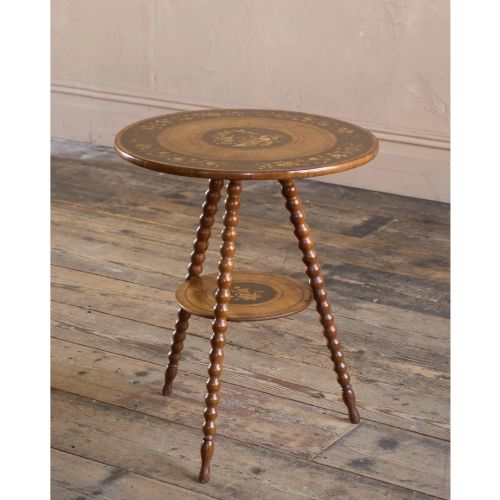
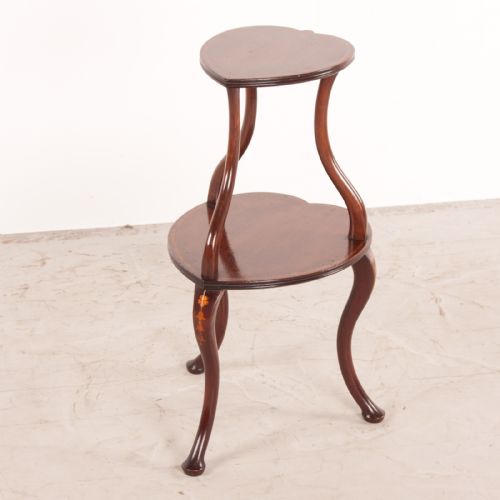
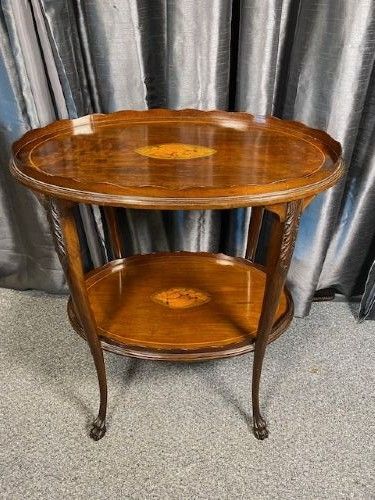
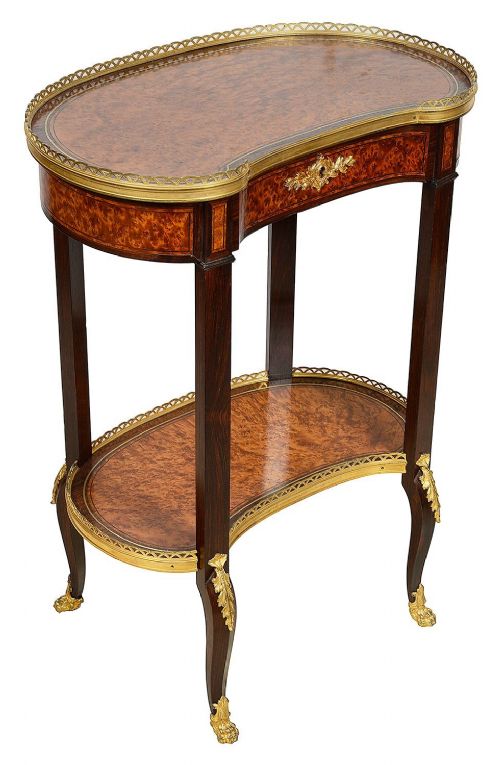


Marquetry Two Tier Table
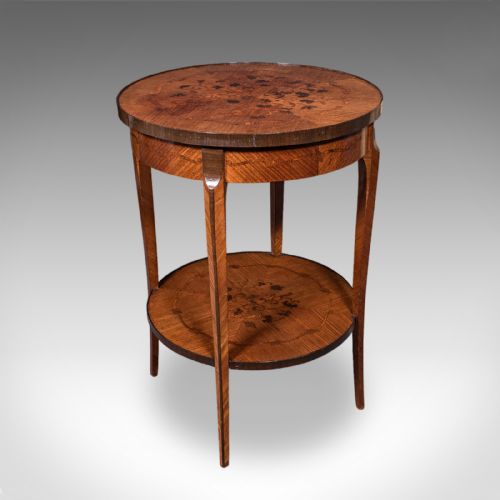
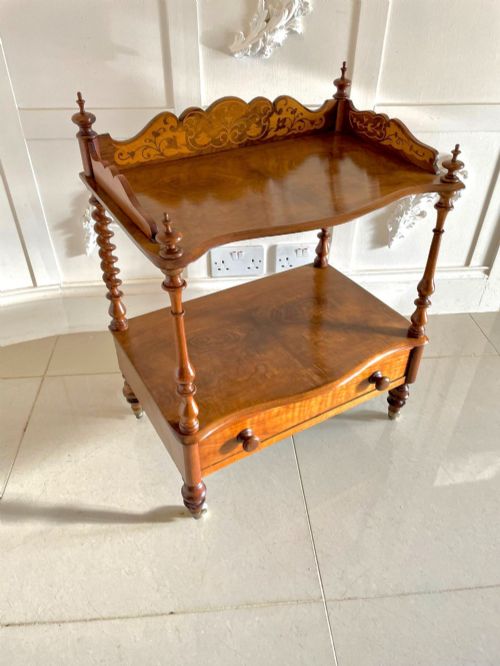
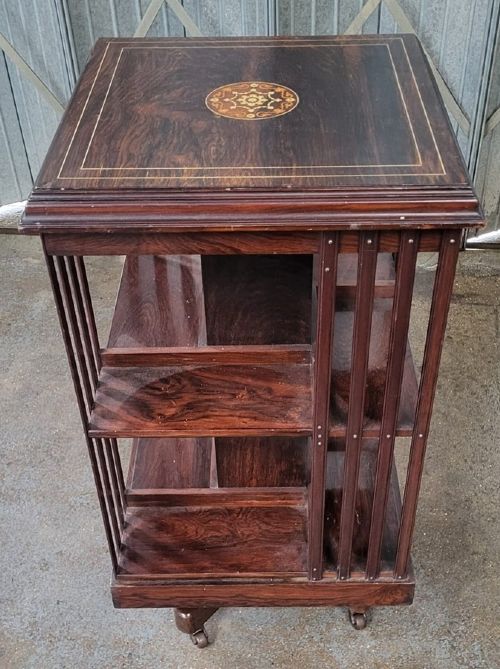
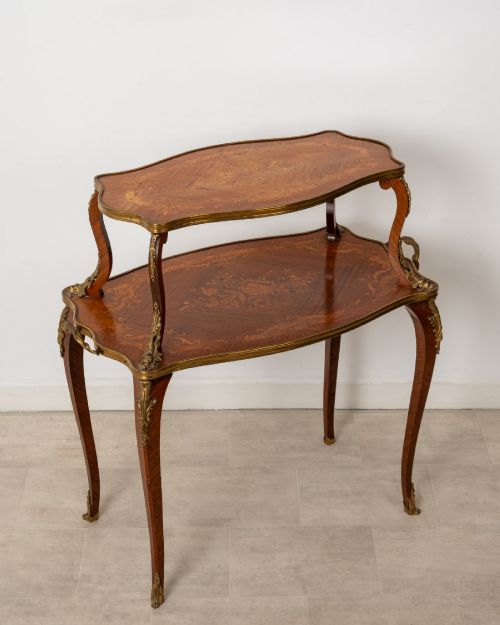
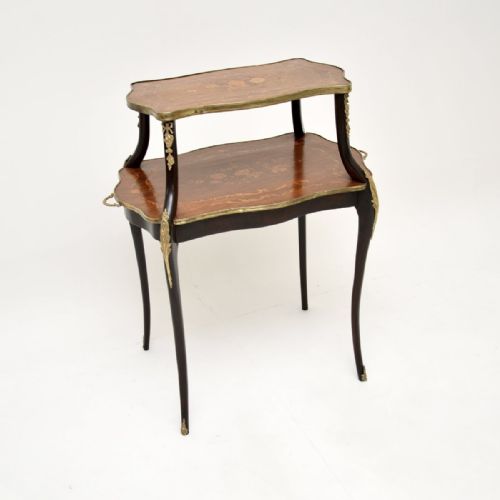
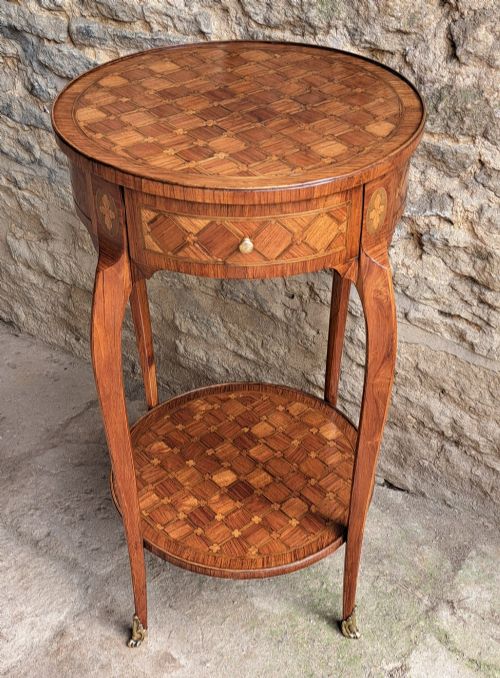
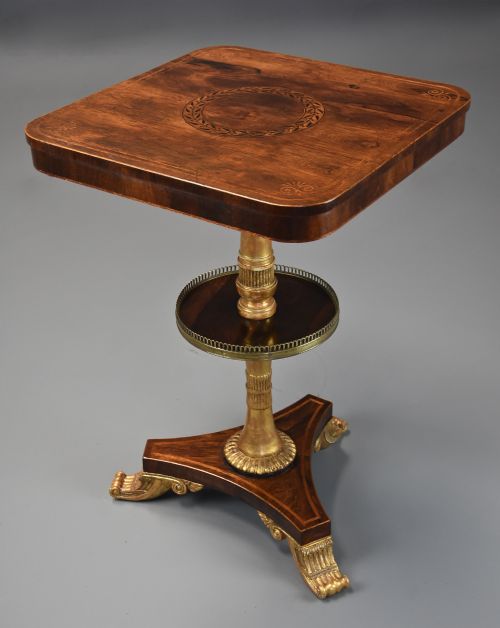
A marquetry two tier table brings together patterned wood veneers and practical double-decked surfaces, offering both display space and decorative floral or geometric panels.
Marquetry Two Tier Table
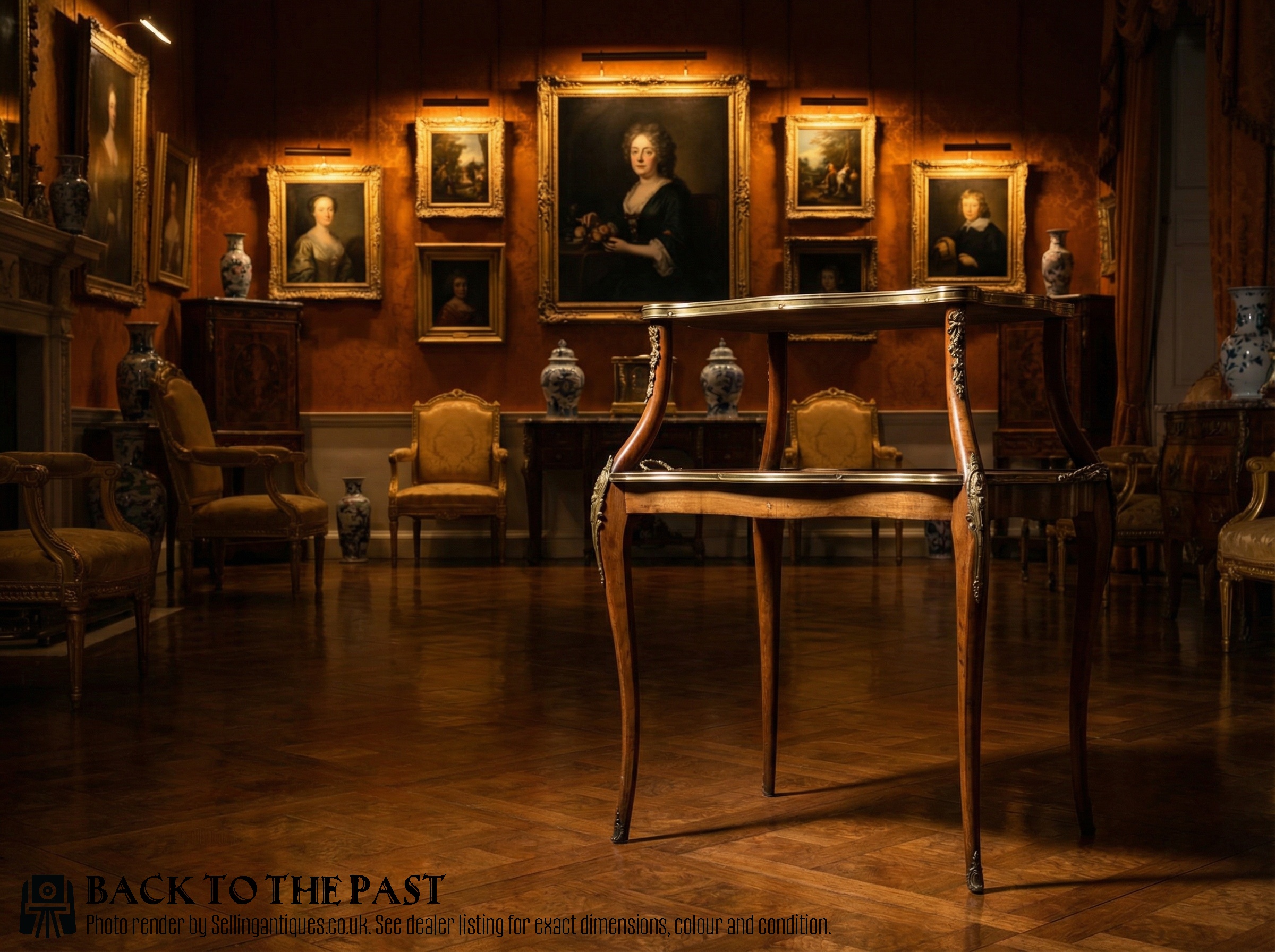
A marquetry two tier table comprises pieces designed with two distinct surfaces for display, most frequently encountered as etagere, occasional, and side table forms. The selection spans the nineteenth century through to the Edwardian period, often reflecting French taste with Louis XV and Louis XVI styling alongside English Sheraton Revival interpretations.
The lower tier provides additional surface area close to the floor, while the upper tier holds small lamps, books, or decorative objects. Many examples originate from French workshops or English cabinet makers, showing a distinct preference for multi-level occasional furniture during the Victorian and Edwardian eras.
How they were made
Makers utilised a foundation of solid timbers such as mahogany, walnut, or rosewood, applying fine veneers of kingwood, satinwood, and boxwood to the top surfaces to form intricate floral or geometric marquetry patterns. Brass galleries, ormolu mounts, and delicate inlays frequently edge the tiers to finish the construction.
Cabinet makers cut contrasting wood veneers by hand and fitted them into recessed channels on the table top and lower shelf. The tiered framework relies on slender vertical supports, combining lightweight stability with decorative wood grain effects.
Some tables include brass galleries designed to stop your tea set sliding off during an enthusiastic afternoon debate.
What varies in quality
The standard of the marquetry decoration sets the best examples apart, judged by the precision of the veneer joints and the subtlety of the shaded wood types used to render floral motifs. Finely cast brass or ormolu mounts and delicate galleried edges indicate a higher grade of manufacture.
The choice of cabinet woods also dictates quality, with denser exotic timbers like kingwood, rosewood, and figured walnut signalling superior construction compared to simpler secondary woods. The crispness of the turning on the legs and the overall balance of the two tiers reveal the maker's hand.
Tehan·George Bullock·Edwards & Roberts·Donald Ross
The Marquetry Two Tier Table Glossary
- Marquetry
- Decorative veneer work arranged in pictorial or geometric patterns using various coloured woods. This technique contrasts with simpler inlay by covering the entire surface in assembled timber pieces.
- Etagere
- A small open shelving unit or tiered table designed for displaying ornaments. The form provides multiple tiers supported by slender uprights.
- Ormolu
- Gilt bronze mounts cast and chased for decorative effect on furniture. These metallic details typically accent the corners, legs, or gallery edges of French tables.
- Satinwood
- A pale, lustrous timber native to India and the West Indies, prized for its golden sheen. Cabinet makers used it extensively for contrasting borders and stringing.
- Sheraton Revival
- A late nineteenth-century design movement inspired by the furniture of George Sheraton. Pieces feature neoclassical motifs, painted details, and light mahogany construction.
Marquetry Two Tier Table: Frequently Asked Questions
What is a marquetry two tier table?
A marquetry two tier table is a small piece of furniture featuring two surfaces for display, decorated with inlaid wood veneers arranged in patterns.
These tables function as occasional surfaces, etageres, or lamp tables, providing both a main tabletop and a secondary lower shelf.
Where were these tables used?
These tables served primarily in nineteenth-century and Edwardian drawing rooms and parlours for holding small decorative items, books, or lamps.
The lower tier offered extra storage for reading materials while keeping the main surface clear for daily use.
How do I style a two tier table?
Place a small lamp or a floral arrangement on the upper tier to draw attention to the marquetry panel.
Use the lower shelf for stacked books or a small decorative dish to balance the vertical space.
How can I tell French styles apart?
French Louis XV and Rococo revival pieces often display curved cabriole legs and flowing floral marquetry with asymmetrical elements.
Louis XVI style furniture tends to feature straighter tapered legs, neoclassical symmetry, and more restrained geometric veneer patterns.