


Ormolu Mounted Tiered Table
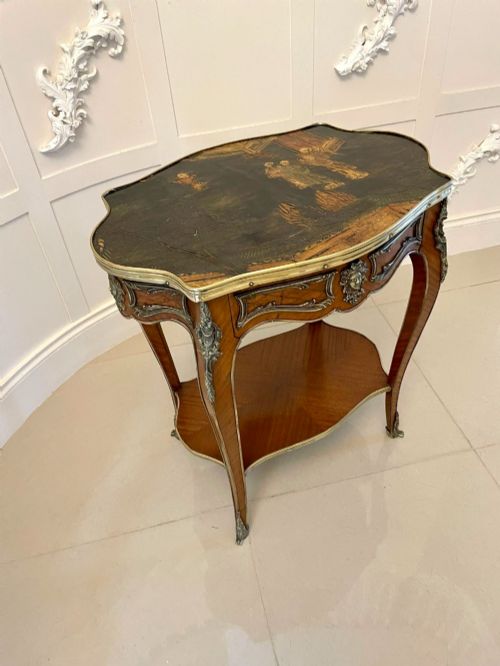
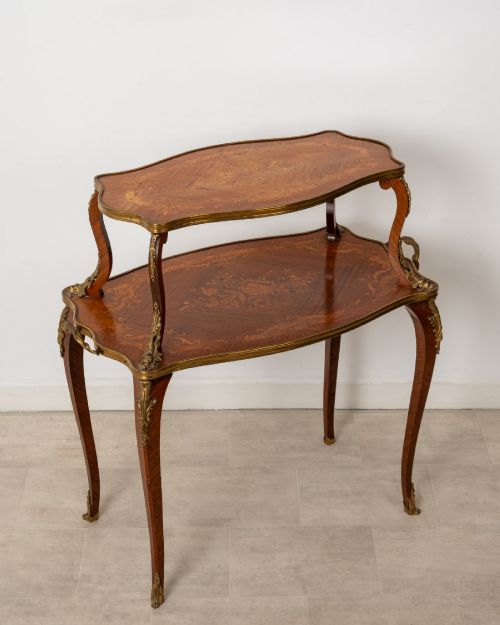
An ormolu mounted tiered table brings French refinement and multiple display surfaces to a room.
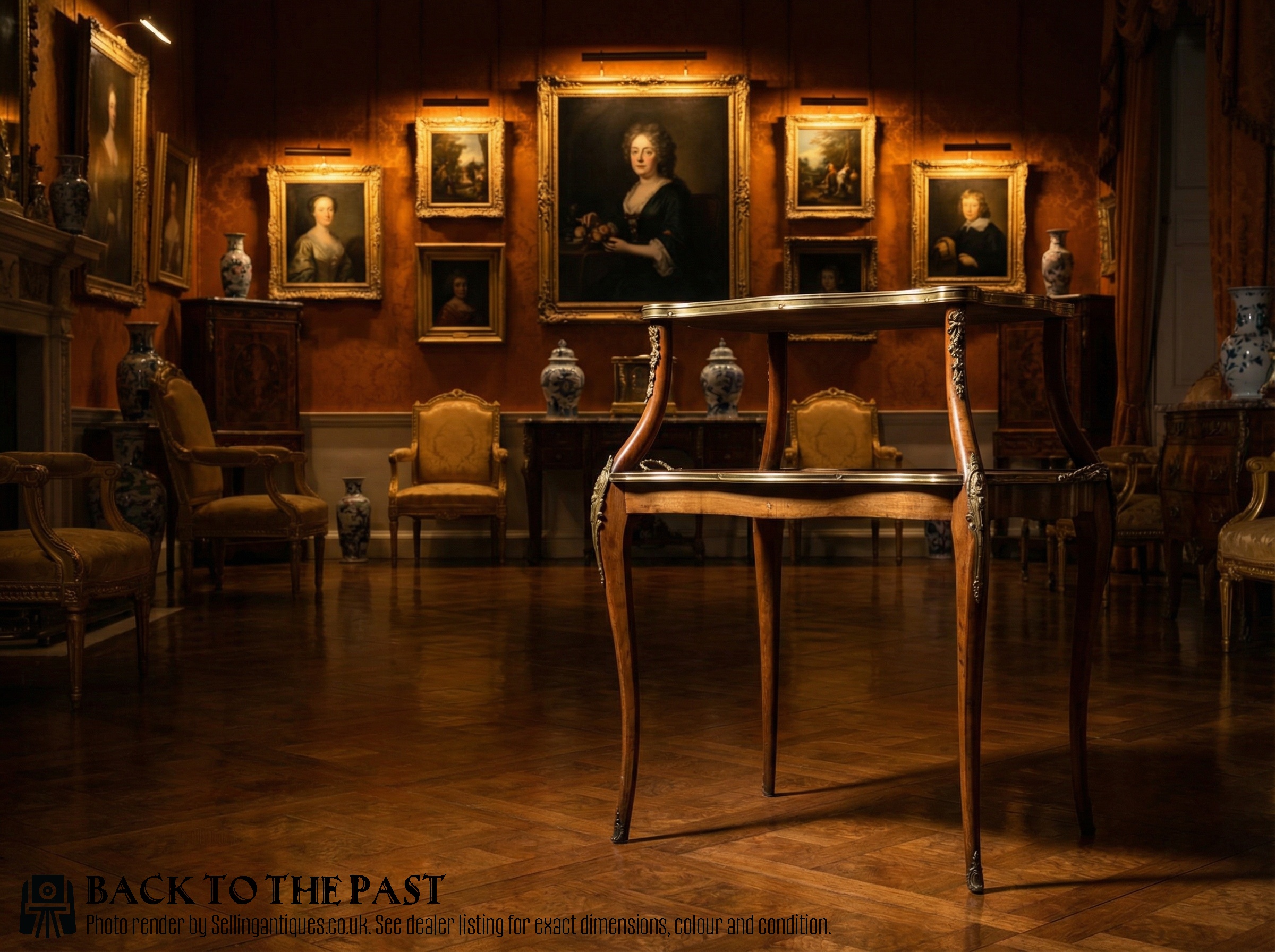
Ormolu Mounted Tiered Table
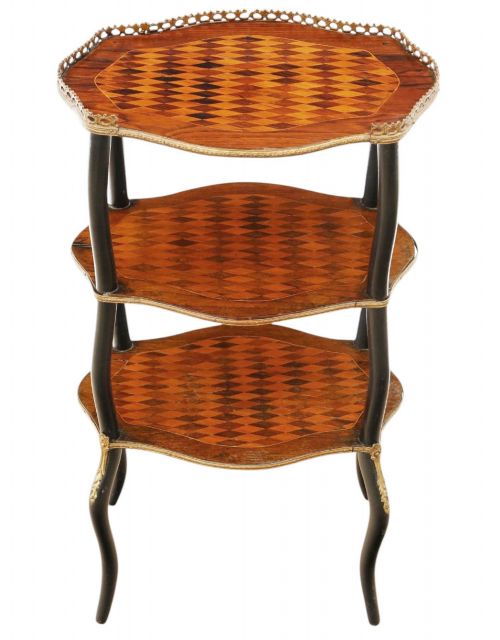
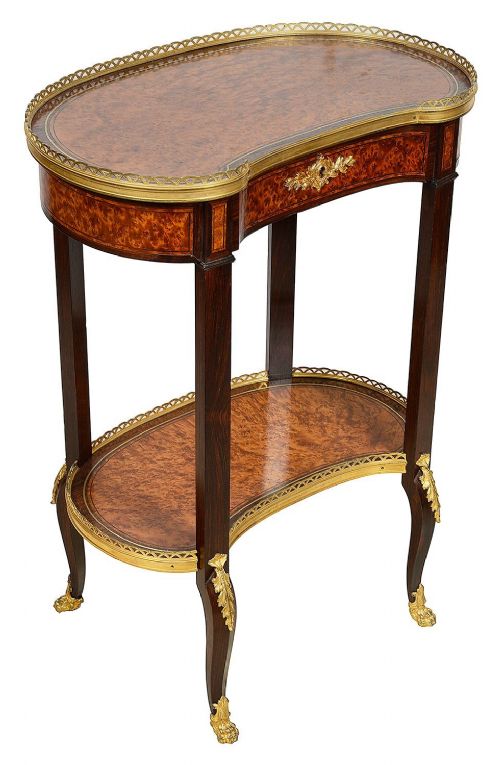
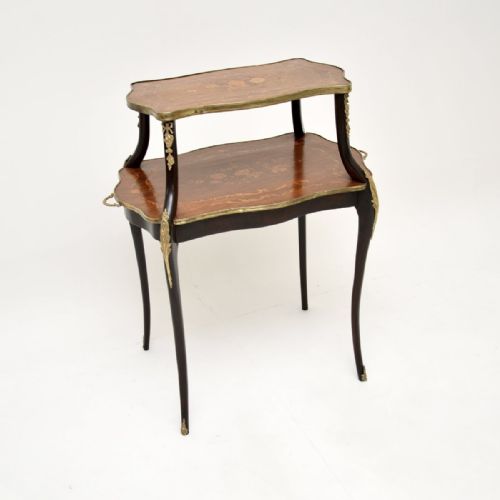
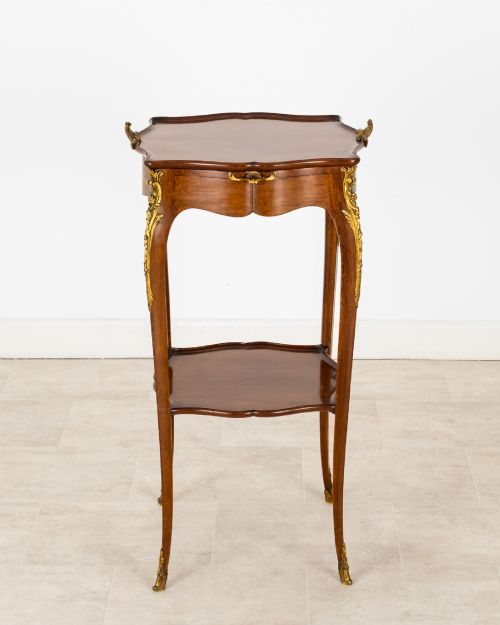
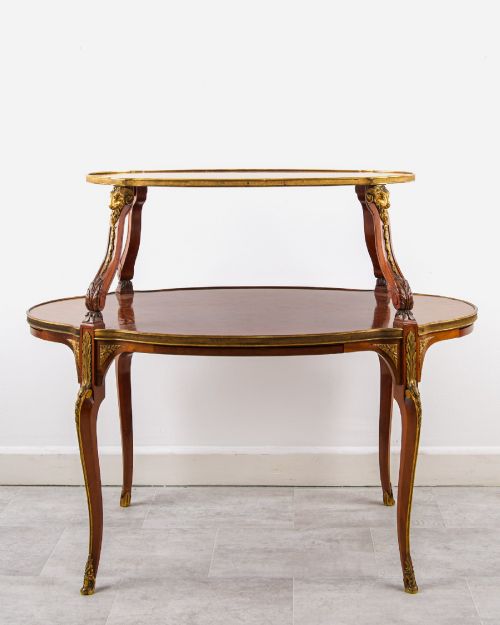
An ormolu mounted tiered table combines ornamental gilt metal mounts with stacked wooden surfaces designed for display and utility. When you search for this phrase, you encounter pieces intended for salons and drawing rooms, predominantly taking the form of etagères, occasional tables, and two-tier or three-tier side tables.
The selections on this page stem largely from the nineteenth century, encompassing Victorian and Edwardian interpretations alongside specific French revivals. Makers working in the Louis XV and Louis XVI styles dominate the designs, creating tiered surfaces supported by slender legs and finished with cast mounts.
Most examples rely on French cabinet-making traditions, appearing as freestanding centre tables, corner pieces, or tiered display shelves. These items serve to hold decorative objects, porcelain, or lamps while adding visual rhythm to an interior through their stacked tiers.
Materials and construction
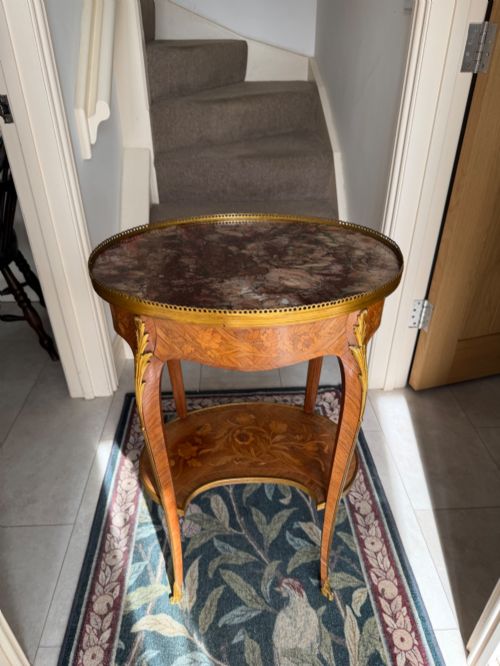
Cabinet-makers constructed the carcases of these tiered tables using timbers such as mahogany, kingwood, walnut, rosewood, and amboyna. Artisans frequently embellished these surfaces with intricate marquetry and parquetry veneers, arranging contrasting wood grains in geometric patterns or floral motifs.
The defining feature, ormolu or gilt bronze, is cast and chased before being applied to corners, legs, and edges. Workshops also integrated marble tops, porcelain plaques, and brass galleries to frame the tiers and protect the edges of the wood.
Listings for this phrase frequently combine kingwood or mahogany surfaces with intricate marquetry and gilt bronze mounts across nineteenth-century forms.
Distinctions in quality
Quality rests heavily on the crispness of the cast ormolu mounts and the precision of the timber inlay. Finer pieces display deeply chased bronze details that fit snugly against the contours of the wood, whereas lesser items use loosely cast mounts with softer definition.
The choice of timbers and the complexity of the marquetry define the upper tier of the range. Tables featuring dense kingwood veneers, carefully matched grain patterns, and heavy marble inserts demonstrate a higher level of workshop execution.
François Linke·Edwards & Roberts·Tehan
The Ormolu Mounted Tiered Table Glossary
- Ormolu
- Gilded bronze used for decorative mounts and furniture embellishments. This technique involves applying a gold amalgam to bronze before heating to drive off the mercury.
- Etagere
- A piece of furniture consisting of open shelves for displaying small objects or ornaments. These tiered stands often feature two or three levels supported by slender uprights.
- Marquetry
- Decorative veneer work formed by fitting together small pieces of wood, shell, or ivory to create pictorial designs. Artisans apply these patterns to the primary surfaces of tabletops and shelves.
- Parquetry
- Geometric mosaic woodwork used for flooring and furniture surfaces. It differs from marquetry by relying on regular shapes like squares, triangles, and lozenges.
- Gueridon
- A small French table supported by one or more columns or figures. These versatile stands often function as lamp tables or wine tables within a reception room.
Ormolu Mounted Tiered Table: Frequently Asked Questions
What is an ormolu mounted tiered table?
These pieces are decorative small tables featuring multiple horizontal surfaces and gilded bronze mounts. They were designed in nineteenth-century Europe for displaying ornaments and serving light refreshments.
Cabinet-makers utilised exotic woods and marquetry to enhance their visual appeal. Today, they function as side tables, lamp stands, or etagères in traditional and eclectic interiors.
How do I identify Louis XV style?
Louis XV style furniture is characterised by curved lines, asymmetrical motifs, and naturalistic floral marquetry. The legs typically sweep outward in a gentle cabriole shape.
Ormolu mounts on these pieces tend to accent the shoulders of the legs and the apron edges with scrollwork and acanthus leaves.
Where should I place an etagere?
An etagère suits drawing rooms, studies, or hallways where its multiple tiers can hold books, ceramics, or small lamps. Because many examples feature finished backs, they work well freestanding in the centre of a room.
Placement should avoid direct sunlight to protect the polished wood finishes and delicate veneer work.
How do I care for ormolu mounts?
Gilt bronze mounts require gentle dusting with a soft, dry cloth to prevent the accumulation of grime. Avoid chemical cleaning agents and polishes, which can strip the original gilding from the bronze surface.
Maintaining a stable room temperature helps preserve both the metalwork and the surrounding wooden carcase.