

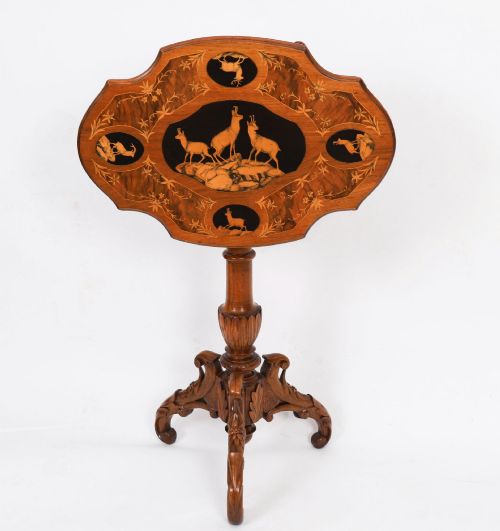
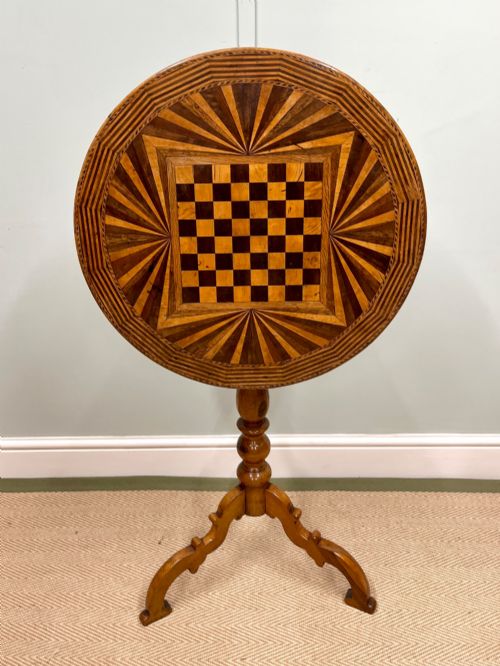
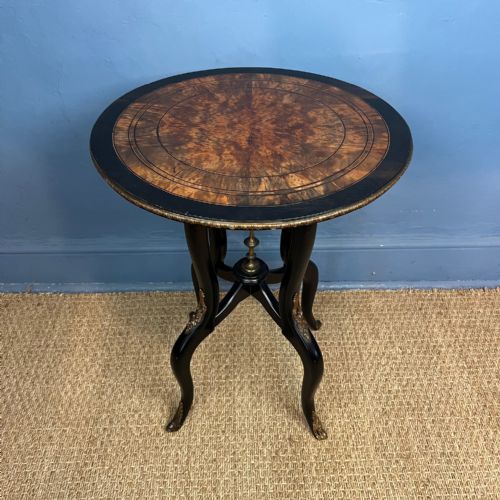
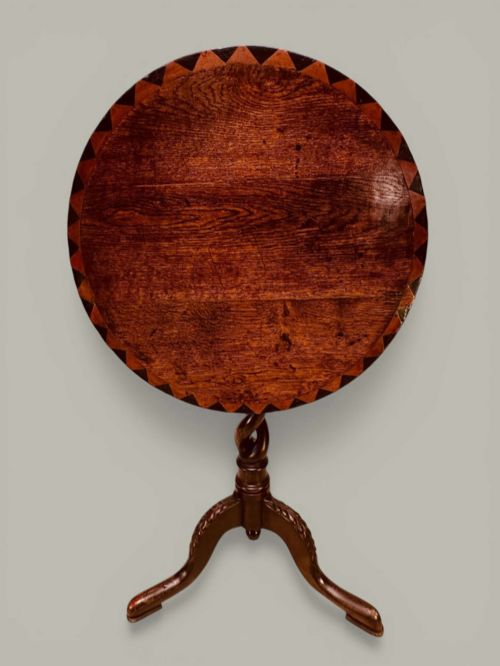

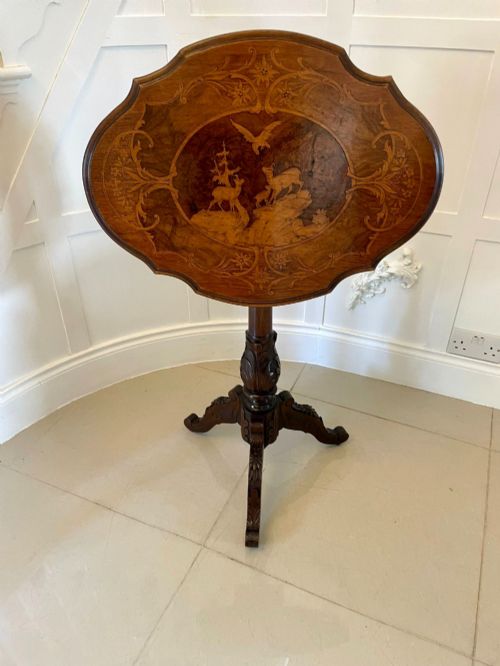
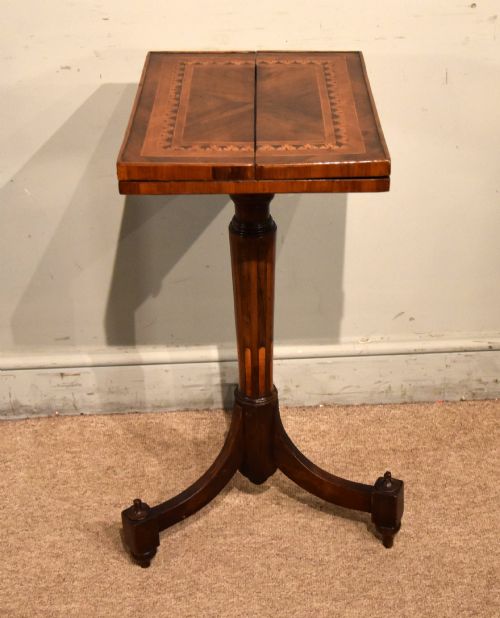
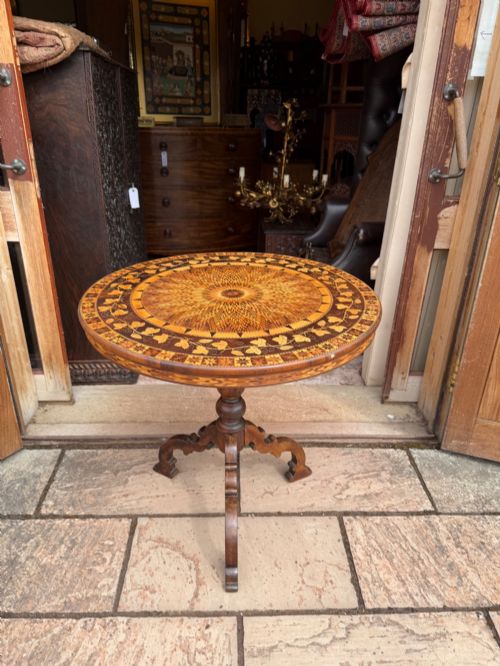
Marquetry Tripod Side Table
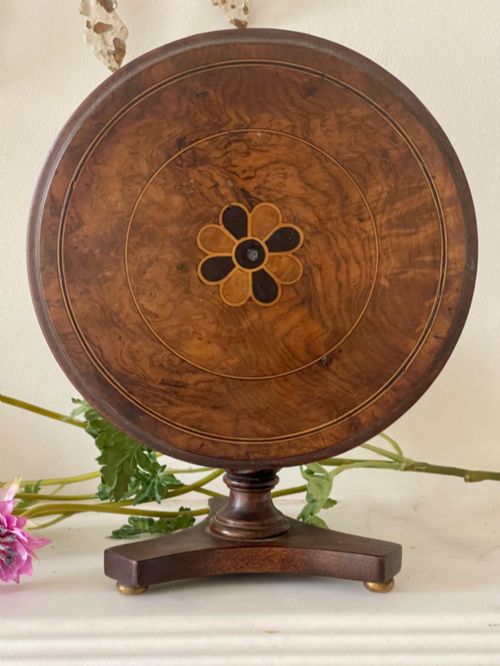
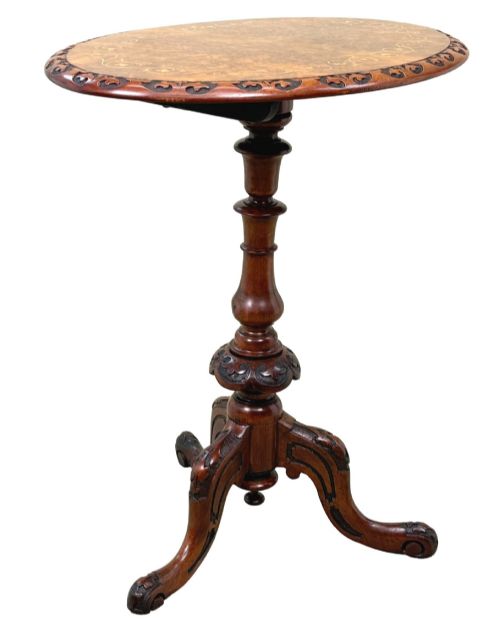
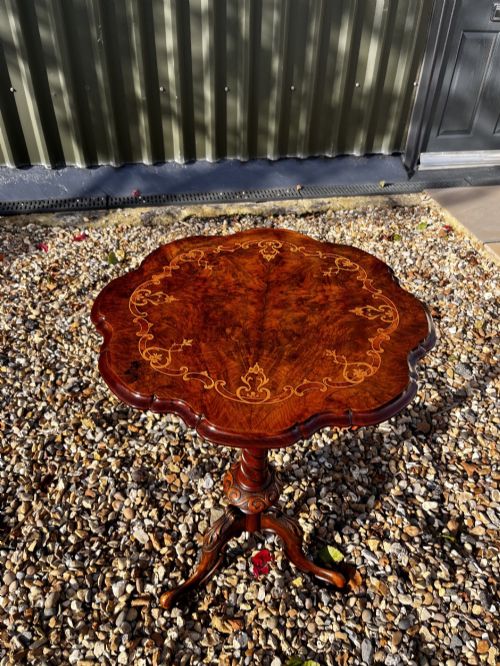
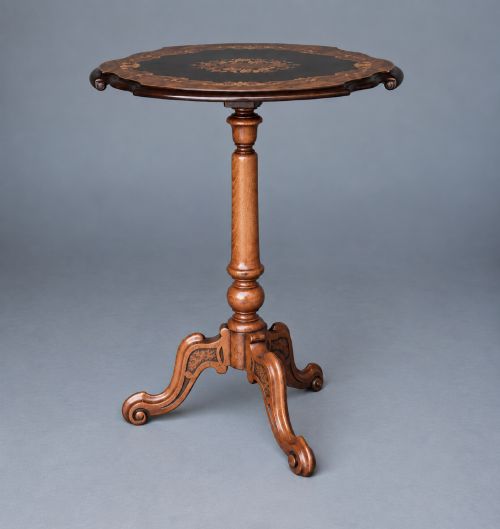
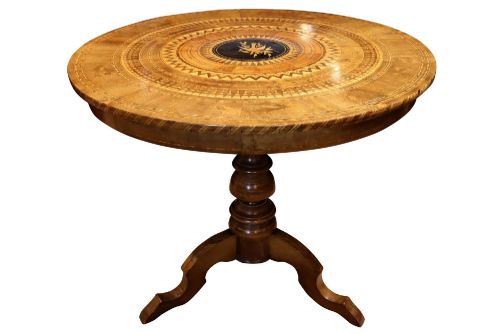
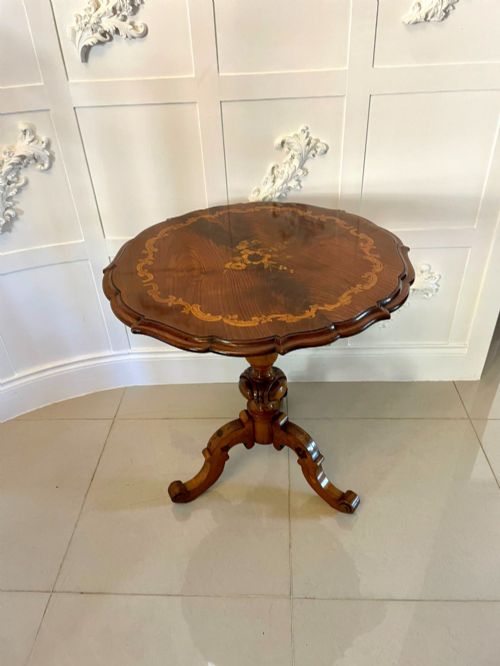
A marquetry tripod side table brings intricate wood inlay and a central column base together to hold your evening glass or lamp.
Marquetry Tripod Side Table
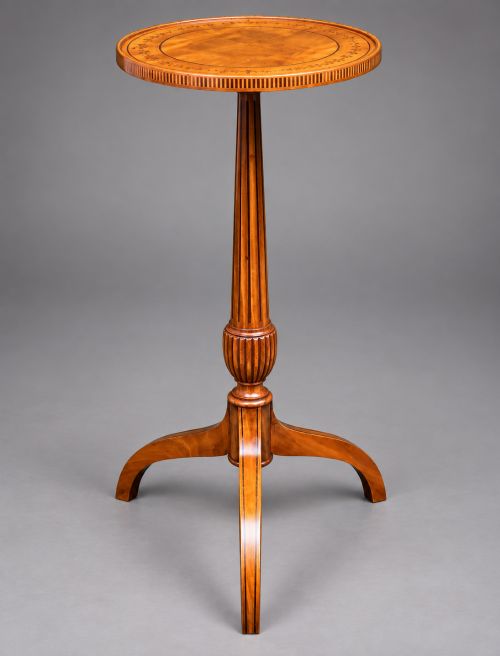
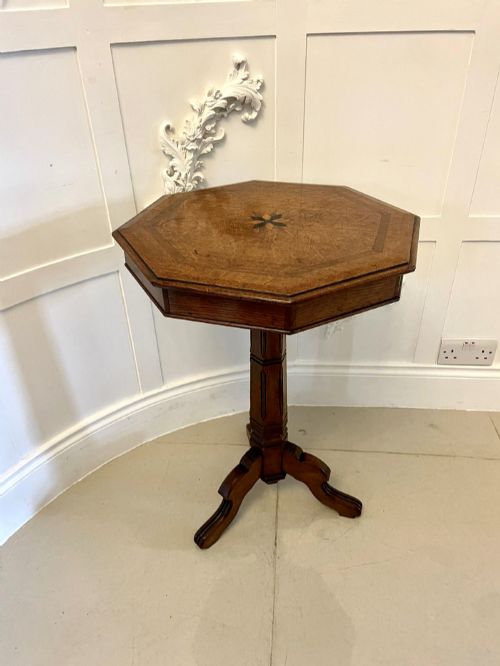
A marquetry tripod side table is a compact surface resting on a central pillar supported by three feet. These pieces serve as occasional, wine, or lamp tables, designed to sit beside seating or in corners without dominating a room.
You will most commonly encounter Victorian and nineteenth-century examples on this page, often featuring circular or oval tops decorated with floral or geometric wood patterns. Earlier Georgian forms and later Edwardian variations also appear among the selections.
Makers utilised various domestic and exotic timbers to construct these stands, creating portable surfaces that transition easily from functional furniture to decorative centrepieces within a home.
Materials and construction
Cabinet makers built the structural frames using hardwoods such as mahogany, walnut, rosewood, and oak, often turning the central column on a lathe to form the characteristic tripod support.
The decorative tops rely on marquetry and parquetry inlay, setting contrasting veneers like satinwood, fruitwood, and burr birch into the primary timber surface to create detailed pictorial or geometric designs.
Many examples incorporate a tilt-top mechanism, allowing the surface to tip vertically when not in use so the table could be stored compactly against a wall.
Marquetry Tripod Side Table Retail Price Guide 2026
Typical asking prices for marquetry tripod side table among the pieces listed under this phrase on Sellingantiques today, from the lower quarter to the upper quarter. They describe what is for sale here now, not the wider market.
Some tables feature secret hinges designed solely to confuse visiting Victorian guests.
Quality and craftsmanship
The division between ordinary and exceptional tables rests upon the precision of the inlay work and the choice of timbers. Finer pieces display tight, seamless joints in the veneers and complex multi-wood pictorial scenes rather than simple repeating borders.
Stability and proportion dictate the merit of the tripod base, where hand-turned columns and well-carved cabriole or splayed legs distribute weight evenly without wobble. Heavier, denser woods like ebony or rosewood indicate higher-tier production compared to softer secondary timbers.
Gillows·Anton Seuffert·George Bullock
The Marquetry Tripod Side Table Glossary
- Marquetry
- Decorative veneer work arranged in pictorial or patterned designs on a wooden surface. Craftsmen cut thin slices of various coloured woods and assembled them like puzzles.
- Tripod base
- A support structure consisting of three legs radiating from a central vertical pillar. This design ensures the table stays balanced on uneven floorboards.
- Tilt-top
- A hinged table top that pivots ninety degrees to stand vertically. This clever mechanism saved floor space in smaller period parlours.
- Specimen wood
- Furniture constructed using a variety of different timbers, often collected from various regions. Tops made this way frequently showcase natural grain contrasts.
- Satinwood
- A lustrous, yellowish timber native to India and Sri Lanka frequently utilised for fine inlay and veneers. Its reflective surface catches the light warmly.
Marquetry Tripod Side Table: Frequently Asked Questions
Where should I place a tripod side table?
These compact pieces fit naturally beside an armchair or sofa where you need a convenient surface for a cup or a reading lamp.
Because the footprint is small, they also occupy awkward corners or empty landings without crowding the room.
How do I care for inlaid wooden surfaces?
Keep these tables away from direct sunlight and heat sources to prevent the delicate wood veneers from drying out and lifting.
Apply a traditional beeswax polish occasionally and buff gently with a soft cloth to maintain the natural lustre of the timber.
What is the difference between a wine table and an occasional table?
Wine tables traditionally feature small, round dished tops specifically designed to hold a bottle and glasses during evening gatherings.
Occasional tables encompass a broader range of shapes and sizes, including hexagonal, oval, and drop-leaf formats used for general display.
Can these tables handle everyday use?
Sturdily built nineteenth-century frames remain remarkably durable for daily placement of lightweight objects like books and lamps.
However, the delicate marquetry and veneered tops require coasters and careful handling to avoid scratching the historical surface.