





Marquetry Tiered Whatnot
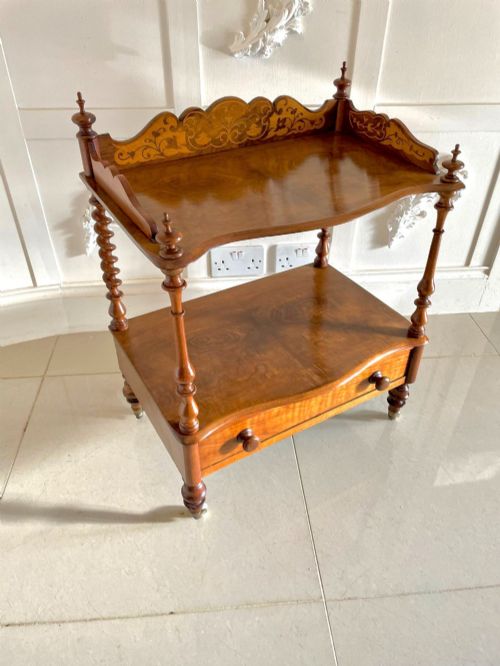
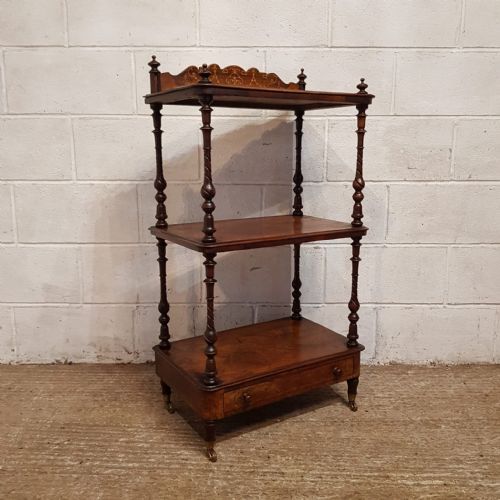
These marquetry tiered whatnot pieces combine multiple display shelves with detailed timber inlay, offering both functional surface space and decorative presence in a room.
Marquetry Tiered Whatnot
A marquetry tiered whatnot is a multi-shelved stand featuring detailed wood inlay, designed to hold ornaments, books, or small display items. These items appear primarily from the Victorian and Edwardian periods, running from the mid nineteenth century into the early twentieth century.
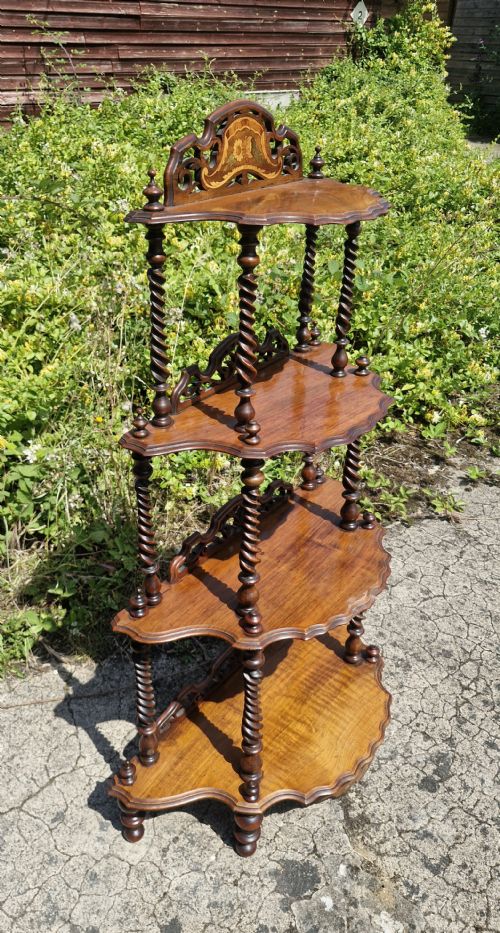
The configurations on this page include standard freestanding multi-tier stands, corner stands, and specialised forms incorporating cabinets or chiffonier bases. Walnut and burr walnut serve as the primary foundational timbers for these multi-level display pieces.
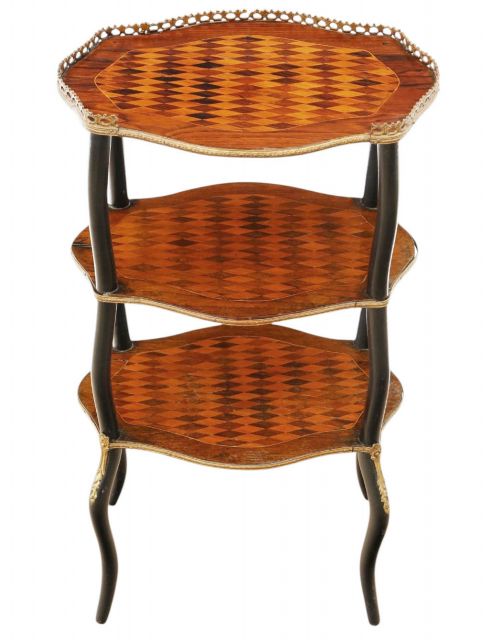
French revival and Louis XV influences frequently appear alongside straightforward Victorian designs, bringing shaped shelves, brass mounts, and ormolu details to the tiered structure. Most examples provide three or four graduated levels supported by turned or shaped uprights.
Materials and construction methods
Makers built these pieces predominantly using walnut and burr walnut, often enhanced with ebonised wood to create striking tonal contrasts. Marquetry and parquetry inlays of boxwood provide floral or geometric patterns across the shelves and top surfaces.
Marquetry Tiered Whatnot Retail Price Guide 2026
Typical asking prices for marquetry tiered whatnot among the pieces listed under this phrase on Sellingantiques today, from the lower quarter to the upper quarter. They describe what is for sale here now, not the wider market.
Several Victorian examples cleverly combine multi-tier display shelving with integrated jewellery cabinets, proving that Victorians loved organising their tiny treasures vertically.
Distinctions in construction and finish
Quality in these pieces rests upon the precision of the marquetry inlay and the choice of timber figures, such as heavily patterned burr walnut. Finer examples display crisp boxwood detailing and tightly fitted joints across multiple tiers.
The inclusion of cast ormolu mounts, ebonised accents, and integrated cabinet work separates standard production stands from more ambitious decorative items. Structural stability across three or four open shelves remains a key indicator of thoughtful workshop execution.
The Marquetry Tiered Whatnot Glossary
- Marquetry inlay
- Decorative wood veneers cut and fitted together to form pictorial or geometric patterns on a surface. This technique creates the floral and scroll designs seen across the shelves.
- Etagere
- A piece of furniture consisting of a set of open shelves for displaying small articles. These function interchangeably with whatnots in the historical record.
- Burr walnut
- Timber taken from a walnut tree growth that produces intricate, swirling grain patterns. It provides a highly decorative surface for tabletops and shelf panels.
- Ormolu
- Gilded bronze used for decorative mounts and trimmings on furniture. This material highlights the edges and supports of French revival pieces.
- Parquetry
- Geometric mosaic woodwork used for floors and furniture surfaces. It differs from marquetry by using strictly angled shapes rather than curved pictorial designs.
Marquetry Tiered Whatnot: Frequently Asked Questions
What is a tiered whatnot used for?
These multi-shelf stands were originally intended for displaying ornaments, ceramics, and small decorative objects in Victorian and Edwardian reception rooms.
Today, they serve the same practical function in modern interiors, utilising vertical space efficiently while adding traditional timber character to a corner or empty wall.
How do I date a walnut whatnot?
Dating relies on examining the timber selection, inlay style, and structural proportions across the tiers. Victorian examples from the mid to late nineteenth century often feature rich burr walnut and boxwood marquetry.
Later Edwardian versions around nineteen hundred sometimes incorporate lighter framing, French revival styling, or ormolu mounts influenced by Louis XV designs.
Where should I place a corner whatnot?
Corner stands fit directly into ninety degree room angles, making them ideal for utilising dead space without obstructing pathways. They provide multiple graduated display surfaces while maintaining a compact footprint.
Placing them in living rooms or studies allows the tiered shelves to hold books, plants, or collections at visible heights.
What is the difference between an etagere and a whatnot?
Historically, the terms often overlap, though etagere frequently implies a French influence with lighter proportions and decorative mounts. Whatnot is a traditional British term for a multi-tiered shelving unit.
Both forms offer open display levels, but French pieces more commonly feature ormolu accents and shaped serpentine shelves.