
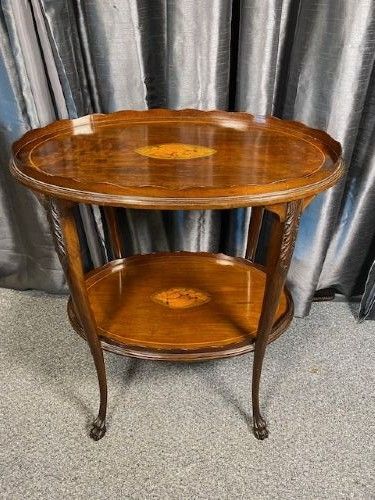
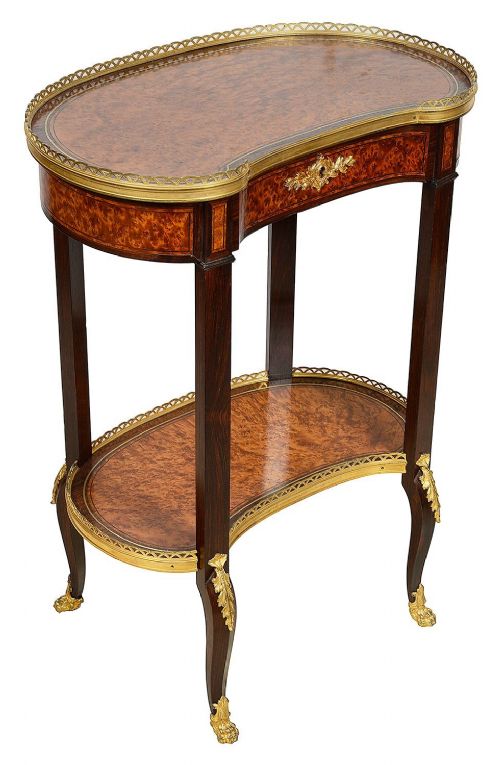
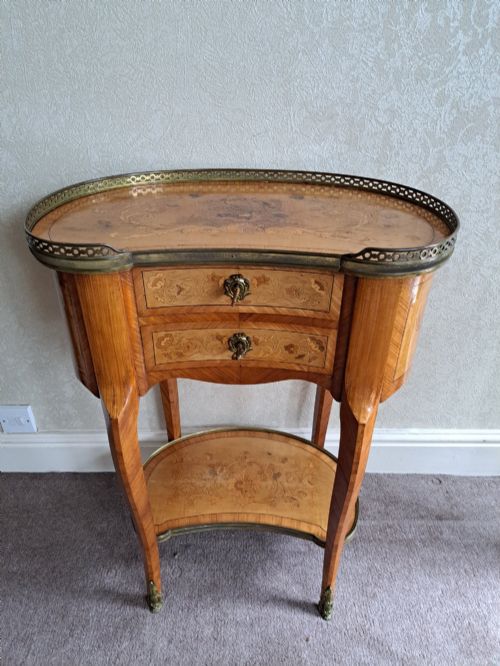
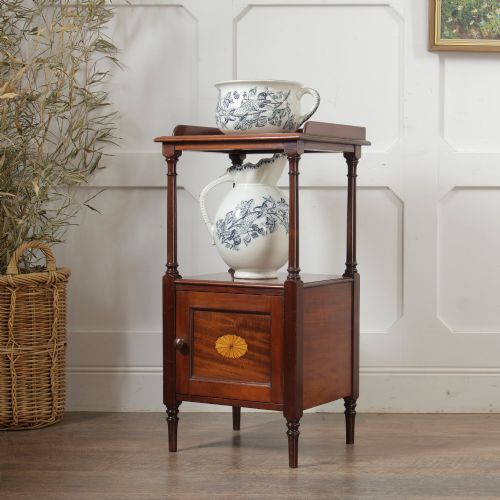
Marquetry Tier Table
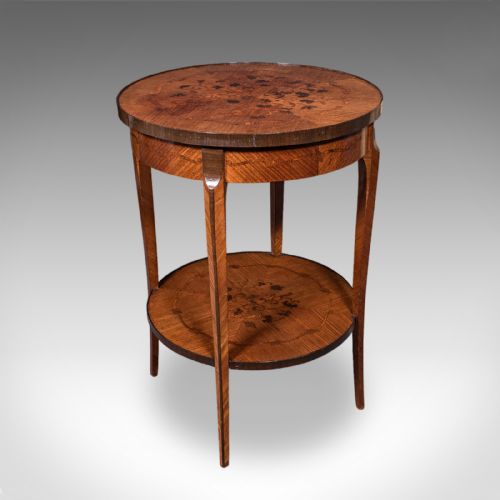
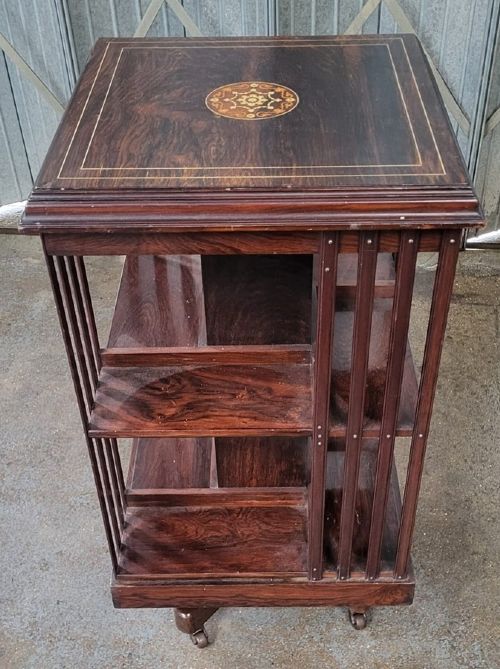
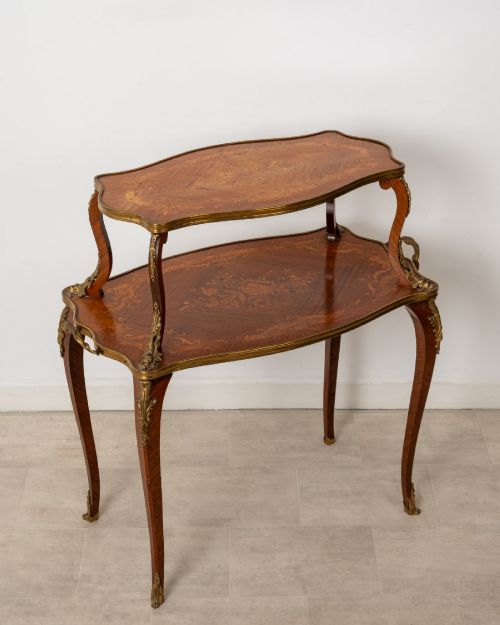
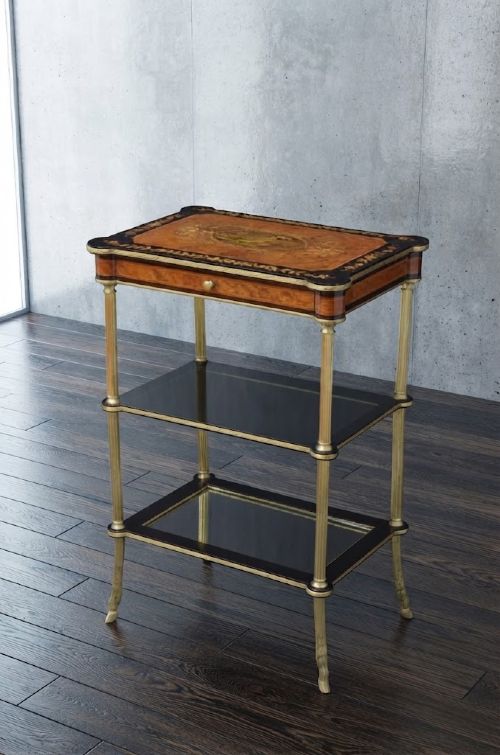
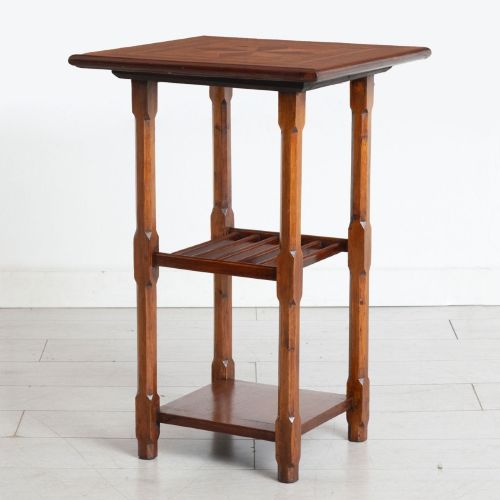
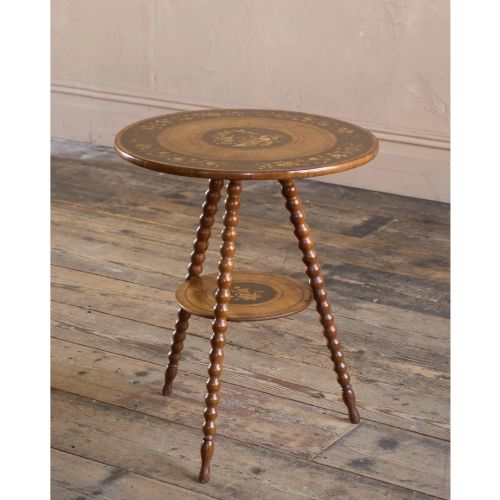
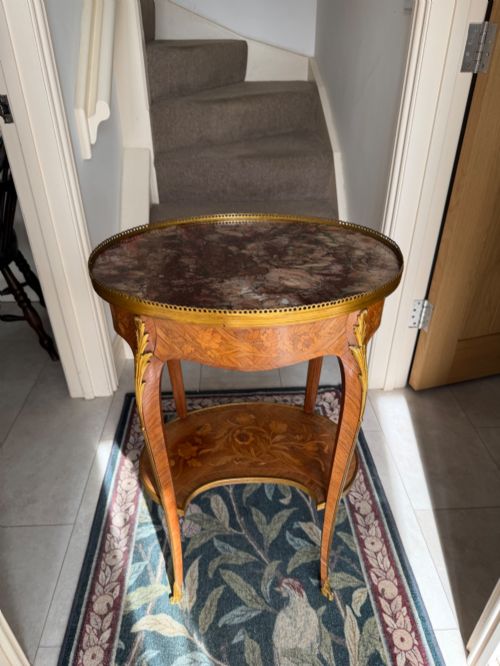
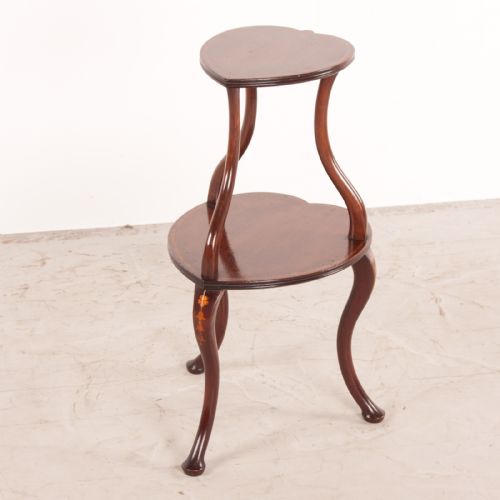
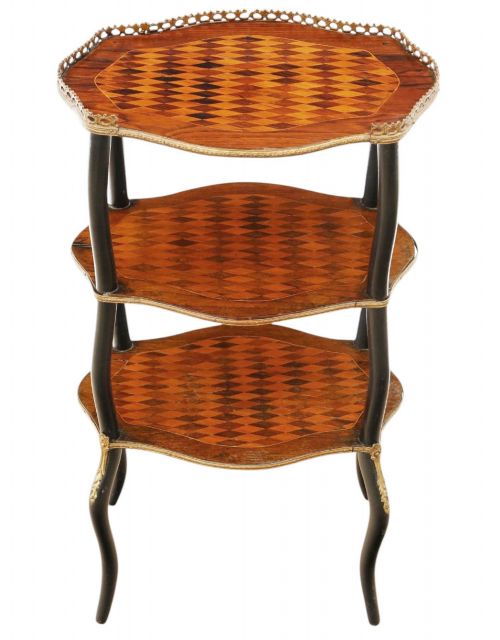
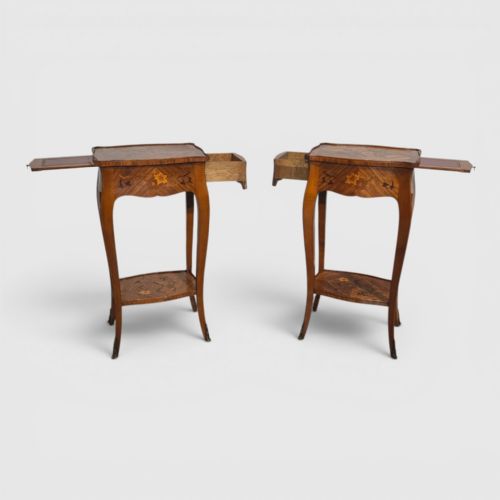
A marquetry tier table brings layered display surface and intricate wood-inlaid floral or geometric patterns to a room.
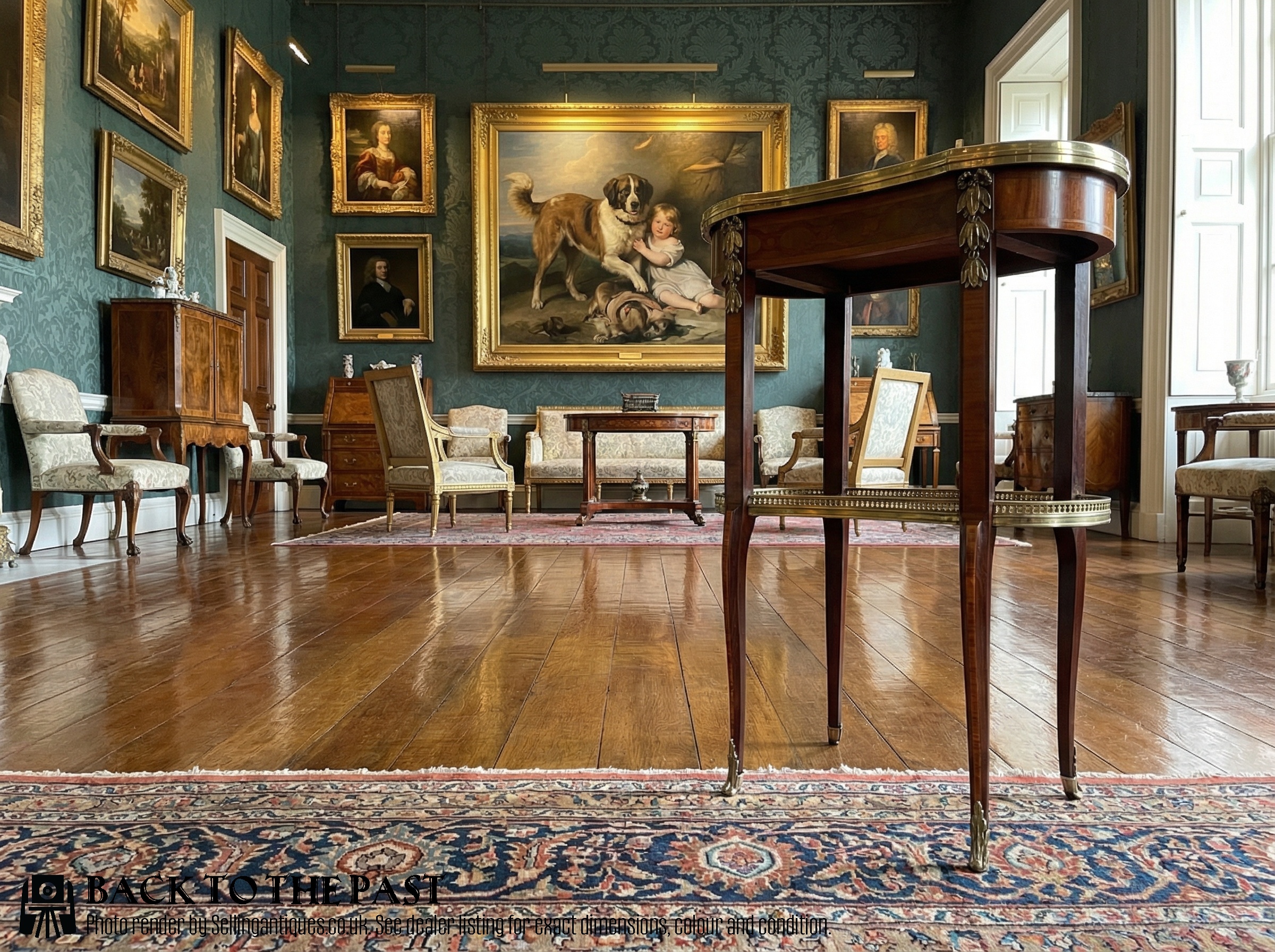
Marquetry Tier Table
The pieces seen here span the Victorian, Edwardian and early twentieth century periods, with French stylistic influences dominating the selection.
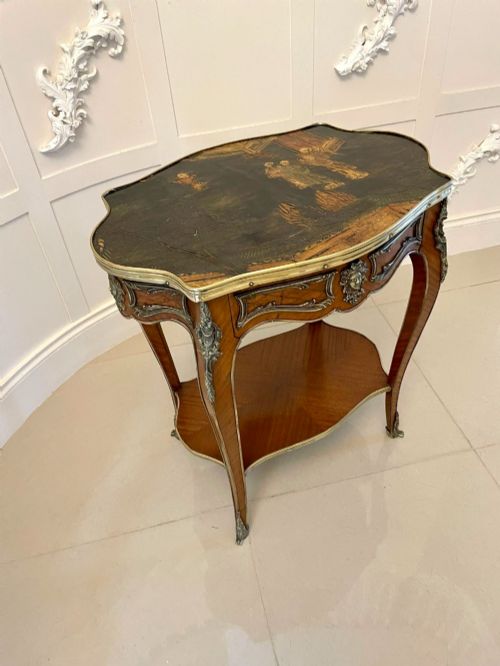
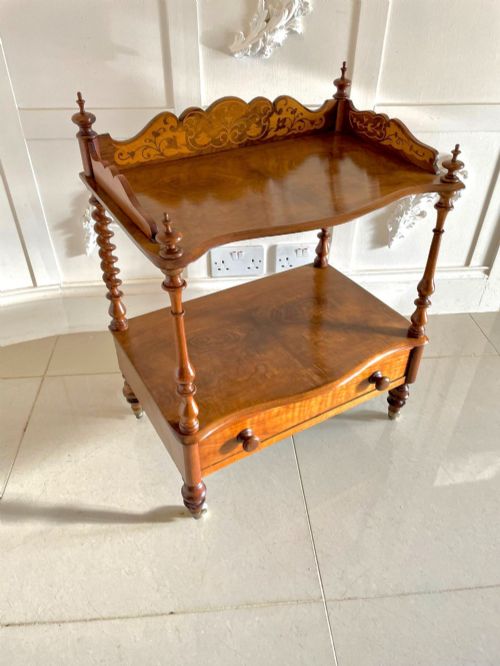
Makers often drew upon Louis XV and Louis XVI revival tastes, producing forms that function as occasional tables, etageres and bedside stands.
How they were made
Cabinetmakers constructed these pieces using a hardwood carcase or support framework overlaid with contrasting exotic wood veneers such as kingwood, rosewood, walnut and mahogany.
Inlay work combined different timber grains to form pictorial or geometric motifs, frequently complemented by cast brass or ormolu mounts and pierced galleries along the shelf edges.
What varies in quality
The refinement of the veneer cutting and the complexity of the floral or geometric marquetry patterns separate standard production from exceptional examples.
Cabinetmaking standards appear in the crispness of the brass or ormolu mounts, the stability of the multi-tiered structure, and the selection of richly figured secondary timbers.
François Linke·Edwards & Roberts·Collingson & Lock
The Marquetry Tier Table Glossary
- Marquetry
- Decorative veneer work arranged in pictorial or geometric patterns using various coloured woods. It requires precise hand-cutting to fit each tiny piece into the ground veneer.
- Etagere
- A small multi-tiered piece of furniture designed for displaying ornaments or small objects. These pieces often feature open shelves supported by slender uprights.
- Ormolu
- Gilt-bronze mountings applied to furniture for decorative accent. Artisans cast and chased these metal elements by hand before fire-gilding them.
- Kingwood
- A dense, heavily figured South American timber prized in elite cabinetmaking. It displays dark contrasting bands against a rich brownish-violet ground.
- Gallery
- A raised ornamental border of pierced metal or wood fitted around the edge of a shelf or tabletop. It prevents small items from sliding off the tier.
Marquetry Tier Table: Frequently Asked Questions
Where should I place a tier table?
These pieces suit drawing rooms or hallways where multiple surfaces allow the display of small decorative objects, lamps or plants without occupying excessive floor space.
Because they offer distinct levels, positioning them beside seating or against an open wall lets the patterned woodwork and mounted details catch the light from different angles.
How do I care for inlaid wood?
Protect the surface by keeping these tables away from direct sunlight and steady heat sources, which can dry out delicate veneers and cause lifting.
Applying a traditional beeswax polish occasionally maintains the lustre of the timber without building up heavy chemical residues that dull the grain.
What is the difference between marquetry and parquetry?
Marquetry involves cutting and assembling various wood veneers to create pictorial scenes, floral sprays or complex scrolls across the surface.
Parquetry uses geometric blocks of timber to form repeating patterns such as cubes, chequers or lozenges, creating a structured architectural effect.
Are brass galleries original?
Original cast brass or ormolu galleries show consistent ageing, patination and fitting marks that match the construction period of the main framework.
Replacements often appear overly bright or lack the hand-chased definition found on nineteenth-century mounts.