



Marquetry Storage Box
A marquetry storage box brings together meticulous woodworking and practical containment, offering a tactile piece of history designed to hold small treasures or household fuel.
Marquetry Storage Box
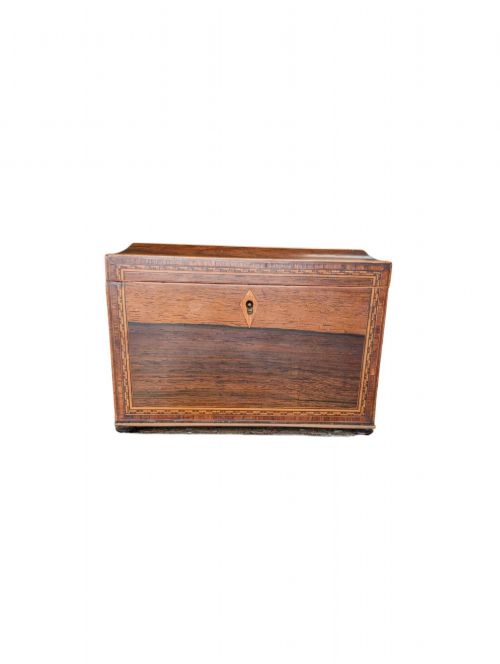
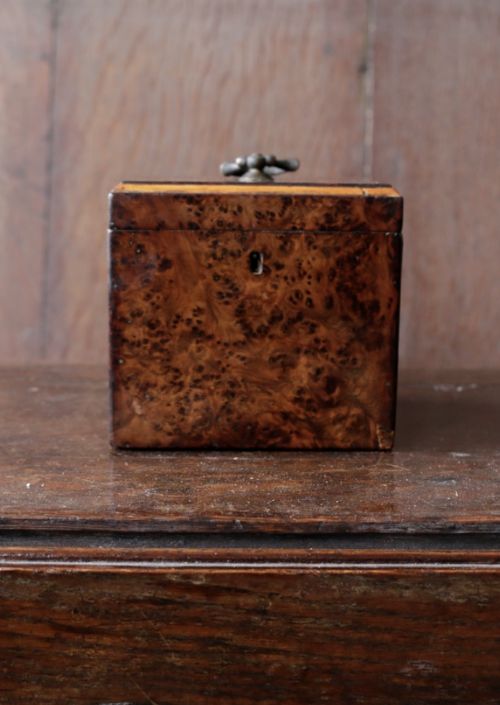
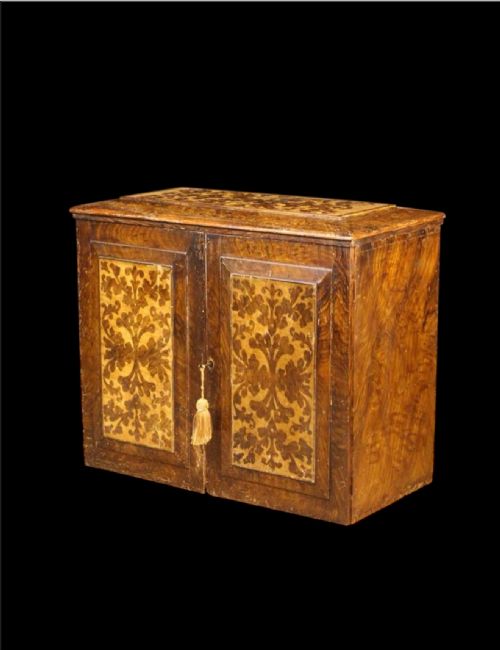
A marquetry storage box encompasses a broad spectrum of historical containers, ranging from intimate tea caddies and trinket boxes to substantial coffers, chests, and coal cabinets. These pieces emerge from periods spanning the 17th century through the Edwardian era, reflecting shifting domestic needs over generations.
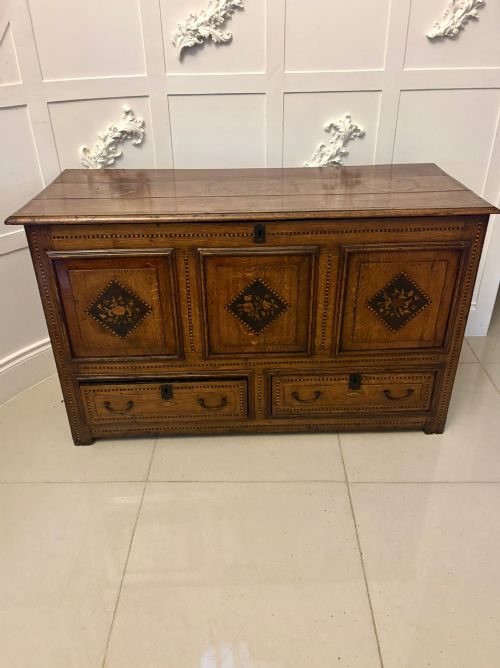
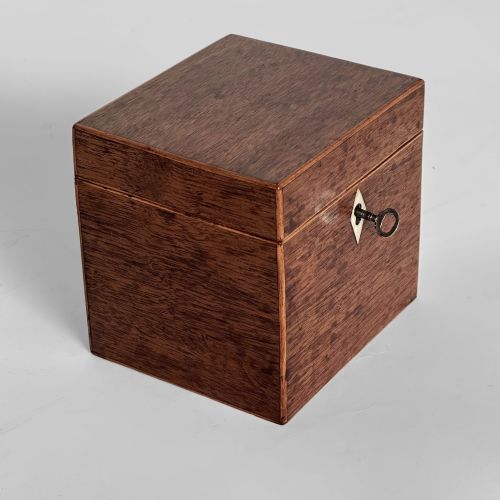
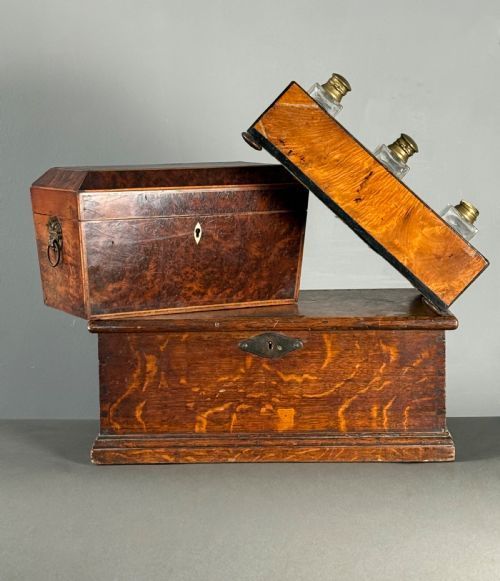
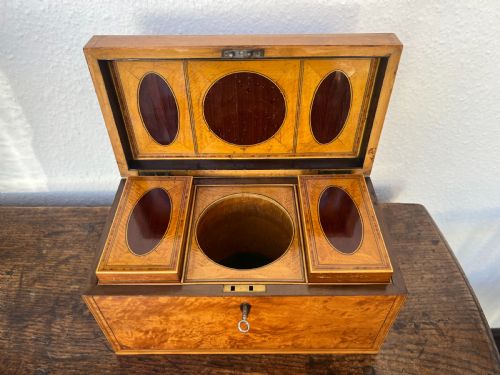
The version most frequently encountered on this page is the tea caddy or tabletop box, often rendered in rosewood, walnut, or mahogany with intricate wood inlays. Alongside these smaller caddies, larger pieces such as oak mule chests and coal boxes demonstrate how patterned veneers and inlay techniques scaled up for heavier utility.
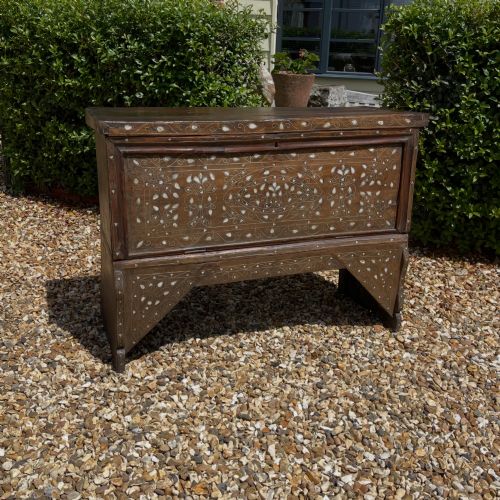
Origins stretch across English, French, Italian, and Syrian workshops, introducing diverse regional aesthetic choices to the basic form. Whether taking the shape of a book, a sarcophagus, or a simple cube, each container serves to organise domestic spaces while displaying ornamental surfaces.
Materials and construction
Carinthian hardwoods, exotic veneers, and native oaks provide the structural foundation for these pieces, supporting decorative schemes executed in satinwood, boxwood, fruitwood, and ebony. Cabinet makers employed these varied timbers to generate natural contrasts in colour and grain across the exterior planes.
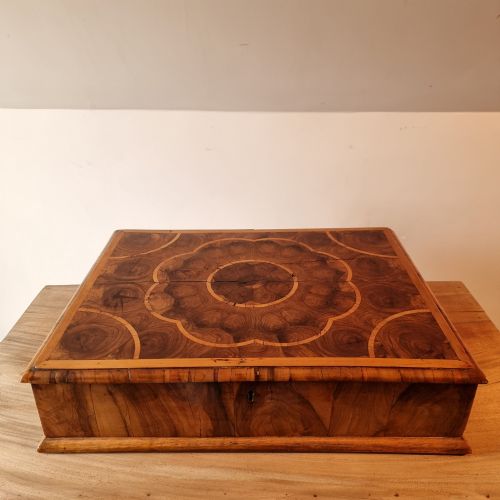
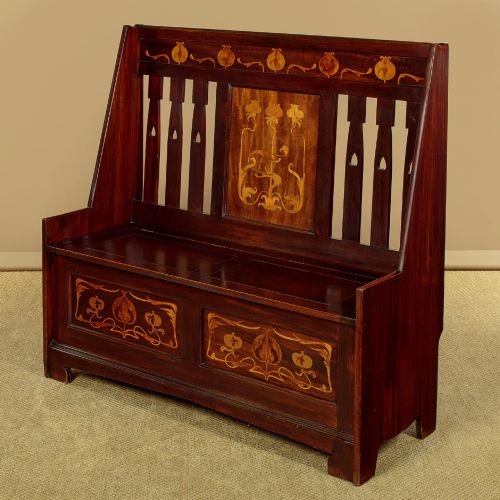
Surface decoration relies heavily on marquetry inlay, parquetry, and occasional additions of bone, mother of pearl, tortoise shell, or brass wire. Artisans carefully shaped and fitted these contrasting elements into prepared recesses within the primary wood, creating flat pictorial or geometric patterns.
Marquetry Storage Box Retail Price Guide 2026
Typical asking prices for marquetry storage box among the pieces listed under this phrase on Sellingantiques today, from the lower quarter to the upper quarter. They describe what is for sale here now, not the wider market.
Materials recorded on this site include bone, mother of pearl, tortoise shell, and brass alongside traditional European and exotic hardwoods.
Distinctions in quality
The calibre of a marquetry storage box rests upon the precision of the inlay work and the harmonious selection of timber grains by the maker. Tighter joints, seamless flush surfaces where different materials meet, and crisply defined floral or geometric motifs elevate an example above simpler production.
The integrity of the internal fittings, such as original compartments, key escutcheons, and lining materials, further differentiates standard utilitarian boxes from superior cabinet work. Pieces that retain their structural balance and original decorative elements demonstrate a higher tier of period craftsmanship.
James Shoolbred & Co·Lund Of Cornhill
The Marquetry Storage Box Glossary
- Marquetry inlay
- Decorative woodwork where small pieces of contrasting veneer are applied to a structural foundation to form pictures or patterns. This technique allows cabinet makers to create complex pictorial surfaces.
- Tea caddy
- A small container specifically designed to store dry tea leaves securely before brewing. These vessels frequently included internal lids or compartments.
- Coffer
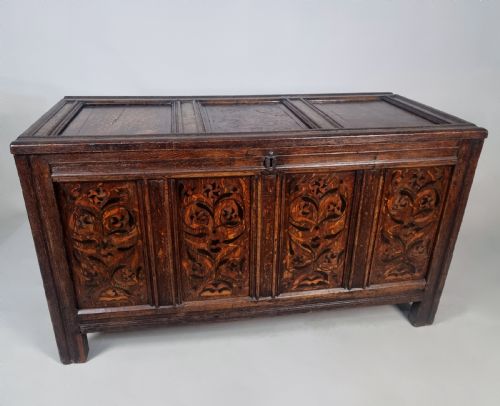
- A heavy wooden chest traditionally used for storing valuables, linens, or documents. Early examples often feature panelled construction and carved or inlaid decoration.
- Sarcophagus
- A box shape featuring a sloping or domed lid reminiscent of ancient stone coffins. Regency and Georgian cabinet makers frequently utilised this silhouette for tea caddies.
- Parquetry
- A geometric mosaic of wood pieces used for floor or box surfaces. It creates repeating patterns like cubes or chequers rather than figurative designs.
Marquetry Storage Box: Frequently Asked Questions
What were tea caddies used for?
Tea caddies served to store expensive tea leaves safely under lock and key in the home. Servants or hosts would dispense the leaves for each pot.
Because tea was a costly commodity during the Georgian and Victorian periods, these containers were built with secure lids and internal compartments to protect the contents.
How do I tell Victorian boxes apart from Georgian ones?
Victorian boxes often showcase darker timbers like rosewood and walnut, frequently combined with profuse marquetry or mother of pearl details. Their forms can lean towards the ornate and eclectic.
Georgian examples tend to favour mahogany, satinwood, or burr yew, displaying cleaner architectural lines and restrained geometric or shell inlays.
What is a coal box?
A coal box or purdonium is a domestic storage container designed to hold household coal near a fireplace. They combined utility with decorative cabinet work.
Many Victorian versions feature hinged lids, drop fronts, or metal liners to contain coal dust while matching the room's fine furniture.
Can I use these boxes for modern storage?
These boxes adapt easily to holding modern items like jewellery, stationery, or keepsakes. Their internal compartments remain practical for organisation.
Care should be taken to place them away from direct heat sources and strong sunlight to protect the historical veneers and polishes.