


Marquetry Slant Top Desk
These marquetry slant top desk examples combine elaborate floral and geometric veneers with practical writing slopes, offering collectors both decorative presence and writing utility.

Marquetry Slant Top Desk
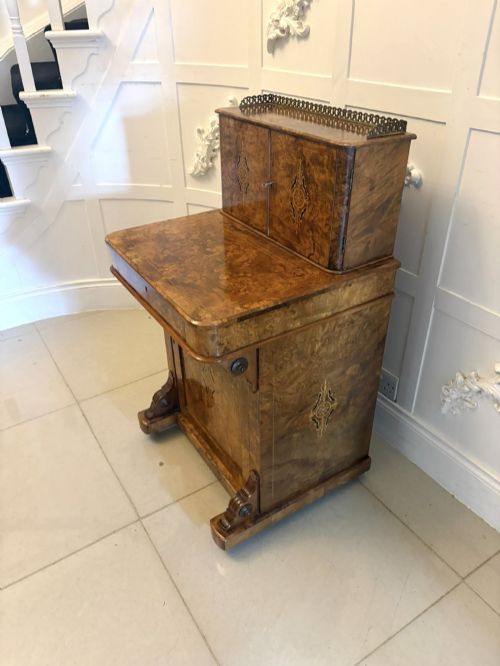
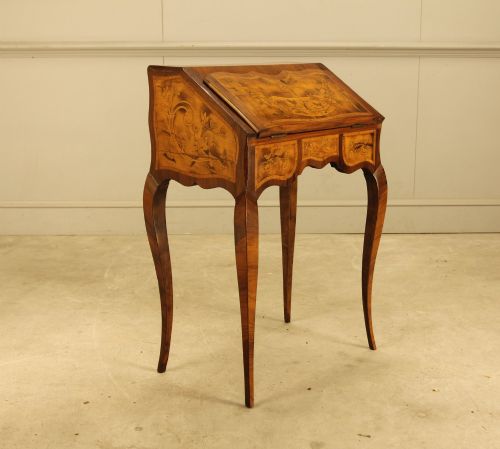
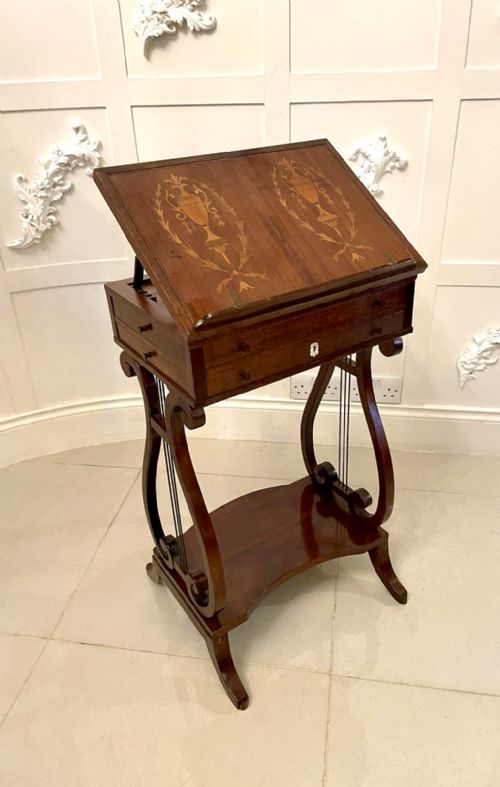
A marquetry slant top desk encompasses forms such as the compact Davenport, the bureau de dame, and larger block fronted bureaux designed for domestic writing tasks. These pieces frequently emerge from Victorian, Edwardian, and nineteenth-century workshops, drawing stylistic inspiration from French Louis XV revival and Dutch baroque traditions.
The buyer meets variations ranging from rosewood and burr walnut Davenport desks with fitted interiors to mahogany writing desks and freestanding French pieces. Many examples incorporate satinwood inlay and brass mounts alongside the sloping writing lid that conceals pigeonholes and small drawers.
Materials and construction
Cabinetmakers utilised dense timbers such as mahogany, rosewood, walnut, and burr walnut as foundational woods for these desks. Surfaces received intricate veneers and inlay work utilising lighter woods like satinwood to construct floral and geometric marquetry panels.
Structural elements frequently incorporated fitted brass hardware, leather writing surfaces, and internal subsidiary drawers. Joinery methods relied on traditional cabinetmaking techniques to stabilise richly figured veneers across sloping lids and cabinet carcases.
Listings feature Victorian and Edwardian examples constructed from walnut, mahogany, and rosewood with marquetry inlay.
Assessing quality
The sophistication of the veneer selection and the precision of the marquetry cutting define the upper tier of these pieces. Dense burr walnut and richly figured rosewood demonstrate superior material choice compared to plainer timbers.
Execution of internal fittings, such as secret drawers, stationery compartments, and properly matched secondary woods, separates standard production from exceptional cabinetwork. The harmony between the structural form and the applied inlay determines overall visual balance.
Edwards & Roberts
The Marquetry Slant Top Desk Glossary
- Marquetry
- Decorative veneer work forming pictures or patterns by assembling small pieces of coloured wood, shell, or ivory onto a carcase. This technique allows cabinetmakers to create complex floral and pictorial scenes across desk lids and drawer fronts.
- Davenport
- A compact pedestal desk featuring a hinged sloping writing top and side drawers. First popularised in the nineteenth century, this form maximised storage within a small footprint.
- Bureau de dame
- A small ladies writing desk, often freestanding and serpentine in contour. Originating in French cabinetmaking traditions, these desks frequently display extensive floral inlay and gilt-metal mounts.
- Burl
- Wood cut from a tree burl or growth, revealing swirling, highly figured grain patterns. Burr walnut and similar burls were highly prized for surface veneers on Victorian desks.
- Satinwood
- A durable, lustrous yellow-brown timber native to Ceylon and India. Cabinetmakers utilised it extensively for contrasting stringing and inlay details on mahogany and rosewood furniture.
Marquetry Slant Top Desk: Frequently Asked Questions
What is a Davenport desk?
A Davenport is a compact writing desk featuring a hinged, sloping top above a bank of drawers. It gained immense popularity during the Victorian era for domestic correspondence.
Most examples include internal compartments for stationery and small drawers accessed from the side of the pedestal.
How do I care for marquetry?
Marquetry surfaces require stable indoor humidity and protection from direct sunlight to prevent veneer lifting and timber fading. Regular application of suitable furniture wax maintains the finish.
Avoid placing these desks near heat sources which dry out historic glues and cause wood shrinkage.
Are these desks practical for writing?
Many slant top desks provide functional writing slopes, frequently lined with leather or tooled inserts. The interior compartments accommodate modern stationery items while maintaining historic character.
Buyers should check the height of the kneehole and slope angle to ensure comfortable daily use.
How do I date a bureau de dame?
Dating relies on examining construction methods, secondary timbers, and stylistic markers such as Louis XV revival curves or Edwardian marquetry patterns. Maker signatures or stamps offer definitive timelines.
Hardware styles, dovetail construction, and lock mechanisms provide additional clues to the manufacturing period.