



Marquetry Serpentine Sideboard
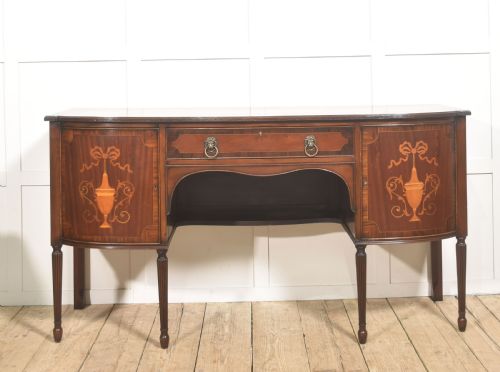
A marquetry serpentine sideboard brings rhythmic curves and intricate wood inlay together, offering a commanding focal point for a formal dining room.
Marquetry Serpentine Sideboard
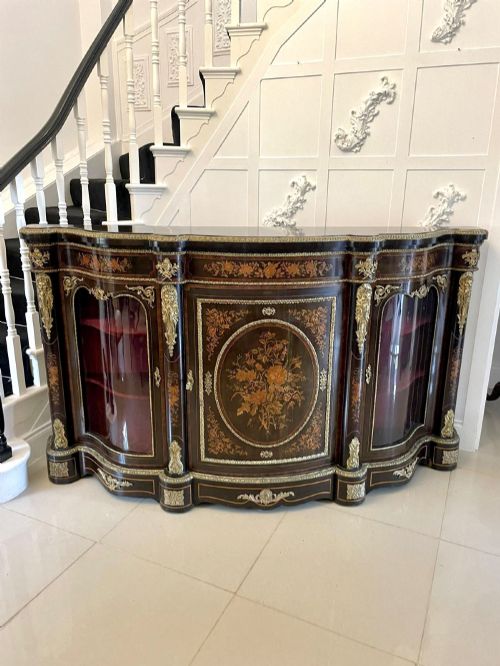
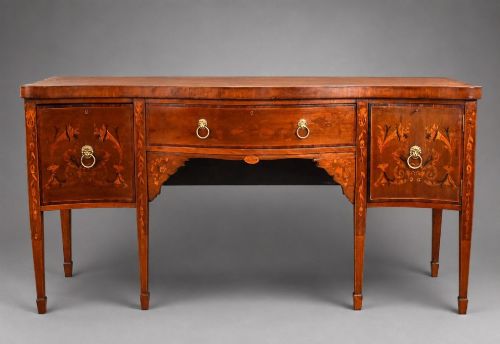
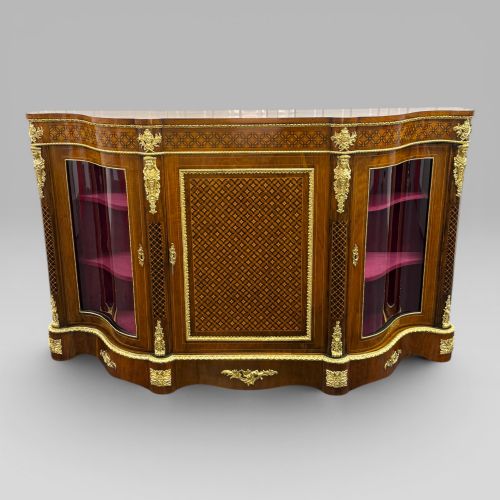
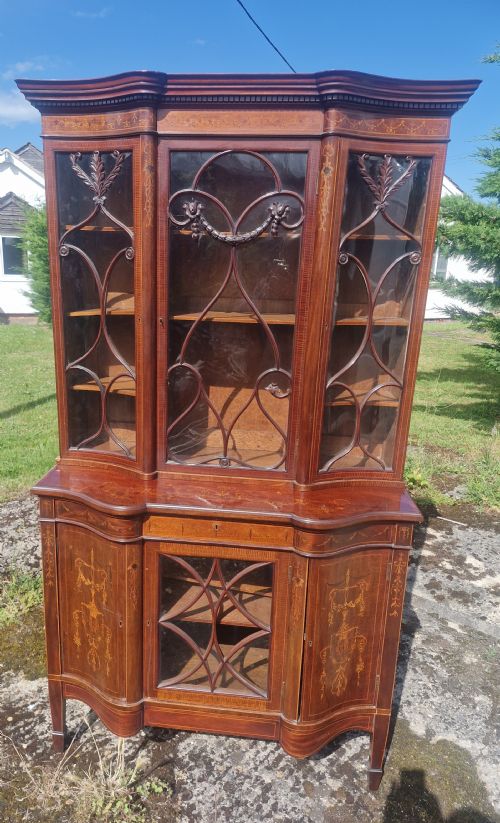
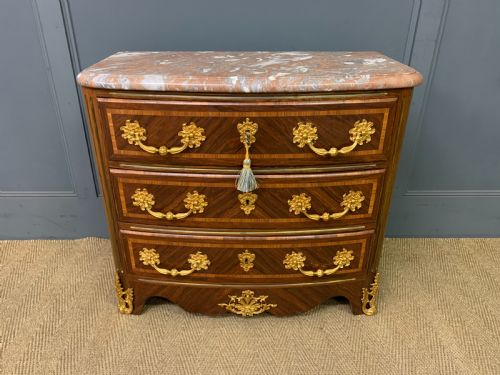
A marquetry serpentine sideboard combines a undulating, curving front profile with detailed pictorial wood inlay across the doors and panels. These pieces span from the eighteenth century through to the Edwardian era, taking the form of large credenzas, sideboards, and marble-topped commodes.
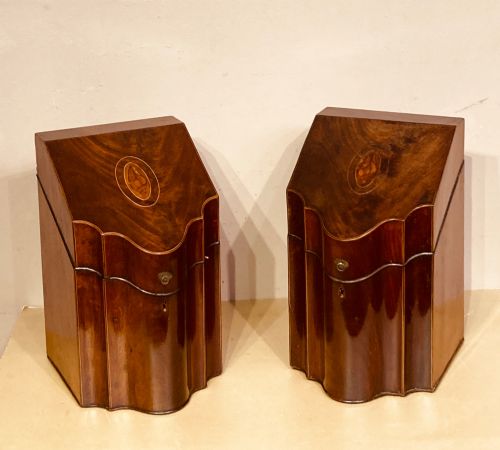
Victorian examples in burr walnut dominate the selection, frequently paired with gilt-metal mounts and complex floral marquetry. Georgian mahogany iterations and later Edwardian Sheraton Revival pieces also appear, demonstrating the enduring appeal of the curving serpentine outline.
How They Were Made
Craftsmen shaped solid timbers such as mahogany and walnut to form the undulating curves of the carcass, applying contrasting veneers like satinwood, kingwood, and burr walnut over the surface. Floral and geometric marquetry patterns were meticulously cut from thin wood veneers and fitted together like puzzles before being glued to the panels.
Gilt bronze or ormolu mounts, brass stringing, and marble tops were incorporated to accentuate the sweeping lines of the furniture. Cabinetmakers utilised hand tools to achieve the tight radius curves of the serpentine drawer fronts and doors.
Secret drawers often hide behind the scrolling curves of nineteenth-century credenzas, waiting for fingers to find the hidden spring release.
What Varies in Quality
The sophistication of the marquetry design separates standard production from exhibition pieces, with intricate shading achieved by scorching veneer edges in hot sand. The choice of underlying timber, such as heavily figured burr walnut or rich kingwood, dictates the visual depth of the cabinet.
Precision in the assembly of the serpentine carcass and the integration of cast ormolu mounts signal higher workshop standards. Superior examples display seamless alignment across curving drawer fronts and doors, maintaining visual harmony from every angle.
Maison Gagneau
The Marquetry Serpentine Sideboard Glossary
- Marquetry
- Decorative veneer work forming pictures or patterns by assembling pieces of different woods, metals, or shells. This technique requires immense skill to fit intricate shapes into a solid background.
- Serpentine
- A furniture outline featuring a concave centre flanked by two convex ends, or the reverse. The undulating contour creates a sense of movement across the front of a sideboard.
- Ormolu
- Gilded bronze mounts applied to furniture for ornamentation and edge protection. Makers cast and chased these metal elements by hand before mounting them onto the wooden carcass.
- Credenza
- A low cabinet, often enclosed by doors and fitted with interior shelving, used for storage and display. Victorian variations frequently incorporate mirrored backs and curved glass side compartments.
- Kingwood
- A dense, richly grained tropical timber used extensively in fine French and English cabinetry. Its dark brown colour and golden contrasting stripes make it ideal for decorative veneers.
Marquetry Serpentine Sideboard: Frequently Asked Questions
What is a serpentine sideboard?
A serpentine sideboard is a storage cabinet defined by its undulating front edge, curving outward and inward in a wave-like shape. These pieces combine practical cupboard space with decorative woodwork.
Cabinetmakers adopted this curving form to catch the light and soften the rigid geometry of dining rooms. The shape demands advanced woodworking skill to ensure doors and drawers operate smoothly along the curved track.
How do I date a marquetry sideboard?
Dating relies on examining the underlying wood species, the style of the marquetry, and construction techniques. Georgian pieces favour mahogany with restrained inlay, while Victorian examples often feature burr walnut and heavy ormolu mounts.
Secondary woods inside the drawers and the formulation of the polish offer further clues to the period. Revivals from the Edwardian era often mimic earlier Georgian and French styles but use machine-prepared veneers.
Where should I place a serpentine sideboard?
These sideboards suit dining rooms, grand hallways, or living spaces where their curved profile can be appreciated from multiple angles. Placing them against a flat wall allows the undulating front to create pleasing shadows.
Because many examples feature delicate veneers and marble tops, positioning them away from direct sunlight and heating vents preserves the wood and finish. Ample floor space ensures the projecting curves are not obstructed by surrounding furniture.
How do I care for antique marquetry?
Maintenance involves dusting with a soft, dry cloth and applying microcrystalline wax sparingly to nourish the wood surface. Avoid liquid polishes containing silicone, which can penetrate hairline cracks in old veneer.
Keeping the room at a stable humidity prevents the wood underneath from expanding and causing the marquetry pieces to lift. Promptly attending to any loose veneer edges with appropriate furniture glue prevents further loss.