



Marquetry Oak Storage Box
A marquetry oak storage box is a timber chest decorated with patterned wood veneers, offering sturdy utility and centuries of craftsmanship.
Marquetry Oak Storage Box
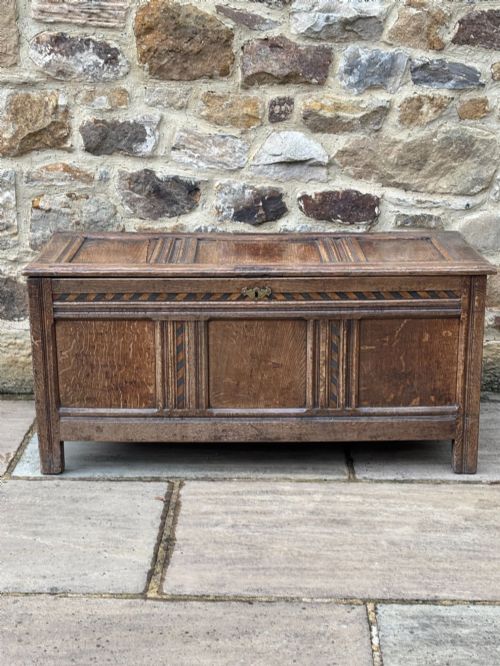
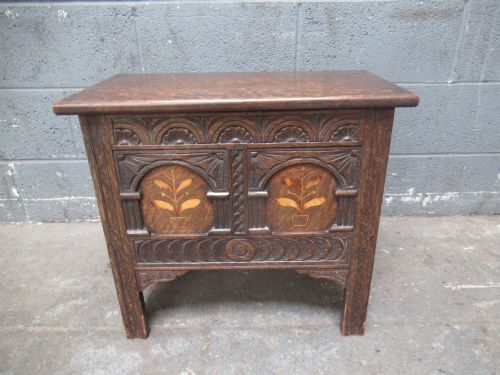
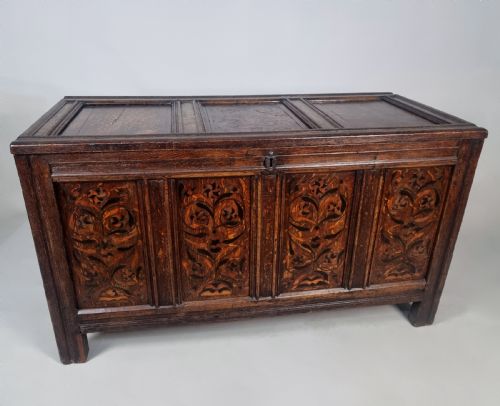
A marquetry oak storage box brings together heavy domestic utility and intricate surface decoration, ranging from miniature boxes to substantial chests. When searching for a marquetry oak storage box, you encounter forms that span several centuries, including seventeenth-century coffers, eighteenth-century mule chests, and Victorian tool trunks. These items serve primarily as receptacles for household goods while displaying decorative woodworking traditions.
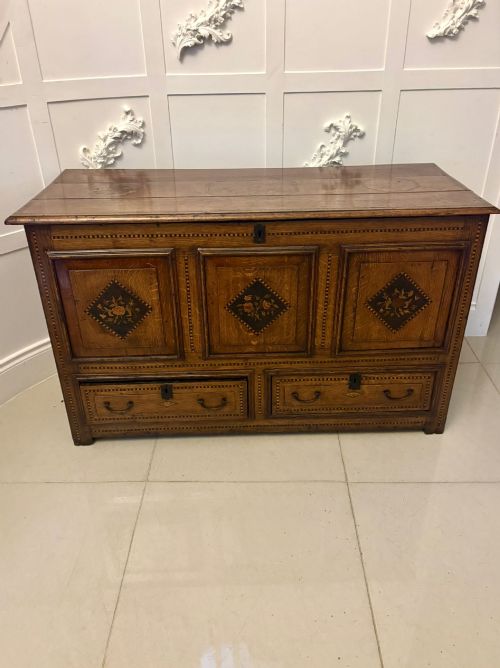
The most prevalent examples on this page date from the seventeenth and eighteenth centuries, executed in solid oak with contrasting wood inlays. Forms include arcaded coffers, mule chests featuring lower drawers, and smaller Welsh storage boxes. Regional variations appear alongside pieces created in the revival styles of later periods.
Materials and construction
Makers built these pieces using solid oak as the primary structural timber, often combined with iron hardware for hinges and locks, and brass for decorative escutcheons. The surfaces receive embellishment through marquetry inlay, utilising mixed woods, mother-of-pearl, and bone details to create geometric or pictorial patterns.
Joinery methods reflect the period of manufacture, moving from early pegged frame-and-panel construction to later dovetailed carcases. Wood inlay techniques involve fitting thin veneers of contrasting timber into recesses carved into the oak ground.
Marquetry Oak Storage Box Retail Price Guide 2026
Typical asking prices for marquetry oak storage box among the pieces listed under this phrase on Sellingantiques today, from the lower quarter to the upper quarter. They describe what is for sale here now, not the wider market.
Cabinet makers sometimes hid secret compartments inside these heavy oak trunks, rewarding anyone persistent enough to investigate the fitted interiors.
Assessing quality
Quality in these storage pieces rests upon the precision of the cabinet work and the complexity of the veneer patterns. Pieces featuring intricate marquetry and well-fitted interior compartments stand apart from simpler vernacular examples.
The choice of secondary timbers and the integrity of the original hinges and locks also influence the standing of an individual box or chest. Survival of the original surface patination without excessive restoration marks the finer examples.
The Marquetry Oak Storage Box Glossary
- Marquetry inlay
- The art of applying decorative pieces of veneer to a structural surface to form intricate designs. This technique employs various coloured woods to create pictorial or geometric motifs.
- Mule chest
- A traditional storage chest featuring one or more drawers at the base beneath the main compartment. This form emerged as makers sought to combine the capacity of a coffer with the accessibility of a chest of drawers.
- Coffer
- A heavy wooden box traditionally used for storing valuables, documents, or textiles. Early examples feature robust oak construction and often incorporate carved arcading.
- Arcaded coffer
- A chest adorned with decorative carvings that imitate classical arches. This architectural motif appears frequently on pieces from the seventeenth century.
- Vernacular furniture
- Objects made by local craftsmen following regional traditions rather than metropolitan fashions. Welsh examples on this page demonstrate distinct local building characteristics.
Marquetry Oak Storage Box: Frequently Asked Questions
What is the difference between a coffer and a mule chest?
A coffer is a simple chest with a hinged lid opening from the top for general storage.
A mule chest adds one or more drawers beneath the main compartment, offering easier access to stored belongings.
How do I date an antique oak storage box?
Dating relies on observing construction methods, such as frame-and-panel joinery versus dovetailing, alongside hardware types and wood selection.
Stylistic details like seventeenth-century arcading or eighteenth-century marquetry patterns also provide clear chronological markers.
What are these boxes typically used for today?
These sturdy containers function well in modern interiors as blanket chests, living room storage tables, or hallway furniture.
Smaller boxes serve to hold keepsakes while maintaining a visible historical presence in a room.
Are marquetry details original to the oak boxes?
Many pieces retain their period marquetry work executed in mixed woods, though some nineteenth-century revival pieces emulate earlier styles.
Close inspection of the veneer integration helps determine whether the inlay belongs to the original period of manufacture.