
Marquetry Nightstands
Marquetry nightstands bring patterned wood surfaces to the bedside, offering enclosed storage alongside decorative floral and geometric veneers.
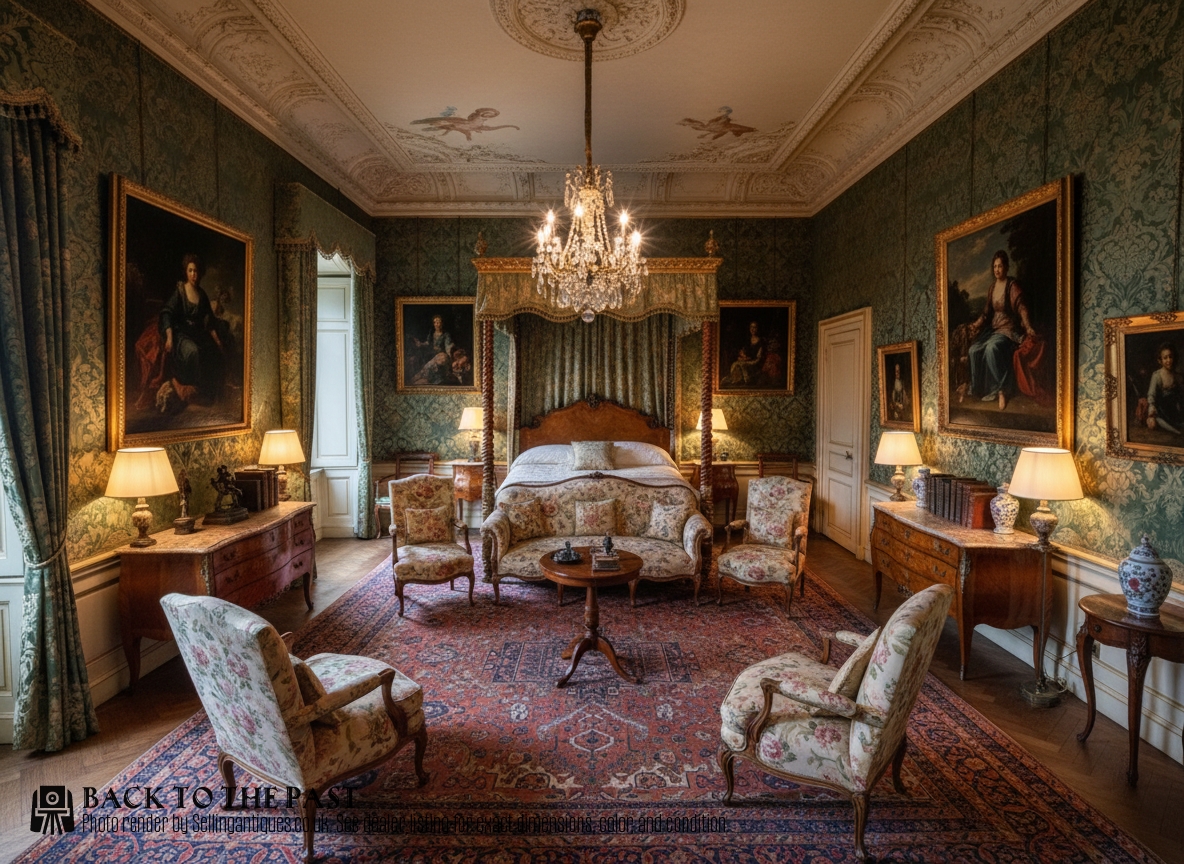
Marquetry Nightstands
Marquetry nightstands span several decades of bedroom furniture production, taking the form of bedside cabinets, commodes, and small lamp tables. These small tables and cupboards serve a practical bedside function while displaying detailed wood veneer patterns on their top and side surfaces.
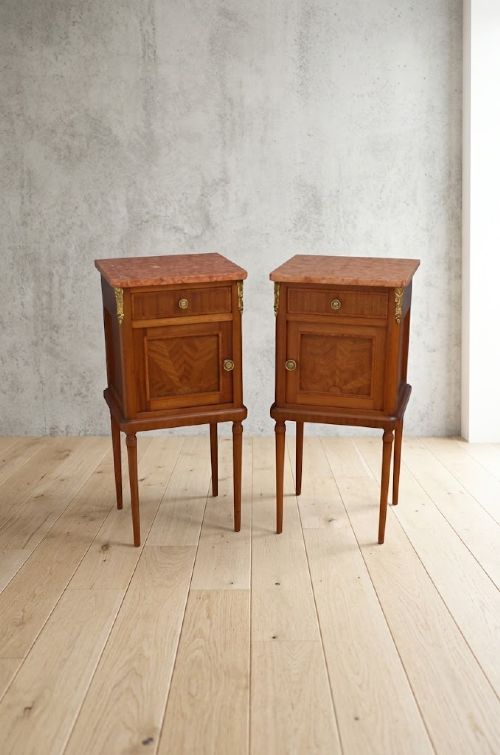
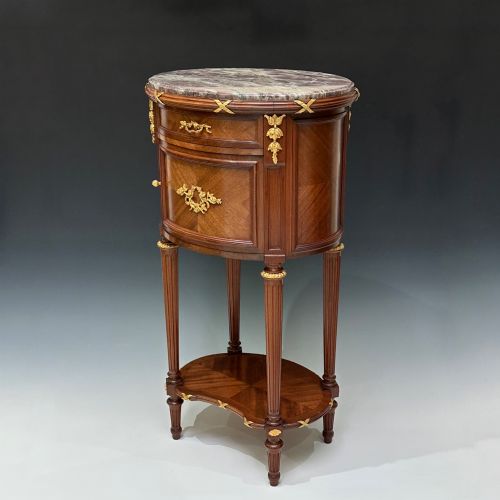
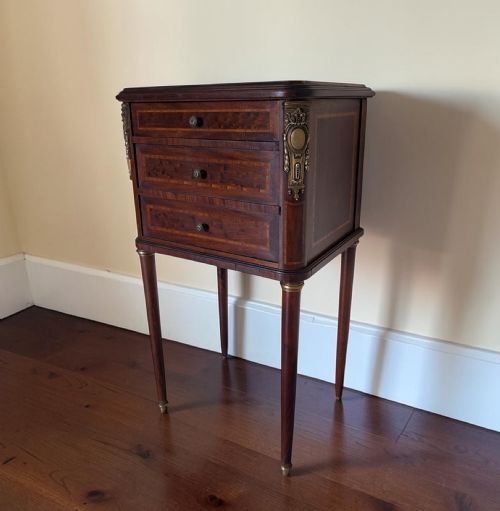
The pieces appearing on this page originate predominantly from the nineteenth and early twentieth centuries, drawing heavily upon French stylistic revivals. Buyers encounter walnut, mahogany, and kingwood bodies ornamented with contrasting timber inlays.
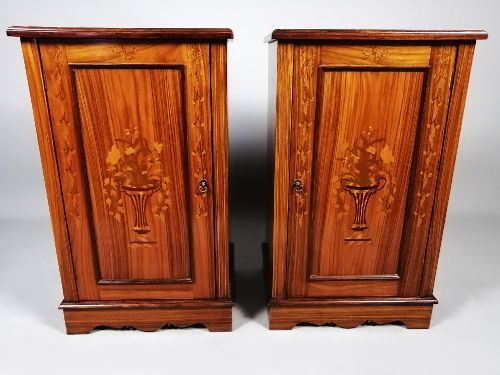
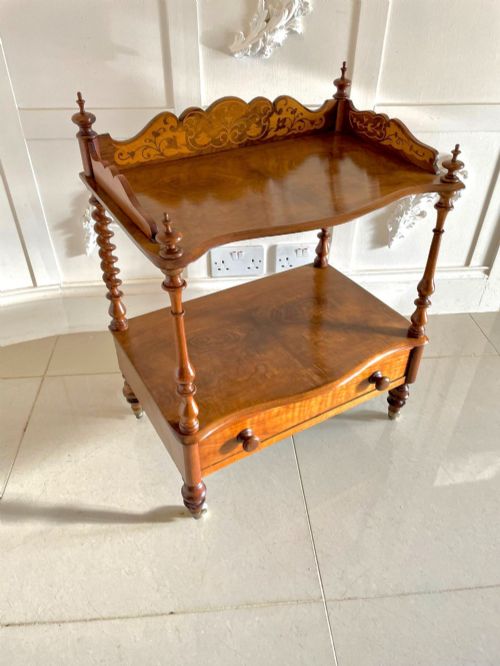
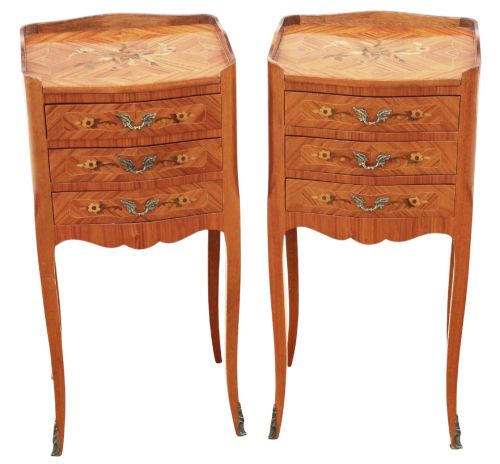
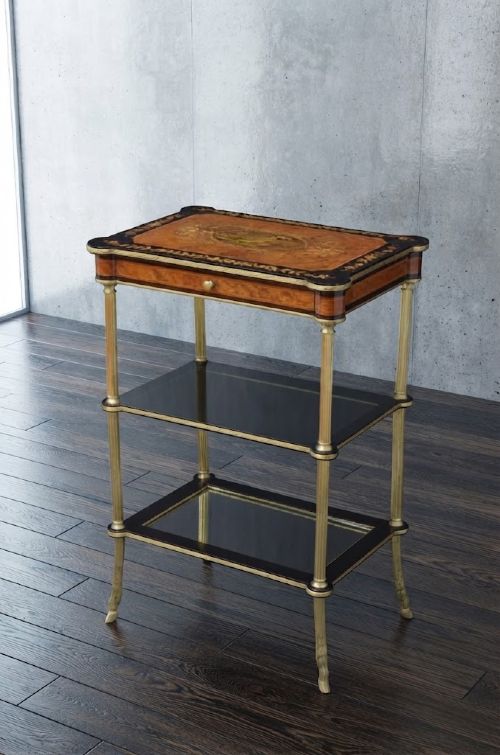
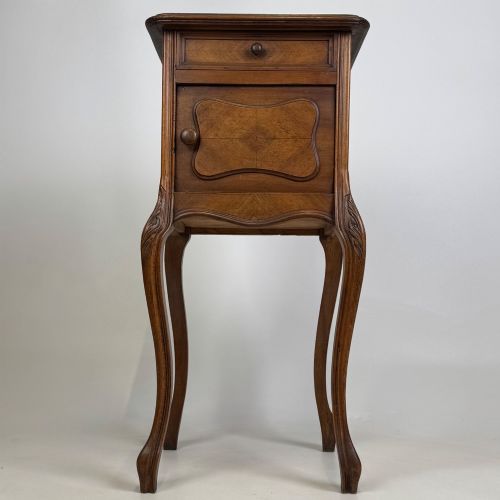
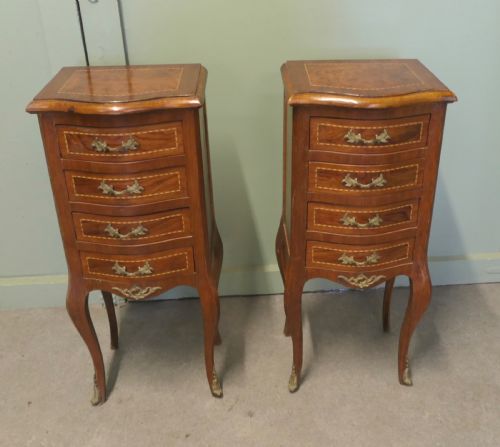
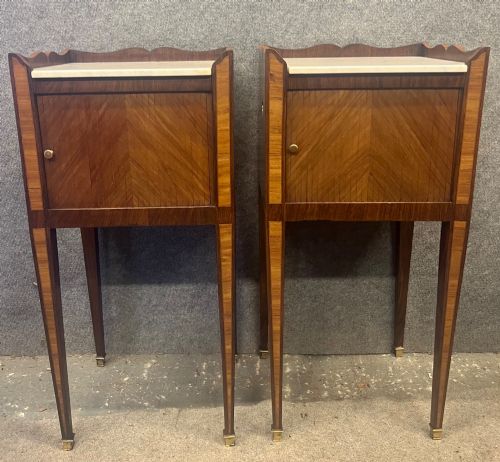
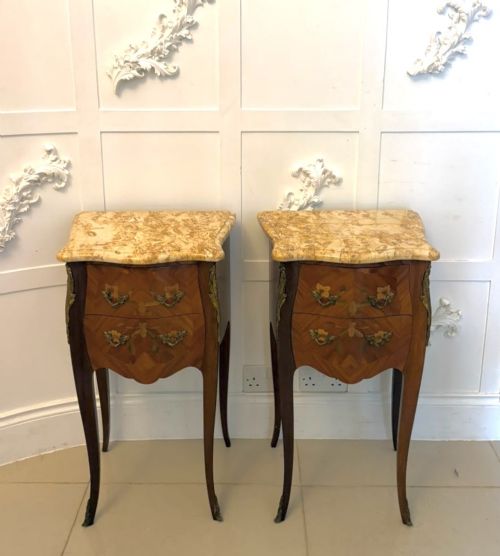
Forms range from simple single-door cupboards and open lamp tables to taller multi-drawer chests fitted with marble surfaces. Many survive as matching pairs, though single items and near pairs also appear.
How they were made
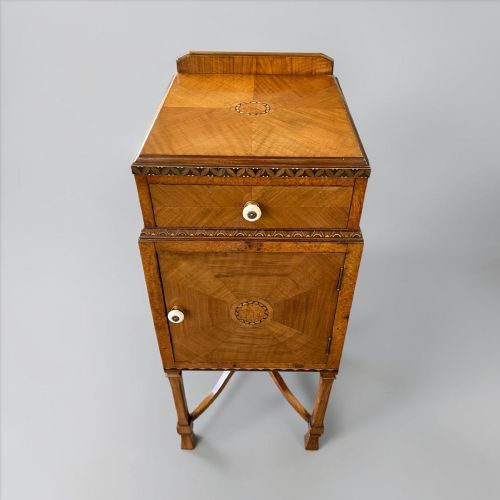
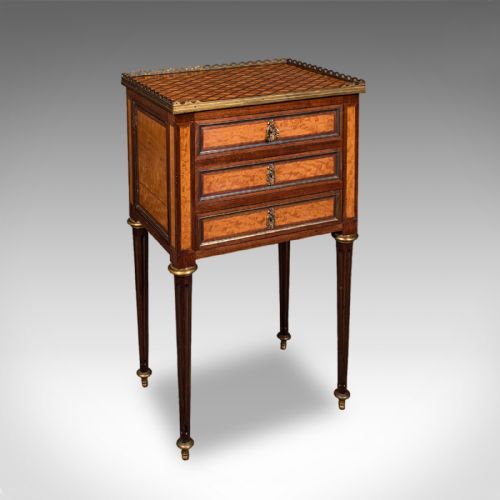
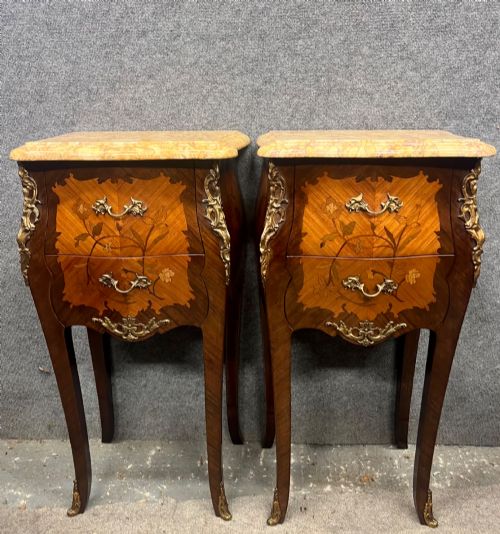
Cabinet makers constructed the foundational carcase from timbers such as mahogany, walnut, or oak, applying fine veneers of kingwood, rosewood, and satinwood to the exterior surfaces. Marquetry designs were assembled by cutting contrasting wood veneers into pictorial or geometric motifs and fitting them flush into the ground wood.
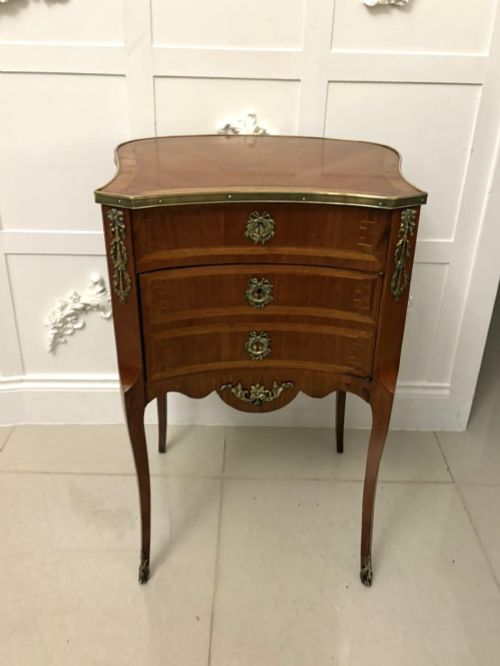
Many cabinets incorporate moulded marble tops bedded onto the wooden frame, alongside cast brass or ormolu mounts framing the corners and drawer fronts. Ebonised finishes and inlaid stringing lines frequently provide border definition to the floral panels.
Marquetry Nightstands Retail Price Guide 2026
Typical asking prices for marquetry nightstands among the pieces listed under this phrase on Sellingantiques today, from the lower quarter to the upper quarter. They describe what is for sale here now, not the wider market.
Listings feature woods such as kingwood, rosewood, and satinwood combined with marble and brass.
What varies in quality
Quality rests primarily in the precision of the veneer work and the choice of cabinet timbers. Superior examples show seamless junctions within the marquetry panels, where different wood species fit together tightly without excessive filler.
The standard of secondary materials dictates overall worth, seen in heavy marble slabs, substantial cast ormolu mounts, and solid drawer linings. Well-executed forms maintain structural stability in the joints despite the seasonal movement of multi-layered wood veneers.
François Linke·Sormani
The Marquetry Nightstands Glossary
- Marquetry
- The art of applying decorative pieces of veneer to a structural carcase to form geometric or pictorial designs. This technique differs from parquetry by employing curved and naturalistic floral motifs rather than repeating angular tile patterns.
- Ormolu
- Gilded bronze mounts applied to furniture corners, feet, and key escutcheons for decorative accent. Makers cast and chased these metal elements before attaching them to the wooden frame.
- Kingwood
- A dense, richly figured tropical timber utilised extensively in fine cabinet making for its dark purple-brown grain and golden streaks. It forms a contrasting background for lighter satinwood and fruitwood inlays.
- Commode
- A low standing cabinet with drawers or doors, adapted in various periods to serve as bedside storage. These pieces often feature shaped fronts and marble tops.
- Chevet
- A French term for a bedside table or small nightstand. These compact units provide surface space and enclosed storage next to a bed.
Marquetry Nightstands: Frequently Asked Questions
How do I spot reproduction marquetry?
Original nineteenth and early twentieth century marquetry relies on hand-cut veneers where individual wood pieces show slight irregularities upon close inspection. Modern machine-cut copies often display uniform laser-burnt edges around the floral motifs.
The underlying carcase construction also reveals age through traditional joinery methods and the natural ageing of secondary timbers inside the drawers.
Are these nightstands sturdy enough for daily use?
These cabinets utilise solid hardwood frames and sturdy timber carcases designed for everyday domestic duty. While the veneered surfaces require sensible care to avoid moisture damage, the underlying structures remain robust.
Marble tops provide a durable surface for lamps and water jugs, resisting stains better than polished wood alone.
How do I clean marble top tables?
Marble surfaces benefit from gentle wiping with a damp cloth and mild neutral soap to remove dust and daily grime. Acidic cleaning products and harsh abrasives etch the stone and ruin the polished finish.
Dry the surface thoroughly after cleaning to prevent water spots from forming on the polished stone.
What is the difference between a commode and a bedside cabinet?
A commode traditionally describes a low chest of drawers with decorative mounts and shaped fronts, often built on a larger scale. Bedside cabinets are dimensioned specifically for placement next to a bed, typically featuring a single door or smaller drawer configuration.
Both forms utilise similar marquetry techniques and decorative vocabularies during the revival periods.