




Marquetry Mantelpiece Clock
A marquetry mantelpiece clock brings timberwork and time together on the shelf, offering inlaid mahogany, rosewood, and satinwood for the collector.
Marquetry Mantelpiece Clock
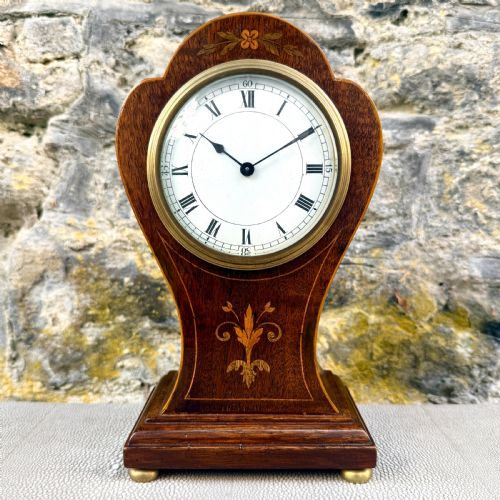
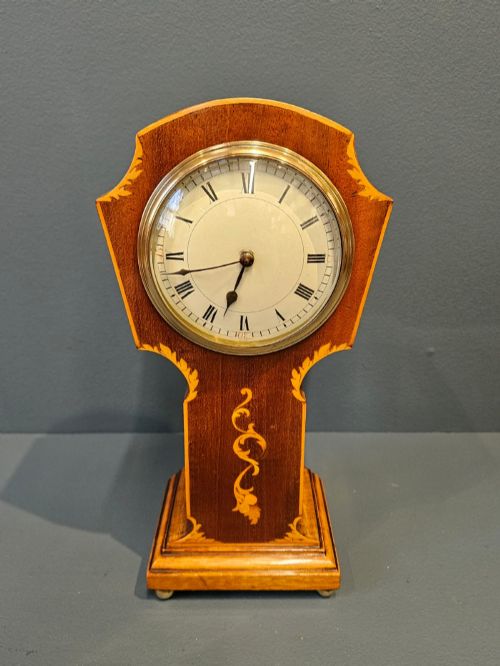
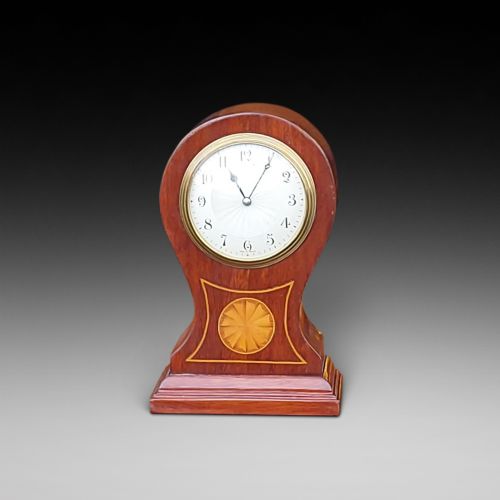
A marquetry mantelpiece clock combines precision timekeeping with detailed wood inlay, appearing on the mantel in various period forms. When you search for a marquetry mantelpiece clock, you are looking at domestic timepieces housed in wooden cases decorated with contrasting veneers.
The pieces listed here date from the nineteenth century through the Edwardian era, spanning Victorian, Regency, and Art Nouveau styles. Most examples take the form of upright mantel clocks or portico clocks designed to sit steadily upon a shelf or bracket.
Mahogany and rosewood form the primary casework for these examples, often enhanced with boxwood, lemon wood, and satinwood inlay. French movements and English fusee movements both appear among the listings, alongside architectural portico designs.
How they were made
Cabinetmakers constructed the wooden housings using dense timbers like mahogany and rosewood as a base for intricate veneer work. Artisans then cut contrasting woods such as boxwood, satinwood, and lemon wood to create geometric or floral marquetry patterns across the front and sides.
What varies in quality
The precision and complexity of the wood inlay set individual examples apart, with multi-wood floral motifs requiring greater skill than simple stringing. The choice of base timber also matters, as finely grained rosewood and figured mahogany elevate the appearance of the case.
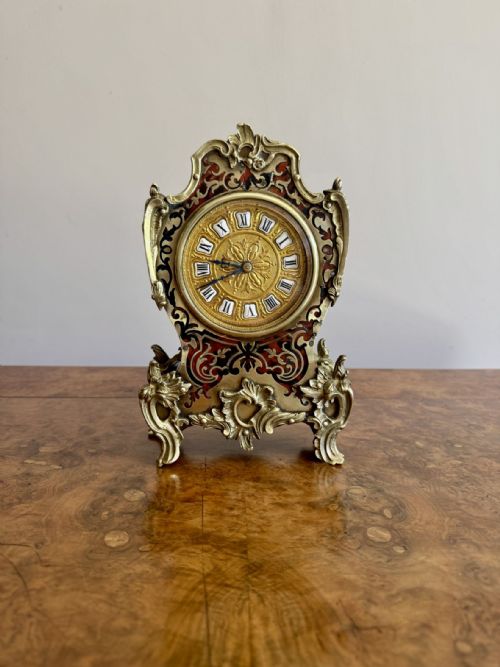
The integration of ormolu mounts and the finish of the cast brass elements demonstrate the workshop standard behind each piece. Movement type further distinguishes the examples, with single fusee mechanisms and signed dials indicating higher manufacturing ambition.
W. Burton·Henry Marc·Thomas A Paris
The Marquetry Mantelpiece Clock Glossary
- Marquetry
- The art of applying decorative pieces of veneer to a structural structure to form intricate patterns or pictures. Craftsmen use contrasting woods to build up scenes or geometric designs.
- Ormolu
- Gilded bronze used for decorative mounts and feet on furniture and clock cases. The technique involves applying a gold amalgam to bronze.
- Portico clock
- A distinct architectural style of clock featuring two supporting pillars framing the central pendulum or dial. These cases often utilise rosewood and ormolu.
- Fusee
- A conical pulley used in clock movements to maintain even driving force as the mainspring unwinds. This mechanism improves timekeeping accuracy across the power reserve.
- Boulle
- A method of marquetry using brass and tortoiseshell inlaid together, named after a famous French cabinetmaker. It creates a shimmering, contrasting surface texture.
Marquetry Mantelpiece Clock: Frequently Asked Questions
How do I wind a mantel clock?
Most mechanical mantel clocks require a key to tension the springs through winding holes on the dial face. Care must be taken not to overwind the movement.
Fusee clocks often use a separate door at the back or side to access the movement, requiring steady hands and the correct key size.
Where should I place my clock?
These clocks are designed for stable surfaces such as mantelpieces, shelves, or dedicated wall brackets. A level surface ensures the pendulum swings evenly.
Keep wooden cases away from direct sunlight and strong heat sources to protect the polished veneer and delicate marquetry from drying out.
How do I identify an Edwardian clock?
Edwardian clocks often feature mahogany cases with understated inlay work, reflecting the styles popular in the early twentieth century. They frequently house reliable spring-driven movements.
Design motifs from this period tend to draw on earlier Regency or Sheraton influences rather than the heavier Victorian aesthetic.