

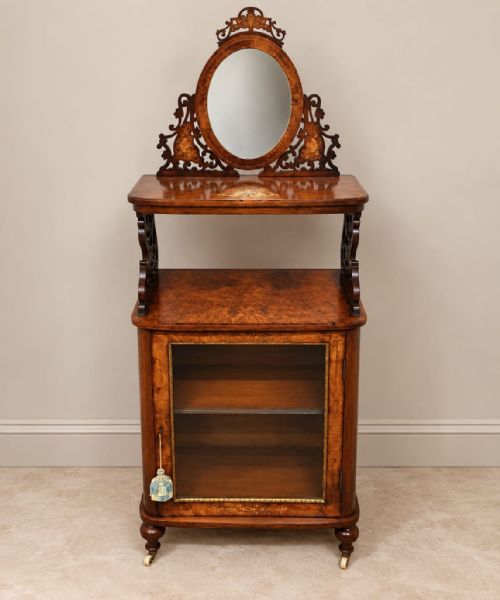
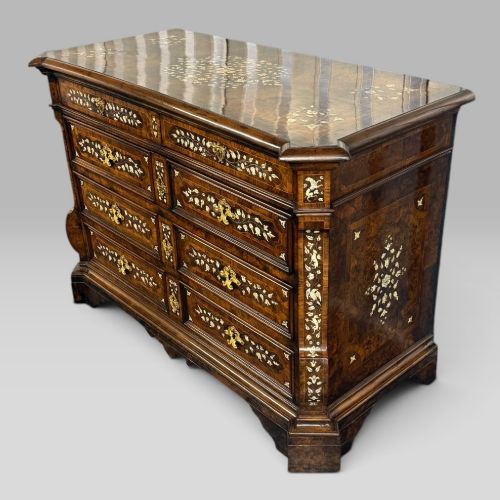
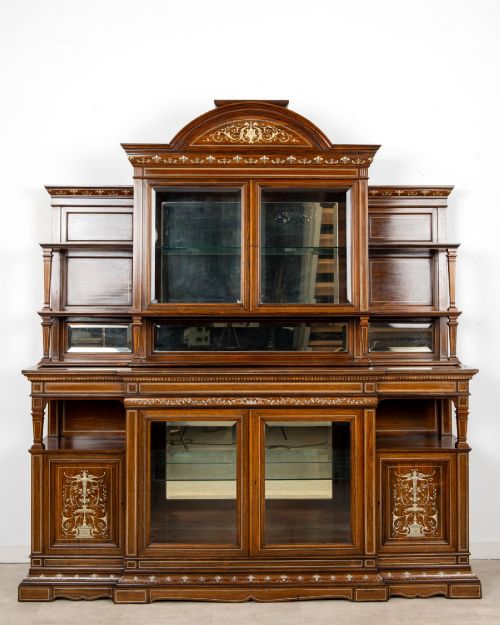
Marquetry Inlay Credenza
A marquetry inlay credenza brings rich timber and intricate pattern to a room, offering both display space and concealed storage.
Marquetry Inlay Credenza
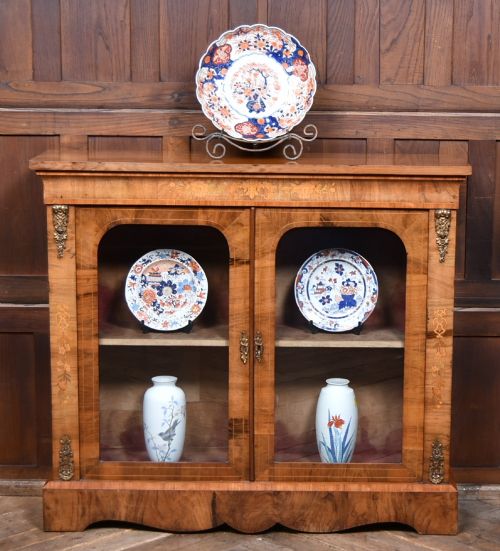
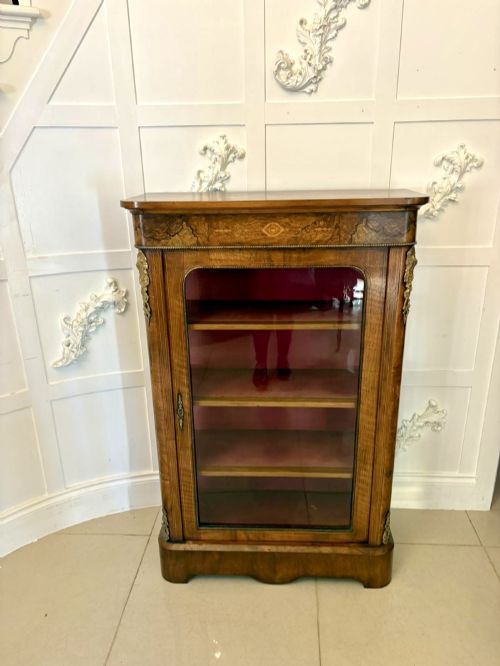
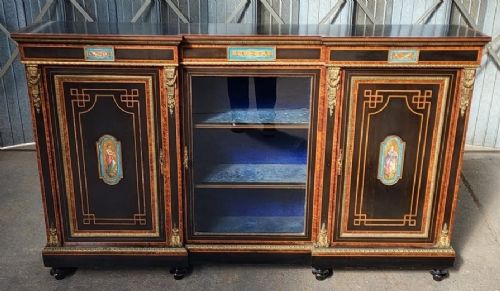
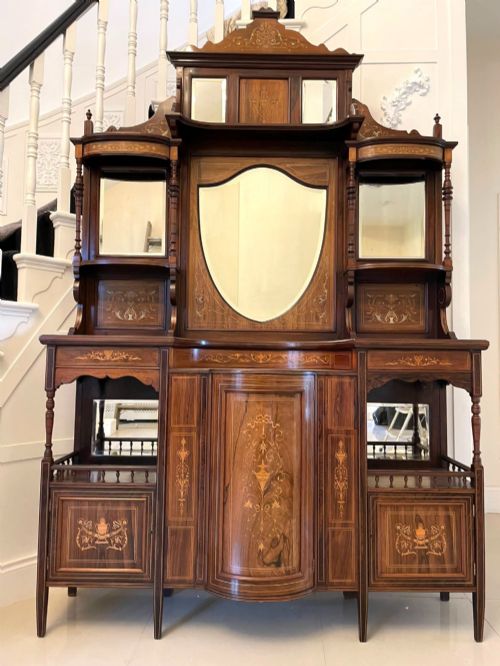
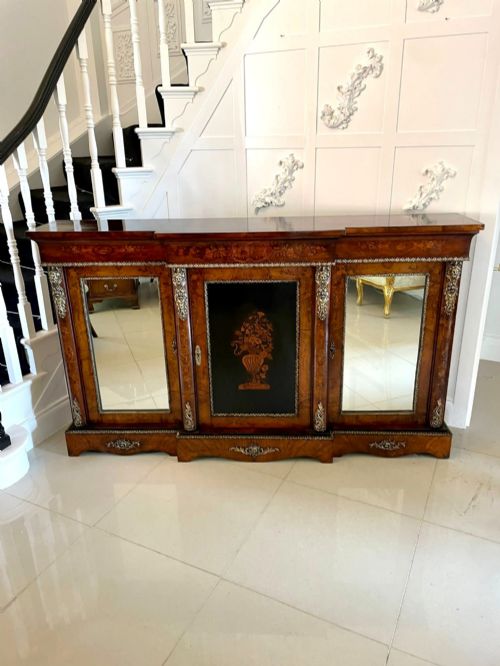
A marquetry inlay credenza is a low, substantial cabinet designed for formal reception rooms, frequently appearing in Victorian and nineteenth-century inventories. These pieces combine flat timber top surfaces with glazed or panelled doors, often accompanied by matching side cabinets and pier cabinets.
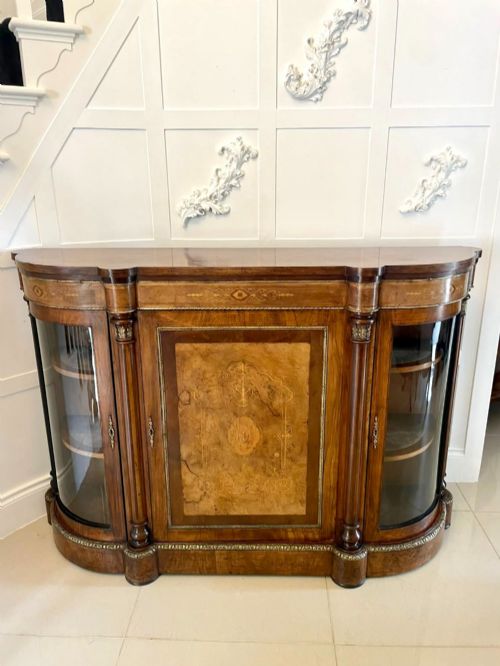
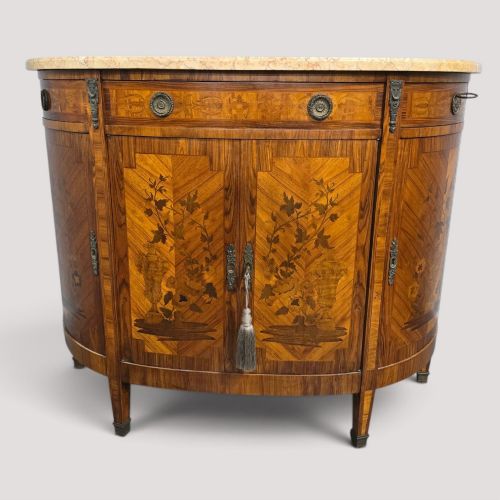
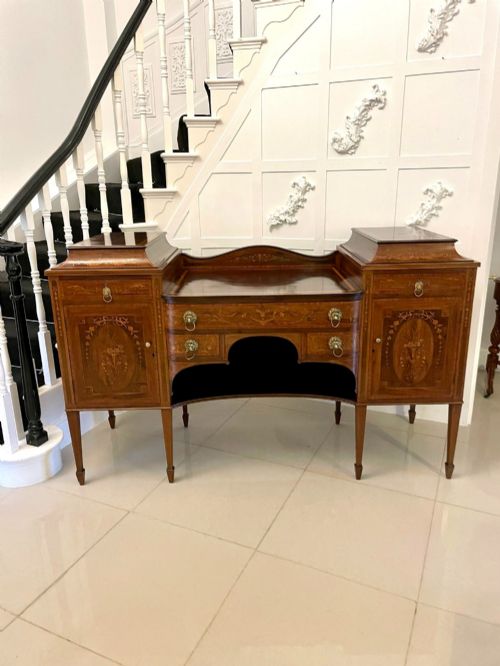
The most frequent examples seen on this page date from the Victorian era around the middle to late nineteenth century, rendered in burr walnut, rosewood, and mahogany. Makers of the period drew upon French Louis XVI and Sheraton Revival styles, incorporating serpentine fronts and rounded ends.
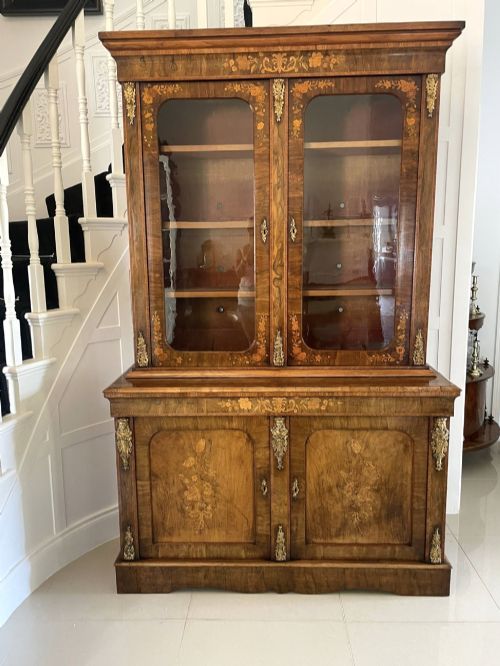
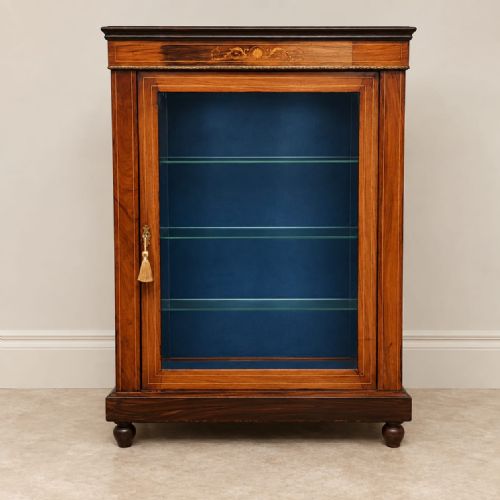
Alongside standard credenzas, related forms include three-door sideboards, narrow pier cabinets, and display cases outfitted with glass shelves. Their proportions suit alcoves or long walls where low furniture creates balance without obstructing sightlines.
Materials and Technique
Cabinetmakers built the carcase using dense foundational timbers such as mahogany or walnut before applying decorative veneers. Burr walnut and satinwood provided heavily figured surfaces that caught the light, contrasting with darker borders of ebony and boxwood.
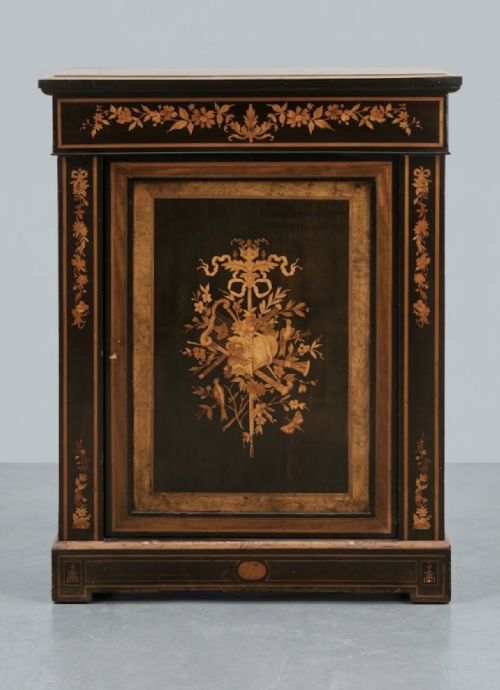
Marquetry patterns involved cutting thin slices of contrasting wood, fruitwood, and sometimes shell or brass to form floral motifs and geometric scrolls. These pictorial panels were glued into prepared recesses within the timber veneer and smoothed flush.
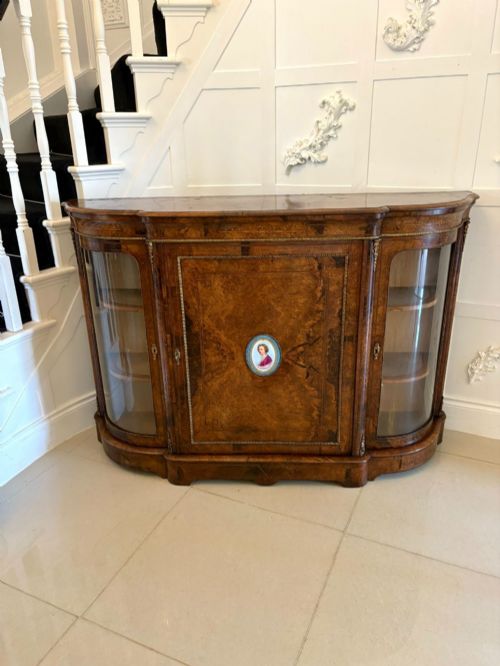
Gilded bronze mounts, known as ormolu, frame the doors, corners, and central plaques, while porcelain panels occasionally appear inset into the frieze. Fine brass stringing delineates the cabinet contours and highlights the architectural shape.
Listings feature credenzas spanning the Victorian period alongside Sheraton Revival interpretations and French Napoleon III ebonised examples.
Judging Quality
The distinction between ordinary and exceptional pieces rests upon the precision of the marquetry and the depth of figure in the timber veneers. Master workshops achieved tight joints where contrasting woods met, maintaining crisp lines within floral sprays without visible filler.
Structural heft and the quality of secondary timbers inside the carcase signal superior construction. Substantial ormolu mounts with crisp, chased detail separate workshops of high standing from mass-produced output.
The harmony between timber selection, proportion, and decorative mounts determines the visual weight of the cabinet. Curvatures in serpentine doors and bow ends require exact carpentry to prevent warping and ensure doors seat evenly against their frames.
Hewetsons London·Collinson and Lock·Gillows·Lamb of Manchester·Maison Gagneau
The Marquetry Inlay Credenza Glossary
- Marquetry
- Decorative veneer work forming pictures or patterns by assembling small pieces of wood, shell, or metal. This technique differs from simpler inlay by covering the entire surface in a mosaic design.
- Ormolu
- Gilded bronze mounts and ornaments applied to furniture. These decorative elements frame panels and accent corners on nineteenth-century pieces.
- Burr Walnut
- Timber taken from the abnormal growths on walnut trees, yielding highly swirled and mottled grain patterns. It forms the primary veneered surface on many Victorian credenzas.
- Pier Cabinet
- A narrow upright display cabinet designed to fit the wall space between windows. These pieces share the vocabulary of inlay and ormolu found on larger credenzas.
- Boulle
- A style of marquetry utilising tortoiseshell and brass inlay, popular in French-influenced nineteenth-century furniture. The technique creates a dramatic contrast of shimmering metallic tones against dark grounds.
Marquetry Inlay Credenza: Frequently Asked Questions
What is a marquetry inlay credenza?
A low, decorative cabinet featuring intricate wood-veneer patterns, designed in the nineteenth century for formal reception rooms. These pieces typically include central cupboards flanked by glass-fronted display sections.
Cabinetmakers utilised timbers like burr walnut and rosewood as a canvas for floral and geometric marquetry, accented with ormolu mounts.
How were these cabinets used?
They served as both display furniture for porcelain and ornaments and as storage for dining silver or linens. The flat top surface also provided space for lamps or decorative objects during evening gatherings.
In Victorian drawing rooms, they anchored the room's decorative scheme, often matching other walnut or ebonised furniture suites.
How do I identify a Victorian piece?
Victorian credenzas frequently employ burr walnut veneers, floral marquetry, and cast ormolu mounts framing curved doors. Construction details include hand-cut dovetails in the interior drawers and secondary pine or mahogany carcases.
Many examples incorporate ebony and boxwood stringing along the edges, reflecting the revival of Sheraton and French taste during the eighteen-fifties and sixties.
How do I care for antique veneer?
Keep the cabinet away from direct sunlight and heat sources to prevent the timber veneers from drying out and lifting. Maintain a stable room temperature and dust gently with a dry cloth.
Applying occasional specialist wax feeds the timber and preserves the sheen of the French polished surface without harming the delicate marquetry.