

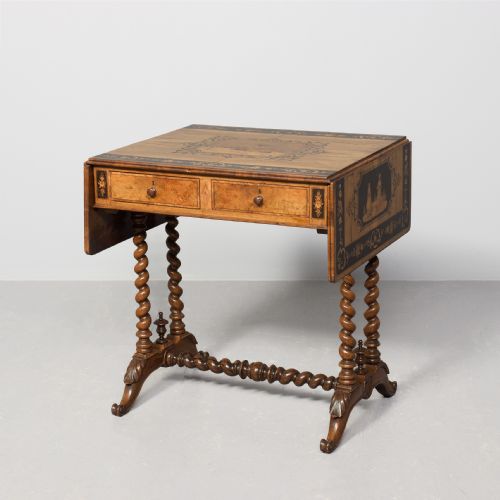
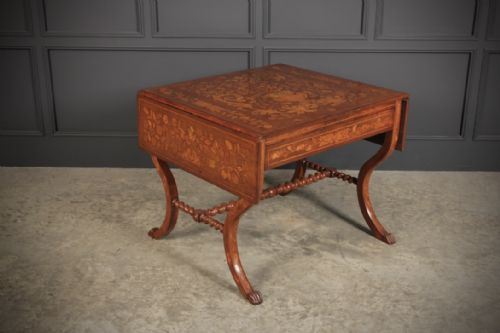

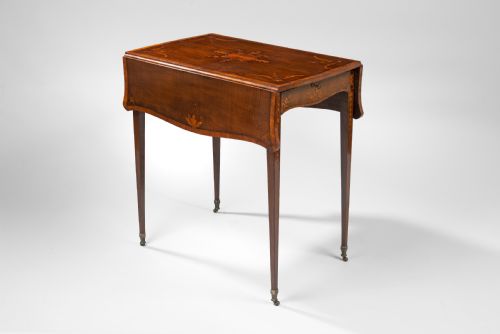


Marquetry Inlaid Sofa
When you search for a marquetry inlaid sofa, you are looking at nineteenth-century and Edwardian seating built with elaborate wood veneers.

Marquetry Inlaid Sofa
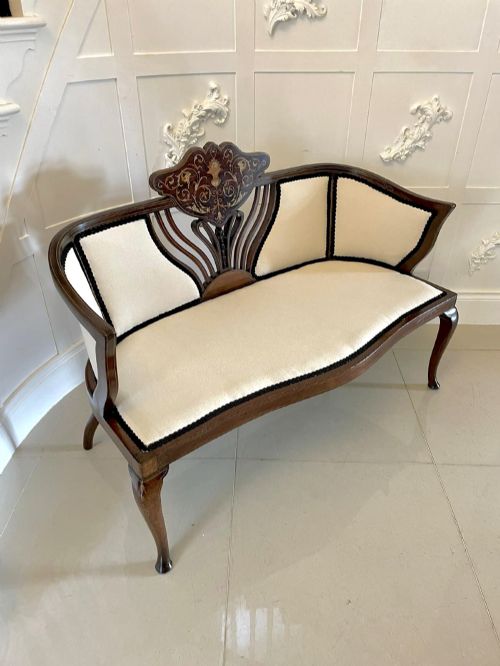
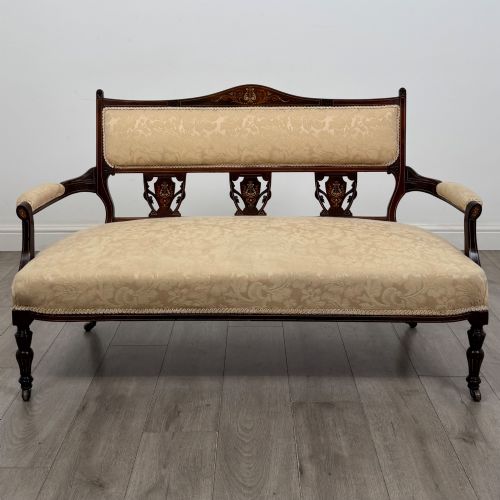
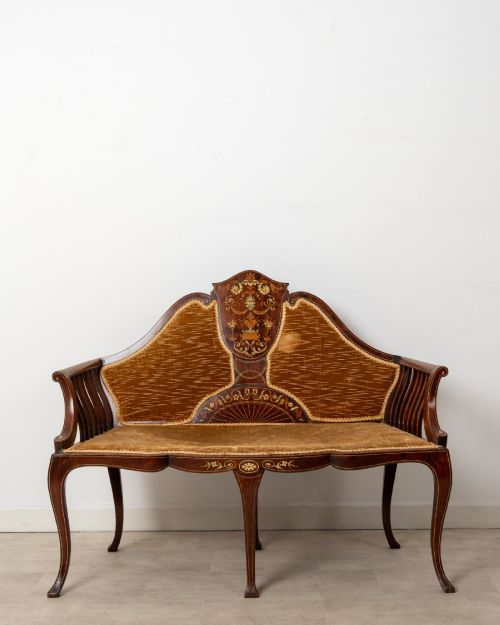
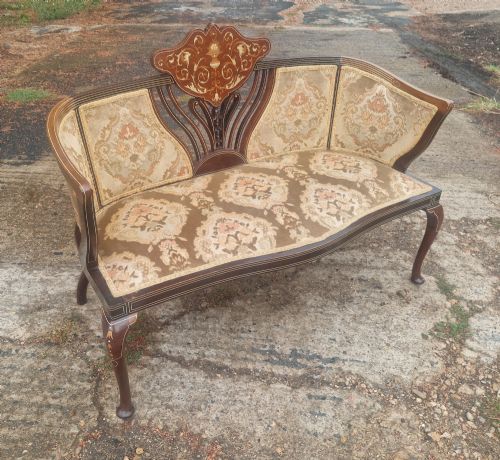
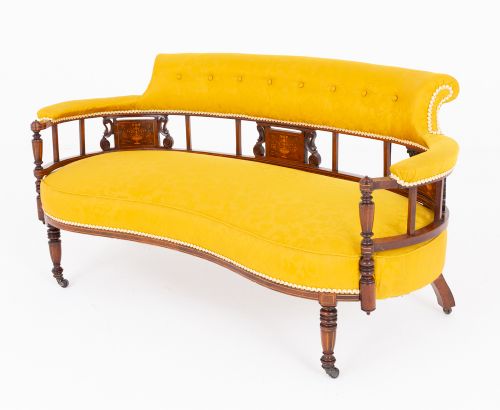
A marquetry inlaid sofa combines comfortable upholstered seating with intricate wood-veneer pictures laid into the timber frame and panels. These pieces appear most frequently from the Victorian and Edwardian eras, spanning mahogany, rosewood, and walnut structures.
The seating forms vary from traditional settees and end-of-bed daybeds to two-seat salon couches. Many examples integrate satinwood, bone, or brass elements alongside the central floral or geometric marquetry designs.
Materials and construction
Cabinetmakers constructed the foundational frames using sturdy timbers such as mahogany, walnut, and rosewood, often applying burr walnut for rich, mottled grain patterns. Artisans then carefully cut thin veneers of contrasting lighter and darker woods to form floral, scroll, or pictorial marquetry patterns.
Inlays of satinwood, bone, and brass added fine linear detail and contrast against the darker primary wood backgrounds. Upholstery materials completed the seating surfaces, pairing traditional textile covers with the decorative timber frames.
The listings on this site show pieces constructed from mahogany, walnut, rosewood, and satinwood.
Quality and execution
The distinction between standard and superior pieces lies in the precision of the veneer cutting and the complexity of the timber selection. Finer examples feature tight, seamless joints in the marquetry where multiple contrasting woods meet without visible gaps.
The choice of primary wood also dictates standing, with rich burr walnut and figured rosewood framing commanding greater presence than standard mahogany. Artisans who incorporated secondary materials like bone or delicate satinwood stringing alongside complex floral motifs achieved a higher level of decorative refinement.
Gillows
The Marquetry Inlaid Sofa Glossary
- Marquetry
- A decorative technique where small pieces of wood veneer are assembled into pictorial or geometric patterns on a support structure. This method defines the primary visual appeal of the seating.
- Settee
- A small upholstered bench or sofa designed to seat two or more people. These pieces typically feature decorative wooden frames with inlaid backs and arms.
- Satinwood
- A durable, lustrous timber from tropical trees displaying a yellow or golden sheen. Makers used it to create bright contrasting details within darker veneer panels.
- Burr walnut
- A specialised cut of walnut wood featuring swirling, knotted growth patterns that create mottled textures. It appears frequently on the polished surfaces of nineteenth-century furniture.
- Rosewood
- A dense, dark timber featuring pronounced grain lines and rich colouration. It provides a stable and heavy structural base for intricate veneer work.
Marquetry Inlaid Sofa: Frequently Asked Questions
What is a marquetry inlaid sofa?
A marquetry inlaid sofa is a nineteenth-century or Edwardian upholstered seat featuring decorative wood veneer patterns embedded into the wooden frame. These pieces range from compact salon settees to end-of-bed couches.
Craftsmen utilised contrasting timbers like satinwood and walnut to build elaborate floral or geometric designs across the timber panels. They combine practical seating with detailed cabinetry work characteristic of the Victorian and Edwardian periods.
How do I date an inlaid sofa?
Dating relies on observing the primary timber choices, upholstery styles, and overall silhouette of the wooden frame. Victorian examples often utilise dark rosewood or burr walnut, while Edwardian pieces frequently feature lighter mahogany frames.
The complexity of the marquetry and the presence of stylistic markers like Art Nouveau curves help narrow the manufacture window between the mid-nineteenth and early twentieth centuries.
Where were these sofas used?
These sofas served as principal decorative seating within formal drawing rooms, parlours, and reception spaces of large homes. Their detailed veneer work ensured they functioned as display pieces as much as comfortable furniture.
Smaller settees also found placement in bedrooms, dressing rooms, or specialised window nooks where owners required compact yet ornamental seating.
How do I care for antique veneer?
Protecting antique veneer requires maintaining stable room humidity levels to prevent the thin wood pieces from drying out and lifting. Avoid placing the furniture in direct sunlight or near direct heat sources.
Gentle dusting with a soft, dry cloth preserves the polished surface without damaging the delicate contrasting wood inlays or the underlying timber.