



Marquetry Folded Top Table
A marquetry folded top table combines clever engineering with decorative timber work, serving as both a decorative console and a practical playing surface.
Marquetry Folded Top Table
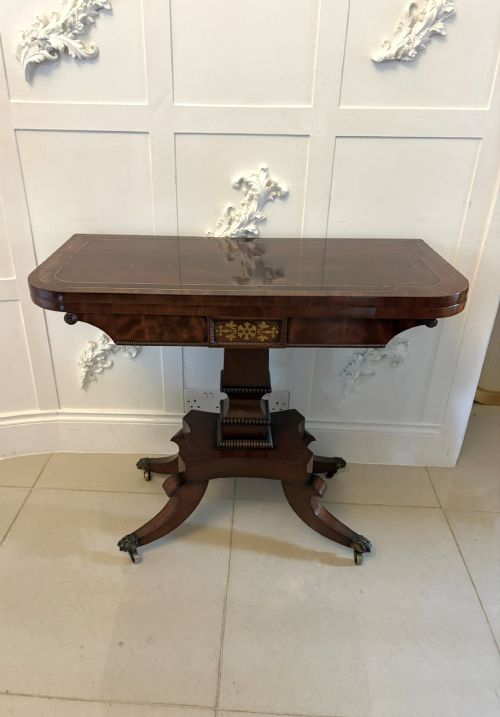
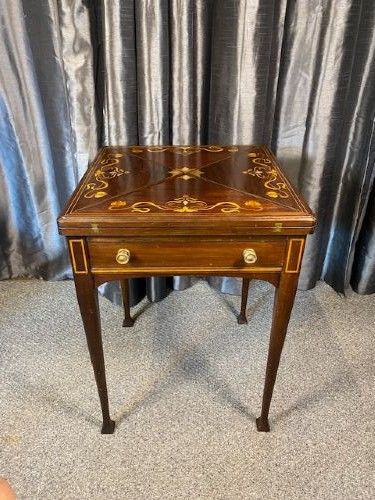
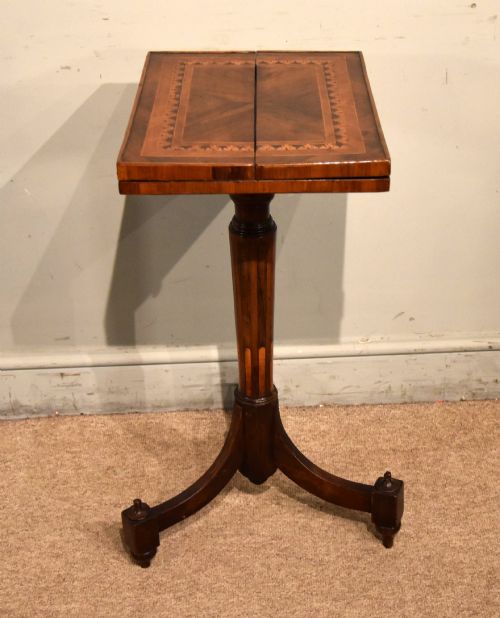
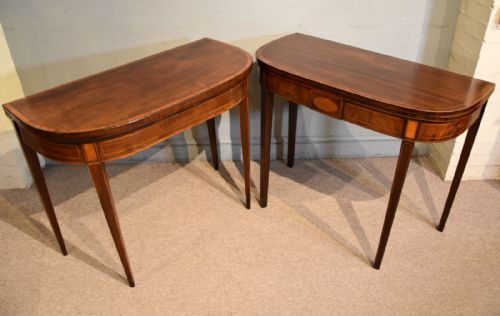
A marquetry folded top table is primarily designed for social pastimes like card games, tea, and writing, adapting its surface area through a hinged or pivoting top. These pieces range from compact Edwardian envelope models to substantial Victorian card tables and 18th-century Georgian designs.
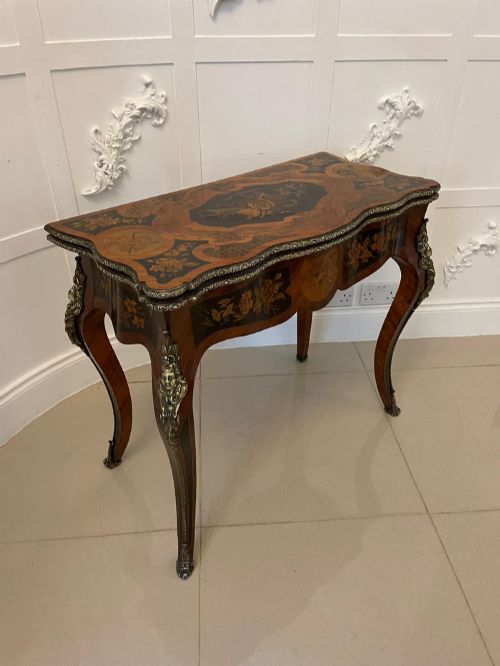
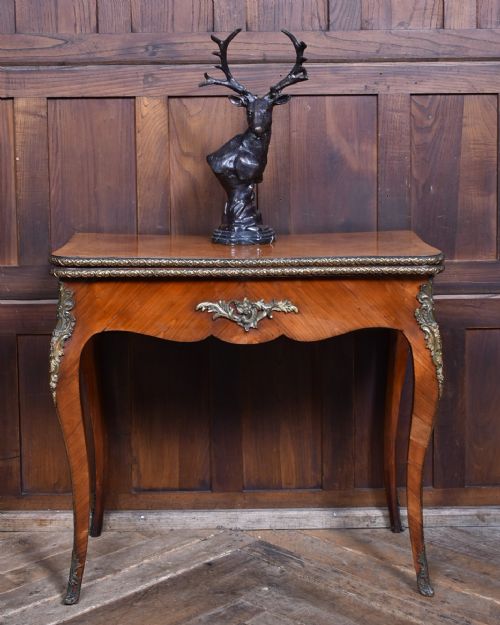
The most common examples encountered on this page are Victorian burr walnut and French revival card tables featuring intricate floral patterns. Walnut, mahogany, and rosewood form the foundational carcases for these versatile folding surfaces.
Object types span strictly dedicated card tables, games tables, and tea tables, often doubling as side tables when closed against a wall. Their dual nature makes them practical for modern rooms that require furniture to earn its keep without dominating the floor space.
Materials and construction methods
Cabinet makers applied fine veneers of walnut, satinwood, rosewood, and exotic woods over solid secondary timbers to create elaborate pictorial or geometric patterns. These thin wood slices were cut using a fretsaw and fitted together like puzzles before being glued down to the table top.
Structural joints relied on traditional cabinet-making techniques to support the pivoting or folding mechanisms required for the double-surface design. Ormolu mounts, brass inlay, and hinges provided both structural reinforcement and decorative contrast against the dark hardwood surrounds.
Some Edwardian tables came printed with the Royal and Pleasant Game of Goose right on the folding top.
Judging quality and execution
The distinction between standard examples and exceptional pieces rests upon the crispness of the timber cutting and the variety of woods utilised in the mosaic. Tighter shading within the floral motifs and sharper lines in the geometric banding indicate a more accomplished workshop.
Stability in the folding action and the seamless alignment of the grain when the top is opened reveal the underlying precision of the carpentry. Superior pieces maintain a balanced proportion whether displayed closed as a console or open for play.
The Marquetry Folded Top Table Glossary
- Marquetry
- The art of applying decorative pieces of veneer to a structure to form intricate pictures or patterns. It differs from inlay by assembling the entire design on a template before gluing it to the carcase.
- Envelope table
- A square card table with four triangular flaps that fold inward to cover the green baize playing surface like an envelope. This clever mechanism typically dates to the late 19th and early 20th centuries.
- Ormolu
- Gilded bronze used for decorative mounts and edgings on furniture, particularly popular in French revival pieces. It adds a bright metallic accent to the dark walnut and rosewood surfaces.
- Burr walnut
- Timber taken from a tree growth or wart, yielding highly figured grain patterns with swirling knots. Cabinet makers prized this material for its rich visual texture on table tops.
- Demi-lune
- A half-moon shape frequently seen on 18th-century console and tea tables. These pieces fit snugly against flat walls when closed.
Marquetry Folded Top Table: Frequently Asked Questions
How do these tables open?
Most folding tables utilise a hinged top that swings open to double the surface area, often supported by a pivoting rear leg or a swinging frame.
Envelope tables feature four triangular flaps that fold inward sequentially to reveal the felt-lined interior.
Where were these tables placed historically?
These pieces typically stood against drawing room walls as slim console or side tables when not in use for entertaining.
When guests arrived, the furniture moved toward the centre of the room to accommodate card games or tea service.
How do I date a marquetry top?
Stylistic clues such as cabriole legs point toward mid-Victorian and French revival periods, while straight tapered legs often suggest Georgian or Edwardian origins.
The choice of underlying timber, from heavy mahogany to figured burr walnut, also helps narrow down the decade of manufacture.
Are the playing surfaces lined?
Many interior surfaces feature baize, felt, or tooled leather to provide a soft area for playing cards or writing.
Some simpler timber-topped versions lack this textile lining, serving equally well for tea or general display.