


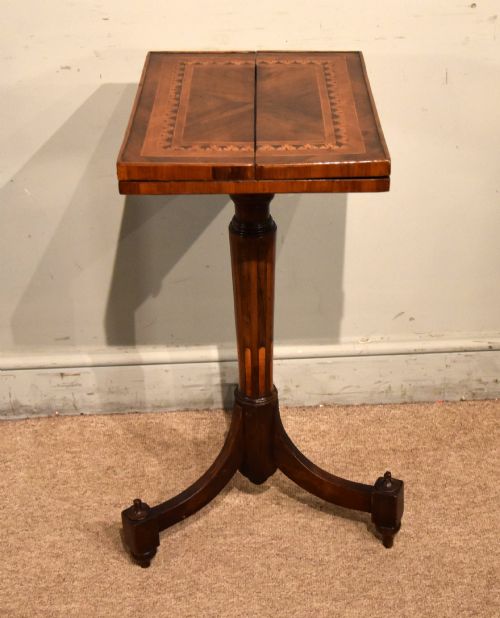
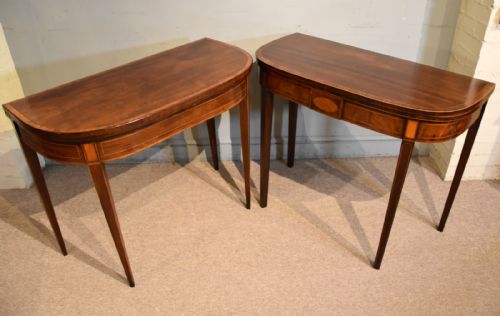


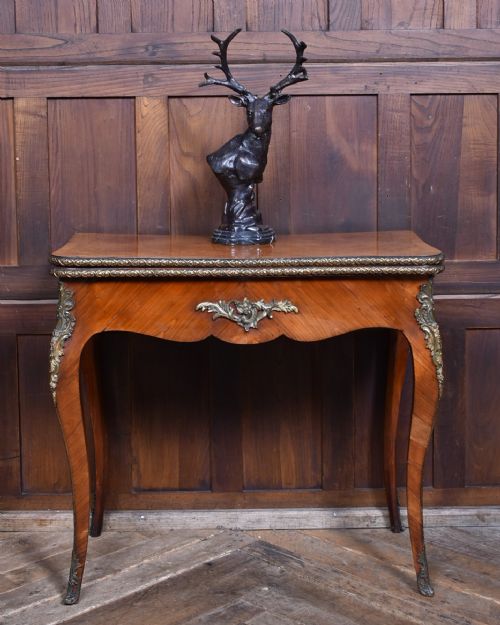

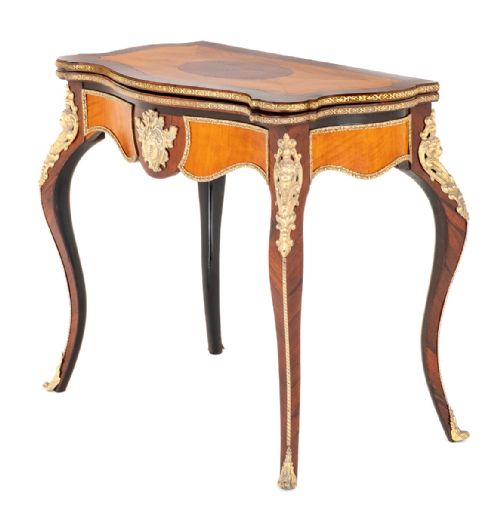

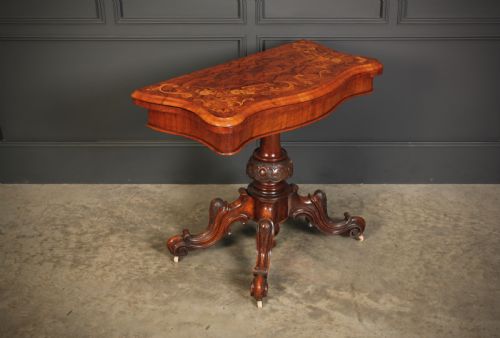
Marquetry Fold Top Table
These marquetry fold top tables combine clever mechanical folding actions with intricate wood inlay, offering a versatile surface that opens from a compact console to a full gaming or tea area.
Marquetry Fold Top Table
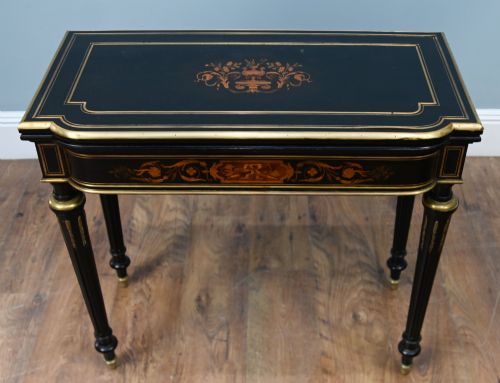
A marquetry fold top table functions primarily as a card, games or tea table, remaining neatly against a wall when closed and doubling its surface area when opened. When you search for a marquetry fold top table, you encounter forms ranging from Victorian burr walnut examples to 18th-century Georgian and Sheraton designs.
The common varieties on this page span the 18th and 19th centuries, including Victorian, Edwardian and Regency pieces. Formats vary from swivel tops and envelope designs to demi-lune shapes and metamorphic writing tables.
Origins stretch across England, France, Italy, Malta, Syria and the Netherlands. Woods such as walnut, mahogany, rosewood and satinwood provide the ground for elaborate floral and geometric inlay.
Materials and construction
Cabinet makers built the primary carcass from solid timbers such as mahogany, walnut or rosewood, applying contrasting veneers and exotic woods across the top and frieze. Marquetry inlay required meticulous hand-cutting of diverse veneers to fit tightly into pre-cut recesses within the ground wood.
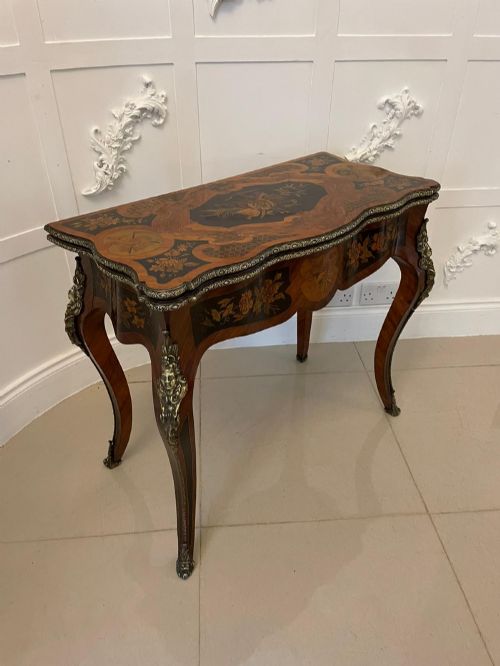
Metal mounts in ormolu and brass reinforced structural corners and provided decorative accents, particularly on French-influenced Victorian pieces. Hinges and swivel mechanisms had to be engineered with precision to support the folding leaves without sagging when opened.
Marquetry Fold Top Table Retail Price Guide 2026
Typical asking prices for marquetry fold top table among the pieces listed under this phrase on Sellingantiques today, from the lower quarter to the upper quarter. They describe what is for sale here now, not the wider market.
Current listings showcase pieces spanning the 18th and 19th centuries, incorporating walnut, mahogany, rosewood, and satinwood with complex marquetry inlay.
Distinctions in quality
The caliber of a piece rests heavily on the crispness and complexity of the marquetry inlay, where varied timber tones create genuine depth rather than flat decoration. Superior examples maintain tight joints and smooth folding or swivelling actions that operate without binding or looseness in the pivots.
Material selection dictates the upper tier of the range, utilising highly figured burr walnut, rosewood or satinwood alongside gilt bronze or ormolu mounts. The refinement of the secondary timbers and the integrity of the original polish separate standard production from exceptional craftsmanship.
The Marquetry Fold Top Table Glossary
- Marquetry inlay
- The decorative technique of applying cut veneers onto a structural carcass to form pictorial or geometric patterns. Different wood species are selected for their natural colours and grain directions.
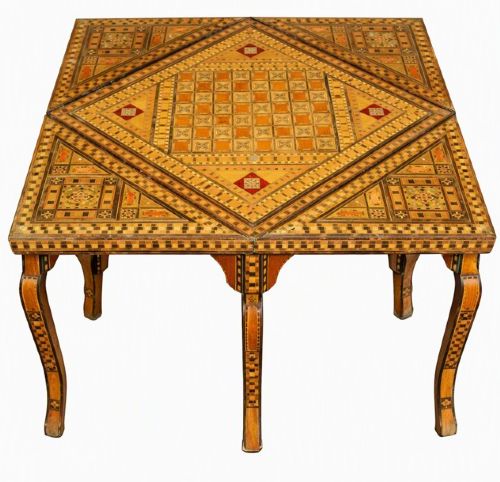
- Envelope table
- A square games table with four triangular flaps that fold diagonally inwards and downwards to reveal the baize-lined interior. This clever mechanism opens in a single fluid motion.
- Ormolu
- Gilded bronze mounted onto furniture as decorative enrichment, popular in French revival and Victorian cabinet making. The finish provides a rich metallic contrast against dark walnut or rosewood.
- Demi-lune
- A half-moon shape used for table tops and consoles designed to sit flat against a wall. When opened, the folding top forms a complete circular surface for tea or card games.
- Swivel top
- A table mechanism where the upper leaf pivots ninety degrees to rest upon the supporting frieze or swing-out leg. This provides stability to the extended surface.
Marquetry Fold Top Table: Frequently Asked Questions
How do these folding tables work?
Most examples utilise a hinged top that doubles the surface area when unfolded, often supported by a swinging rear leg or a pivoting mechanism. Some Victorian and Edwardian versions feature swivel actions or rotating leaves.
Once opened, the surface typically reveals a lined playing area intended for cards or board games. The clever engineering allowed small console tables to transform into functional game spaces instantly.
Where were these tables placed?
In period interiors, these tables stood against drawing room or parlour walls when closed, serving as decorative side tables or supports for lamps. Their compact footprint made them ideal for perimeter placement.
When guests arrived, the tables moved outward into the room and unfolded for social pastimes or tea. This dual functionality made them essential furniture in homes with limited floor space.
How do I date a marquetry fold top table?
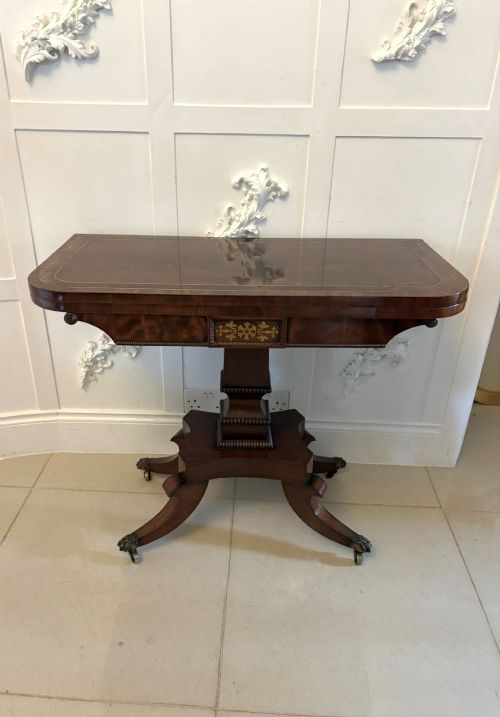
Dating relies on combining the timber species, construction methods, and stylistic cues such as Regency brass inlay or Victorian burr walnut veneers. 18th-century examples often display Sheraton or Georgian proportions.
Later Victorian and Edwardian pieces frequently incorporate French revival influences or specific mechanics like envelope folds. Examining the interior secondary woods provides further clues to the manufacturing decade.
What is the difference between card and games tables?
Card tables generally feature rectangular or demi-lune tops specifically dimensioned for card playing, often with baize or leather inserts. Games tables accommodate a wider variety of pastimes.
Some specialist tables include specific boards or compartments for games like chess, backgammon or the game of goose. Both types share the fundamental folding or swivelling construction characteristic of the form.