
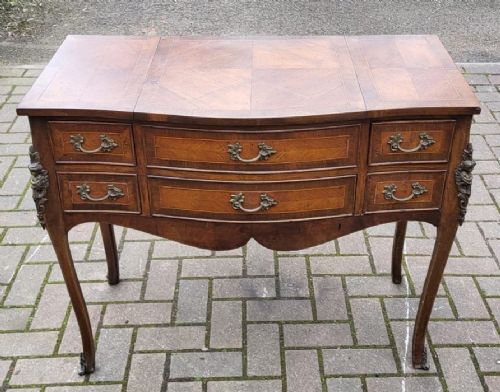
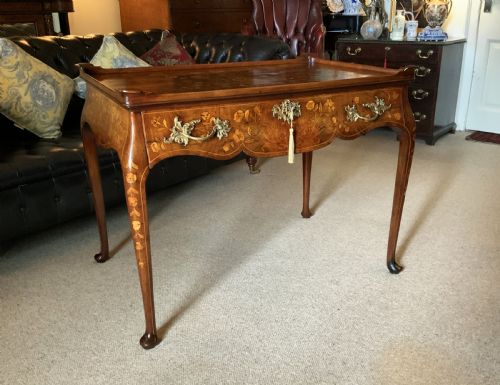


Marquetry Dressing Desk
A marquetry dressing desk brings together intricate wood veneers and practical surfaces for personal grooming or writing.
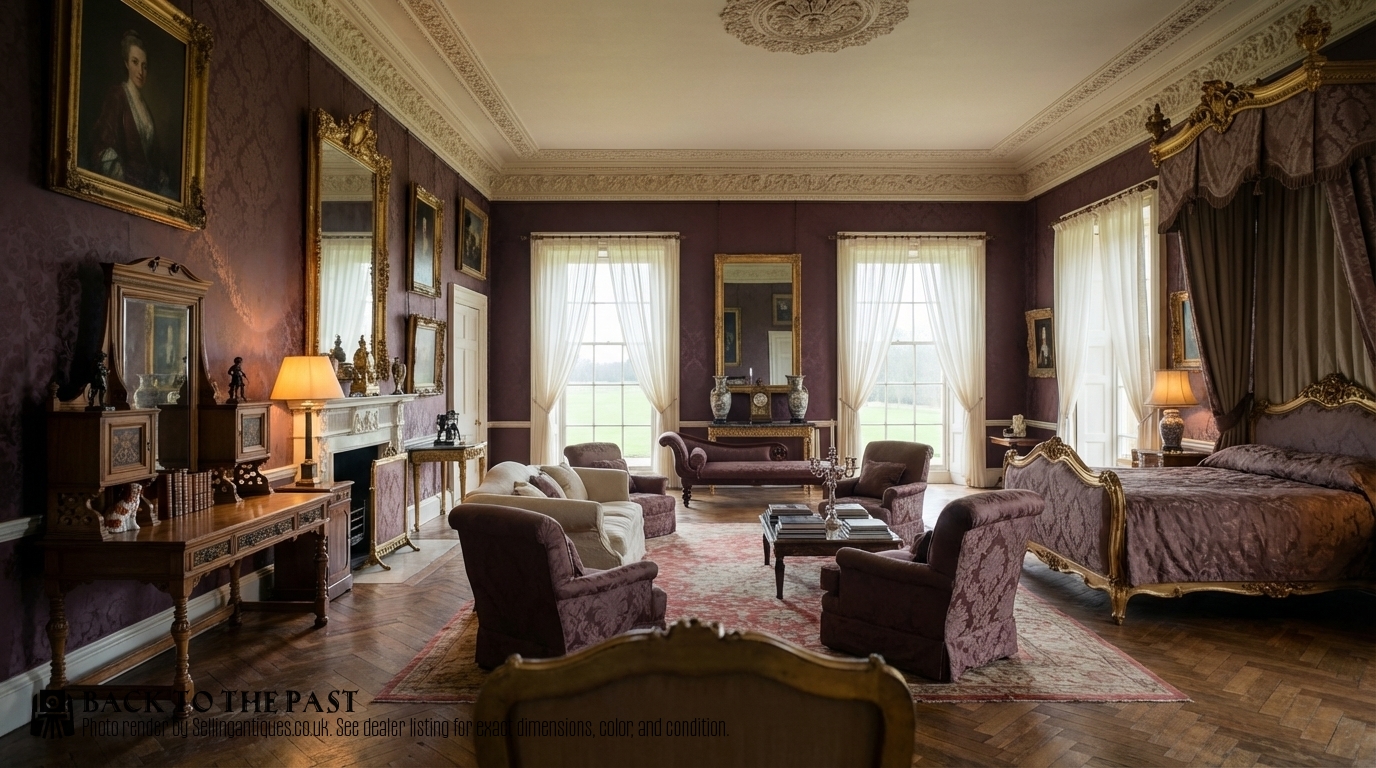
Marquetry Dressing Desk
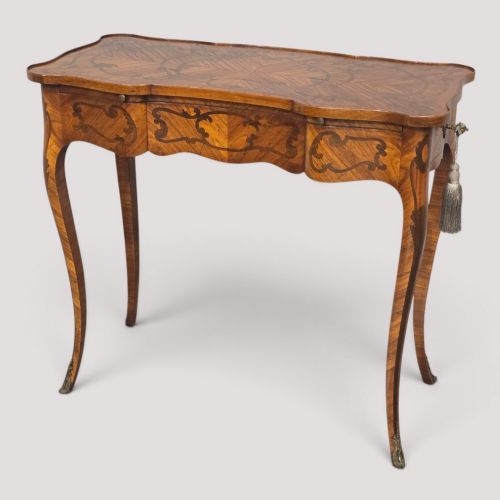
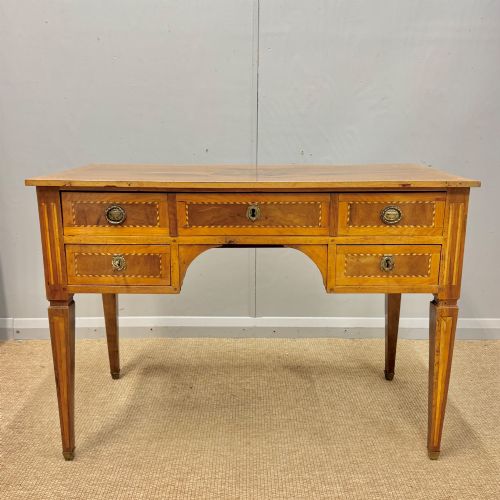
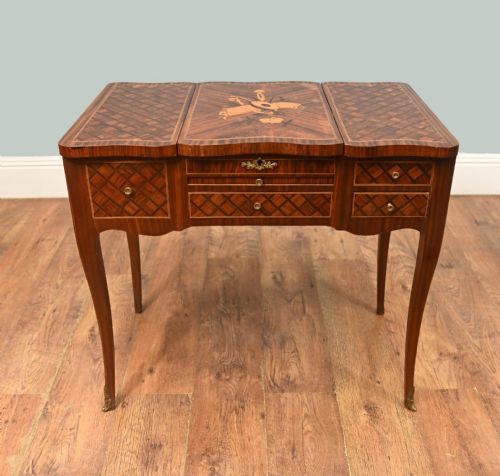
A marquetry dressing desk combines the functions of a writing table and a dressing station, often featuring fitted compartments for cosmetics or letters. The examples seen here range from Georgian lowboys to elaborate French poudreuses and Victorian kneehole desks.
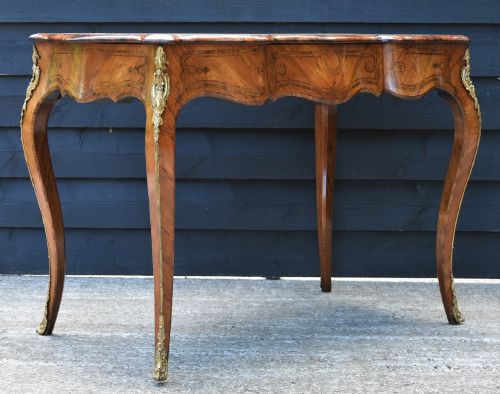
The materials span walnut, mahogany, satinwood, and kingwood, frequently enhanced with floral or geometric inlay. Many pieces reflect revival styles such as Louis XV and Sheraton Revival, alongside Edwardian and Victorian interpretations.
Originating in both English workshops and continental European centres, these tables serve as compact pieces of furniture for bedrooms and boudoirs. Buyers encounter freestanding writing desks, kidney-shaped tables, and traditional poudreuses with folding mirrors.
How they were made
Cabinetmakers constructed these tables using a sturdy carcase of mahogany, walnut, or oak, onto which thin veneers of exotic timbers like tulipwood, kingwood, and satinwood were applied. The surface patterns were formed by hand-cutting contrasting veneers and assembling them into pictorial or geometric designs.
Brass mountings, handles, and ormolu details were cast and chased to accent the curves of serpentine tops and cabriole legs. Leather insert writing surfaces appeared on later office and library desks, while folding lids on poudreuses concealed compartments lined with glass and timber.
Listings feature walnut, mahogany, satinwood, and rosewood veneers across Victorian, Edwardian, and Georgian periods.
What varies in quality
The precision of the veneer work dictates the standing of a marquetry dressing desk, particularly the tightness of the joints within floral and scroll motifs. Master workshops used varied grain directions and natural shading to create depth, whereas lesser examples rely on simple stamped outlines.
The choice of secondary timbers inside drawers and secret compartments reveals the standard of construction, with solid mahogany and oak outlasting softer pine linings. Crispness in the cast ormolu mounts and the smooth operation of rising mirrors or sliding trays further separate standard production from cabinetmaker pieces.
Edwards and Roberts·James Shoolbred of London·Gillows
The Marquetry Dressing Desk Glossary
- Marquetry
- A decorative technique where small pieces of tinted and textured wood veneer are arranged into pictorial or geometric patterns on a carcase.
- Poudreuse
- A French dressing table equipped with a folding top that opens to reveal a mirror and compartments for cosmetics.
- Bonheur du Jour
- A small ladies writing desk featuring a tiered superstructure with shelves, drawers, or cupboards above the main writing surface.
- Kingwood
- A dense, dark timber with pale golden streaks, frequently used for contrasting veneers in high-status cabinetmaking.
- Ormolu
- Gilded bronze used for decorative mounts, handles, and sabots on French and English revival furniture.
Marquetry Dressing Desk: Frequently Asked Questions
How do I use a poudreuse?
A poudreuse is designed for personal grooming, featuring hinged lids that lift to expose a central mirror and divided compartments for storage.
Items such as brushes, cosmetics, and small trinkets sit neatly within the well, keeping the surface clear when closed.
Where should I place a dressing desk?
These tables suit bedrooms, dressing rooms, or drawing rooms where their decorative veneer work can be appreciated from multiple angles.
Freestanding models with finished backs work particularly well away from walls in the centre of a room.
How do I care for marquetry veneer?
Protect the surface by keeping the wood away from direct sunlight and maintaining stable room humidity to prevent veneer lifting.
Apply a light application of appropriate wax polish periodically to nourish the timber without building up heavy residues.
What is the difference between a writing desk and a dressing table?
A writing desk prioritises a flat surface, sometimes lined with leather, alongside functional drawers for stationery and documents.
A dressing table incorporates built-in mirrors, lidded compartments, and spaces specifically arranged for personal accessories.