



Oak Vanity Unit Mirror
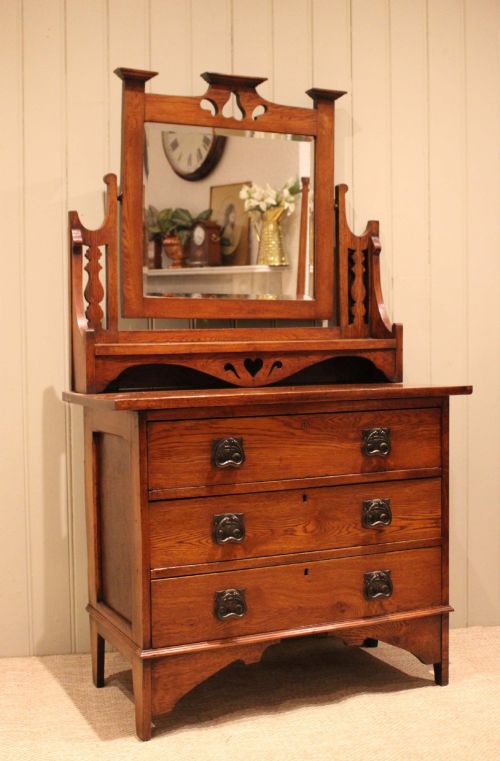
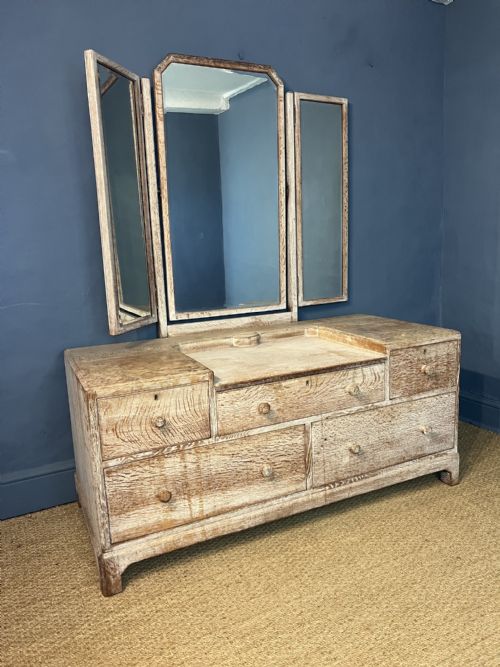
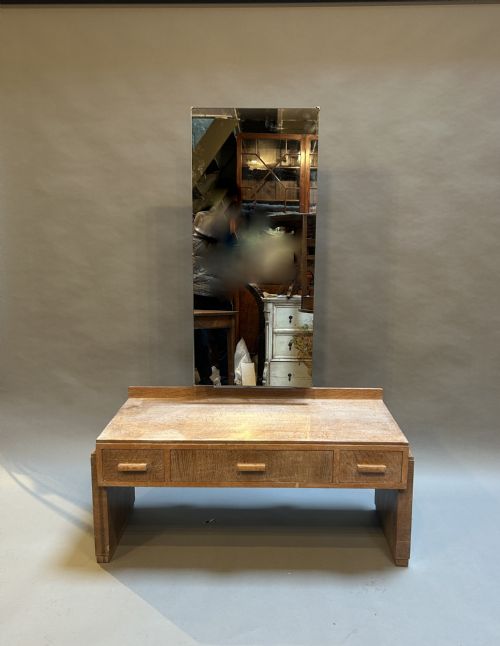
These oak vanity unit mirror pieces combine timber and glass for domestic dressing, spanning the Victorian era through to Art Deco designs.
Oak Vanity Unit Mirror
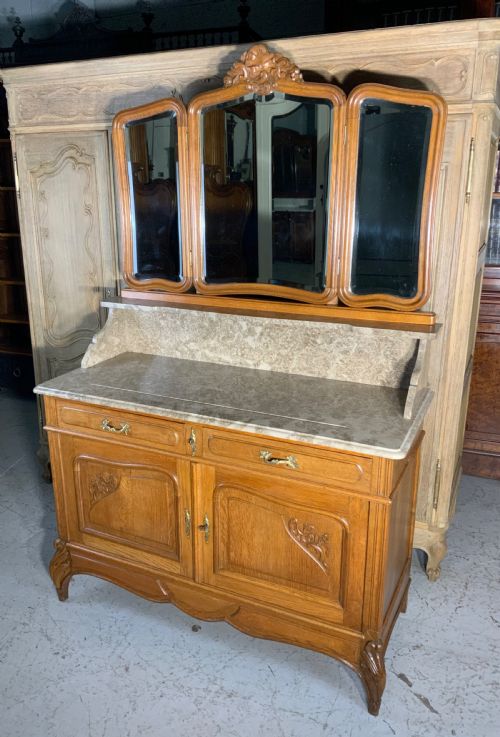
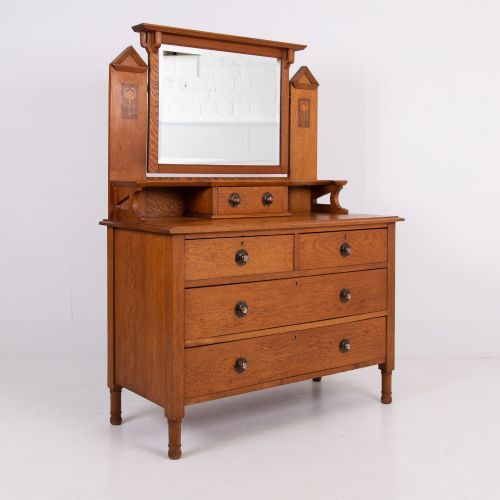
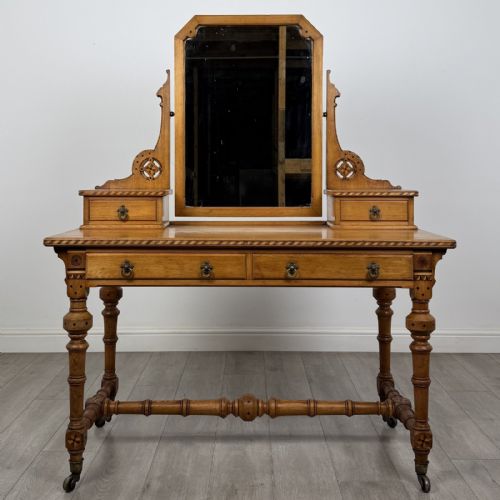
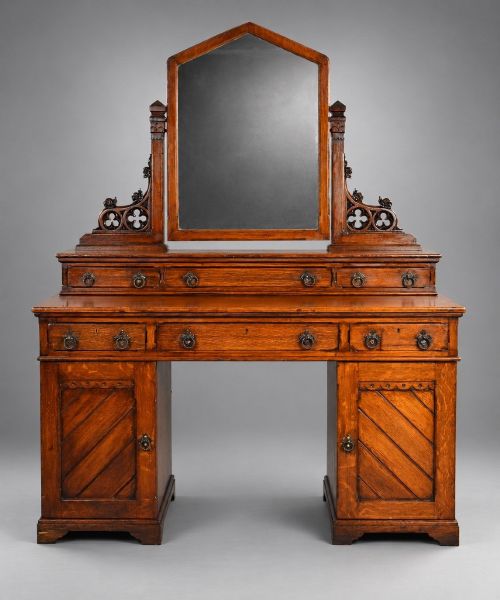
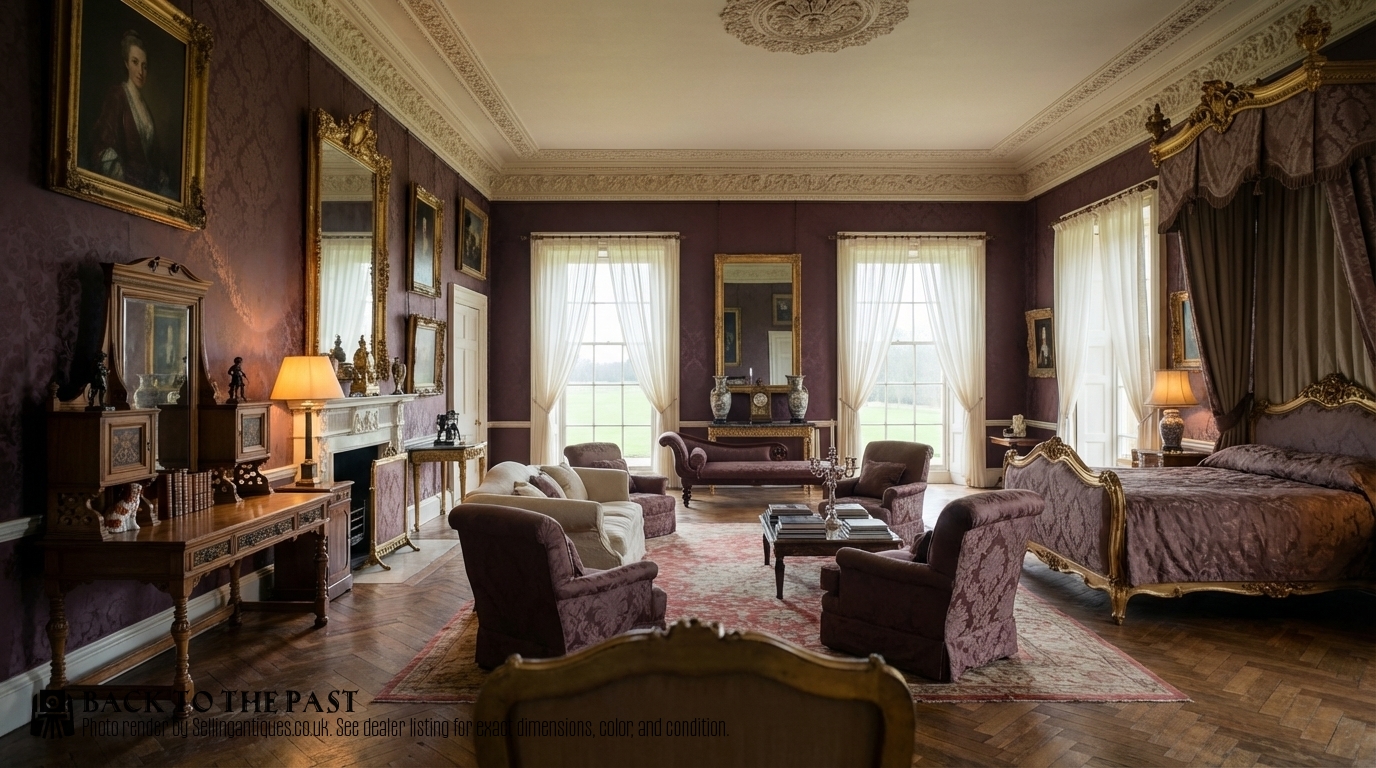
An oak vanity unit mirror takes several forms across the periods, appearing most frequently as dressing tables, dressing chests, and washstands. Buyers searching this phrase meet everything from late Victorian kneehole pedestals to streamlined Art Deco pieces.
The domestic bedroom forms the primary origin for these items, accompanied by specialised items such as gentlemen's shaving stands. Makers from the Edwardian period onward adapted traditional timber furniture to include integrated glass mirrors for daily grooming.
Stylistic variation runs from heavy revivalist carvings through to clean modernist lines produced by prominent workshops. The pieces combine storage drawers or pedestals with upright or pivoting mirror plates.
How they were made
Solid oak serves as the primary timber, occasionally treated with a pale limed finish to achieve a lighter surface tone. Workshops incorporated contrasting materials like brass handles, copper details, and fabric elements to accent the main wooden structure.
Glass forms the adjustable or fixed mirror plates, sometimes framed within carved or plain oak surrounds. Joinery techniques range from traditional dovetail drawer construction to panelled framing typical of Arts and Crafts and revivalist cabinet making.
Oak Vanity Unit Mirror Retail Price Guide 2026
Typical asking prices for oak vanity unit mirror among the pieces listed under this phrase on Sellingantiques today, from the lower quarter to the upper quarter. They describe what is for sale here now, not the wider market.
Listings feature oak alongside alternative materials including walnut, brass, copper, and fabric accents.
What varies in quality
Construction methods distinguish standard commercial output from the refined output of specialist workshops and named makers. The precision of the drawer dovetails, the selection of figured oak timber, and the retention of original brass or copper hardware dictate the standing of a piece.
The clarity and originality of the mirror glass alongside subtle decorative touches, such as marquetry inlay or stencilled decoration, separate simpler utility items from superior examples.
Heals·Shapland and Petter·James Shoolbred·Harris Lebus
The Oak Vanity Unit Mirror Glossary
- Limed oak
- Timber treated with a specialised paste or finish to create a pale, white-grained appearance popular during the early twentieth century. This treatment lightened the natural brown tone of the wood.
- Dressing chest
- A lower chest of drawers fitted with an upright mirror, used for bedroom grooming and storage. It offers a compact alternative to a full dressing table.
- Shaving stand
- A specialised compact furniture form featuring a mirror and a small top surface designed for a gentleman's morning routine. These often include small drawers or adjustable heights.
- Kneehole pedestal
- A desk or dressing table configuration featuring two banks of drawers with a central recess for the legs. This form provides substantial drawer capacity.
- Marquetry inlay
- Decorative patterns formed by fitting small pieces of contrasting veneer into the oak surface. This technique creates geometric or pictorial designs.
Oak Vanity Unit Mirror: Frequently Asked Questions
How do I date an oak dressing table?
Examine the hardware, construction methods, and overall style to establish the period of manufacture. Edwardian and Victorian pieces often display more ornamentation, while 1930s examples lean towards clean lines.
Look at the backboards, drawer linings, and mirror bevelling for further chronological clues. The presence of limed finishes typically points towards the twentieth century.
Are the mirrors original to the pieces?
Many mirrors remain original, showing subtle signs of age such as light foxing or minor silvering degradation. Replacement glass is common due to the fragile nature of vintage mirrors.
Check the mirror frame construction and fixings to see if they match the age and timber of the base unit. Original glass often sits within rebated wooden frames secured with traditional panel pins.
How do I care for limed oak furniture?
Dust regularly with a dry, soft cloth and avoid modern silicone polishes that can build up on textured surfaces. Keep the timber away from direct heat sources and strong sunlight to prevent drying.
Apply a microcrystalline wax sparingly if the surface appears dry, following the grain of the wood. Protect the top surfaces from moisture using coasters or mats.