

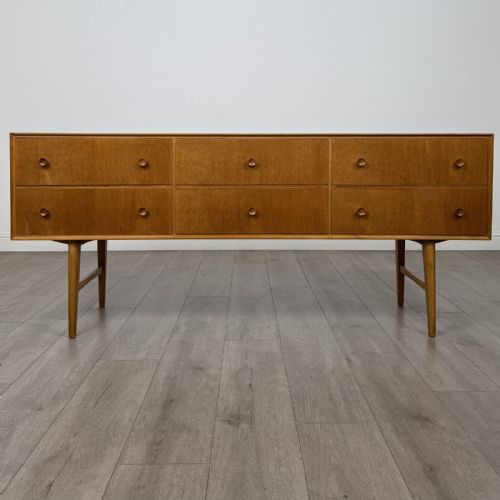
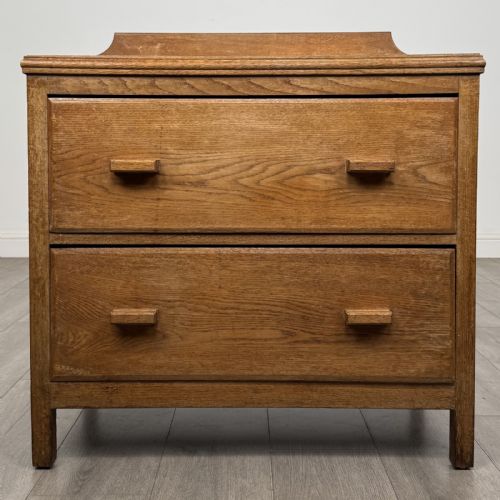
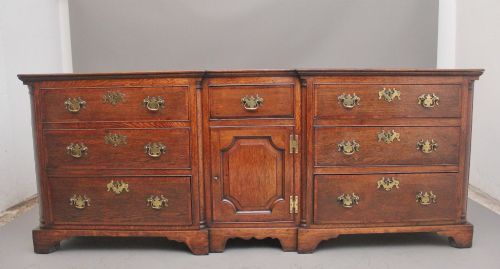


Low Oak Chest Drawers
These low oak chest drawers provide sturdy domestic storage, spanning 18th-century country pieces to 20th-century maker designs.
Low Oak Chest Drawers
A low oak chest drawers search brings together compact storage furniture fashioned primarily in solid timber across multiple centuries. Buyers most frequently encounter Edwardian and 20th-century interpretations alongside earlier Georgian and 18th-century vernacular examples.
Beyond standard chests, the selection encompasses related forms including low dressers, press cupboards, dressing tables, and sideboards. These diverse formats share a reduced vertical proportion suited to lower ceiling heights or specific room layouts.
How they were made
Construction relies heavily on solid oak timbers, occasionally paired with secondary woods like pine, mahogany, or painted finishes. Metal and brass hardware such as drawer pulls and handles attach securely to the timber drawer fronts.
Joinery techniques span traditional hand-cut joints found on 18th-century pieces to later 20th-century workshop methods. Surfaces display natural grain patterns, wax polishes, limed finishes, or period paint.
Low Oak Chest Drawers Retail Price Guide 2026
Typical asking prices for low oak chest drawers among the pieces listed under this phrase on Sellingantiques today, from the lower quarter to the upper quarter. They describe what is for sale here now, not the wider market.
Listings span periods from 1700 through the 18th century, Edwardian era, and 1930s.
What varies in quality
Differences in standard stem from the selection of timber figure, the crispness of mouldings, and the integrity of the original construction. Pieces produced by documented firms often exhibit refined proportions and careful attention to detail.
The survival of original brass hardware, uncompromised drawer linings, and honest surface patination elevate certain examples above standard utility items.
Heals of London·Waring and Gillow·Gillows
The Low Oak Chest Drawers Glossary
- Lowboy
- A small oak dressing table or side table fitted with drawers, typically standing on four slender legs.
- Press cupboard
- A tall or low storage piece combining upper cupboard doors with lower drawers for linen or garments.
- Mule chest
- A blanket box or chest fitted with one or more functional drawers in the base section.
- Dresser base
- A long, low cabinet featuring multiple drawers and sometimes cupboards below, originating from country houses.
- Limed oak
- A specialist finish applied to timber in the 20th century to create a pale, pickled appearance.
Low Oak Chest Drawers: Frequently Asked Questions
How do I date an oak chest?
Dating relies on observing construction methods, timber choice, and hardware styles. Hand-cut joints and pegged frames typically indicate earlier centuries.
Later 20th-century pieces often display standardised machine cutting and distinct workshop labelling.
What is a low chest used for?
These pieces provide accessible storage for clothing, linens, and domestic items while maintaining a low profile. Their reduced height allows them to fit beneath windows or in smaller bedrooms.
They also serve as functional surface tables in hallways and living spaces.
Are these chests made of solid oak?
Most pieces utilise solid oak for primary surfaces and framing. Secondary timbers like pine may appear inside drawer linings or back panels.
Finish treatments range from natural waxed timber to painted surfaces and limed oak.
How do I care for antique oak?
Maintain the timber by applying traditional beeswax periodically to nourish the surface grain. Avoid placing furniture in direct sunlight or near heat sources to prevent timber splitting.
Dust regularly with a dry cloth.