
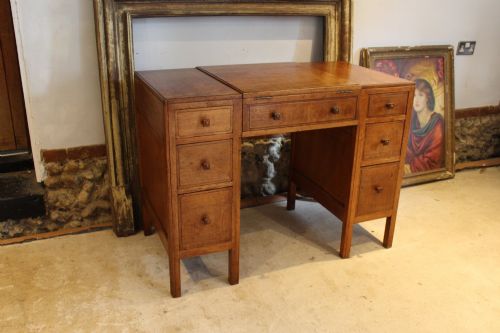


1930s Oak Chest of Drawers
A 1930s oak chest of drawers brings sturdy twentieth-century utility and clean geometric lines into a modern bedroom.
1930s Oak Chest of Drawers
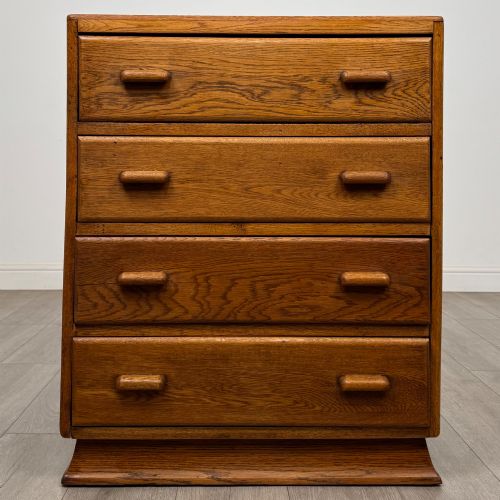
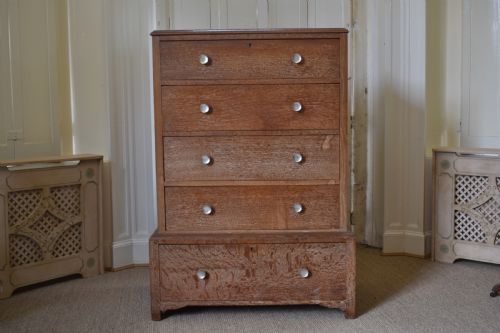
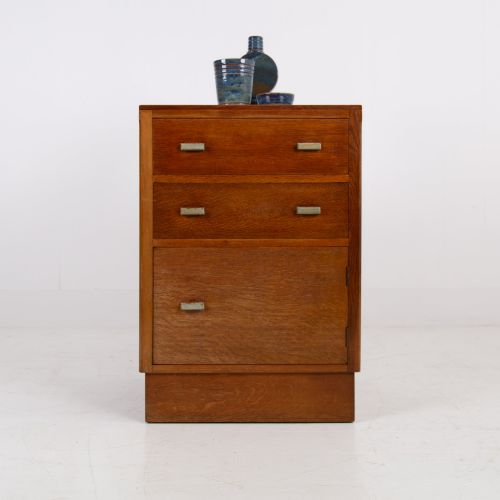
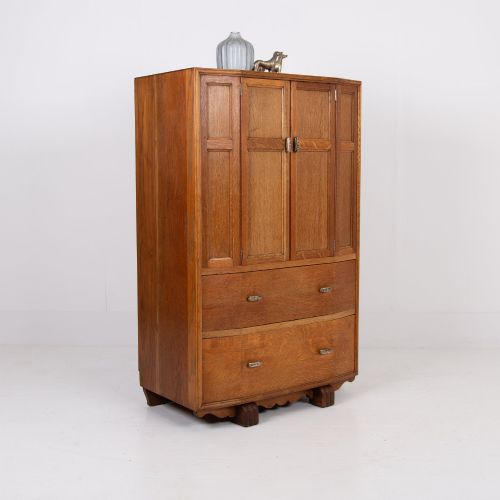
A 1930s oak chest of drawers is a practical bedroom storage piece that reflects the shift from heavy historic revival designs toward streamlined modern living. Buyers searching this phrase encounter low bedroom chests, tallboys, bedside cabinets, and dressing chests rooted in the 1930 period, alongside occasional pieces from the Edwardian era and the 1920s.
The dominant aesthetic draws heavily on Art Deco and Art Deco Modernist styles, though Arts and Crafts traditions and Anglo-Indian carving also appear. These forms range from simple utilitarian drawers to sophisticated tall chests and matching bedroom suites designed for contemporary domestic spaces.
What varies in quality
Quality in these chests is defined by the integrity of the timber selection and the precision of the joinery rather than ornamental excess. Pieces featuring figured oak veneers, Macassar ebony accents, or distinct regional styling sit at the higher end of the scale.
Attribution to notable workshops or makers elevates a piece above standard utilitarian production. The sophistication of the hardware, the crispness of any carved or marquetry detail, and the overall coherence of the design determine its standing within the period.
Art Deco Modernist designs appear frequently alongside pieces influenced by the Cotswold School and Anglo-Indian traditions.
Gomme·Heal & Sons·B Cohen & Sons
The 1930s Oak Chest of Drawers Glossary
- Tallboy
- A tall chest of drawers, often combining a wardrobe section or multiple drawer tiers to maximise vertical storage. This form became particularly popular for smaller interwar bedrooms.
- Limed oak
- A finish created by rubbing a white pigment into the open grain of oak to lighten the timber. This treatment achieved the pale, modern aesthetic favoured in interwar interior design.
- Art Deco Modernist
- A style emphasising streamlined geometric forms, clean vertical lines, and minimal ornamentation. It marked a sharp departure from traditional nineteenth-century revival furniture.
- Marquetry
- The art of applying pieces of veneer to a structure to form decorative patterns and pictures. In this period, it frequently created contrasting geometric borders on drawer fronts.
1930s Oak Chest of Drawers: Frequently Asked Questions
How do I spot an original 1930s chest?
Original pieces typically display period construction methods, traditional drawer dovetailing, and materials consistent with interwar production such as solid oak and limed finishes.
Stylistic cues like Art Deco geometry and specific hardware choices further help distinguish authentic pieces from later reproductions.
Are these chests suitable for small bedrooms?
Many examples from this decade were designed specifically for compact interwar housing developments. Tallboys and bedside cabinets offer substantial storage without dominating floor space.
Low chests and dressing tables also provide practical surface areas while maintaining a low visual profile in modest rooms.
How should I care for limed oak?
Limed oak surfaces benefit from regular dusting with a soft cloth and protection from direct sunlight and excessive moisture. Avoid harsh chemical cleaners that can strip the pigmented finish from the grain.
Applying a traditional beeswax occasionally helps nourish the timber and preserve the characteristic pale tone.
What is the difference between Edwardian and 1930s oak?
Edwardian oak furniture generally adheres to heavier historical revival styles with darker finishes and ornate mouldings. In contrast, 1930s pieces favour lighter tones, cleaner lines, and Art Deco or modernist influences.
The later decade also introduced alternative finishes like limed oak and simplified hardware configurations.