




Art Deco Oak Chest
An art deco oak chest brings geometric clarity and sturdy grain to a bedroom, combining functional storage with the bold lines of the interwar period.
Art Deco Oak Chest
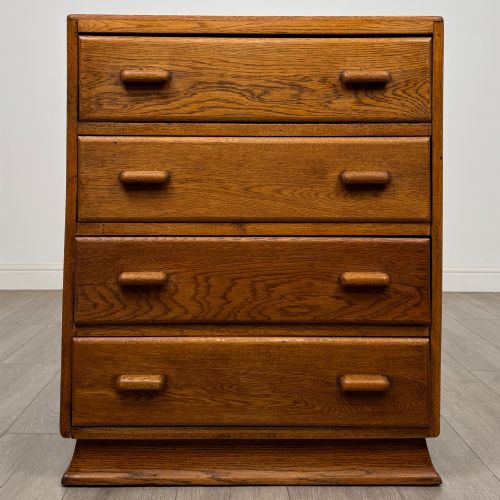
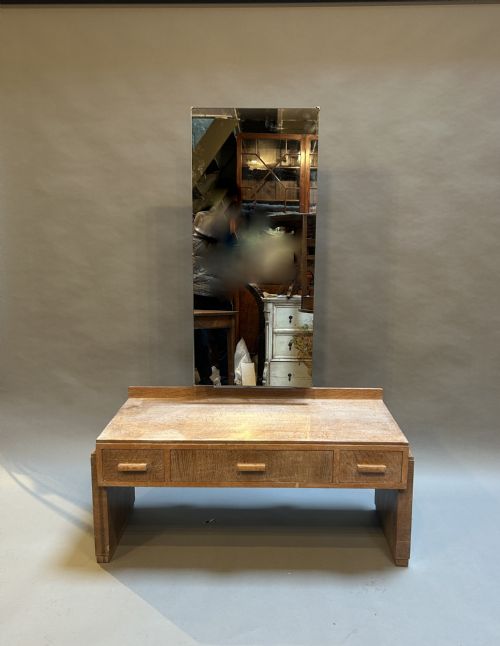
When searching for an art deco oak chest, buyers encounter practical storage furniture built primarily during the 1920s and 1930s, alongside pieces carrying Edwardian influences. The selection on this page ranges from tallboys and dressing chests to bedside cabinets and blanket trunks.
The most common formats are chests of drawers and compact tall chests that make efficient use of floor space while offering deep storage. These items reflect the transition from ornate historical revival styles toward streamlined modern domestic design.
Materials and construction
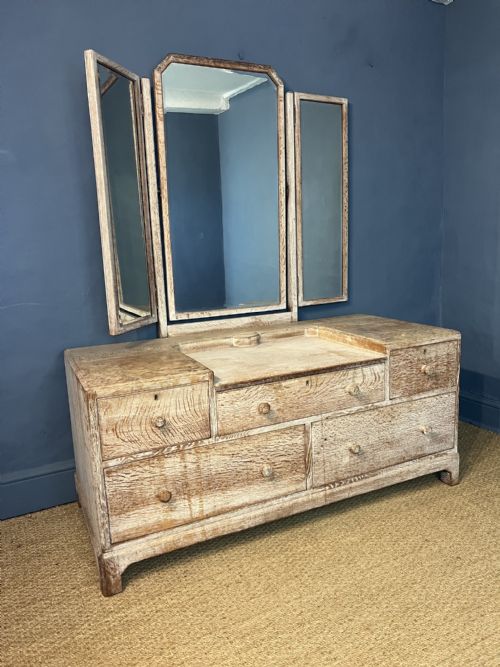
Cabinet makers utilised solid oak and oak veneers, frequently applying limed finishes to lighten the timber grain in line with modernist tastes. Metal fittings in brass and silver plate, alongside glass and occasional bakelite details, provide functional contrast to the wood.
Specialist pieces incorporate contrasting veneers such as pollard oak, macassar ebony, and coromandel wood to accentuate geometric drawer layouts and cabinet door panels. Carved camphor wood also appears internally in specialised storage chests.
Art Deco Oak Chest Retail Price Guide 2026
Typical asking prices for art deco oak chest among the pieces listed under this phrase on Sellingantiques today, from the lower quarter to the upper quarter. They describe what is for sale here now, not the wider market.
Listings include solid oak, limed oak, and pollard oak alongside contrasting exotic woods like macassar ebony and coromandel.
Distinctions in craftsmanship
Quality separates standard production items from pieces bearing maker attributions to firms like Heals, Gomme, Rowley, or Waring and Gillow. Superior examples demonstrate refined handling of timber grain, precise marquetry, and balanced proportions across multi-drawer configurations and matching bedroom suites.
The integration of secondary decorative woods and specialised finishes like limed oak or contrasting exotic banding dictates the visual sophistication of individual chests. Well-executed hardware and clean geometric carving further distinguish finer workshops from mass commercial output.
Heals·Gomme·Rowley·B Cohen and Sons·Warings Waring and Gillow
The Art Deco Oak Chest Glossary
- Limed oak
- A wood finishing technique that leaves a pale, whitish pigment in the open pores of oak timber. This treatment achieved the lighter aesthetic favored by interwar designers.
- Tallboy
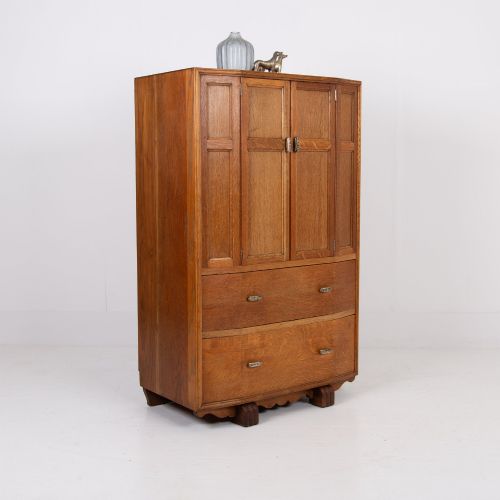
- A tall chest of drawers, often combining a wardrobe section or upper cabinet space with lower drawers. It maximises vertical storage capacity within a compact footprint.
- Marquetry
- The art of applying pieces of veneer to a structure to form decorative patterns. Makers used contrasting timbers to create geometric designs across drawer fronts.
- Canteen
- A fitted box or chest designed to hold and organise cutlery sets. Examples from the period integrate seamlessly into dining and storage furniture.
- Coffer
- A heavy box or chest traditionally used for storing valuables or textiles. Art deco iterations combine traditional blanket storage with modern linear forms.
Art Deco Oak Chest: Frequently Asked Questions
How do I date an art deco oak chest?
Pieces generally date from the 1920s and 1930s, identifiable by geometric handles, stepped cornices, and characteristic limed oak finishes.
Earlier transitional pieces retain Edwardian proportions while adopting early modernist restraint in their decorative carving.
What is limed oak?
Limed oak is a treated timber finish where a white or pale compound fills the open grain of the wood.
This technique lightened dark oak furniture to suit the brighter, airier interiors popular during the interwar decades.
Are these chests suitable for modern bedrooms?
The clean lines and functional drawer configurations of these cabinets fit easily alongside contemporary furniture.
Their robust construction provides reliable daily storage while introducing period character to a room.
How do bedside cabinets match the larger chests?
Bedside units frequently share the same timber treatments, handle designs, and stepped base details as the larger dressing chests and tallboys.
Pairs often feature matching door configurations and complementary oak grain patterns designed for symmetrical bedroom layouts.