





Marquetry Drawer Desk
A marquetry drawer desk brings together intricate wood veneers and practical writing space, offering a surface that rewards close inspection.
Marquetry Drawer Desk
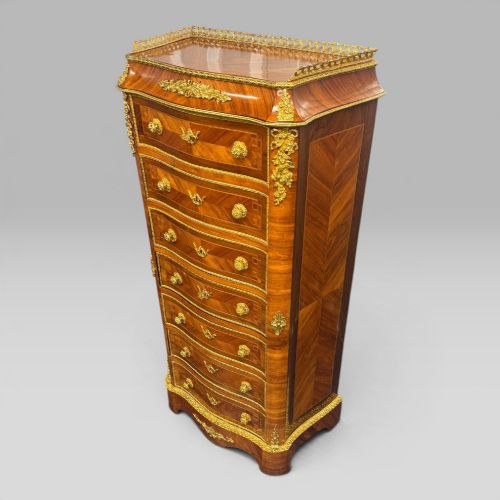
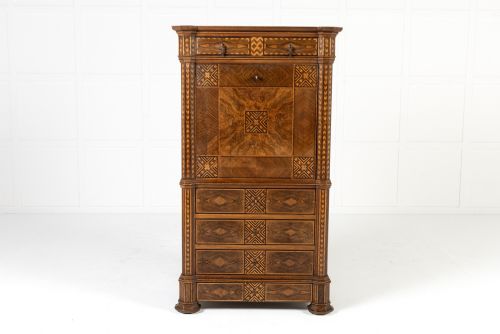
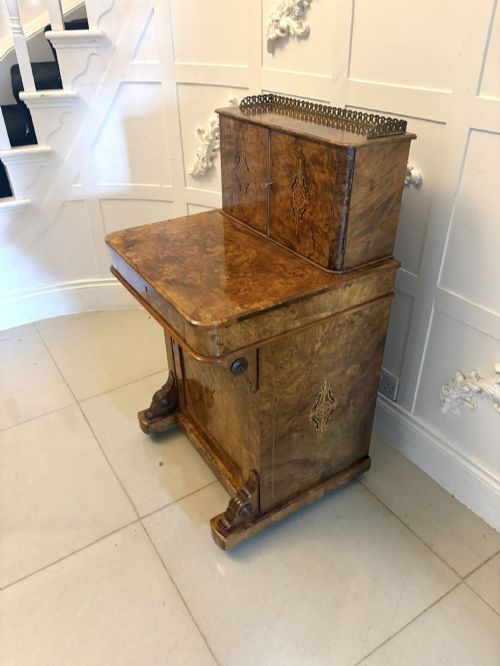
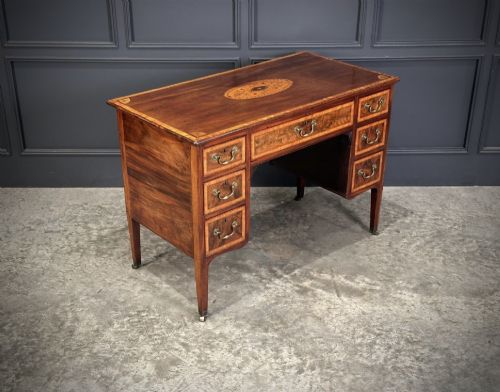
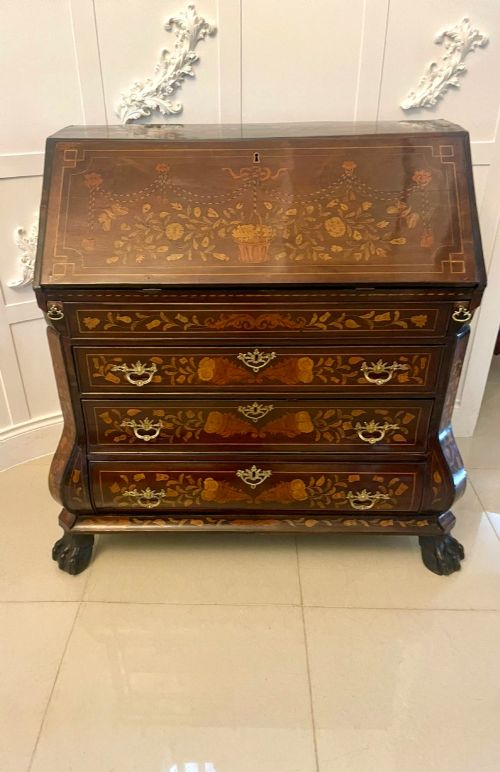
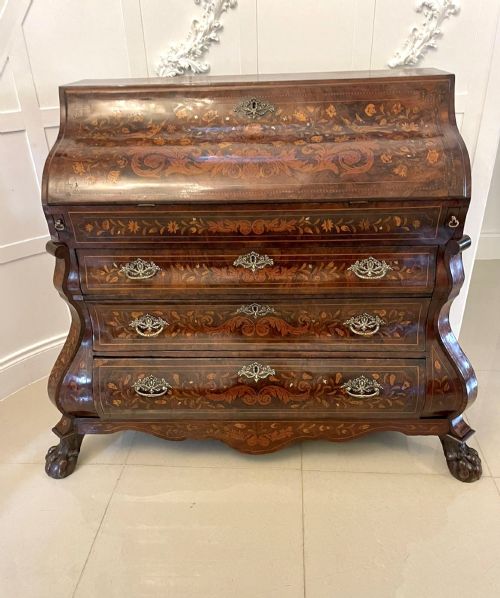
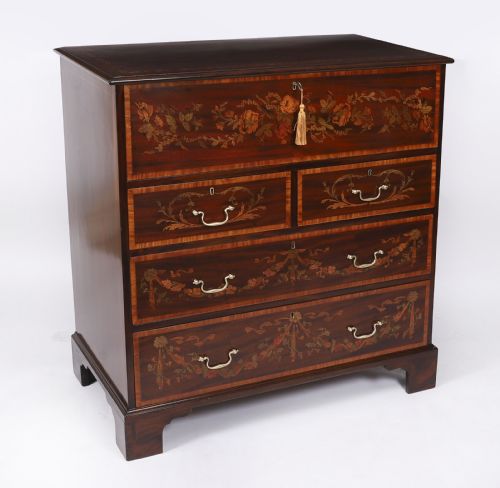
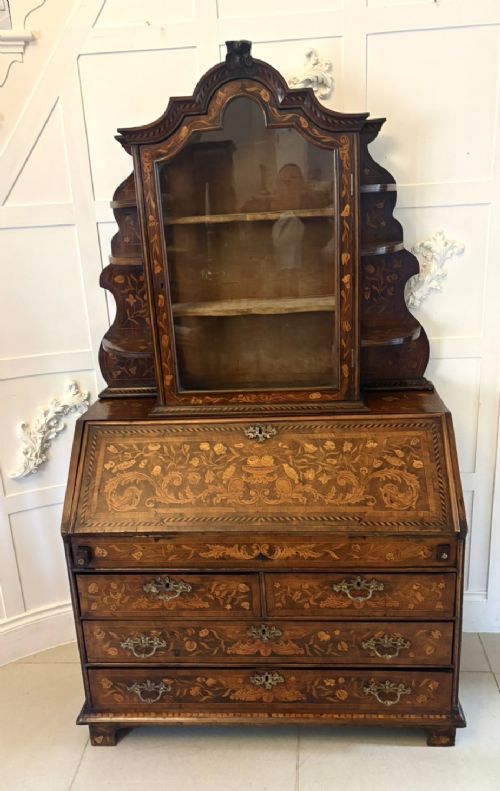
A marquetry drawer desk is a functional writing piece decorated with patterned wood veneers arranged to form floral or geometric designs across the surface. These items appear primarily in eighteenth-century Dutch and nineteenth-century Victorian forms, ranging from bureau bookcases to compact writing tables and davenports.
The most common examples on this page date from the eighteenth and nineteenth centuries, utilising walnut, mahogany, and burr walnut as foundational woods. Makers combined these timbers with detailed fruitwood or satinwood inlay to create writing surfaces and drawer fronts that functioned as both furniture and ornament.
Materials and construction
Craftsmen built these desks using solid structural carcases of mahogany, walnut, or oak, applying fine veneers of kingwood, satinwood, and burr walnut over the primary surfaces. Specialised marquetry cutters sliced thin sections of contrasting fruitwoods and lighter timbers to form floral sprays and pictorial scenes, pressing them into recessed channels on drawer fronts and tabletops.
Metal mounts in brass and ormolu appeared on specific French and Regency models, protecting corners and framing drawers alongside leather writing inserts. Cabinetmakers integrated dovetailed drawer construction and secret compartments within bureau bookcases and Davenport desks to secure correspondence.
Marquetry Drawer Desk Retail Price Guide 2026
Typical asking prices for marquetry drawer desk among the pieces listed under this phrase on Sellingantiques today, from the lower quarter to the upper quarter. They describe what is for sale here now, not the wider market.
An eighteenth-century bureau once served an emperor, proving that even rulers needed a secure place for their paperwork.
Judging the work
The quality of a marquetry drawer desk rests upon the precision of the veneer cutting and the depth of the timber selection. Finer examples display tight, continuous grain matching across drawer banks, with meticulous botanical or scroll inlay that sits flush with the surrounding wood.
Substantial differences emerge in the secondary timbers used inside the drawers and the crispness of the cast brass or ormolu mounts. Pieces retaining their original fitted interiors and unblemished polish demonstrate superior workshop origin compared to items with heavy modern restoration.
Maison Krieger·Jas Shoolbred·Gillows of Lancaster
The Marquetry Drawer Desk Glossary
- Marquetry
- The art of applying decorative veneer pieces to a structural carcase to form pictures and patterns. Craftsmen select various coloured woods to achieve tonal contrast.
- Bomba
- A swelling, curved profile found on eighteenth-century bureau fronts and commodes. This rounded shape requires skilled shaping of the underlying woodwork before veneer application.
- Davenport
- A compact Victorian writing desk featuring a sloping top above a bank of side drawers. These items often incorporate stationary compartments and pull-out slides.
- Ormolu
- Gilt bronze mounts applied to nineteenth-century French and English writing furniture. The metal is cast and chased before receiving a gold finish.
- Parquetry
- Geometric wood inlay forming repeating patterns such as cubes or chequers. This technique contrasts with the pictorial floral designs typical of standard marquetry.
Marquetry Drawer Desk: Frequently Asked Questions
How do I identify an eighteenth-century marquetry bureau?
Examine the construction methods inside the carcase, including hand-cut dovetails on the drawer linings and oak or pine secondary woods. Eighteenth-century models frequently feature heavy walnut or burr walnut bases with floral marquetry that extends across the fall-front flap.
Check for candle slides and pigeonholes concealed behind the primary writing flap. The absence of modern machine marks on the internal framing confirms the age of the piece.
What is the difference between a Davenport and a writing table?
A Davenport is a small, upright desk with a sloped writing surface and drawers opening to the side rather than the front. They were popular during the Victorian era for boudoir use.
Writing tables provide an open, flat surface supported by four legs with one or more drawers built directly beneath the main top. They lack the enclosed stationery box found on standard Davenports.
How should I care for antique wood veneer?
Keep wooden writing furniture away from direct sunlight and steady heat sources to prevent the underlying veneer from lifting or cracking. Apply natural beeswax polish sparingly to maintain the protective sheen.
Avoid using liquid cleaners or synthetic sprays that can penetrate gaps in the marquetry work. Dust the surface regularly with a soft, dry cloth to protect the finish.
Are secret compartments common in these desks?
Many eighteenth-century bureau bookcases and nineteenth-century Davenport desks contain hidden drawers behind sliding panels or removable pigeonhole blocks. Cabinetmakers incorporated these compartments to secure valuables and private letters.
Accessing them usually requires releasing a concealed spring catch or lifting a specific divider within the interior stationery nest.