

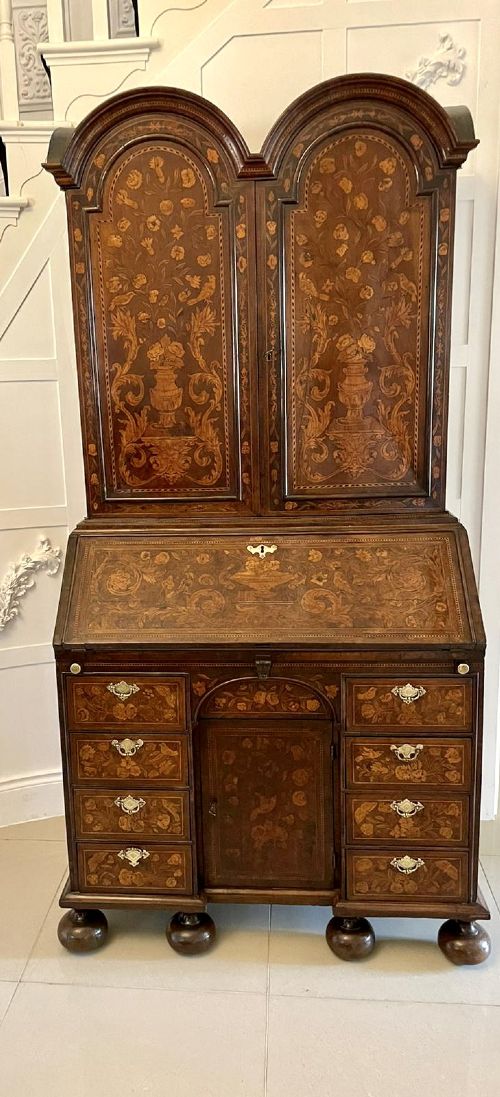
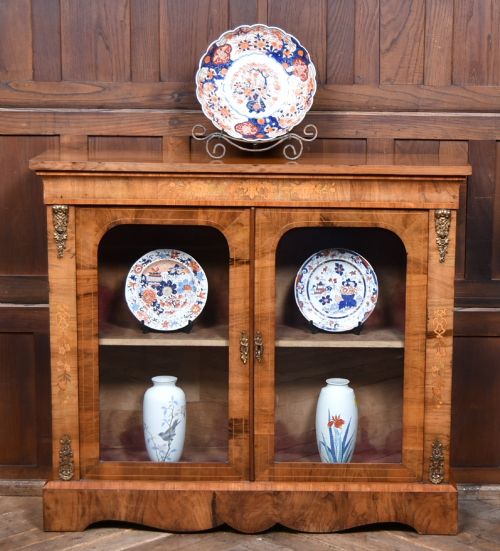


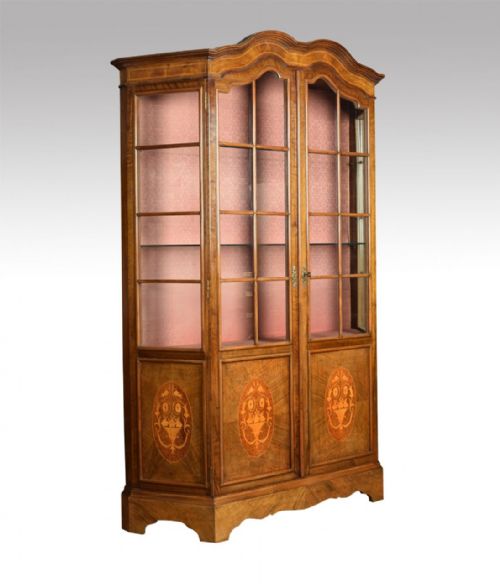


Marquetry Double Cabinet
These marquetry double cabinets combine complex floral wood inlay with large double-door storage, offering a striking centrepiece for storing books or display items.
Marquetry Double Cabinet
A marquetry double cabinet brings together elaborate botanical wood veneer patterns and substantial two-door cabinetry. When you search for marquetry double cabinet, you encounter forms ranging from tall bureau bookcases and linen presses to standing corner display cupboards and pier cabinets.
The pieces on this page span several centuries and design traditions, including seventeenth-century William and Mary examples, Georgian mahogany items, Victorian walnut creations, and Edwardian productions. The most frequent configurations pair glazed upper display sections with inlaid wooden lower doors or large double doors over tiered shelving.
Origins stretch from English workshops to Dutch makers influenced by Baroque styles. Buyers select these cabinets to anchor a room with period character whilst providing functional enclosed storage for collections or linen.
What varies in quality
The standard of a marquetry double cabinet rests primarily on the precision of the wood inlay and the depth of the floral detailing. Finer examples display tight, seamless joints where multiple exotic timbers meet without visible filler or lifting veneer.
Proportion and structural ambition also separate standard pieces from superior ones. Items featuring serpentine fronts, double domes, or integrated bureau desks demand greater joinery skill than flat-fronted rectangular carcases.
Marquetry Double Cabinet Retail Price Guide 2026
Typical asking prices for marquetry double cabinet among the pieces listed under this phrase on Sellingantiques today, from the lower quarter to the upper quarter. They describe what is for sale here now, not the wider market.
Some seventeenth-century cabinet makers hid secret compartments behind decorative marquetry flowers to store tiny love letters and coins.
Edwards And Roberts
The Marquetry Double Cabinet Glossary
- Marquetry
- A decorative technique where small pieces of tinted and natural wood veneer are assembled into pictorial patterns. This craft requires immense patience and steady knife work from the artisan.
- Burr walnut
- Timber taken from the gnarled growths on walnut trees, yielding swirling, highly figured grain patterns. Cabinet makers prized this wood for high-status door panels.
- Pier cabinet
- A low or tall cabinet designed to stand against the wall space between windows. Victorian examples often incorporated glass doors for displaying ornaments.
- Linen press
- A tall storage piece containing sliding trays or shelves behind double doors, traditionally used for flat linens. Georgian versions frequently combine this upper press with drawer chests below.
Marquetry Double Cabinet: Frequently Asked Questions
How do I clean the marquetry surface?
Dust the cabinet regularly with a soft, dry cloth to prevent dirt accumulation in the veneer joints. Avoid modern chemical sprays or wet cloths, which can loosen the animal glue holding the delicate wood pieces.
Apply a traditional beeswax polish occasionally to nourish the timber and maintain a gentle sheen. Buff the wax thoroughly with a clean brush or lint-free cloth after application.
Where should I place a double cabinet?
Position the cabinet against a sturdy interior wall away from direct sunlight, which can fade delicate satinwood and walnut veneers over time. Keep the piece clear of active radiators or damp exterior walls to prevent wood movement.
Ensure the floor is level so the large double doors hang squarely and close without catching. Use subtle shims beneath the base if the structure wobbles on uneven floorboards.
How can I tell the period?
Examine the secondary timbers used inside the drawers and carcase, as oak and pine usage shifts across centuries. Seventeenth-century pieces often display thick walnut veneers and double-dome crests, whilst Georgian items favour solid mahogany.
Look at the construction methods of the drawer linings and backboards for hand-cut joints. Edwardian and later nineteenth-century pieces often incorporate factory-standardised brassware and machine-sawn framing elements.