

Marquetry Bureau Plat
A marquetry bureau plat brings intricate floral wood inlays and gilded mounts to a freestanding writing table.
Marquetry Bureau Plat
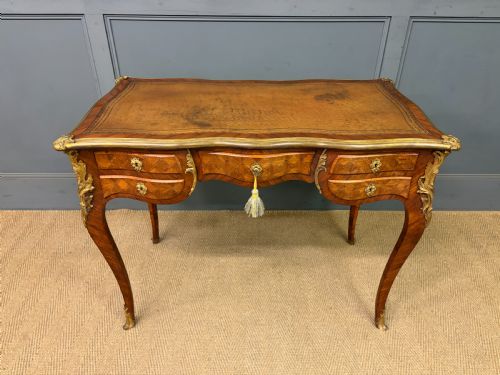
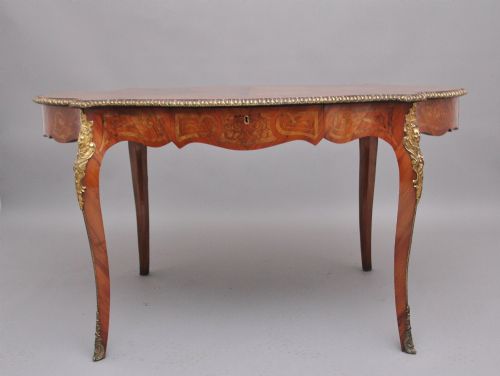
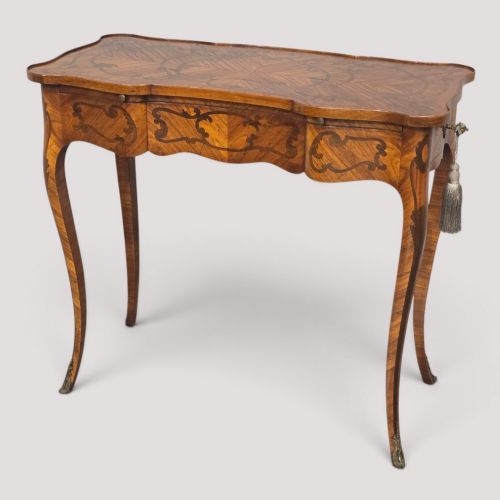
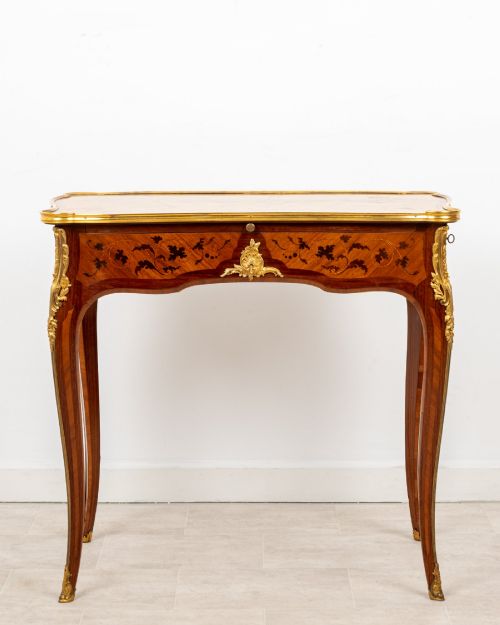
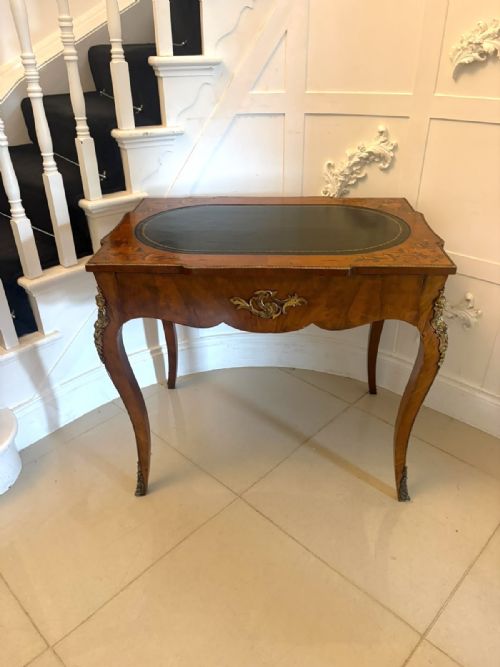
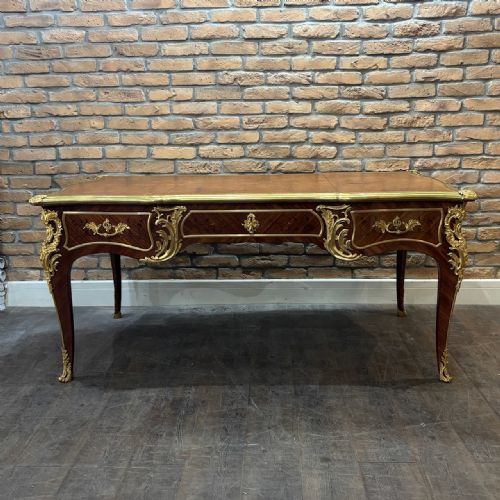
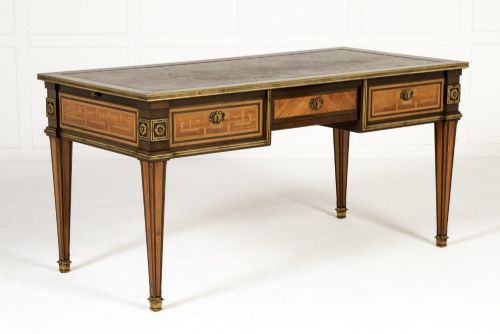
A marquetry bureau plat is a freestanding writing table designed to sit away from the wall, finished on all sides for placement in the centre of a room. Most examples seen here date from the nineteenth century, reflecting the widespread popularity of revival styles across that period.
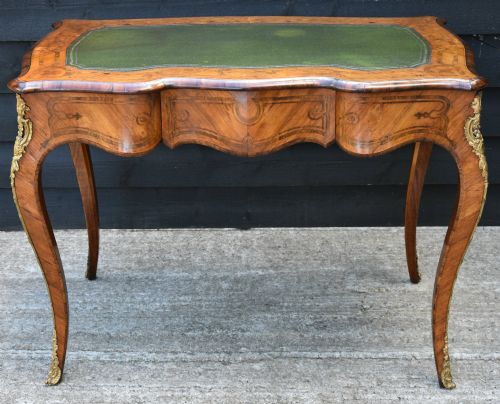
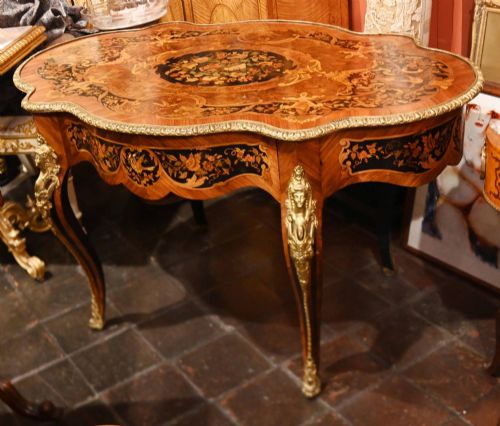
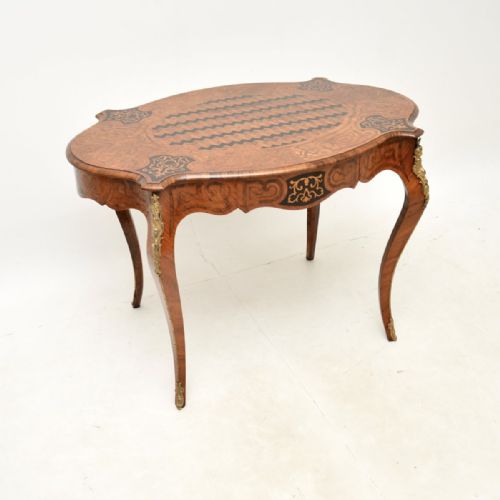
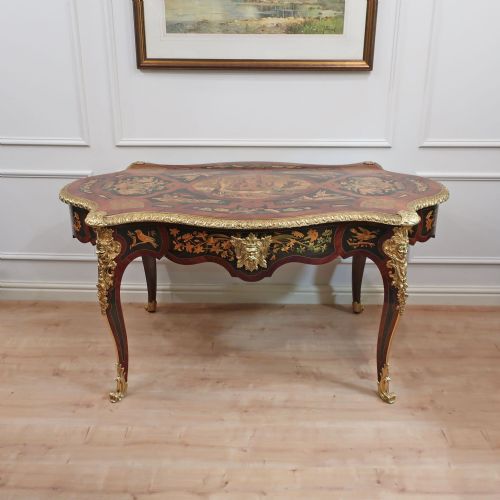
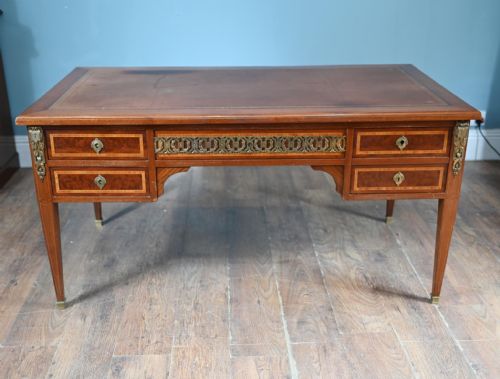
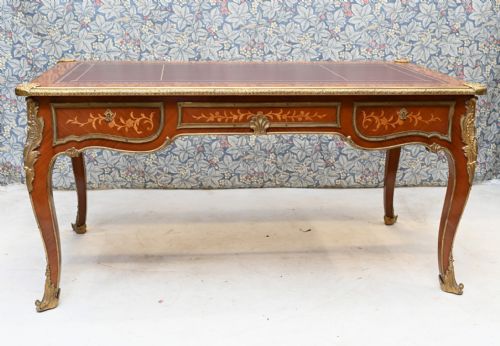
Makers drew heavily on earlier French vocabularies, producing pieces described as Louis XV style, Louis XVI style, or French Rococo revival. These tables combine a leather-inset writing surface with shaped or serpentine aprons, cabriole legs, and elaborate pictorial wood veneers.
Materials and Construction
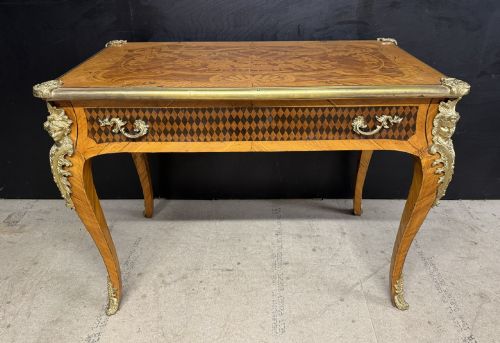
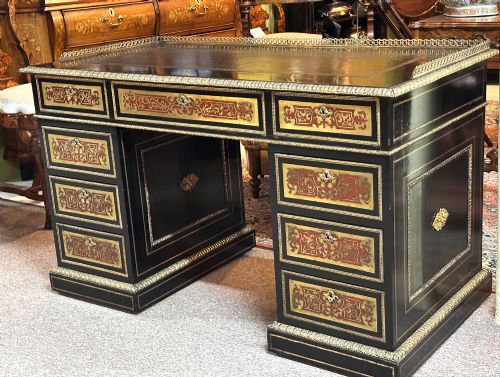
Cabinetmakers constructed carcass frames from timbers such as walnut, rosewood, kingwood, tulipwood, and satinwood, applying finely sliced decorative veneers to form floral or geometric marquetry patterns. Brass and tortoiseshell inlay also appear in pieces adopting Boulle work techniques.
Gilt bronze or ormolu mounts protect vulnerable corners, edge the writing surface, and accentuate the kneehole or leg profiles, while inset panels of leather provide a durable writing surface.
Marquetry Bureau Plat Retail Price Guide 2026
Typical asking prices for marquetry bureau plat among the pieces listed under this phrase on Sellingantiques today, from the lower quarter to the upper quarter. They describe what is for sale here now, not the wider market.
Listings feature walnut, kingwood, and rosewood alongside ormolu mounts and leather writing surfaces across nineteenth century periods.
Assessing Quality
Quality rests in the crispness of the cast ormolu mounts and the precision of the timber cut into the marquetry design, where tight joints reveal the hand of a skilled workshop rather than mass production. Pieces associated with notable makers demonstrate superior proportion in the serpentine curves and deeper relief in the cast bronze details.
The choice of cabinet wood dictates the visual depth of the base, with dense exotic hardwoods like kingwood and rosewood providing a richer contrast to the lighter floral inlays than simpler domestic timbers.
Durand·Francoise Linke·Edward Holmes Baldock·Maison Millet
The Marquetry Bureau Plat Glossary
- Bureau plat
- A flat-topped writing table designed to be viewed from all sides. These tables typically feature a leather writing surface and one or more drawers in the frieze.
- Marquetry
- The art of applying small pieces of veneer to a structure to form decorative patterns or pictorial scenes. Cabinetmakers select contrasting woods to create naturalistic floral motifs.
- Ormolu
- Gilded bronze mounts applied to furniture to accent corners, legs, and borders. The process involves coating cast bronze with a mercury and gold amalgam.
- Kingwood
- A dense, heavy tropical American timber with rich brown and violet-black tones. It was frequently utilised in French cabinetmaking for decorative veneers.
- Serpentine
- A curved line that undulates inward and outward in a continuous wave. This contour appears frequently on the tops and aprons of tables from this group.
Marquetry Bureau Plat: Frequently Asked Questions
What is a bureau plat?
A bureau plat is a freestanding writing table finished on all sides for placement in the centre of a room.
Unlike standard desks meant to sit against a wall, these pieces feature finished backs and detailed mounts visible from any angle.
How do I date these tables?
Most examples originate from the nineteenth century during various French revival periods.
Details like cast ormolu mounts, wood choices, and construction methods help align pieces with specific decades.
Where should I place a bureau plat?
These tables work best positioned away from walls where their finished backs and marquetry patterns remain visible.
They function well as centre tables in studies, libraries, or living spaces.
What woods are used?
Common timbers include walnut, rosewood, kingwood, tulipwood, and satinwood.
Cabinetmakers utilised these exotic and domestic woods to create contrasting tones for detailed marquetry inlay.