

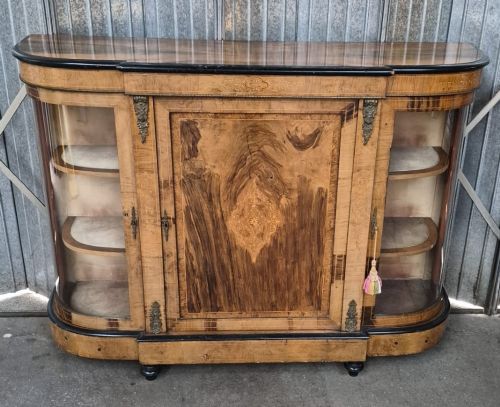

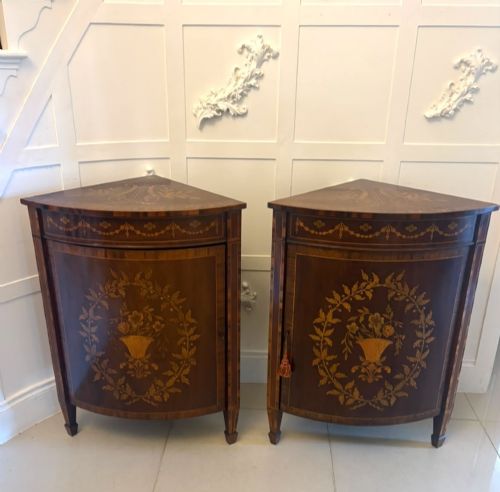
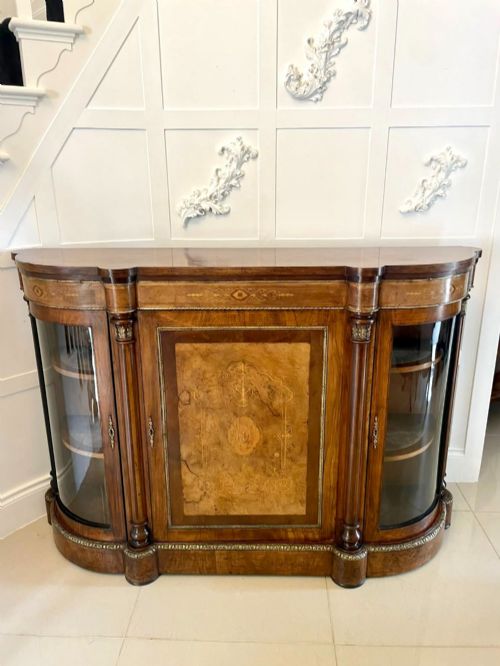
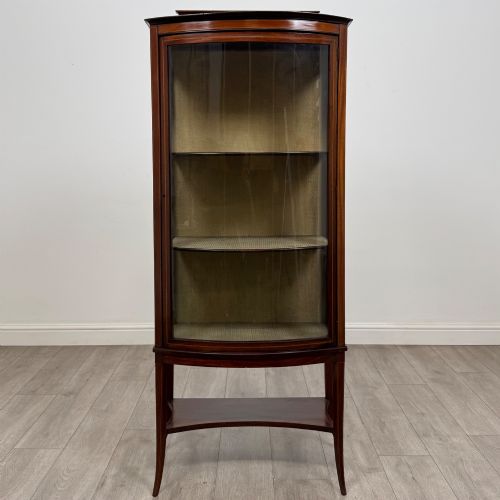
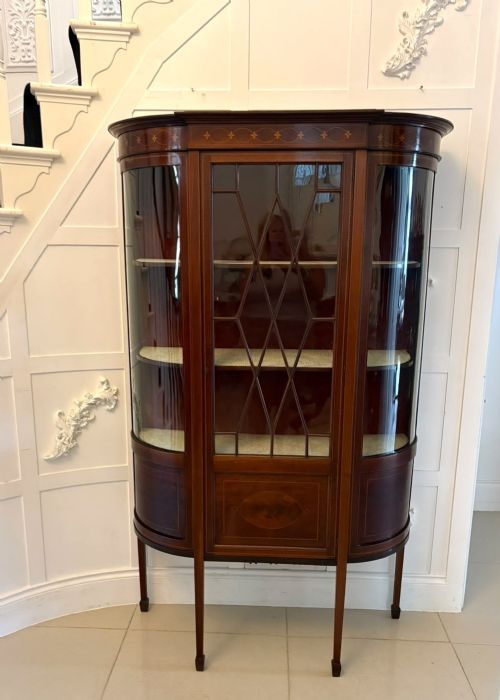
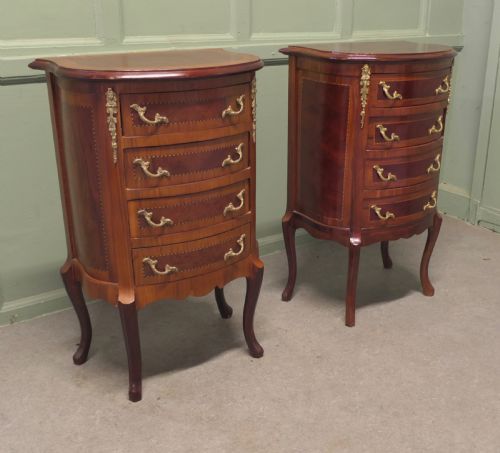
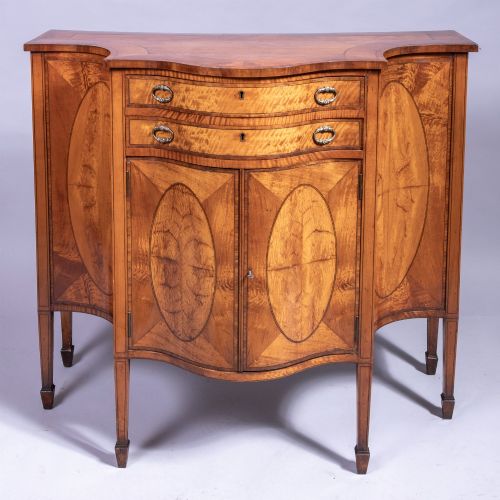
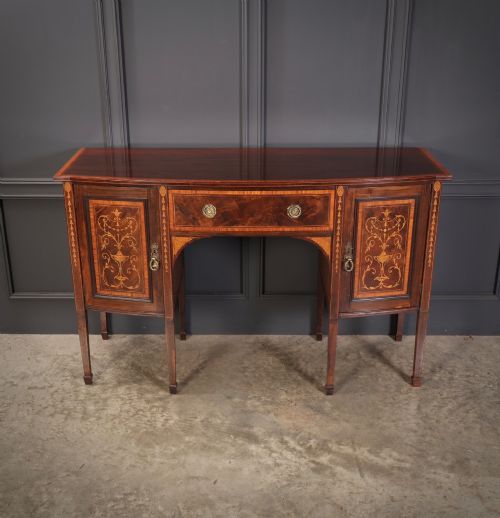
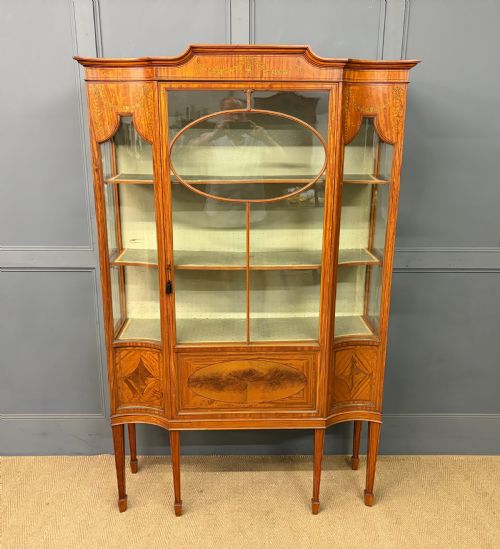
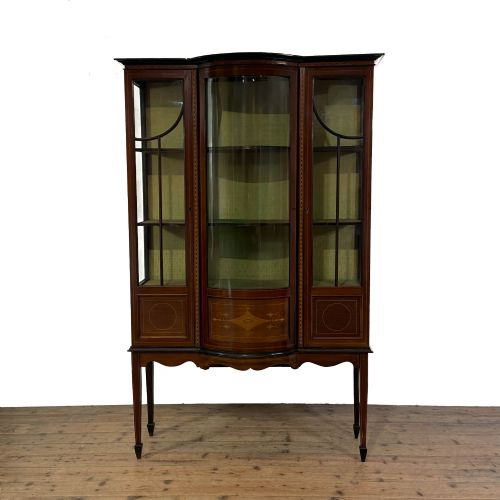
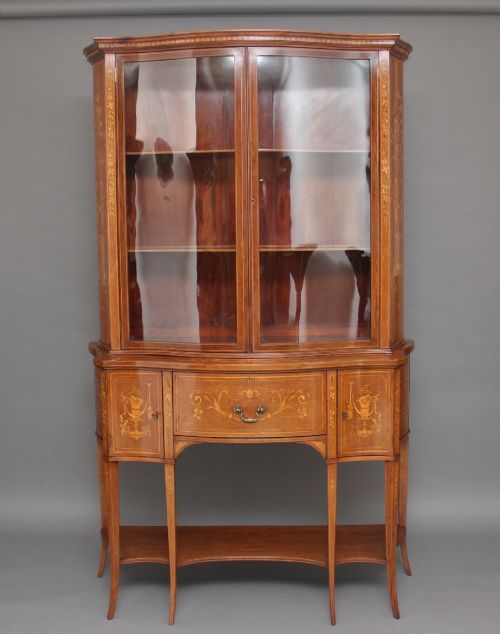
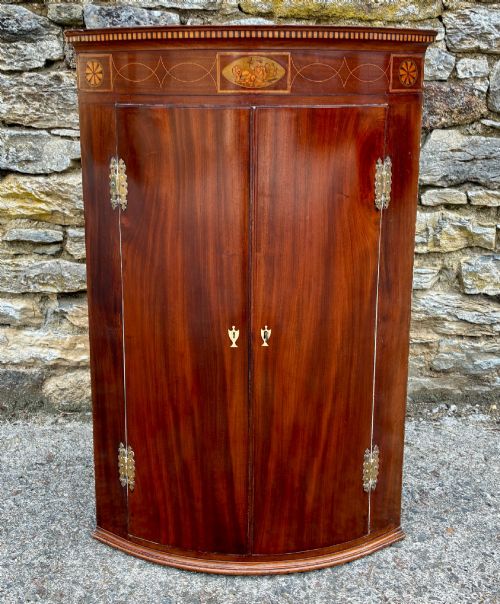
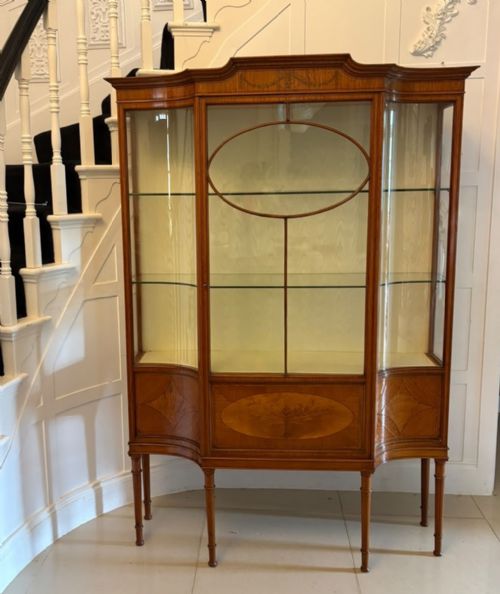


Marquetry Bow Front Cabinet
These marquetry bow front cabinet examples bring together curved timberwork and intricate wood inlay.
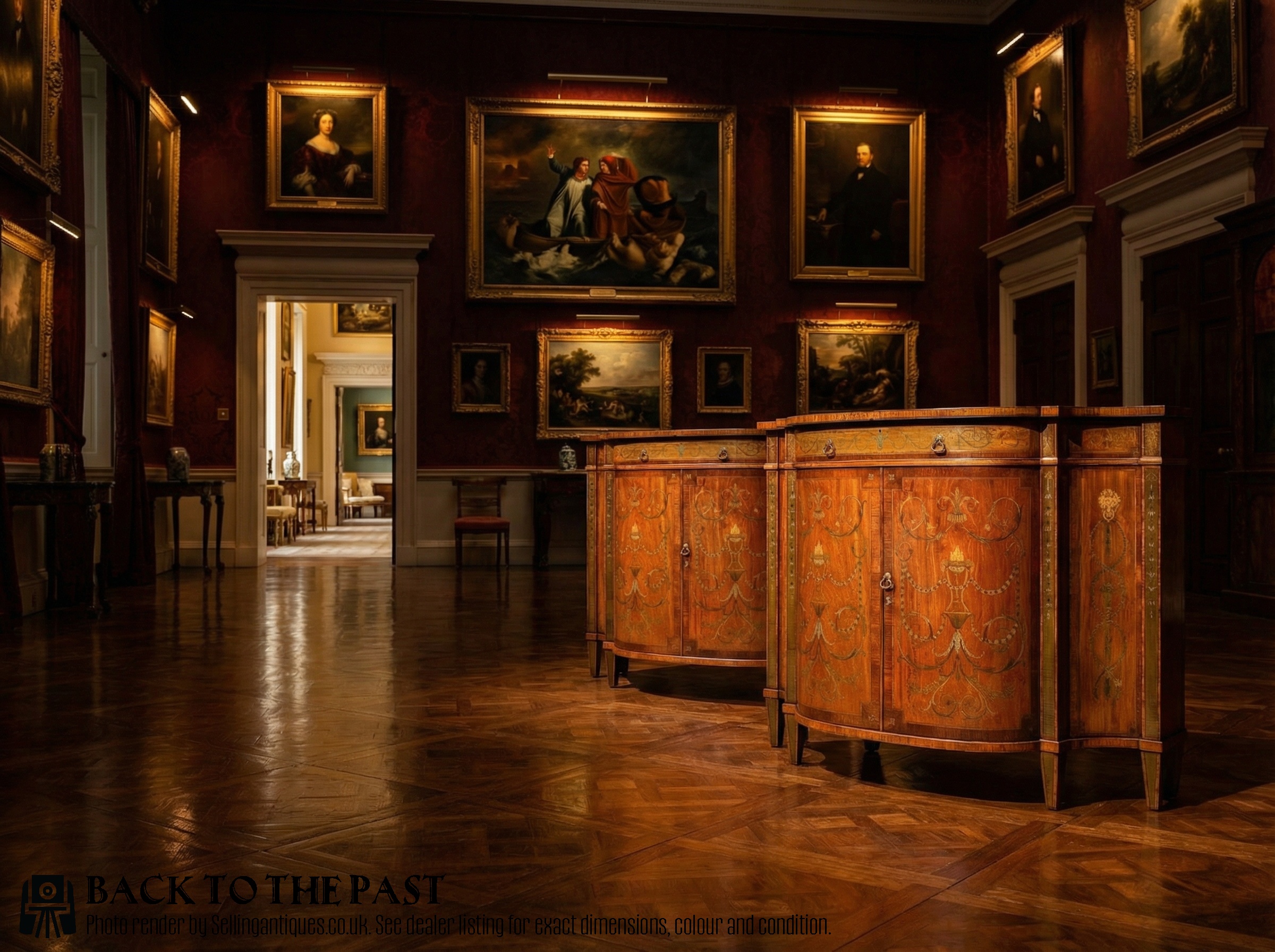
Marquetry Bow Front Cabinet
When you search for a marquetry bow front cabinet, you are looking at furniture defined by a rounded or curved frontal profile combined with patterned wood veneer work. The examples seen here range from Victorian and Edwardian display pieces to corner cupboards and sideboards.
The most common forms on this page include display cabinets and side cabinets dating from the nineteenth and early twentieth centuries. Makers applied figured woods and delicate botanical or geometric patterns to soften the rigid angles of rooms.
Materials and construction
Cabinet makers built these pieces using solid timber frames of mahogany, walnut, or oak, overlaid with carefully chosen veneers. Satinwood, burr walnut, and fruitwood provided contrasting tones for the intricate inlay work.
Craftsmen shaped the timber to form the characteristic curved bow front, often incorporating glass panels, brass mounts, or marble tops into the design.
Marquetry Bow Front Cabinet Retail Price Guide 2026
Typical asking prices for marquetry bow front cabinet among the pieces listed under this phrase on Sellingantiques today, from the lower quarter to the upper quarter. They describe what is for sale here now, not the wider market.
Makers hid secrets in plain sight, crafting clever barrel bow front corner cupboards designed to hug tricky corners with deceptive charm.
Assessing quality
The standard of a marquetry bow front cabinet rests upon the crispness of the timber inlay and the precision of the curved joinery. Finer pieces display tightly fitted veneers and subtle tonal variations in the woods used for floral or geometric motifs.
Proportion and the quality of secondary timbers inside the drawers or carcase further distinguish standard production items from workshop pieces bearing maker stamps.
Maple and Co·Edwards and Roberts
The Marquetry Bow Front Cabinet Glossary
- Marquetry
- Decorative veneer work arranged in pictorial or geometric patterns on a furniture surface. Craftsmen cut different coloured woods to fit together like a puzzle.
- Bow front
- A convex, outwardly curved front profile typical of certain chests, sideboards, and cabinets. This shape softens the corners of furniture and catches the light.
- Credenza
- A low cabinet or sideboard, frequently featuring glass doors or curved ends. Victorian examples often incorporate intricate marquetry and gilt mounts.
- Satinwood
- A durable, lustrous timber from tropical trees with a golden-yellow sheen. It served as a favored background material for detailed inlay.
- Ormolu
- Gilded bronze mounts applied as decorative ornaments to furniture. Makers used them to accent corners and borders on formal pieces.
Marquetry Bow Front Cabinet: Frequently Asked Questions
What is a marquetry bow front cabinet used for?
These cabinets served primarily to display porcelain, silver, and glassware in formal reception rooms. The curved glass and polished wood surfaces enhanced the illumination of treasured objects inside.
Smaller corner versions and side cabinets provided enclosed storage for household items while introducing decorative warmth to domestic interiors.
How do I date a marquetry bow front cabinet?
Dating relies upon identifying the prevailing stylistic influences, such as Sheraton Revival or Louis XV, alongside the construction methods used in the carcase. Victorian and Edwardian examples often feature machine-sawn veneers and specific secondary woods like pine or oak.
Examining the hinges, locks, and interior linings also helps determine the exact manufacturing era of the piece.
Where should I place a bow front cabinet at home?
The curved profile makes these cabinets well suited for placement against flat walls where a softer silhouette is desired. Corner versions fit neatly into unused angles of dining rooms or drawing rooms.
Keep them away from direct sunlight and fluctuating heat sources to protect the delicate veneers and natural glues.
How do I care for marquetry and satinwood?
Maintain the finish by dusting gently with a dry, soft cloth and applying a quality beeswax polish sparingly. Avoid liquid cleaners and silicone sprays which can penetrate fine veneer seams.
Stable indoor humidity prevents the timber from expanding and causing the delicate inlay work to lift or crack over time.