


Maritime Blanket Box
A maritime blanket box is a sturdy travelling chest built for life at sea, prized for its aromatic timber and rugged brass hardware.
Maritime Blanket Box
When you search for a maritime blanket box, you encounter heavy wooden chests designed for storage and travel during the nineteenth and early twentieth centuries. These pieces originate from military campaigns, maritime voyages, and distant trading posts across the globe.
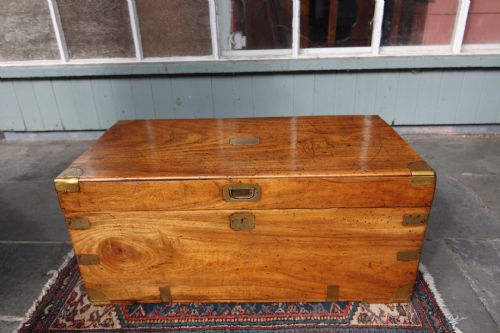
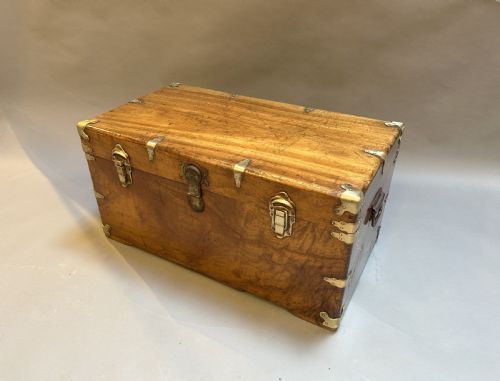
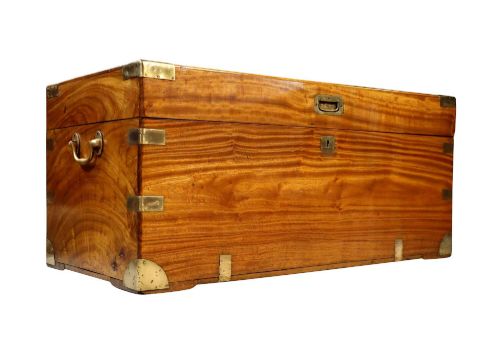
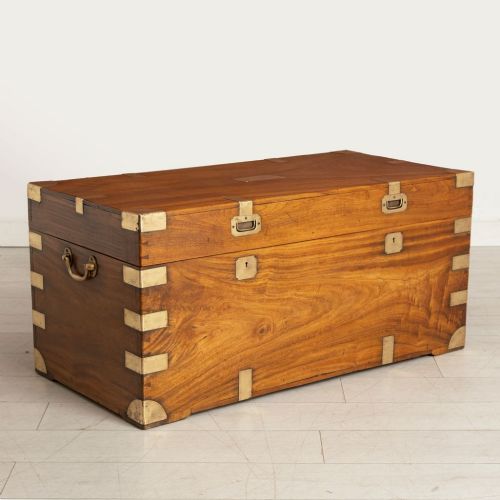
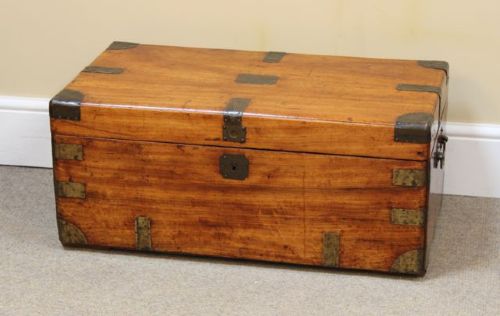
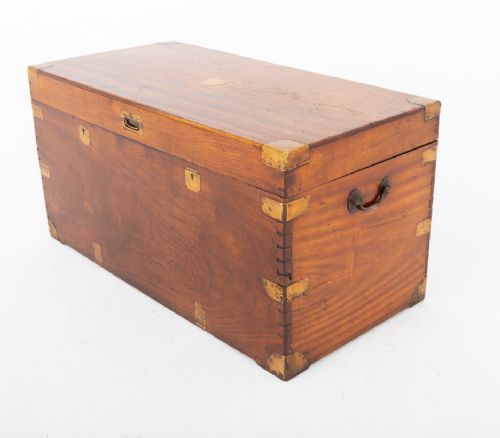
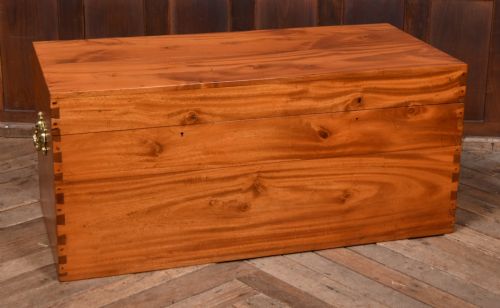
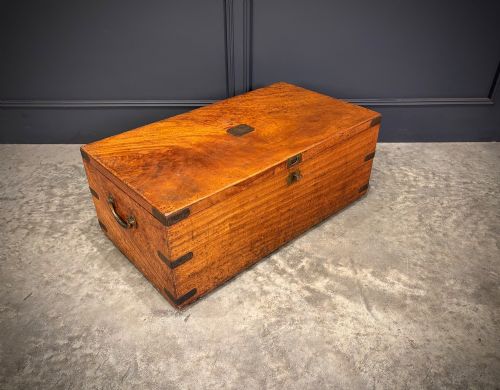
The most common examples on this page are camphor wood and teak chests, often reinforced with brass corners and straps for protection during transit. Many trace their origins to Victorian maritime and campaign styles, alongside Anglo-Indian trade routes.
How They Were Made
Cabinet makers utilised dense, durable timbers such as camphor wood, teak, padouk, and pine to withstand harsh sea conditions and insect damage. Camphor wood was particularly favoured for its natural insect-repellent properties, keeping stored blankets and textiles safe during long voyages.
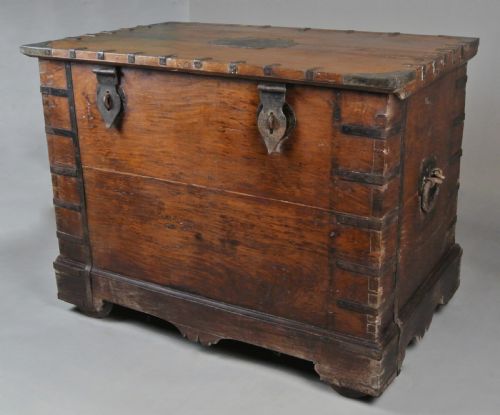
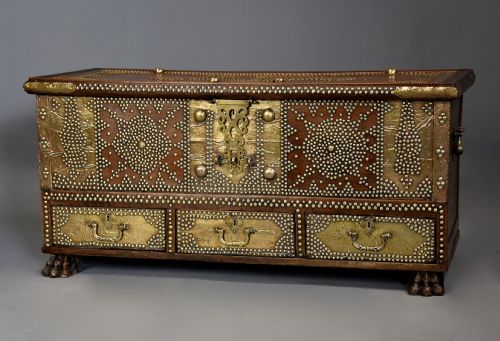
Metalwork played a structural role, with brass corners, straps, and stud decoration reinforcing the wooden joints. Iron and steel fittings also appear on heavy-duty trunks, while rope handles facilitated lifting and transport on board ships.
Camphor wood boxes retain their distinct medicinal scent after more than a century at sea, acting as a built-in time capsule.
What Varies in Quality
The standard of a maritime blanket box rests upon the selection of timber and the precision of its metal mounts. Pieces featuring heavy, well-cast brass banding and flush-fitting recessed drop handles demonstrate a higher grade of construction intended for officers or merchants.
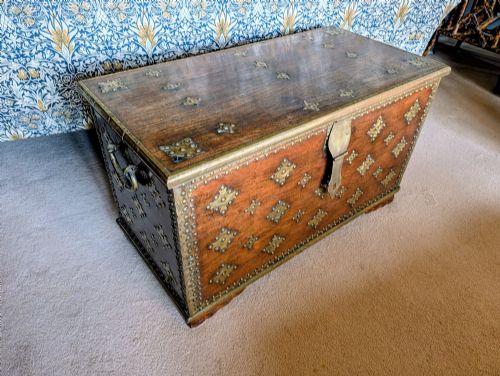
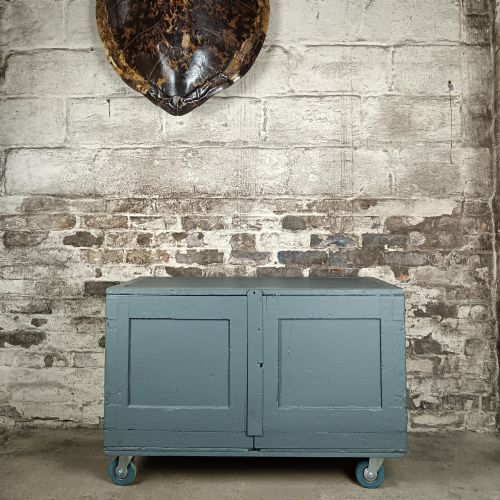
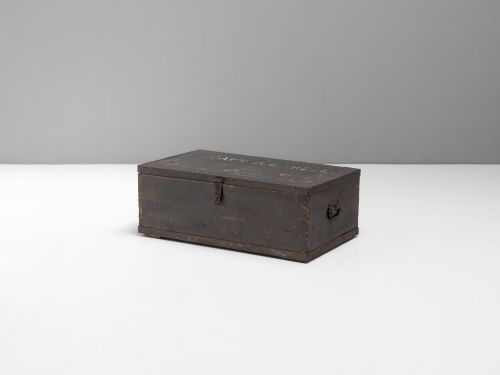
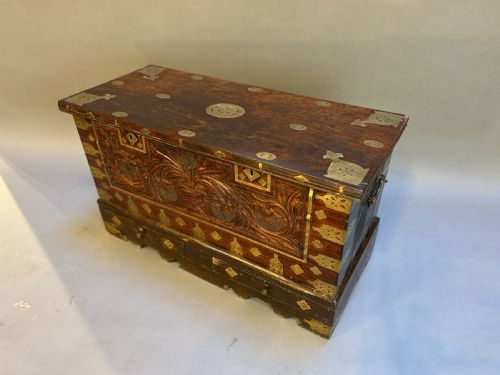
Decorative detail further distinguishes the range, moving from plain utilitarian pine seaman's chests to elaborately decorated Zanzibar trunks adorned with intricate brass stud work and specialised lock plates.
The Maritime Blanket Box Glossary
- Campaign chest
- A modular or portable piece of furniture designed to dismantle or travel easily with military officers on campaign. These chests typically feature recessed brass handles and reinforced corners.
- Camphor wood
- An aromatic hardwood native to Asia, widely utilised for sea chests and blanket boxes. Its strong scent naturally deters moths and silverfish.
- Zanzibar chest
- An ornate trading chest originating from the East African coast, characterised by dense hardwood construction and heavy brass studding. They often incorporate concealed interior till compartments.
- Teak
- A durable, oil-rich tropical hardwood chosen for maritime furniture due to its resistance to moisture and decay.
- Seaman's chest
- A utilitarian storage box built for individual sailors to hold personal possessions aboard ship. These often feature painted decoration or the owner's initials.
Maritime Blanket Box: Frequently Asked Questions
What were maritime blanket boxes used for?
These chests served as secure personal luggage and storage for sailors, military officers, and traders during long sea voyages. They protected blankets, uniforms, and valuables from damp sea air and pests.
Over time, many transitioned from working shipboard equipment into household storage furniture, valued for keeping linens fresh through the natural scent of the wood.
Are all these chests made of camphor wood?
No, while camphor wood is the most common timber found in these listings, makers also utilised teak, padouk, pine, and general hardwoods. Each wood type served different practical requirements aboard ship or in colonial outposts.
Camphor wood is easily recognised by its distinct fragrance, whereas teak and pine specimens often display different grain patterns and surface treatments like paint or ebonising.
How do I care for an antique wooden chest?
Keep the wood conditioned by avoiding direct sunlight and extreme temperature fluctuations that can cause timber to split. Minimal maintenance with appropriate wax preserves the surface finish without harming the antique patina.
Ensure brass hardware is cleaned gently without harsh chemical abrasives to maintain the original metal appearance.