

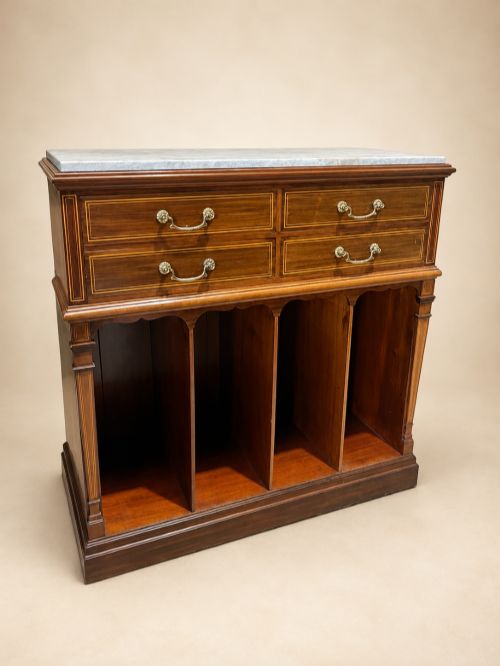
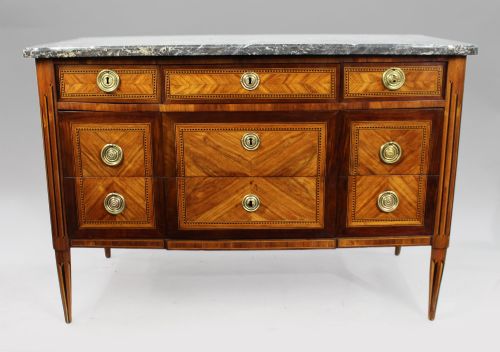
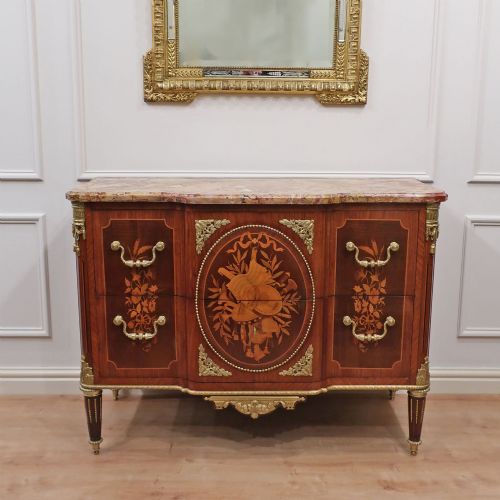
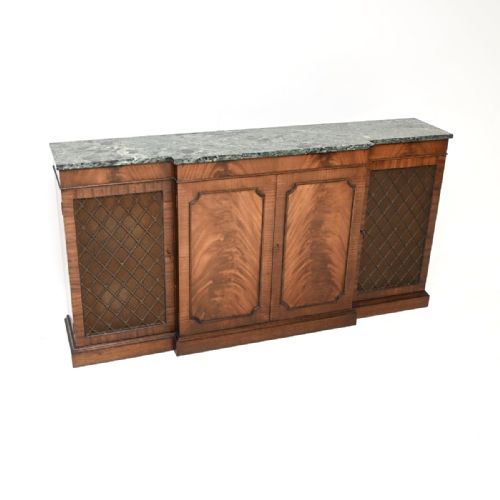
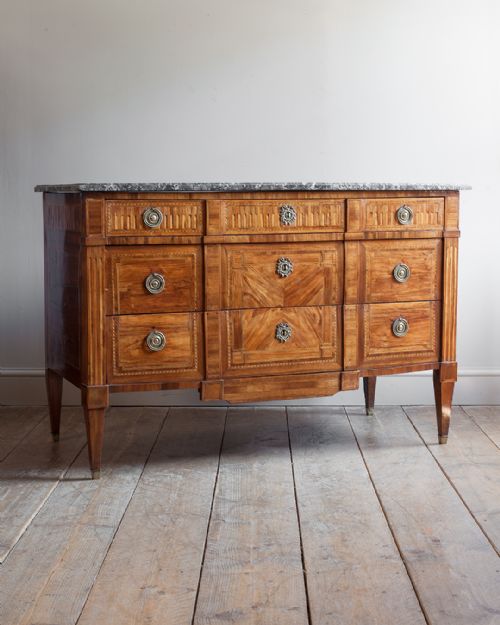
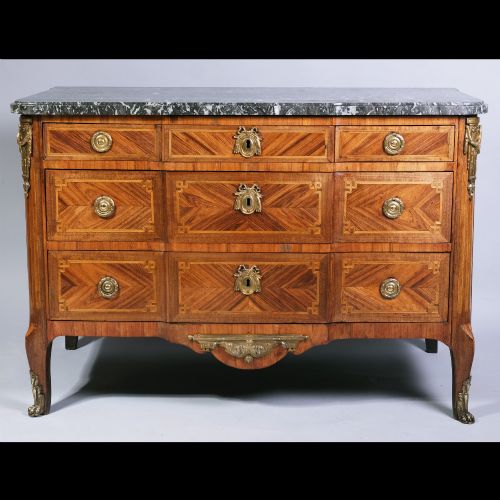
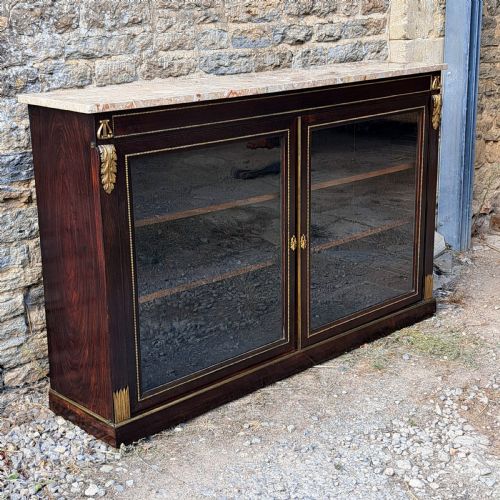
Marble Topped Sideboard
A marble topped sideboard brings solid weight and cool stone together with fine timber.
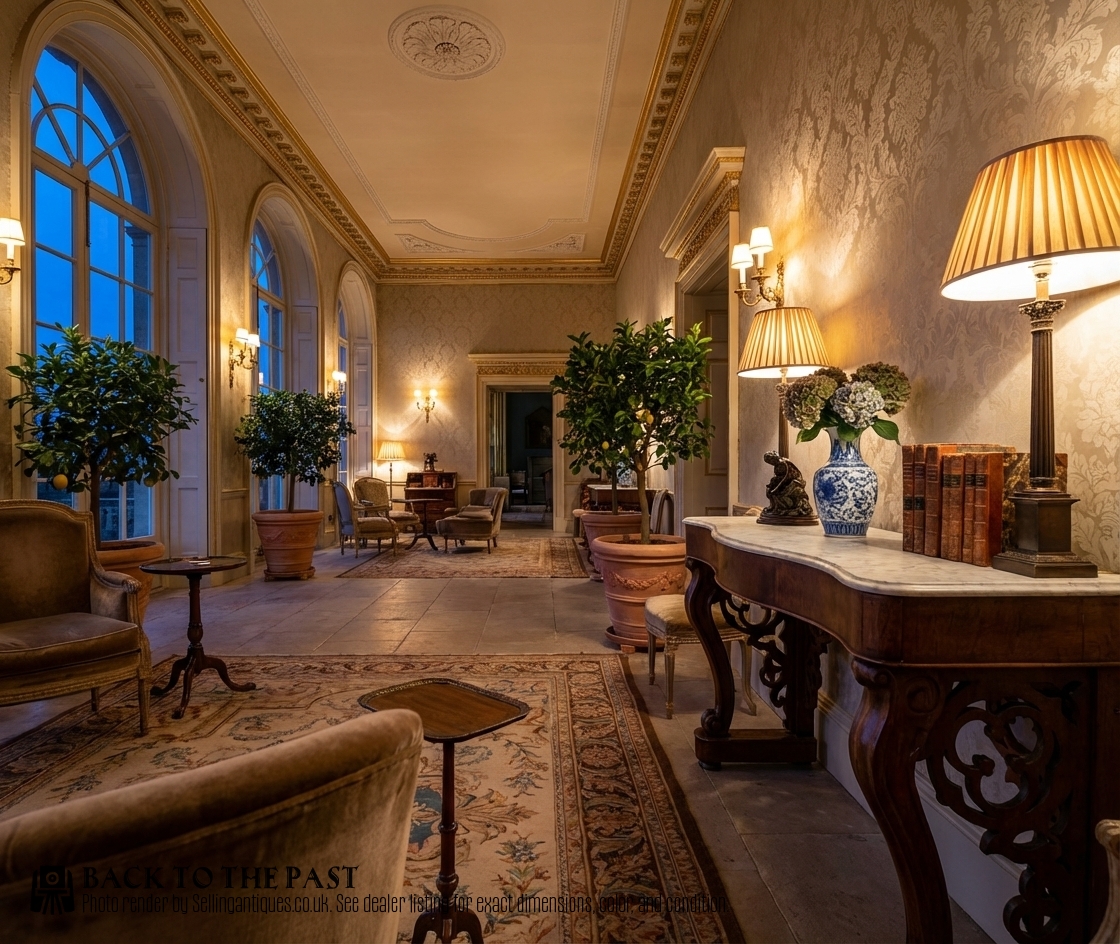
Marble Topped Sideboard
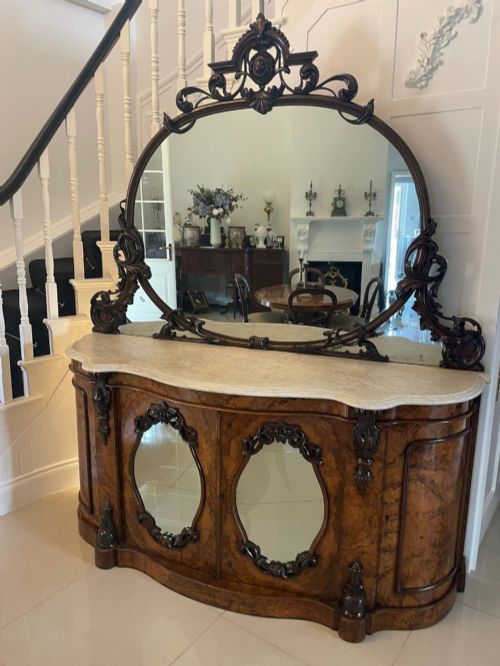
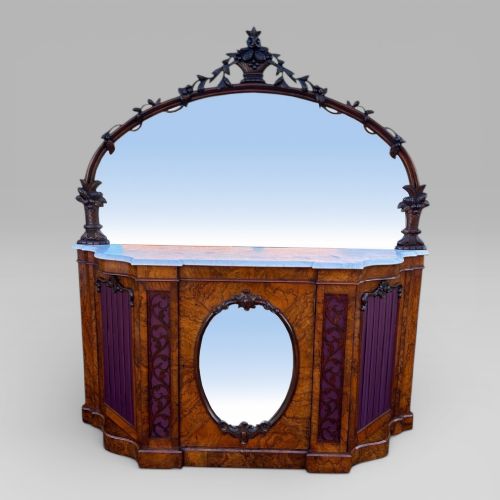
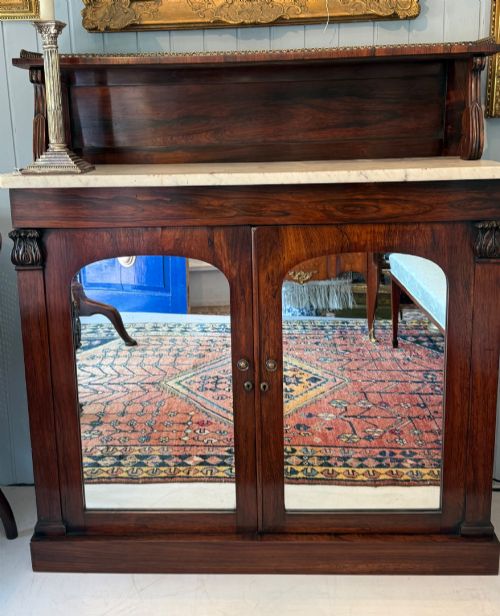
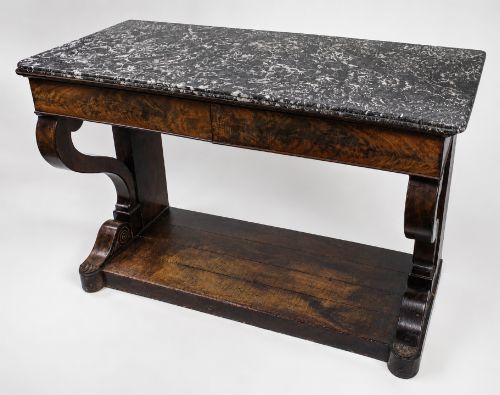
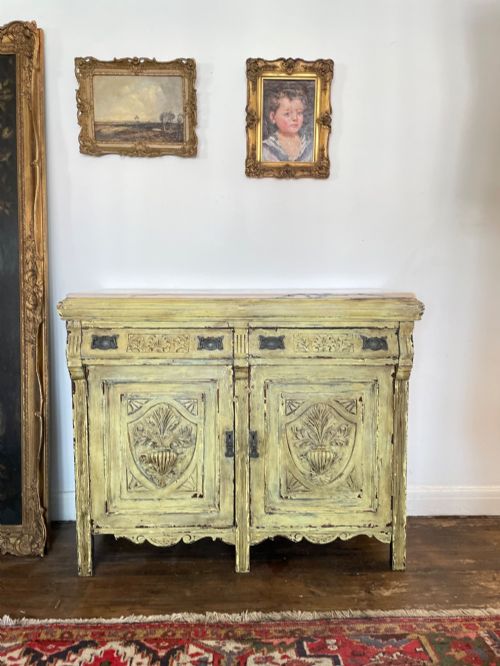
A marble topped sideboard combines robust stone surfaces with substantial wooden cabinetry designed for storage and display. When searching this phrase, buyers encounter forms ranging from Victorian credenzas and chiffoniers to French commodes and oak sideboards. The selection leans heavily toward Continental European workshops and British Victorian cabinet makers working in walnut, mahogany, and rosewood.
The integration of stone and wood serves both practical and decorative functions across dining rooms, salons, and halls. Pieces span multiple eras, including the eighteenth century, the nineteenth century, and early twentieth century revivals. Buyers find everything from low buffet cabinets to tall mirror-backed credenzas fitted with polished marble slabs.
Materials and Construction
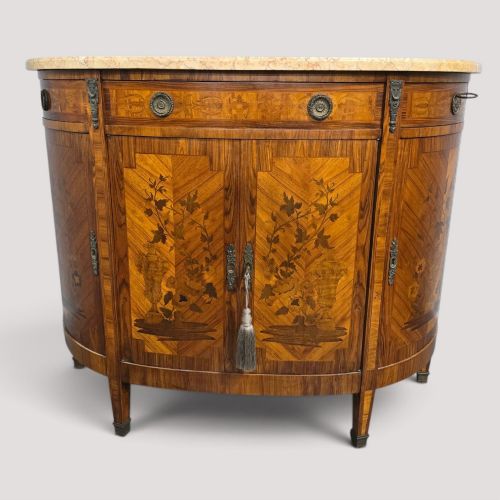
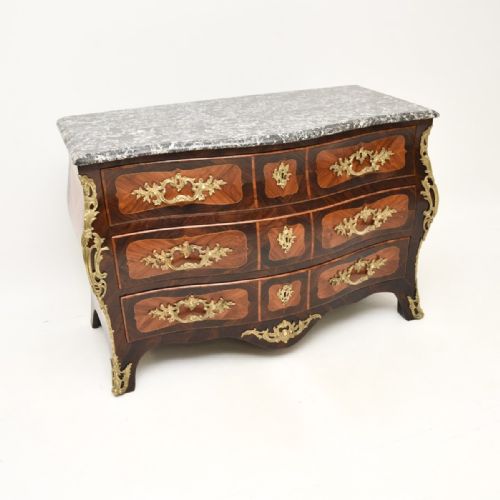
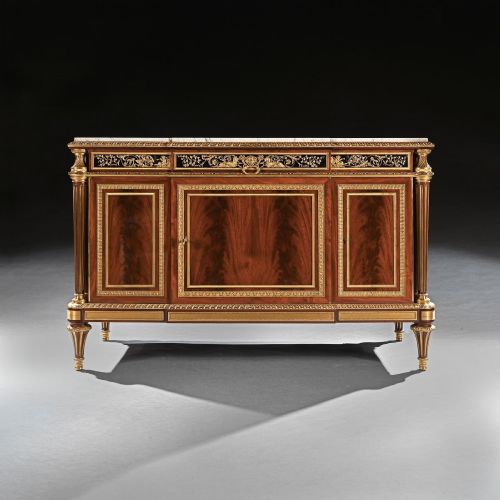
Cabinet makers constructed the foundational carcases from dense timbers like mahogany, walnut, oak, and rosewood, frequently applying decorative veneers such as kingwood, tulipwood, and burr walnut. Marquetry and parquetry inlay patterns introduce geometric or floral details across drawer fronts and doors. Brass and ormolu mounts provide structural accents and decorative trim along corners and aprons.
The defining stone surface typically consists of thick slabs of polished marble, sometimes in pink or variegated tones, shaped to fit the precise contours of the wooden top. Joinery relies on traditional techniques including dovetailing for drawers and mortise and tenon joints for the main frames. Back panels and interior shelving utilise secondary timbers suited to supporting heavy loads of china or linens.
Listings feature woods like mahogany, rosewood, kingwood, and walnut, alongside eighteenth and nineteenth century periods.
Distinctions in Quality
Quality rests on the selection and matching of wood veneers and the weight and finish of the marble slab. Superior examples display continuous grain patterns across drawer banks and precise marquetry work executed without gaps. The integration of cast ormolu mounts shows crisp chasing and secure fixing rather than rough casting.
Structural integrity differentiates standard production from master craftsmanship. Heavier pieces feature robust secondary woods, thick original marble tops that sit flush without shims, and smoothly operating drawers with hand-cut dovetails. The refinement of the carved details, particularly on Victorian mirror backs and French revival frames, indicates the level of skill applied in the workshop.
Jacques Bircklé·Henry Dasson·Weisweiler
The Marble Topped Sideboard Glossary
- Credenza
- A sideboard or buffet cabinet, often featuring mirrored backs or glass doors in Victorian examples. These pieces typically sit low to the ground and serve dining room display purposes.
- Commode
- A low French chest of drawers or cabinet fitted with a stone top. They frequently display curved bombe shapes and intricate marquetry.
- Ormolu
- Gilded bronze mounts applied to furniture for decorative effect. Craftsmen cast and chiselled these metal elements to accent corners and feet.
- Marquetry
- The art of applying pieces of veneer to a structure to form decorative patterns. Artisans utilise various coloured woods to create pictorial or geometric designs.
- Chiffonier
- A small sideboard or cabinet equipped with enclosed shelving. Nineteenth-century versions often include a raised shelf on the upper surface.
Marble Topped Sideboard: Frequently Asked Questions
How do I clean the marble top?
Use a soft cloth dampened with warm water and mild, pH-neutral soap to wipe the surface gently. Avoid acidic cleaners, vinegar, or citrus products that etch the polished stone.
Dry the marble thoroughly with a clean towel to prevent water spots. Apply a specialised stone sealer periodically to protect against stains from glasses or plates.
Where should I place it?
These pieces suit dining rooms, grand hallways, or living spaces where their surface provides a durable display area. Keep them away from direct heat sources and strong sunlight that can dry out old timbers and fade veneers.
Ensure the floor is level, as heavy furniture with stone tops requires stable support to prevent door misalignment. Wall anchoring is also wise for tall mirror-backed credenzas to ensure stability.
How do I date a piece?
Examine the secondary woods inside the drawers, the style of the brass hardware, and the hand-cut nature of the dovetail joints. Eighteenth-century pieces often show hand-sawn timber marks and regional construction traits, while Victorian items feature machine-assisted precision alongside hand carving.
Compare the decorative motifs, such as Louis XVI parquetry or Victorian burr walnut panels, against known stylistic periods. Original backboards and untouched marble slabs also offer clues to the era of manufacture.