
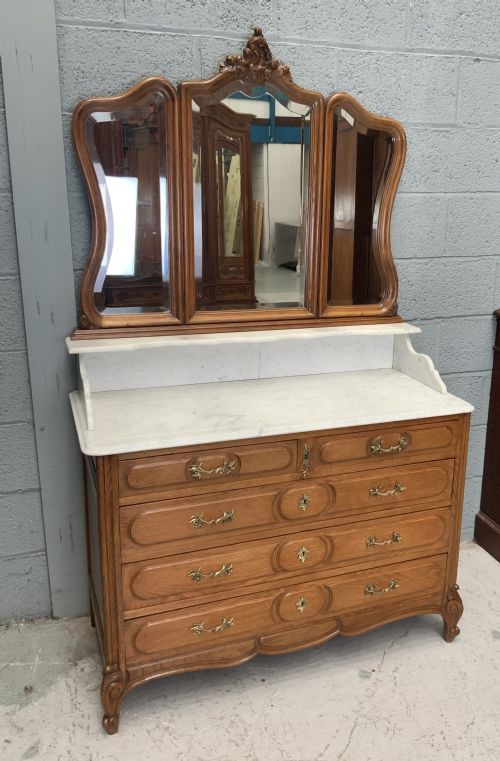


Marble Top Vanity Table
A marble top vanity table brings practical stone surfaces and substantial timber framing together for daily dressing and washing routines.
Marble Top Vanity Table
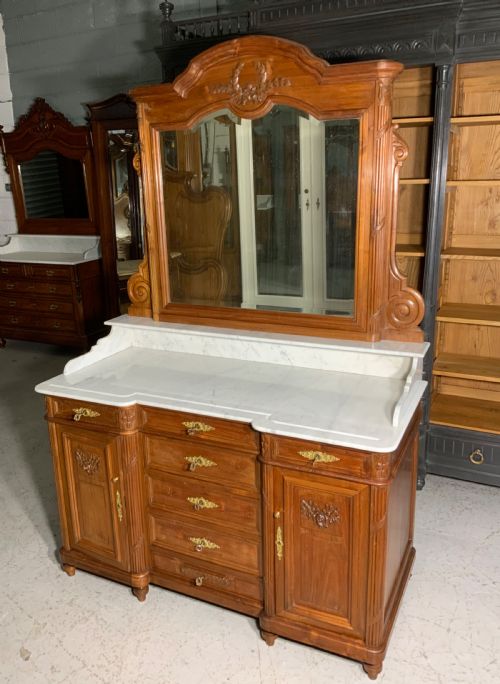
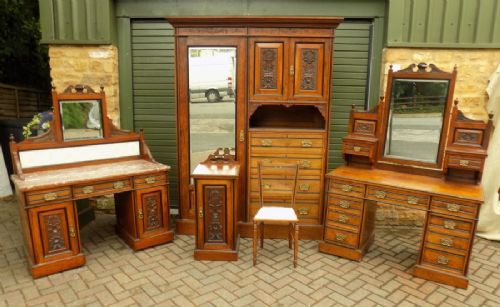
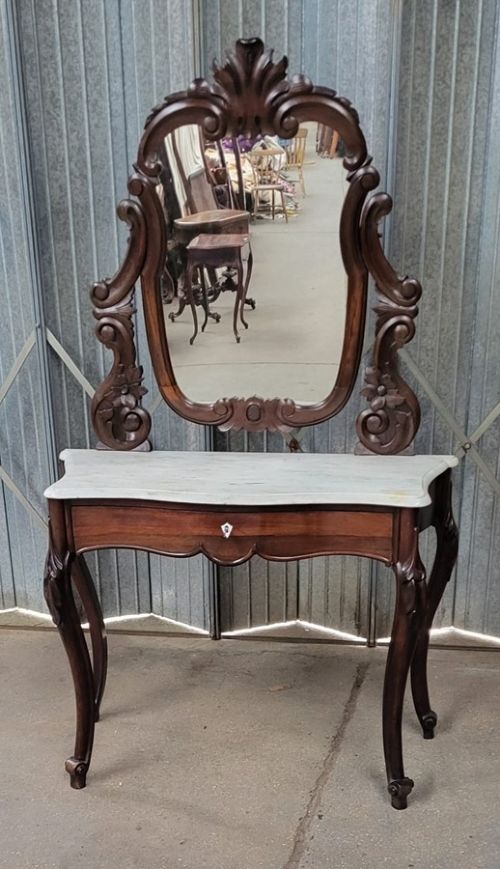
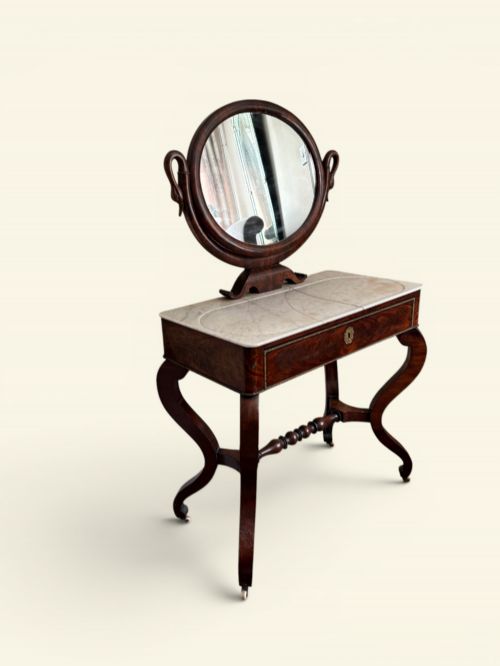
When you search for a marble top vanity table, you encounter washstands, dressing tables, and bedroom suites spanning the Victorian, Edwardian, and nineteenth-century periods.
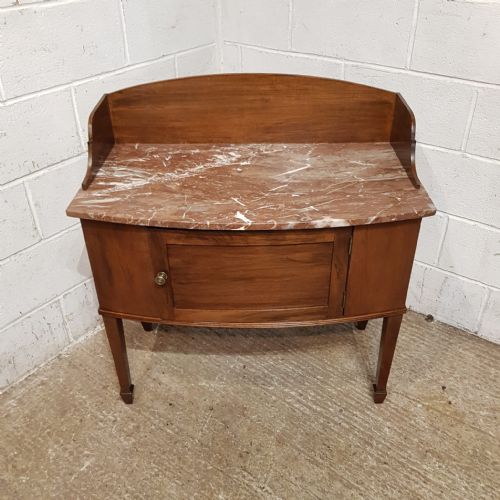
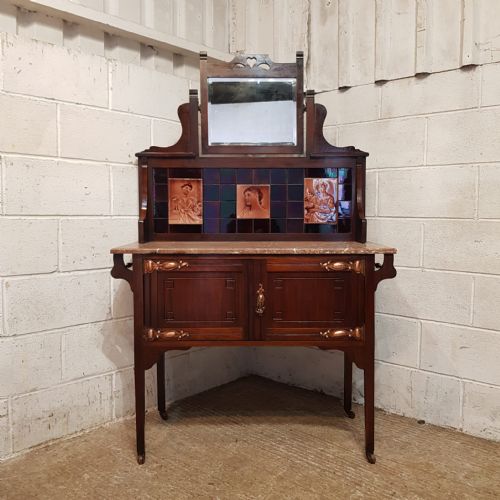
The version you meet most frequently on this page is the nineteenth-century or Edwardian washstand, constructed in mahogany, walnut, or oak, topped with polished stone.
These pieces originated as functional bedroom furniture for washing and grooming, combining timber frames with impermeable marble surfaces designed to withstand daily use.
How they were made
Craftsmen built the structural frames using solid and veneered timbers such as mahogany, walnut, oak, satinwood, and bird’s-eye maple.
Slab marble formed the upper surface, paired occasionally with ceramic tiles on the splashback and glass elements or brass mountings for decoration.
Joinery techniques included carved ornamentation, bow fronts, inlaid details, and specialised framing to support the considerable weight of the stone top.
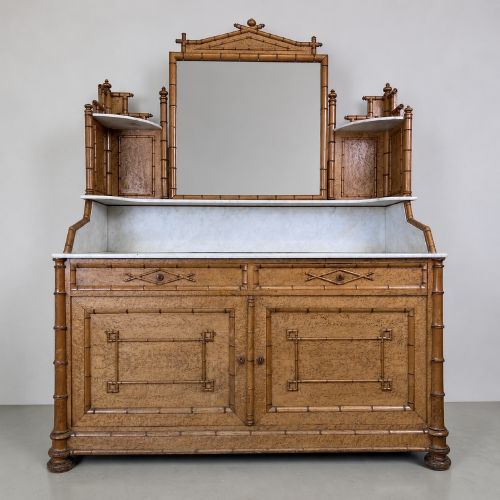
Some nineteenth-century makers cleverly disguised ordinary timber as exotic bamboo using paint.
What varies in quality
The selection of timber grain and the quality of the marble slab establish the primary visual distinction between standard pieces and finer examples.
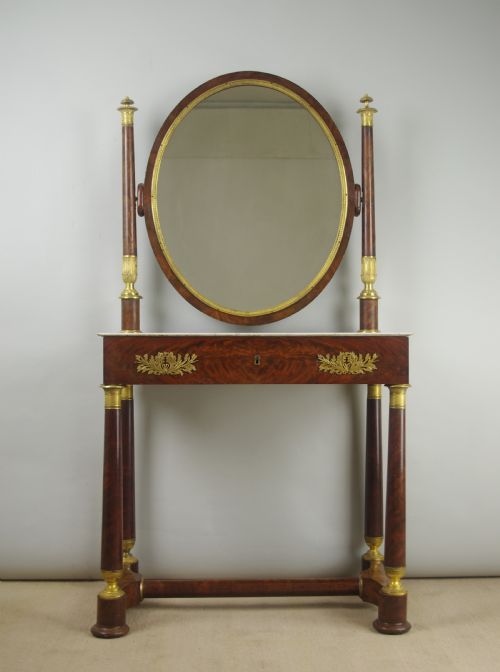
Refinement in the carving, the presence of matching ceramic tiles, and integrated brass or ormolu mounts indicate higher workshop standards.
Proportion, structural integrity of the timber frame, and original fittings dictate the overall execution of the piece.
The Marble Top Vanity Table Glossary
- Washstand
- A piece of bedroom furniture designed for morning ablutions, typically fitted with a stone surface to resist water splashes.
- Marble
- A metamorphic rock prized for its smooth polished surface and distinctive veining, used extensively for hygienic table tops.
- Aesthetic Movement
- A late nineteenth-century design style focusing on visual beauty rather than narrative meaning, often seen in simplified cabinetry.
- Ormolu
- Gilded bronze or brass mounts applied to furniture edges and corners for decorative enrichment, common in French cabinet work.
- Splashback
- A raised vertical panel at the rear of a washstand designed to protect the wall from water marks during use.
Marble Top Vanity Table: Frequently Asked Questions
How do I clean the marble top?
Use warm water and a mild, non-acidic soap to wipe down the stone surface regularly. Avoid harsh chemical cleaners that can etch the polish.
Dry the marble thoroughly with a soft cloth to prevent water spots and maintain the natural lustre of the stone.
Can I use this as a bathroom basin?
Original marble top washstands were built to hold portable ceramic basins and jugs rather than modern plumbed waste pipes. Adapting them requires careful professional plumbing work.
Many owners prefer to keep them in bedrooms or hallways as display tables rather than altering the antique structure.
How do I date a washstand?
Examine the timber species, construction joints, and hardware styles to determine the likely era of manufacture. Victorian pieces often feature heavy mahogany or walnut, while Edwardian examples lean towards lighter satinwood or pine.
Design motifs such as aesthetic movement lines or French empire brass mounts also provide clear chronological markers.
Are the marble tops attached?
Most marble slabs on these tables rest unattached on top of the wooden frame, held entirely by their own substantial weight. This design allowed makers to transport the heavy stone separately from the base cabinet.
Take care when moving the furniture by lifting off the marble first to prevent accidents.