


Vintage Tiled Washstand
A vintage tiled washstand brings robust Edwardian and Victorian practicality into the modern home with ceramic panels and stone tops.
Vintage Tiled Washstand
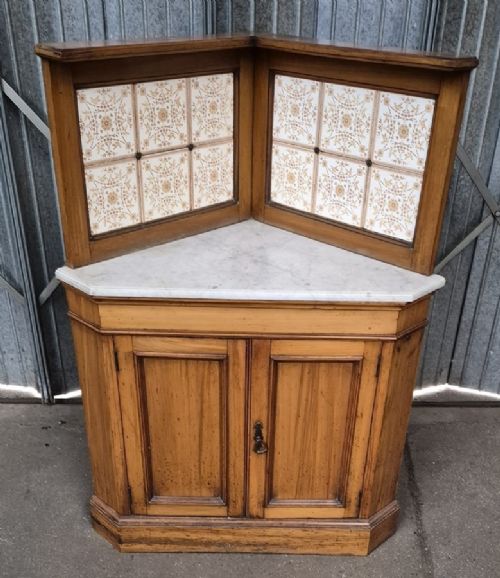
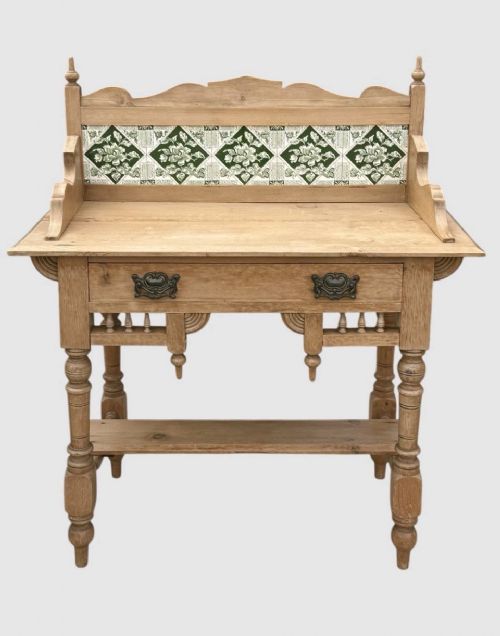
When you search for a vintage tiled washstand, you are looking at utilitarian bedroom furniture from the Victorian and Edwardian eras designed for washing before plumbed bathrooms were universal. These practical pieces combine wooden wash stands with splashbacks inset with ceramic tiles, often paired with a marble top to resist water.
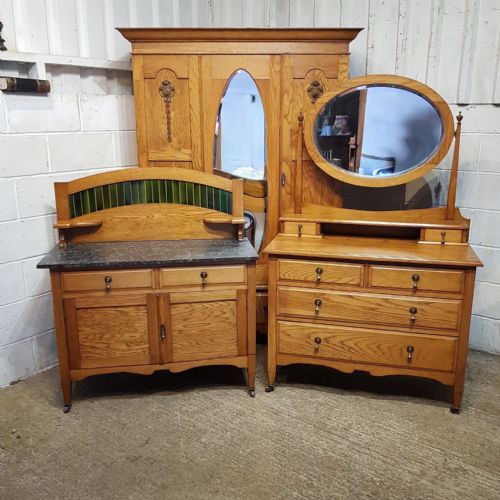
You are most likely to meet Edwardian and Victorian examples on this page, spanning the late nineteenth century up to nineteen ten. They appear as standalone basin units, corner washstands, and parts of larger bedroom furniture suites.
The construction typically involves timbers such as mahogany, walnut, oak, or pine, reflecting the domestic hierarchy from grand townhouse suites to rustic chamber furniture. Arts and Crafts and Art Nouveau styles influence the decorative ceramic tiles and framework.
Materials and construction
Carpenters built these frames using hardwoods like mahogany, walnut, and oak, alongside domestic pine for simpler or painted variants. Brass fixtures frequently provided towel rails or cosmetic fittings.
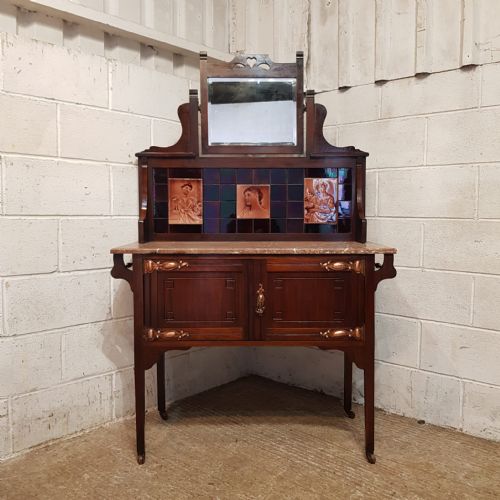
The defining feature, the tiled splashback, utilised glazed ceramic tiles set into wooden frames to protect wallpaper from splashes. Heavy marble slabs formed the surface where basins and ewers once sat, chosen for durability against water.
Materials recorded across the inventory include marble, ceramic, glass, mahogany, brass, oak, walnut, and pine.
Distinguishing quality
The distinction between standard utility pieces and finer examples rests upon the selection of timber and the artistic merit of the ceramic tiles. Walnut and mahogany framing paired with bespoke Art Nouveau or Arts and Crafts tiles elevates a piece above standard pine and mass-produced ceramics.
The integration of heavy marble tops and solid brass hardware demonstrates superior workshop execution. Finer pieces show careful joinery in corner units and multi-piece bedroom suites rather than simple pegged construction.
Walker & Sons
The Vintage Tiled Washstand Glossary
- Splashback
- A vertical panel rising behind the basin area to protect the wall from water. On these pieces, it is typically set with decorative ceramic tiles.
- Marble top
- A heavy stone slab fitted to the main surface of the furniture. It provides a waterproof and cool workspace for jugs and basins.
- Arts and Crafts
- A design movement valuing handcraft and natural materials, visible in the honest construction and tile motifs of these pieces.
- Art Nouveau
- A style characterised by flowing, organic lines and stylized plant motifs. It frequently appears on the decorative tiles of turn of the century pieces.
Vintage Tiled Washstand: Frequently Asked Questions
What is a vintage tiled washstand?
A vintage tiled washstand is a piece of nineteenth or early twentieth century bedroom furniture featuring a tiled splashback and a waterproof top.
They were built to hold wash basins and ewers before plumbed bathrooms became standard in homes.
How were they used originally?
These items stood in bedrooms to facilitate morning washing and grooming routines using water brought up in jugs.
The tile splashback protected the wall behind the basin from splashes while the stone top handled wet use.
How do I date a washstand?
Dating relies on observing the timber, hardware, and stylistic influences such as Arts and Crafts or Art Nouveau motifs.
Victorian pieces often use heavier walnut or rustic pine, while Edwardian examples frequently feature lighter mahogany frames and specific ceramic tile designs.
Can I use one in a modern bathroom?
Yes, many people repurpose these sturdy units as bathroom vanity bases by adapting the top for modern plumbing.
The marble surfaces and ceramic tiles remain naturally suited to humid bathroom environments.