


Edwardian Bedroom Washstand
An Edwardian bedroom washstand brings period utility to the bedroom, combining practical surfaces with the fitted marble and timber typical of the era.
Edwardian Bedroom Washstand
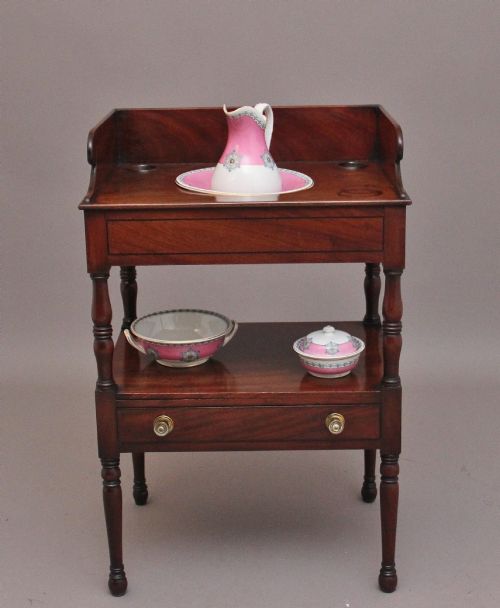
An Edwardian bedroom washstand provides a dedicated space for morning ablutions before the widespread installation of indoor plumbing. These pieces appear frequently alongside dressing tables, chamber pots, and jug and bowl sets within larger bedroom suites.
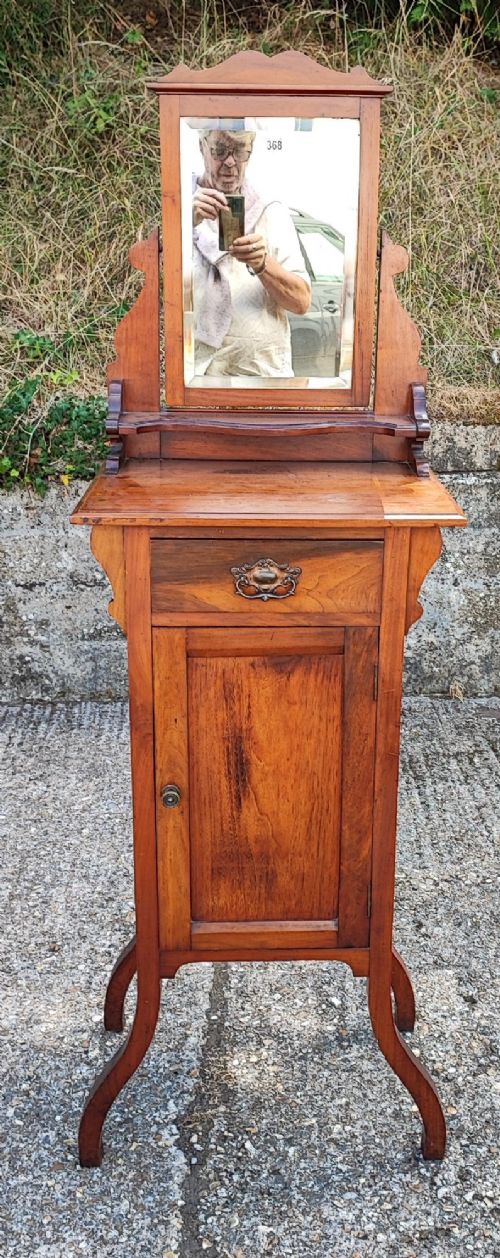
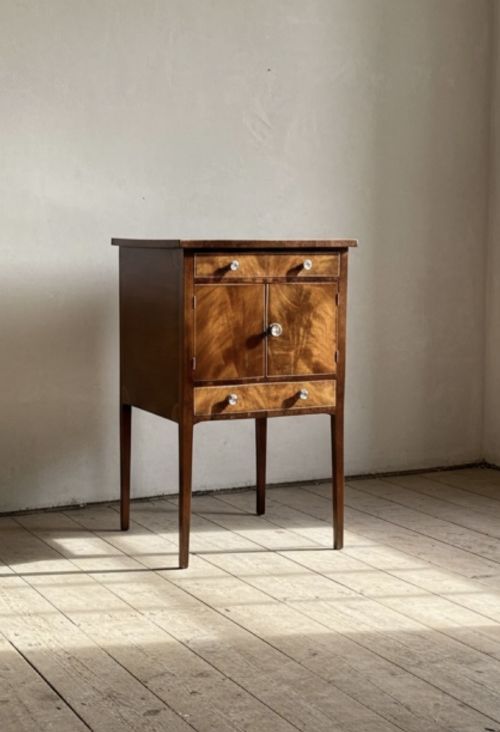
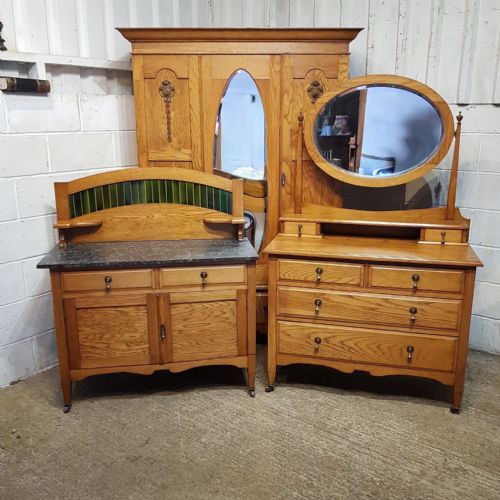
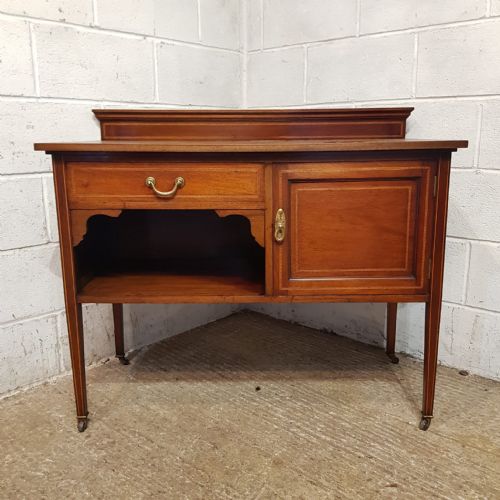
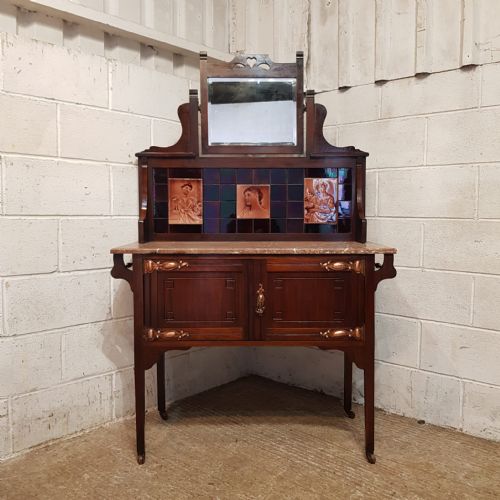
The most common version met on this page is the Edwardian mahogany washstand, often fitted with a marble top and tiled back to protect the wall from splashes. Pieces also emerge in pine, walnut, and satinwood, reflecting the domestic choices of the early twentieth century.
Makers occasionally produced washstands influenced by earlier styles, leading to examples displaying Victorian, Georgian, or Arts and Crafts sensibilities. These varied forms demonstrate how utilitarian furniture absorbed prevailing design movements.
Materials and construction
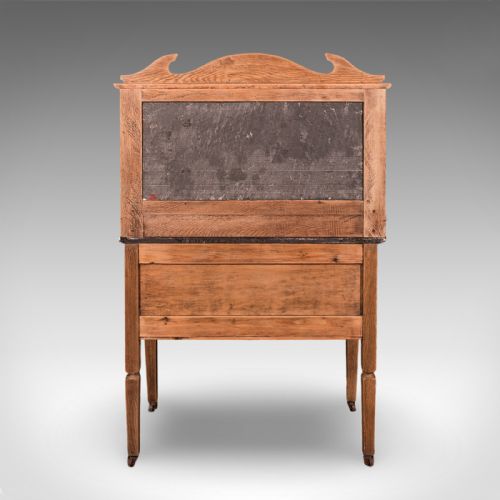
Makers built these washstands using structural timbers such as mahogany, pine, and ash, sometimes accented with satinwood or walnut veneers. Marble surfaces and ceramic tiles provided durable, water-resistant tops designed to withstand daily use with jug and bowl sets.
Joinery techniques relied on traditional cabinetmaking methods appropriate for heavy stone tops and timber frames. Brass hardware, metal fixtures, and ceramic components completed the construction of these utilitarian bedroom pieces.
Listings combine mahogany, marble, pine, and ceramic materials across Edwardian, Victorian, and Arts and Crafts styles.
Judgements of quality
The selection of timber and the quality of the marble slab determine the standing of an individual piece. Mahogany and satinwood examples with heavy rouge marble tops represent a more ambitious standard than simpler painted or plain pine versions.
Integration of decorative elements such as inlaid woodwork, art nouveau carving, or aesthetic movement tiles separates standard utility items from more elaborate chamber furniture. The cohesion of matched suites and the preservation of original ceramic accessories further define the hierarchy of these objects.
Harrods
The Edwardian Bedroom Washstand Glossary
- Washstand
- A piece of bedroom furniture designed to hold a basin and pitcher for washing. These items often include marble tops and tiled splashbacks.
- Jug and bowl set
- Ceramic basins and matching pitchers used for personal hygiene before plumbed bathrooms. They sit directly upon the washstand surface.
- Aesthetic movement
- A late nineteenth-century design style emphasising visual beauty over narrative content. Pieces in this style utilise simplified forms and specific decorative motifs.
- Satinwood
- A durable hardwood with a lustrous, golden sheen. Cabinetmakers employed it for veneers and inlay work on finer furniture.
- Chamber pot
- A ceramic vessel kept in a bedroom for nighttime use. They form part of the broader assortment of bedroom ceramics.
Edwardian Bedroom Washstand: Frequently Asked Questions
What is an Edwardian bedroom washstand?
An Edwardian bedroom washstand is a wooden piece of furniture made to support a ceramic basin and pitcher before plumbed bathrooms became standard.
They typically feature stone tops and tiled backs to handle water splashes during morning routines.
How were washstands used originally?
Households used washstands for daily washing and grooming in the bedroom before running water was installed in sleeping quarters.
Water was poured from a jug into a matching bowl, with slops emptied into a cabinet compartment below.
How do I live with a washstand today?
A washstand functions well as a hallway console, a bathroom vanity, or a plant stand in a sitting room.
The marble top provides a durable surface for modern decorative objects while retaining its historic character.
How do I tell Edwardian pieces from Victorian ones?
Edwardian washstands generally exhibit lighter timbers, simpler lines, and brighter satinwood or mahogany veneers compared to heavier Victorian predecessors.
Victorian examples often lean towards darker woods and more ornate aesthetic or revival styling.