
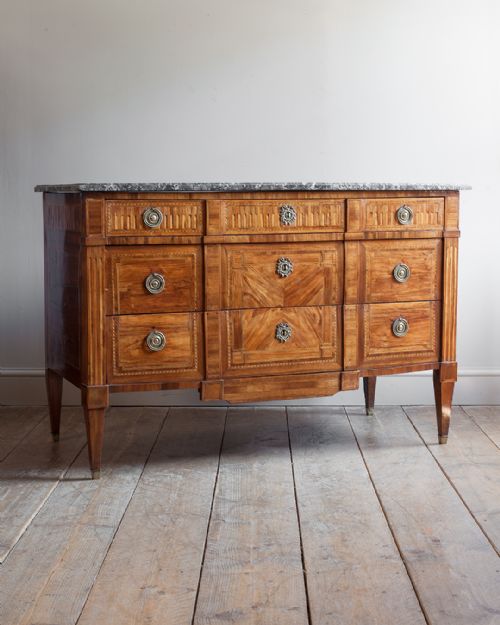
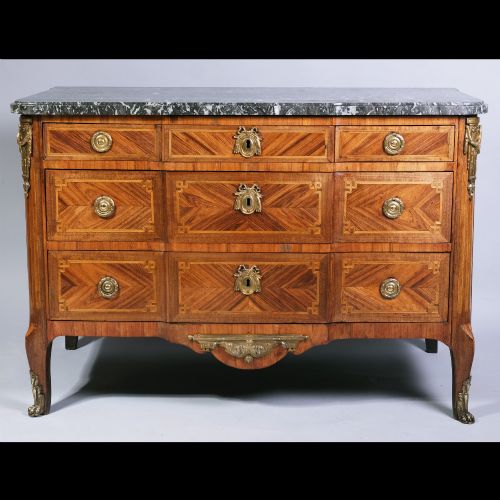
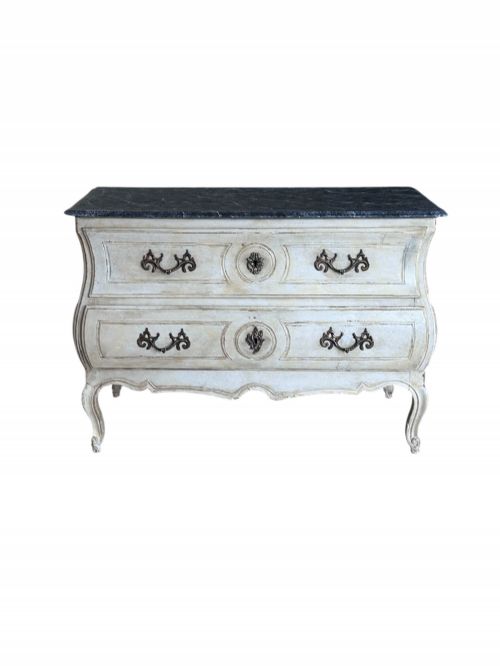
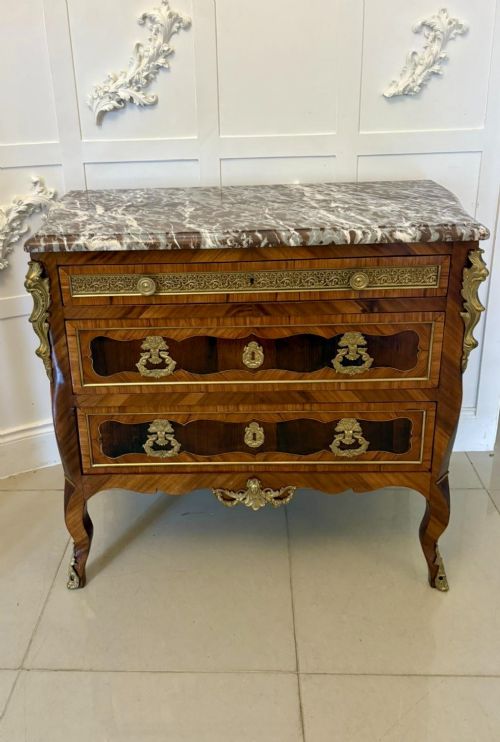


Marble Top Sideboard Chest
A marble top sideboard chest brings solid stone surfaces together with timber drawers, offering a sturdy yet refined focal point for any room.
Marble Top Sideboard Chest
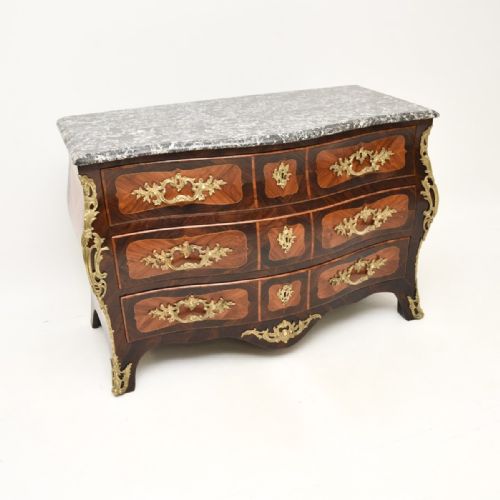
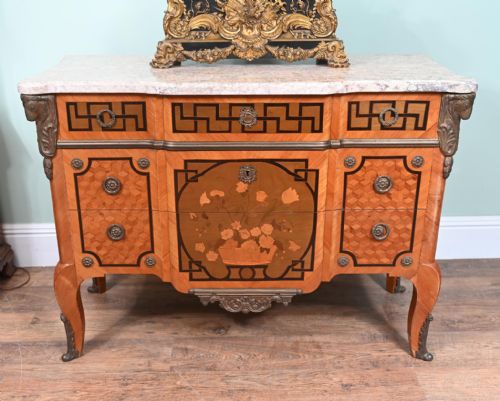
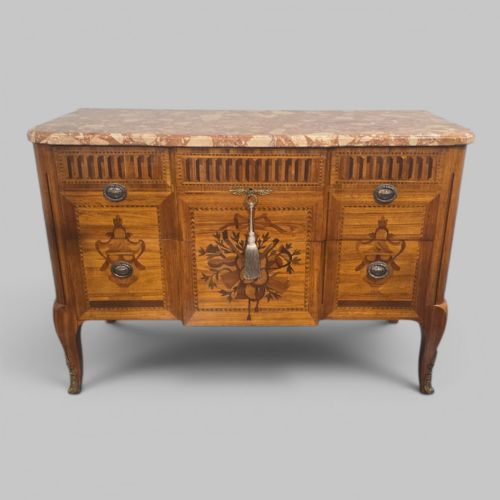
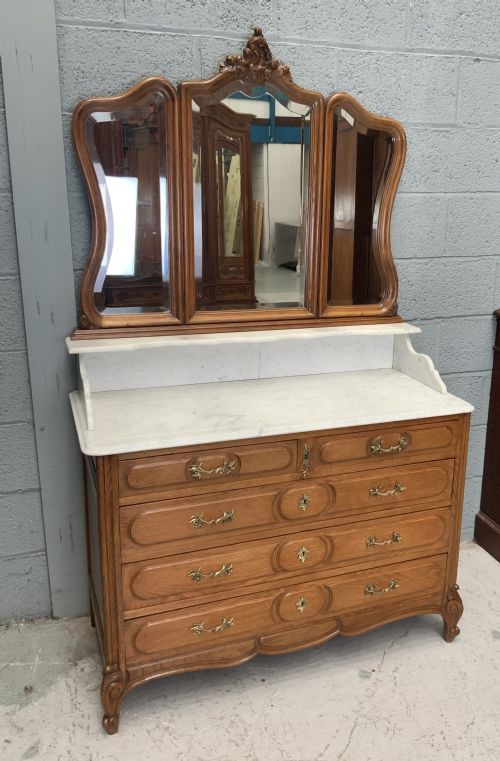
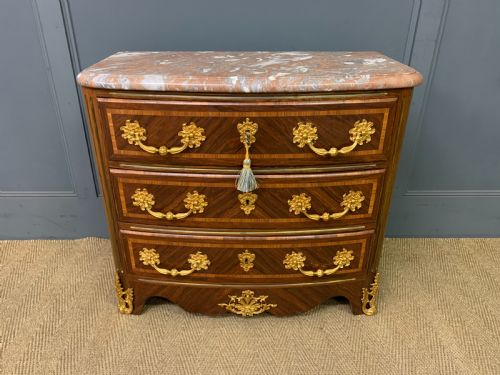
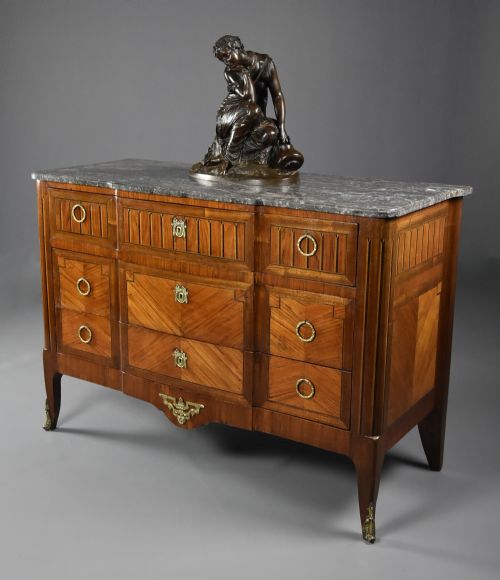
A marble top sideboard chest typically takes the form of a commode, a chest of drawers, or a washstand originating primarily from French and continental workshops. These pieces bridge the gap between utilitarian storage and decorative furniture, utilising heavy stone slabs fitted precisely to wooden carcases. Buyers encounter numerous examples spanning the eighteenth century through to the early twentieth century.
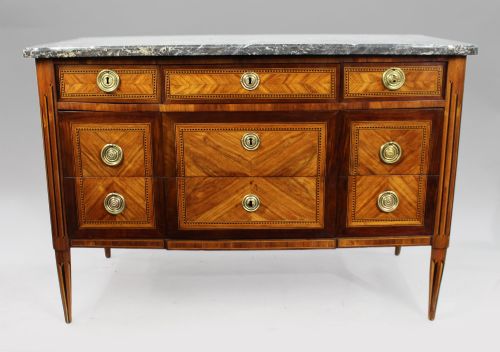
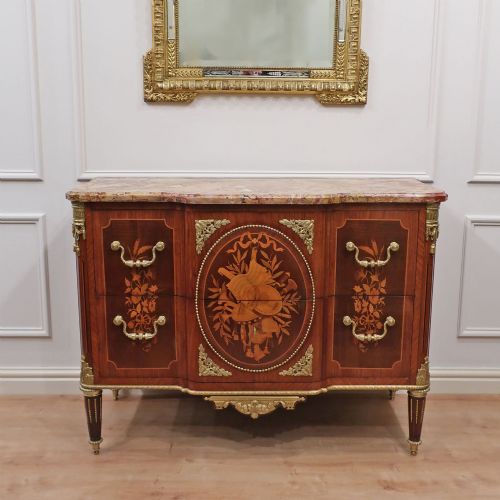
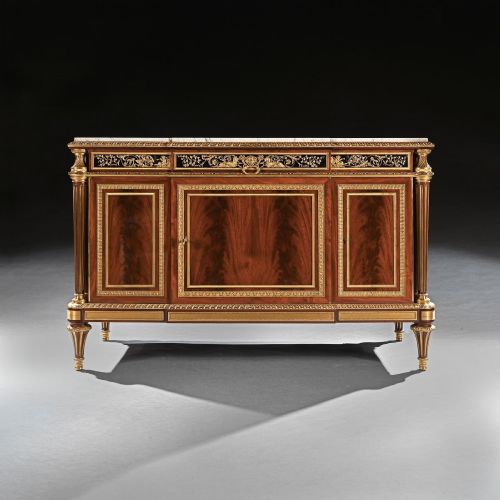
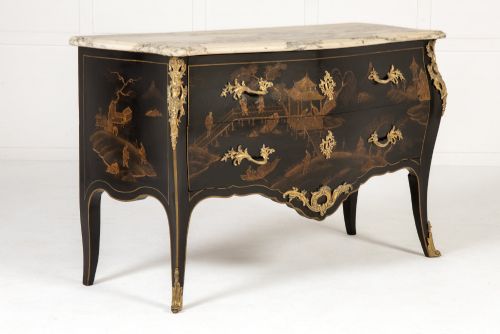
The selections on this page lean heavily toward continental aesthetic movements, particularly Louis XV and Louis XVI designs alongside later revivals. Forms range from serpentine fronts and bombé profiles to straight breakfront configurations with multiple drawers or cupboards. Walnut, kingwood, and mahogany provide the structural wooden foundation for these substantial items.
Materials and Construction
Cabinetmakers constructed the underlying carcase using timbers such as walnut, oak, mahogany, and satinwood, frequently applying elaborate veneers including kingwood, tulipwood, and parquetry patterns. Bronze and ormolu mounts were cast and chased to accentuate corners, feet, and drawer surrounds, adding structural protection and visual weight. Lacquer and japanned finishes occasionally appear on specific decorative models.
The defining element rests upon the summit: a heavy slab of marble, sometimes shaped to follow the serpentine or breakfront contours of the wood below. Scagliola and rouge marble variants provide contrasting colours and veining patterns. Skilled stonemasons shaped these slabs to fit flush against the timber framing.
Listings feature walnut, mahogany, oak, and exotic veneers paired with marble, brass, and bronze across nineteenth and eighteenth-century examples.
Judging Quality and Execution
Quality rests upon the precision of the cabinetwork and the integration of the stone top with the wooden base. Finer pieces display seamless marquetry matching across drawer fronts and crispness in the bronze or ormolu mounts rather than mass-produced casting. The thickness and figuring of the marble slab, along with its original association to the carcase, dictate the standing of an individual piece.
Proportion and the handling of regional styles distinguish standard utility items from exceptional workshop output. The depth of carving on oak or walnut surfaces and the fidelity to period design principles demonstrate the maker's competency. Original hardware and sound structural integrity elevate the piece significantly.
Jacques Bircklé·Henry Dasson·Weisweiler·Jean-Henri Riesener
The Marble Top Sideboard Chest Glossary
- Commode
- A low chest of drawers or sideboard, typically standing on relatively short legs and popular in eighteenth and nineteenth-century France. This form provides the primary shape for most items matching this search.
- Ormolu
- Gilt bronze ornamentation applied to furniture mounts, escutcheons, and feet. This technique involves coating bronze with a finely ground gold mercury amalgam and firing it.
- Bombe
- A swelling, convex curved shape utilised on the front and sides of furniture carcases. This profile requires advanced woodworking skill to align drawers properly.
- Marquetry
- Decorative veneer patterns formed by fitting small pieces of various coloured woods and other materials into a backing. Craftsmen use this technique to create floral or geometric designs.
- Scagliola
- A composite material made from selenite, glue, and pigments, mimicking true marble. Artisans inlay and polish this substance to achieve stone-like decorative surfaces.
Marble Top Sideboard Chest: Frequently Asked Questions
What is a marble top sideboard chest used for?
These pieces function primarily as storage furniture with the added benefit of a durable stone surface for displaying objects or serving items. Historically placed in bedrooms, hallways, or reception rooms, they held linens, clothing, or household goods.
Today, buyers utilise them in dining rooms as sideboards or in living spaces as statement storage units. The stone surface resists moisture and heat better than plain wood.
How do I identify a Louis XV style piece?
Louis XV furniture relies on asymmetrical curves, cabriole legs, and floral marquetry without rigid straight lines. The overall aesthetic is fluid and organic.
Later nineteenth-century revivals adopted these same sweeping contours, so examining the internal construction timber helps determine the actual age.
Are marble tops always original to the chest?
Most pieces retain their original stone slabs, though replacements occurred over centuries due to breakage. Close inspection reveals whether the marble edges match the exact wear patterns and contours of the wooden frame beneath.
A correct fit and matching period mineral composition confirm the integrity of the combination.
How should I care for antique wood and marble?
Maintain the timber surfaces with appropriate paste wax applied sparingly and buffed with a soft cloth. Avoid silicone sprays or excessive moisture on antique veneers.
Clean the marble top using mild soap and warm water, avoiding acidic cleaners like vinegar or lemon juice that etch the polished stone surface.