




Marble Top Secretaire Desk
A marble top secretaire desk provides a solid stone writing surface above a fall front that conceals fitted interior compartments.
Marble Top Secretaire Desk
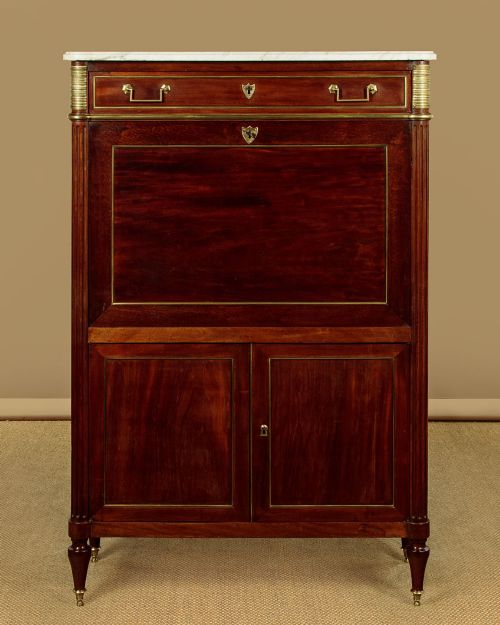
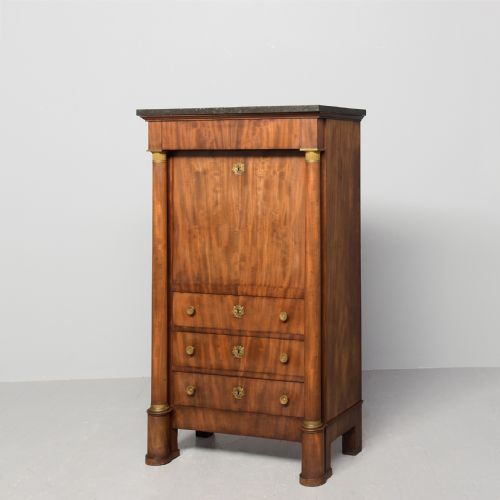
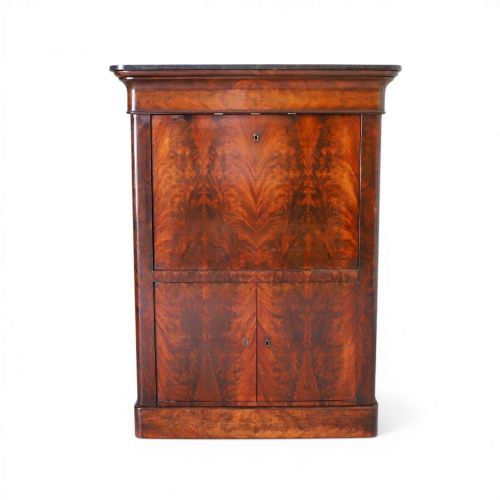
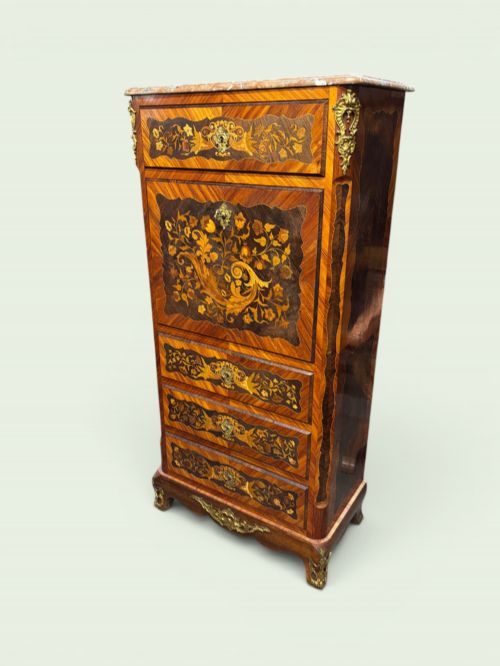
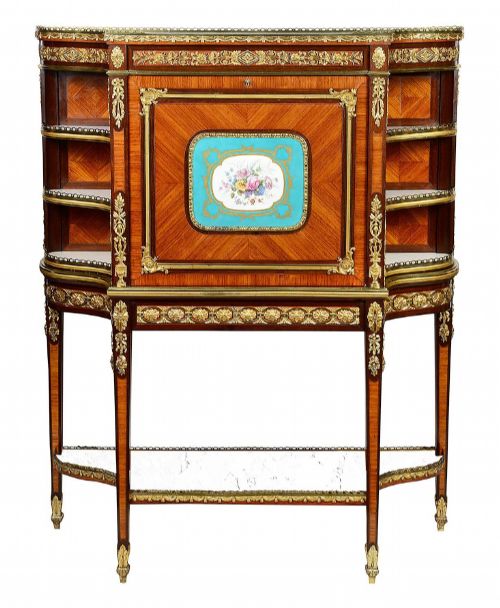
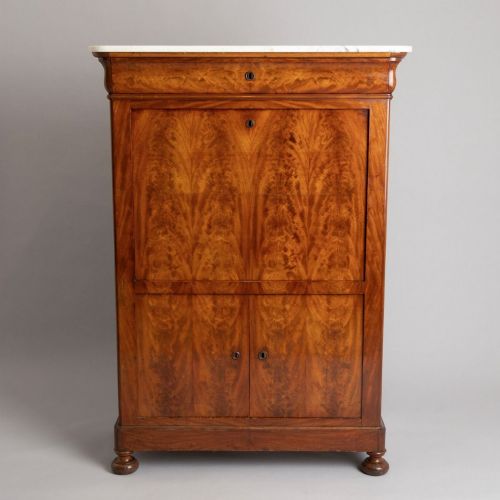
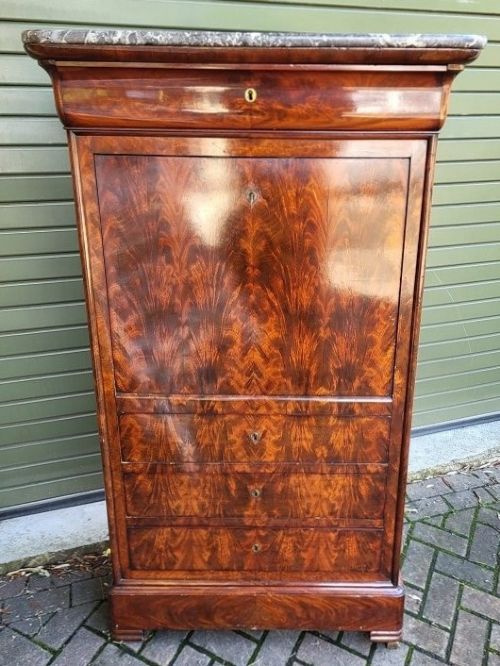
A marble top secretaire desk combines a smooth stone slab with a drop-down writing surface, offering both a sturdy display ledge and a hidden workspace. These pieces emerge primarily from the nineteenth century, spanning stylistic revivals from Louis XV and Louis XVI through to French Empire and Louis Philippe designs.
Materials and construction
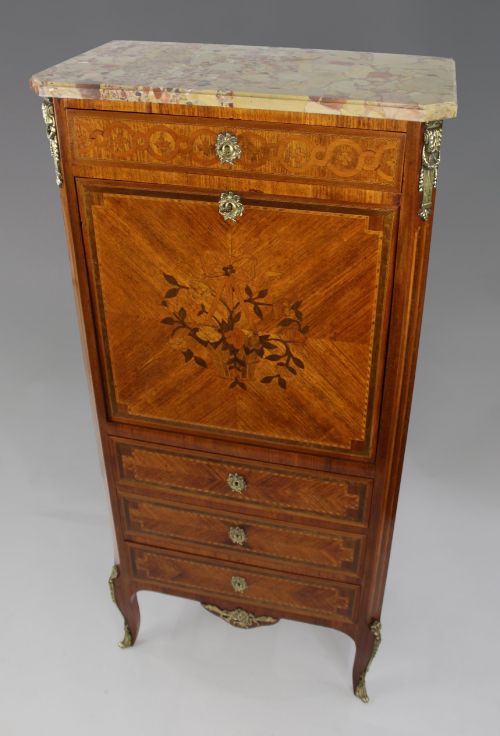
Cabinet makers constructed carcass frames from solid hardwoods like mahogany, walnut, and kingwood, often applying intricate marquetry, parquetry, or flame mahogany veneers to the exterior surfaces. Smooth marble slabs sit precisely on the upper surface, providing a cool, durable finish that contrasts with the warm timber below.
Gilt bronze, ormolu, and brass mounts accent the corners, keyhole escutcheons, and drawer pulls, securing the structural elements while adding decorative emphasis. Drop-front writing panels conceal internal pigeonholes and secret compartments constructed with careful joinery.
Listings feature walnut, mahogany, kingwood, tulipwood, and satinwood finishes combined with marble and ormolu.
Evaluating quality
The distinction between standard production and superior craftsmanship rests in the selection of wood veneers and the precision of the marquetry patterns. Finer pieces display continuous grain matching across the fall front and drawer banks, alongside heavier, fire-gilded ormolu mounts with crisp chisel work.
The integration of the marble top and the complexity of the internal secret drawers further separate exceptional examples from simpler utilitarian models. Original mounts and uncompromised internal mechanisms demonstrate the skill of the original workshop.
Blake, London·MILLET
The Marble Top Secretaire Desk Glossary
- Secretaire abattant
- A tall vertical desk featuring a hinged fall-front writing flap that drops down to reveal a fitted interior. This form maximises storage capacity while maintaining a compact footprint in a room.
- Ormolu
- Gilded bronze ornamentation applied to furniture surfaces for decorative effect. The technique involves treating bronze with a mercury and gold amalgam before heating.
- Marquetry
- Decorative veneer work arranged in pictorial or geometric patterns using various coloured woods. Artisans carefully cut thin slices of timber to fit together like a puzzle.
- Parquetry
- Geometric mosaic woodwork used to cover furniture surfaces in repeating patterns such as cubes or chevrons. This technique showcases the natural grain variations of timbers like kingwood and walnut.
- Escritoire
- An antique writing cabinet or desk equipped with drawers and a writing surface. The term encompasses various French and English formats from the eighteenth and nineteenth centuries.
Marble Top Secretaire Desk: Frequently Asked Questions
What is a secretaire abattant?
A secretaire abattant is an upright cabinet featuring a vertical drop-front panel that opens to create a writing surface. This form allows owners to conceal paperwork and writing materials when not in use.
Inside the fall front, makers typically included small drawers and pigeonholes for organisation. Many versions also incorporated secret compartments accessible by removing specific internal elements.
How do I care for the marble top?
Marble surfaces require simple cleaning with a damp cloth and mild soap, avoiding acidic substances like lemon or vinegar that can etch the polish. Using coasters and protective mats prevents scratching and staining.
Waxing the wooden sections around the stone helps maintain the timber finish without damaging the adjoining marble edge. Regular dusting keeps abrasive particles from settling into the porous areas of the stone.
What woods were used in these desks?
Cabinet makers utilised dense hardwoods including mahogany, walnut, kingwood, tulipwood, and satinwood for the primary structures and decorative veneers. Flame mahogany and exotic grain patterns were specifically chosen for their visual impact on large flat surfaces.
Secondary timbers like oak and fruitwood frequently formed the internal drawer linings and secondary framing. Parquetry and marquetry panels combined multiple contrasting woods to create geometric or floral designs.
Where were these desks placed?
These pieces traditionally served in formal reception rooms, studies, and boudoirs as both functional writing stations and decorative display cabinets. The finished back and side panels allowed them to sit prominently against walls or within room perimeters.
The heavy marble top provided a stable surface for lamps, clocks, and decorative bronzes. Their upright proportions made them practical for rooms with limited floor space.