


Marble Plinth Urns
Marble plinth urns are classical decorative vessels mounted on stone bases, bringing sculptural presence and antique dignity to any room.
Marble Plinth Urns
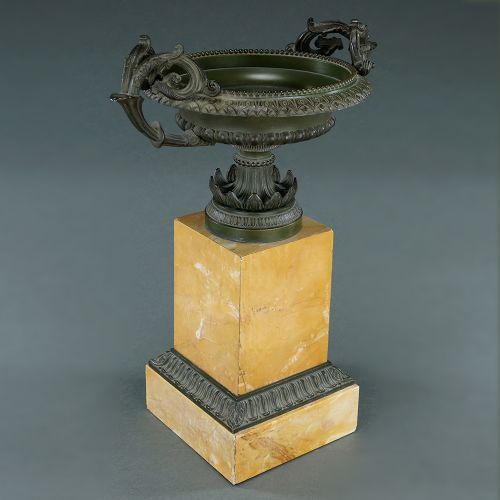
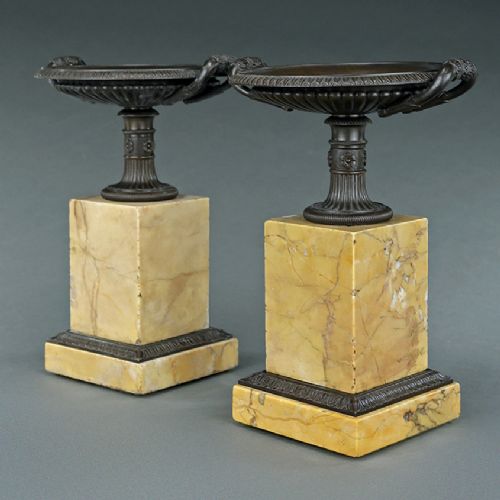
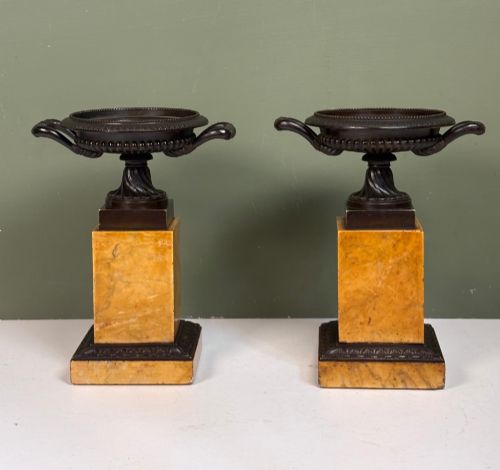
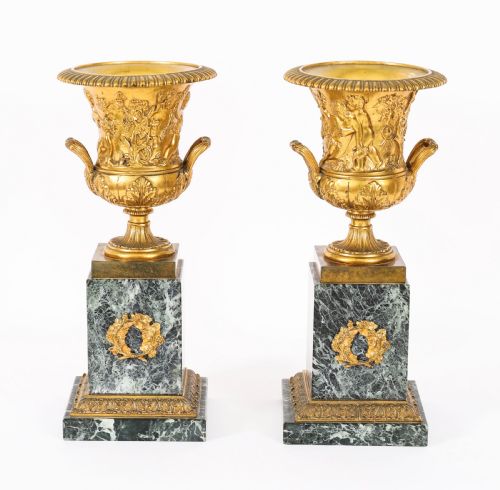
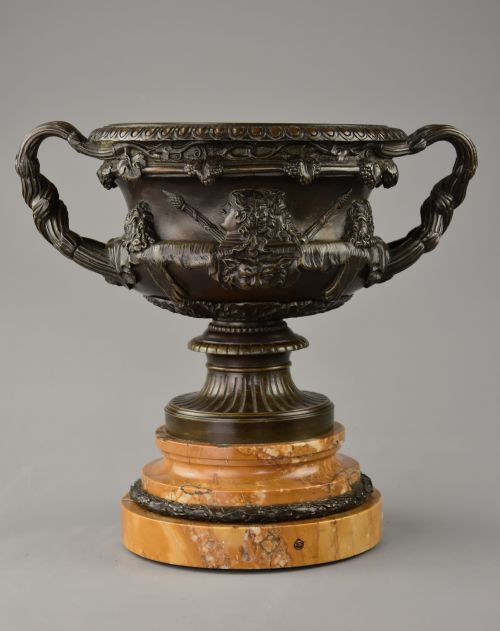
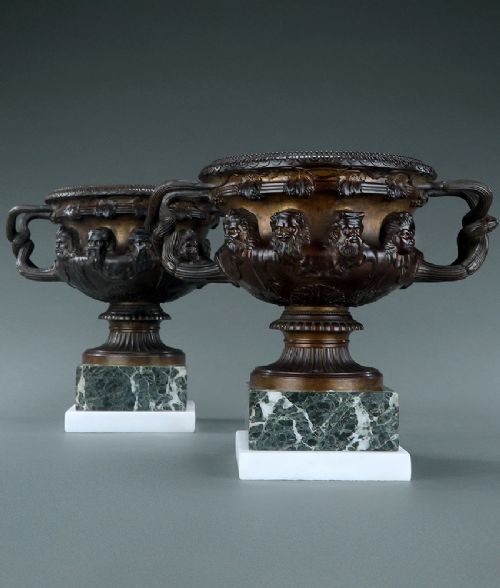
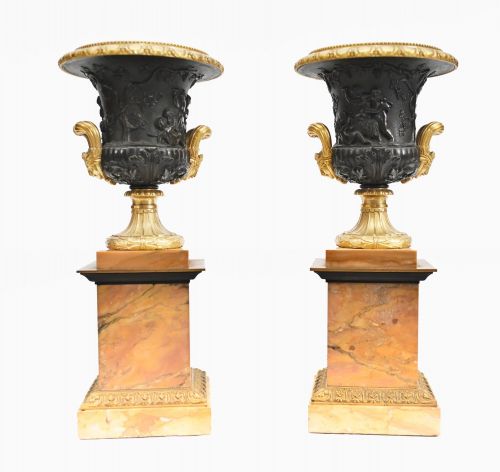
When you search for marble plinth urns, you encounter decorative objects spanning the eighteenth, nineteenth, and early twentieth centuries, rooted in Neoclassical, French Empire, and Grand Tour styles. The examples most frequently met on this page combine cast bronze figures or classical vase bodies with substantial stone bases, often taking the form of campana urns or tazzas.
The objects serve primarily as decorative accents, drawing upon ancient Greek and Roman forms interpreted by later European makers. Many items reflect the nineteenth-century taste for classical antiquity, incorporating sculptural details like cherubs, Bacchus motifs, and handles modelled after famous ancient artefacts such as the Warwick Vase.
Beyond standard tabletop urns, the selection encompasses taller pedestals, columns, and plinth stands designed to elevate busts, smaller vessels, or lighting. These pieces utilise materials ranging from white and green marble to carved wood, gesso, and scagliola, reflecting diverse domestic interiors across different periods.
What varies in quality
Quality in these pieces rests upon the crispness of the bronze casting and the depth of hand-chasing applied to the metal surfaces after removal from the mould. Superior examples display sharply defined facial expressions, botanical details, and clean joints where the metal meets the stone plinth.
Several bronze urns proudly feature sculpted cherubs and Bacchus motifs, ensuring your classical decor comes with a side of mythological revelry.
Selim Bright
The Marble Plinth Urns Glossary
- Campana urn
- A bell-shaped vessel with a flaring rim and a pedestal foot, commonly associated with classical antiquity. These forms frequently appear in bronze and sit upon square marble bases.
- Grand Tour
- A cultural phenomenon of the eighteenth and nineteenth centuries where travellers collected classical antiquities and souvenirs across Italy. Many items on this page replicate specific ancient monuments encountered during these journeys.
- Ormolu
- Gilded bronze, where a layer of gold is applied to a bronze base using mercury amalgamation or electrochemical plating. This technique imparts a rich golden lustre to decorative mounts and handles.
- Tazza
- A shallow saucer-like vessel or cup mounted on a stem and a foot, often used for display. These pieces appear frequently in bronze and marble configurations.
- Scagliola
- A composite material made from selenite, glue, and pigments, embedded in plaster to imitate marble and other hard stones. It is shaped and polished to create decorative architectural elements and urn bodies.
Marble Plinth Urns: Frequently Asked Questions
How were marble plinth urns used?
These pieces functioned primarily as decorative ornaments on mantelpieces, libraries, and side tables. They added an air of classical erudition to formal rooms.
Larger versions and columns served to elevate sculptures, busts, or smaller vessels within grand nineteenth-century interiors.
How do I identify a Grand Tour piece?
Grand Tour items often replicate famous ancient monuments, such as the Warwick Vase or specific archaeological finds from Italy. They were acquired by travellers as high-end souvenirs during the nineteenth century.
Look for fine bronze reductions and quality marble or slate bases that mirror known classical prototypes.
What materials are used in these urns?
The primary materials include various types of marble, such as white, green, and siena, combined with bronze, gilt bronze, and ormolu. Some examples incorporate carved wood, gesso, or scagliola.
Different periods favoured different stone colours and patinations, reflecting changing tastes throughout the Victorian era and earlier.