



Marble Pedestal Vases
Marble pedestal vases unite classical form with heavy stone, offering an imposing presence for interiors.
Marble Pedestal Vases
Marble pedestal vases encompass a striking mix of decorative urns, plant stands, and classical display pieces designed to elevate heavy vessels or support botanical displays. These objects serve as focal points in period rooms, carrying an architectural dignity rooted in classical antiquity.
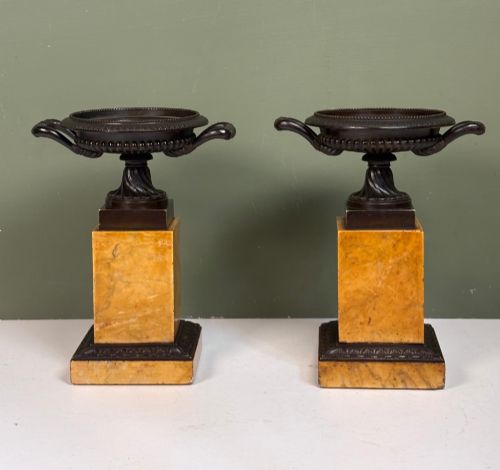
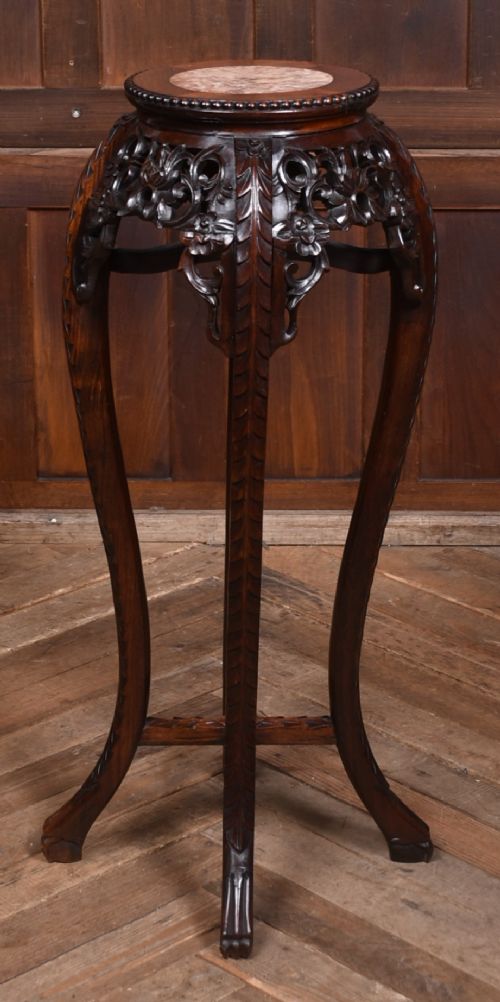
The selections available here lean heavily toward two distinct traditions: European Grand Tour souvenirs and Neoclassical revival pieces alongside Chinese carved hardwood and marble top stands. Buyers encounter French Empire examples alongside Qing Dynasty plant stands, bridging Western bronze mounts and Eastern stonework.
Forms range from monumental urns and cassolettes to low jardiniere stands and tall pedestal tables inset with rouge marble or slate. Each piece utilises its stone and wooden elements to anchor a room with undeniable presence.
Materials and construction methods
Craftsmen built these pieces using dense stones including rouge marble and slate, often paired with structural hardwoods like rosewood or hongmu for stands. Stonemasons turned and polished the marble sections on lathes, while cabinetmakers joined dense timbers with traditional joinery to support the heavy stone tops.
Metal components such as bronze, gilt bronze, ormolu, and silvered bronze underwent lost-wax casting and hand-chasing before being applied to stone bodies. This combination of cold stone and warm metal created durable decorative objects that withstood heavy daily use.
Some nineteenth-century makers built plant stands sturdy enough to double as miniature classical architecture.
Factors of quality and execution
Quality rests in the crispness of the bronze chasing and the depth of carving in the supporting woodwork or marble surfaces. Superior examples display tightly fitted metal mounts, rich patination on the bronze, and flawless integration of inset marble panels.
Lesser pieces show mechanical shortcutting in the carving and loose or ill-fitting metal mounts. The weight and selection of the marble itself, from plain dark slate to richly variegated rouge marble, dictates the overall ambition of the piece.
The Marble Pedestal Vases Glossary
- Ormolu
- Gilded bronze applied to furniture and decorative objects. This technique creates a rich golden finish that contrasts sharply against dark marble.
- Cassolette
- A decorative vase designed to function either as a traditional urn or inverted to serve as a perfume burner. These vessels often feature pierced lids.
- Grand Tour
- A cultural journey undertaken by wealthy Europeans during the eighteenth and nineteenth centuries. Souvenirs included miniature bronzes and marble architectural models.
- Hongmu
- A dense, heavy Chinese hardwood used traditionally for fine furniture and plant stands. The timber polishes to a dark, lustrous finish.
- Jardiniere
- A large ornamental pot or stand designed to hold indoor plants. These pieces often feature water-resistant marble tops to protect underlying frames.
Marble Pedestal Vases: Frequently Asked Questions
How were marble pedestal vases used?
These pieces functioned primarily as display objects, housing indoor plants or standing empty as sculptural focal points in formal rooms.
Larger urns often sat upon pedestals in hallways or drawing rooms, while lower stands supported porcelain bowls and botanical specimens.
How do I distinguish French Empire from Chinese export stands?
French Empire pieces rely heavily on cast bronze mounts, classical motifs, and smooth marbles like rouge varieties.
Chinese export stands utilise carved hardwoods such as hongmu, featuring pierced aprons and inset marble panels without metal mounts.
Can these stands support heavy planters?
Yes, the hardwood and stone construction of these pieces was engineered specifically to bear substantial weight.
The dense timber frames and thick marble tops provide a stable platform for large ceramic jardinieres and established plants.
How should I care for marble and bronze?
Dust marble surfaces regularly with a dry cloth and avoid harsh chemical cleaners that can etch the polished stone.
Bronze and ormolu mounts require only gentle dusting, as vigorous polishing will remove the historic patination accumulated over generations.