
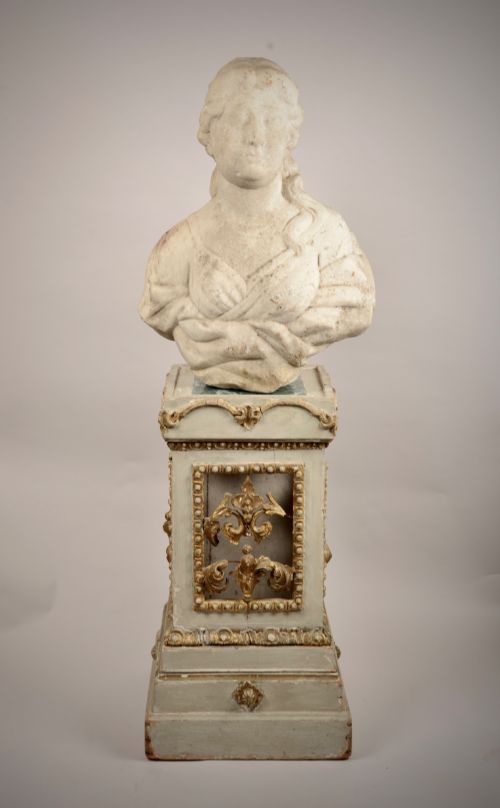
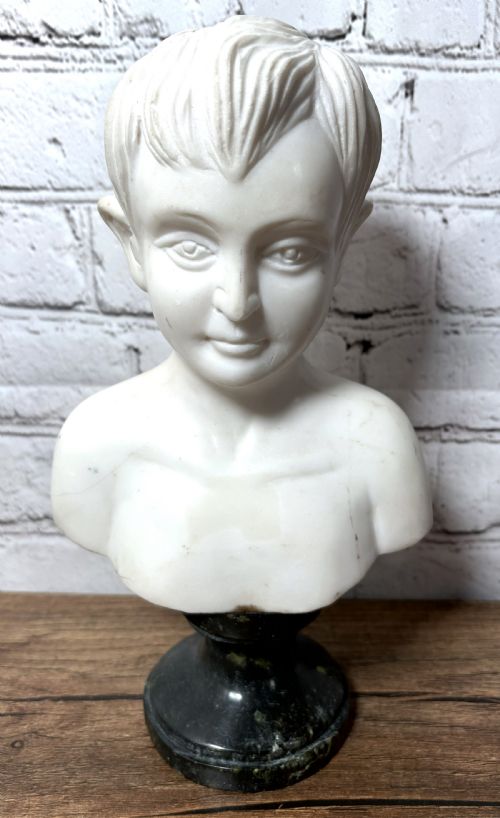

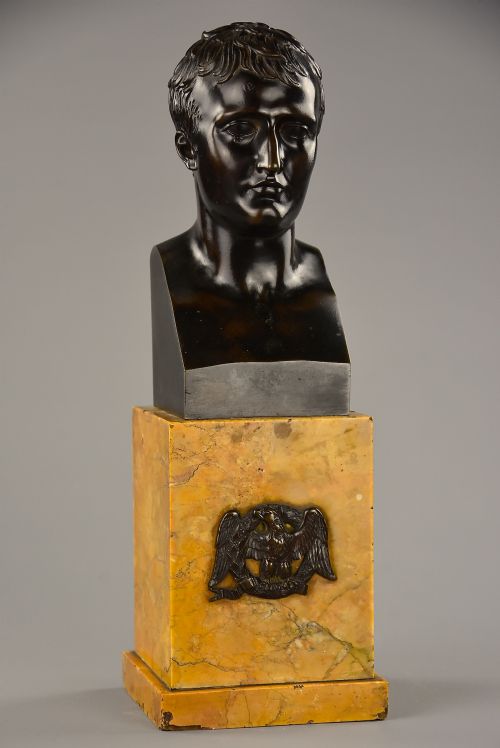


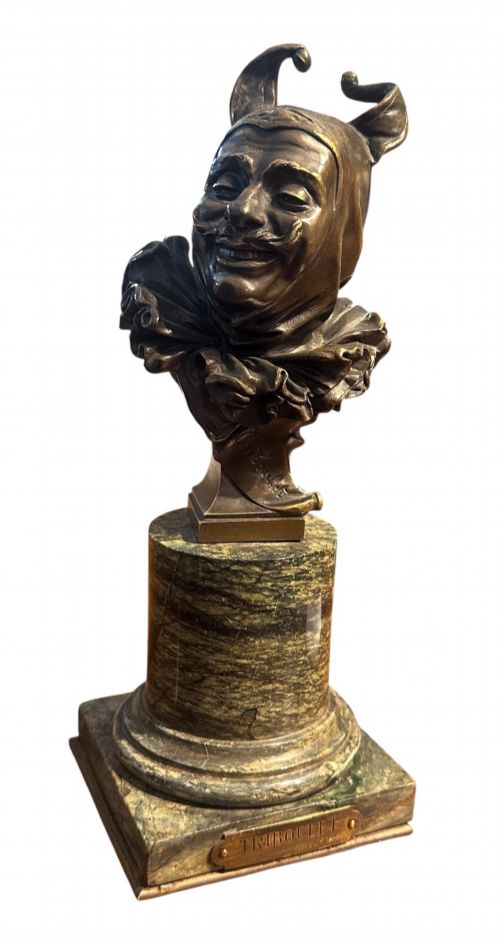


Marble Pedestal Busts
Marble pedestal busts are sculpted portraits raised on stone columns, bringing classical presence and sculptural depth into an interior.
Marble Pedestal Busts
When searching for marble pedestal busts, a buyer looks at sculpted stone portraits paired with supporting columns or plinths. These pieces combine carved figures with architectural stands designed to elevate them within a room.
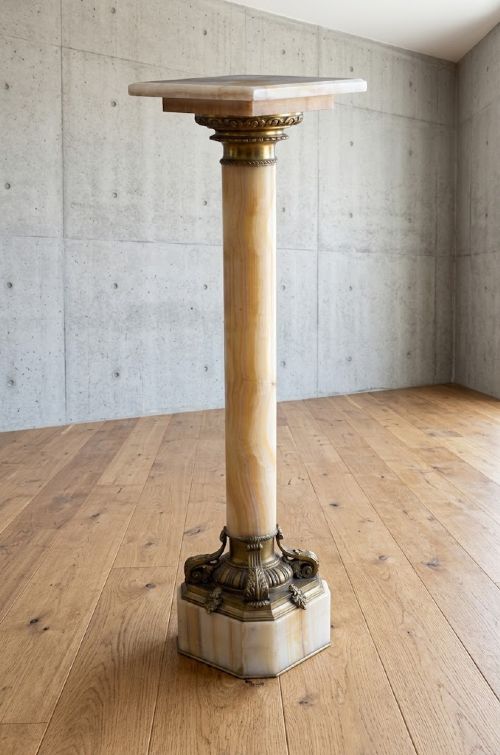
The versions most commonly met on this page date from the nineteenth century, reflecting neoclassical taste and classical revival styles. They range from library-scale pieces to large floor-standing arrangements incorporating ormolu mounts and variegated stone.
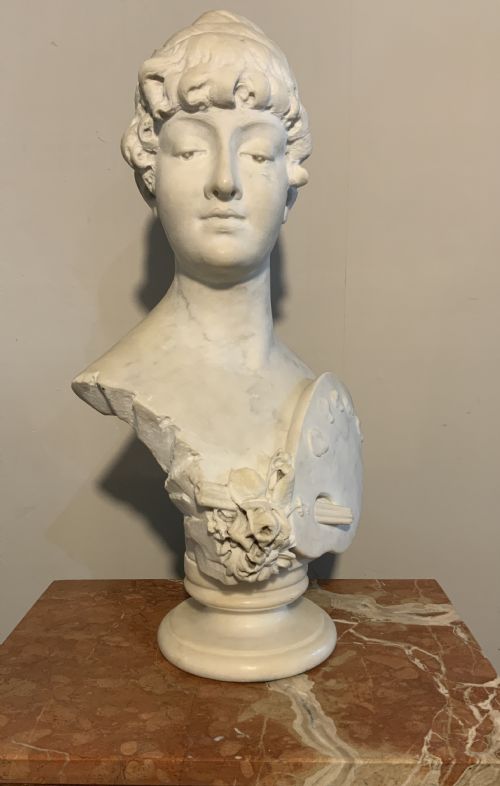
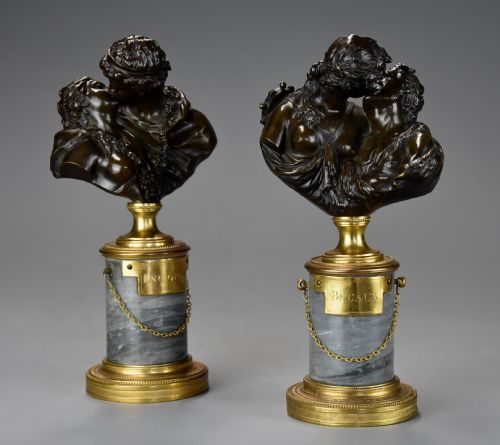
Makers and sculptors utilised various marbles, including Carrara, alongside bronze and onyx to render subjects from historical figures to unknown gentlemen. The resulting objects function simultaneously as portraiture and architectural furniture.
How they were made
Foundries cast bronze elements separately before chasing the metal surfaces and applying patination or gilding. Ormolu mounts and collars were then pinned or screwed directly onto the marble and stone bodies.
Several columns manage to rotate on their bases, letting a stern gentleman face the room from any desired angle.
What varies in quality
Quality rests in the anatomical precision of the carving and the purity of the stone. Superior portraiture captures subtle muscle structure and expression, whereas simpler pieces rely on standard proportions.
The integration of secondary materials dictates overall standard. Finer examples feature heavy cast ormolu mounts and well-figured variegated marble columns, whilst simpler items utilise plain stone and minimal mounts.
John Wenlock Rollins·E. Villanis
The Marble Pedestal Busts Glossary
- Carrara marble
- A type of white or blue-grey stone quarried in Italy, frequently utilised for classical sculpture. Its fine grain permits precise carving of facial details.
- Ormolu
- Gilt bronze applied as decorative mounts to furniture and stone pedestals. It adds metallic contrast to the cooler tones of carved marble.
- Scagliola
- A composite material made from selenite, glue and pigments, manipulated to imitate marble and other stones. It appears on pedestals to provide decorative surface pattern.
- Torchere
- A tall stand or pedestal originally designed to support a torch or lamp. In later periods, makers adapted these forms to hold busts and urns.
- Neoclassical
- A style drawing inspiration from the classical art and culture of ancient Greece and Rome. This aesthetic dominates nineteenth-century pedestal and bust design.
Marble Pedestal Busts: Frequently Asked Questions
What periods do these busts represent?
The listings encompass items spanning the seventeenth through to the twentieth centuries, with a strong concentration of nineteenth-century revival pieces.
Buyers will find works reflecting neoclassical, baroque and Victorian aesthetic movements.
How were pedestals used originally?
Pedestals functioned to elevate sculptures and busts for optimal viewing height within grand rooms and libraries.
They served both an architectural role in interior design and a display purpose for artwork.
Are the busts and columns sold together?
Some listings offer combined sets where the bust rests directly upon a matching column or stand.
Other entries present pedestals and busts separately as individual decorative objects.
What materials make up these pieces?
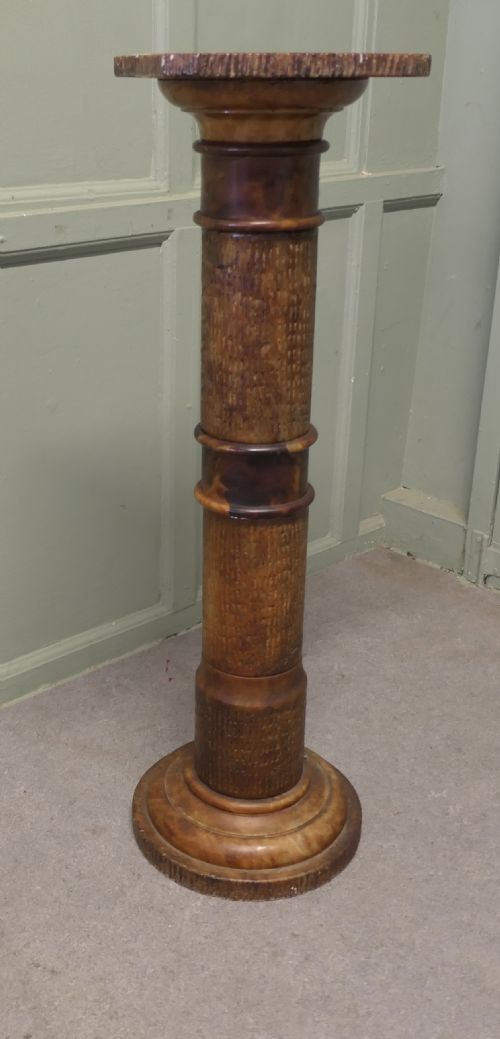
Sculptures utilise white and Carrara marble, alabaster and cast bronze. Supporting columns incorporate onyx, stone, scagliola and mahogany with ormolu or gilt bronze mounts.
How do I care for marble and stone?
Dust surfaces regularly with a soft, dry cloth to prevent grime accumulation on carved details. Avoid liquid cleaners that might penetrate unsealed stone or damage metal ormolu.