

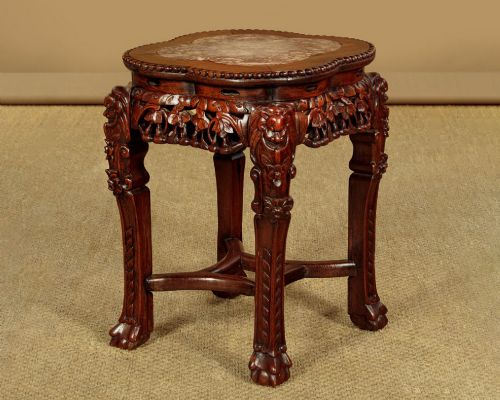
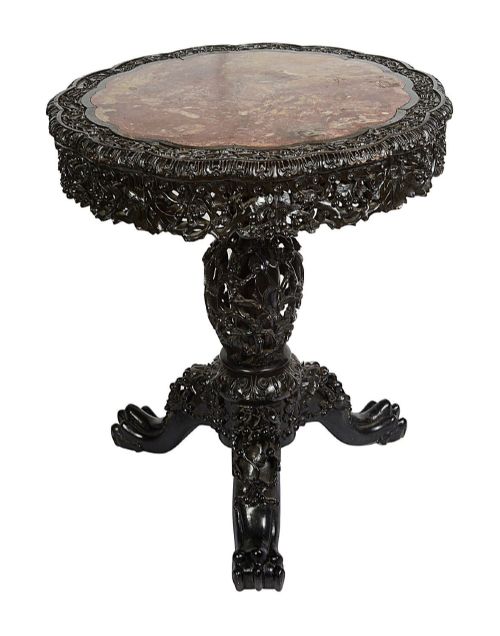
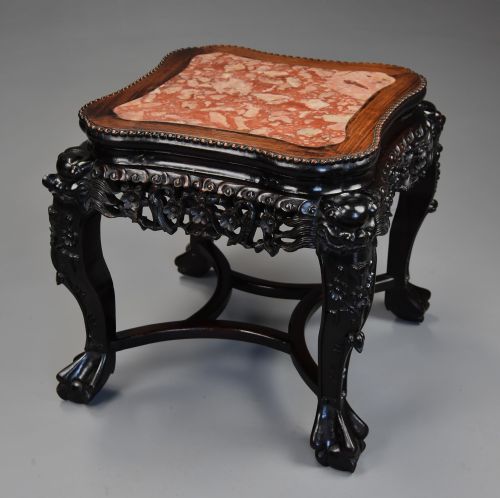
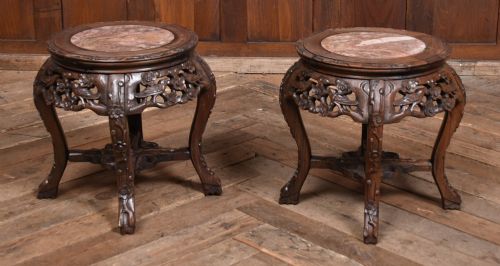




Marble Inset Plant Stand
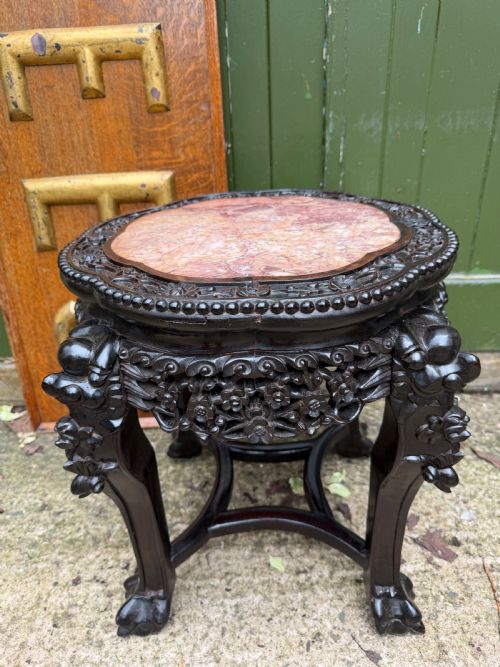
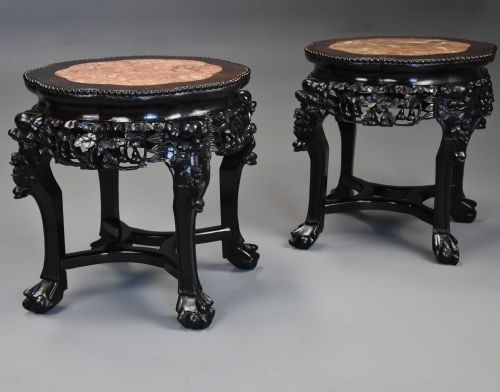
These marble inset plant stand examples bring together carved timbers and cool stone surfaces to elevate ferns, urns and vases.
Marble Inset Plant Stand
A marble inset plant stand is typically encountered as a carved wooden support featuring a smooth stone centre designed to hold jardinières, vases or ferns. Most pieces originate from the nineteenth century, spanning Victorian Britain and Chinese export workshops operating during the Qing Dynasty.
Forms vary from low occasional tables and barrel-shaped stools to tall pedestals intended for display. Buyers will frequently meet Chinese hardwood versions alongside French empire and ebonised designs.
The integration of a stone panel protected the timber from damp soil and water splashes while offering a stable surface for heavy ceramic pots. These versatile furnishings also function as side tables or lamp stands within period interiors.
Materials and construction methods
Construction relies heavily upon dense exotic hardwoods such as hongmu, padouk, rosewood and ebonised wood alongside mahogany and walnut. Artisans carved intricate decorative motifs directly into the timber frames before recessing the stone panels snugly into the tops.
The inset sections utilise variegated rouge marble or pale polished stone, cut to fit the shaped or circular apertures precisely. Additional detailing sometimes incorporates brass mounts or gilt accents, particularly on European pieces from the nineteenth century.
Marble Inset Plant Stand Retail Price Guide 2026
Typical asking prices for marble inset plant stand among the pieces listed under this phrase on Sellingantiques today, from the lower quarter to the upper quarter. They describe what is for sale here now, not the wider market.
Listings feature nineteen-century dates alongside Qing Dynasty and Meiji period origins.
Assessing quality in construction and stone
Quality rests upon the depth and crispness of the carving across the wooden frame, where superior examples exhibit fluid hand-chiselled detailing rather than shallow, uniform tooling. The density and weight of the timber selected, such as solid hongmu or padouk, likewise signal superior workshop output.
The character of the marble inset itself distinguishes finer pieces, with richly veined rouge stone commanding attention over plain slabs. Tight joinery around the stone perimeter ensures the top remains flush and stable under heavy vessels.
The Marble Inset Plant Stand Glossary
- Hongmu
- A traditional Chinese term for dense, fragrant hardwoods used in fine furniture production. These heavy timbers take a dark, lustrous polish.
- Jardiniere
- An ornamental pot or stand designed to hold live plants or floral arrangements. They often occupy elevated positions to display trailing foliage.
- Padouk
- A heavy, durable tropical hardwood prized for its reddish-brown colour and robust grain structure. It provides exceptional structural integrity for carved stands.
- Rouge marble
- A decorative limestone featuring rich red and white veining. It creates a striking contrast against dark ebonised or rosewood frames.
Marble Inset Plant Stand: Frequently Asked Questions
What were marble inset plant stands used for?
These furnishings served primarily to elevate heavy ceramic plant pots, urns and vases off cold floors within principal rooms. The stone centre protected the surrounding wood from water damage during watering.
Over time, owners also utilised them as occasional tables, lamp stands or bedside supports. Their compact footprints made them adaptable for corners and window recesses.
How do I identify Chinese export stands?
Chinese export stands typically feature dense hardwoods like hongmu, padouk or rosewood adorned with deep, traditional carving. Many date from the late nineteenth century and incorporate shaped aprons beneath the tabletop.
The inclusion of variegated rouge marble inserts is a hallmark of this tradition, reflecting workshops catering to Western tastes during the Qing Dynasty.
Are these stands suitable for modern plants?
They function exceptionally well for contemporary houseplants, as the stone top remains impervious to moisture from saucers and pots. Their sturdy construction easily supports heavy terracotta or ceramic containers.
Care should be taken to use protective pads beneath heavy vessels to prevent scratching the polished marble surface. Regular dusting preserves the carved wooden details.
How do French and Chinese stands differ?
French nineteenth-century examples often utilise mahogany, walnut or ebonised wood, sometimes accented with brass mounts and gilt details. They frequently align with Empire or Victorian design idioms.
Chinese pieces rely instead on indigenous hardwoods and distinct regional carving techniques centred around plant and geometric motifs. Both traditions, however, share the practical inclusion of a cool stone insert.