




Marble Decorative Vases
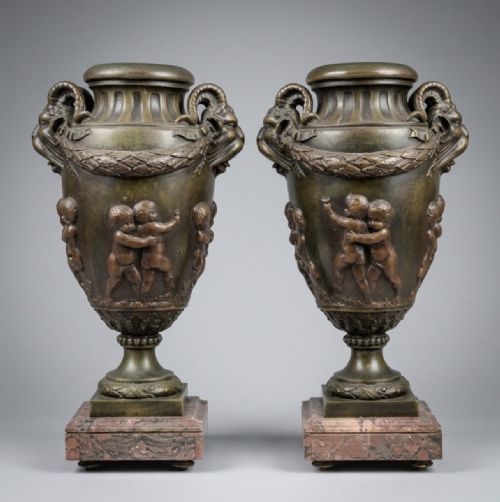
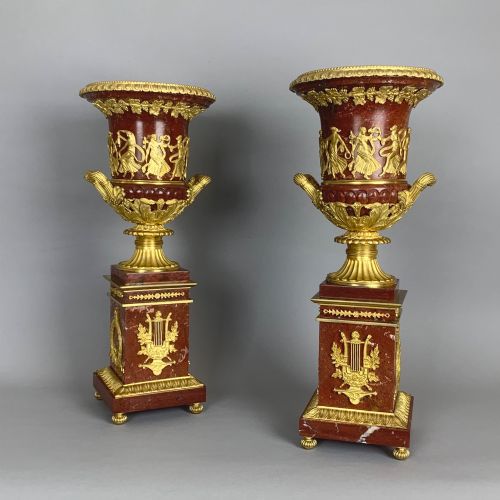
Marble decorative vases bring classical weight to a room, combining carved stone bodies with bronze or ormolu mounts.
Marble Decorative Vases
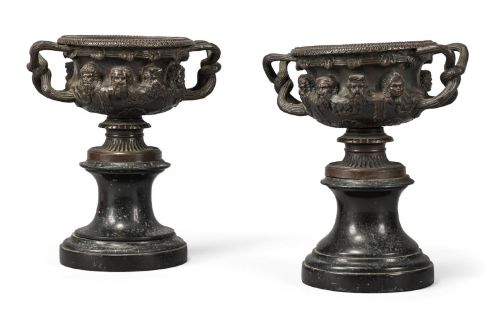
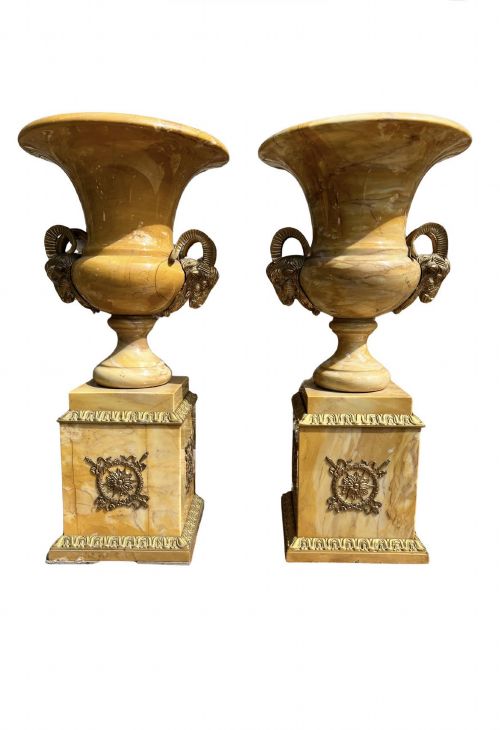
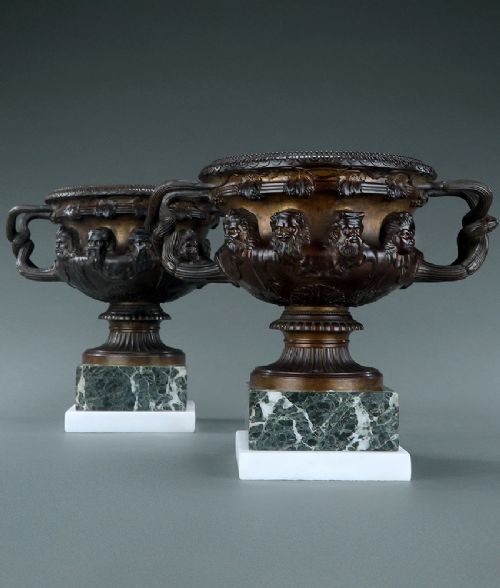
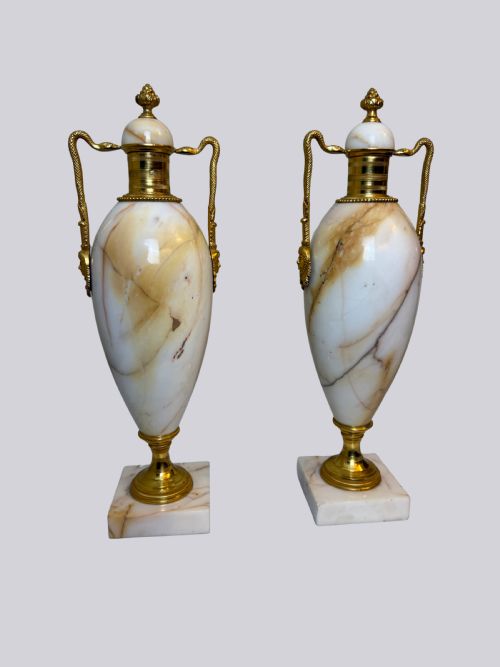
Marble decorative vases draw heavily on classical antiquity, emerging most frequently as nineteenth-century Grand Tour souvenirs and French Empire or Louis XVI style ornamental pieces. When you search for marble decorative vases, you encounter symmetrical urns, cassolettes with reversible lids, and amphora forms designed purely for display.
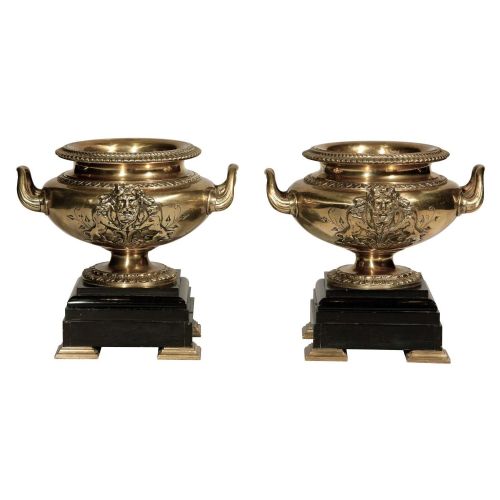
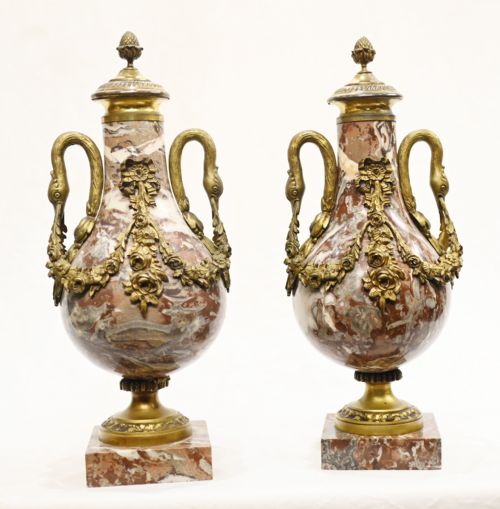
The objects combine turned or carved stone bodies with cast metal mounts, often standing upon square or stepped plinths. Green marble, white marble, Sienna marble, and serpentine appear alongside white onyx and quartz variants.
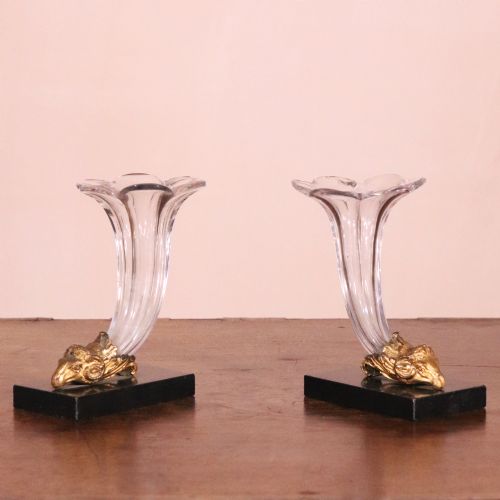
Pairs dominate the selection, created originally to sit upon mantelpieces, console tables, or pedestals as balanced garnitures. Their forms mimic ancient Roman and Greek vessels, reinterpreted through nineteenth-century European craftsmanship.
How they were made
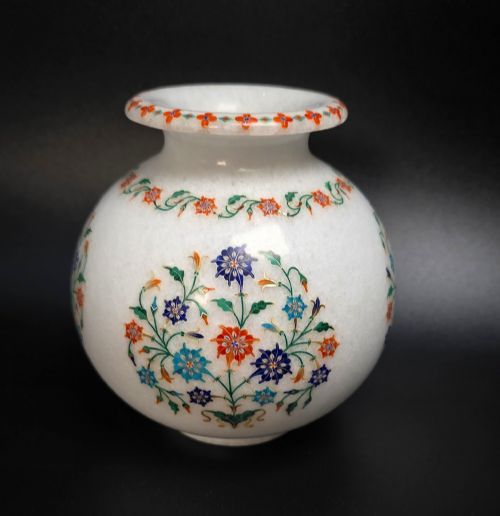
The construction relies on the union of heavy natural stone and cast metalwork, predominantly bronze, gilt bronze, and ormolu. Masons turned marble blocks on lathes or carved them by hand to form slender necks and bulbous bodies, occasionally incorporating pietra dura inlay.
Foundries produced the metal mounts separately using lost-wax casting or sand casting techniques, finishing them with fire gilding, patination, or silvering. Craftsmen then joined the stone and metal components using threaded rods, pins, or adhesives, securing handles, plinths, and removable lids.
The listings show nineteenth-century pieces dominating the selection, alongside early twentieth-century interpretations.
What varies in quality
Quality rests heavily on the crispness of the metal chasing and the depth of the marble figuring. Finer pieces display sharply defined acanthus leaves, bead-and-reel mounts, and figural handles that have undergone meticulous hand-chasing after casting.
The choice and preparation of the stone dictate visual success. Dense, flawless marble with rich natural veining elevates a piece, whereas inferior examples use clouded or fractured stone masked by careless assembly.
The Marble Decorative Vases Glossary
- Cassolette
- A decorative vase featuring a reversible lid that transforms from an urn into a burner or candle holder. These dual-purpose vessels were particularly popular in nineteenth-century French interiors.
- Grand Tour
- A cultural journey undertaken by wealthy young Europeans to study classical antiquities, inspiring the creation of miniature bronze and marble souvenirs. These items replicate famous Roman and Greek monuments.
- Ormolu
- Finely ground high-carat gold applied to a bronze base using a mercury amalgamation technique, yielding a warm, durable finish. Genuine nineteenth-century ormolu shows a distinctive soft golden lustre.
- Pietra dura
- An artistic technique involving the inlay of cut and fitted polished coloured stones into a contrasting stone background to form pictorial designs. It appears on select stone surfaces from the Indian Raj period.
- Spelter
- A zinc alloy commonly utilised as a less costly alternative to bronze for decorative cast mounts and figures. It is frequently patinated to imitate bronze but possesses a lighter weight.
Marble Decorative Vases: Frequently Asked Questions
How do I clean marble vases?
Dust the stone gently with a dry, soft cloth to prevent particulate scratching. Avoid abrasive household cleaners, acidic solutions, and excessive water, which can damage unsealed stone and corrode metal mounts.
For the metal components, use a clean microfibre cloth without chemical polishes that might strip historic patination or gilding. Take care near joints where old adhesives or pins secure the marble to the bronze.
What is a cassolette?
A cassolette is a lidded decorative vase designed with a reversible top that serves two distinct functions. One side presents a solid decorative urn profile, while turning the lid reveals a small bowl or candle socket.
Originating in neoclassical French design, these pieces functioned as ornamental mantel ornaments that could double as burners for scented resins or oils during elite gatherings.
How can I tell the age?
Dating relies on examining the material composition, casting quality, and assembly methods visible at the base or interior. Nineteenth-century pieces often display hand-cut threads on securing bolts, heavy sand-cast bronze components, and natural marble variations typical of period quarries.
Stylistic cues such as French Empire mounts, Grand Tour provenance marks, or specific regional stones like Sienna marble help narrow the decade of manufacture. Compare the patination on the metal parts to ensure the mounts match the presumed age of the stone body.