
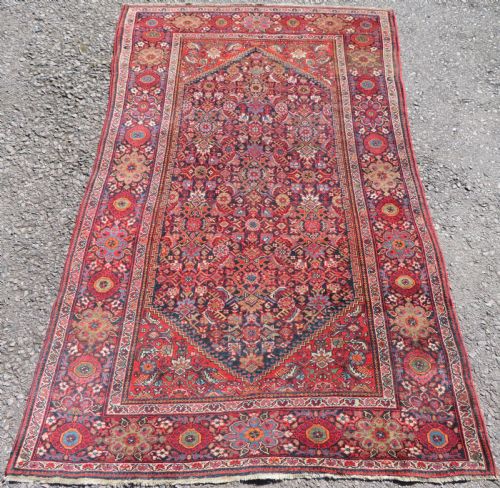


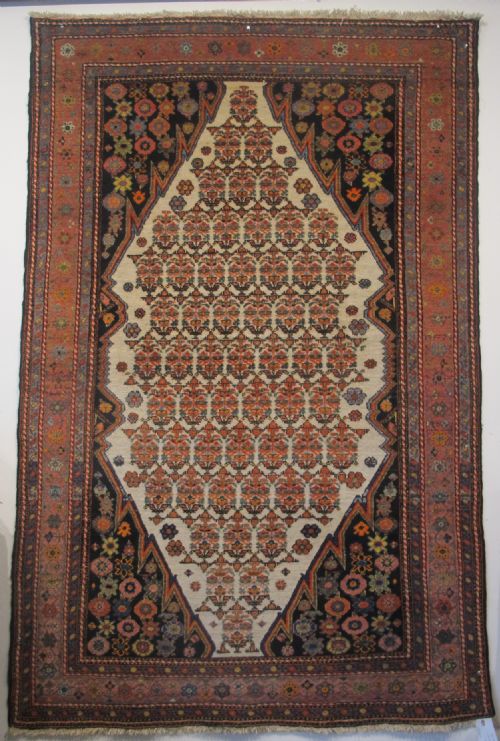


Malayer Tribal Carpet
A malayer tribal carpet brings rich Persian village craftsmanship into a room, offering durability and distinct motifs developed across the decades.
Malayer Tribal Carpet
A malayer tribal carpet represents traditional Persian weaving originating from village workshops, appearing predominantly in formats ranging from smaller area rugs to exceptionally long runners.
The pieces available here span several decades from the late nineteenth century into the early twentieth century, showing Persian, traditional village, and tribal stylistic influences.
Makers in the region employed specific decorative elements such as the boteh motif, bird designs, Herati patterns, and shield styles influenced by Afshar traditions.
What varies in quality
The execution of intricate details like the boteh bird design or Herati pattern demonstrates the weaver's precision and skill within the village tradition.
Format length and overall proportion range from compact scatter sizes to exceptionally long runners, influencing how the rug occupies a space.
Keep an eye out for the occasional rogue lion stepping into the traditional floral patterns.
The Malayer Tribal Carpet Glossary
- Boteh
- A stylised almond or pear-shaped motif representing a shrub or floral spray. This ancient Persian design appears frequently across the field and borders of these rugs.
- Herati
- A repeating floral pattern composed of a central rosette enclosed by leaf-like motifs flanked by curved serrated leaves. It provides a dense, harmonious texture across the carpet.
- Runner
- A long, narrow carpet format designed specifically for hallways, corridors, and staircases. These pieces often extend to several metres in length.
- Pile
- The upright surface yarn of the carpet formed by the knotted wool. This layer provides the colour, pattern, and soft texture underfoot.
Malayer Tribal Carpet: Frequently Asked Questions
Where were these carpets made?
These carpets originate from the Malayer region in West Persia, where local village weavers produced them using traditional techniques.
The production reflected distinct regional styles that blended Persian traditions with village and tribal influences.
How do I use a runner in my home?
Runners suit narrow spaces such as hallways, corridors, and long entryways where floor covering adds warmth and character.
Their elongated format guides the eye along a passage while protecting wooden floors from heavy daily use.
What designs appear on these carpets?
Common decorative elements include the repeating Herati pattern, the boteh motif, and shield designs associated with Afshar styles.
Certain examples also feature pictorial elements such as birds and lions integrated into the field composition.
What materials make up the construction?
The soft upper pile consists of wool, providing a durable surface designed to withstand generations of use.
Cotton forms the hidden foundation structure of warps and wefts, holding the intricate knotting firmly in place.