


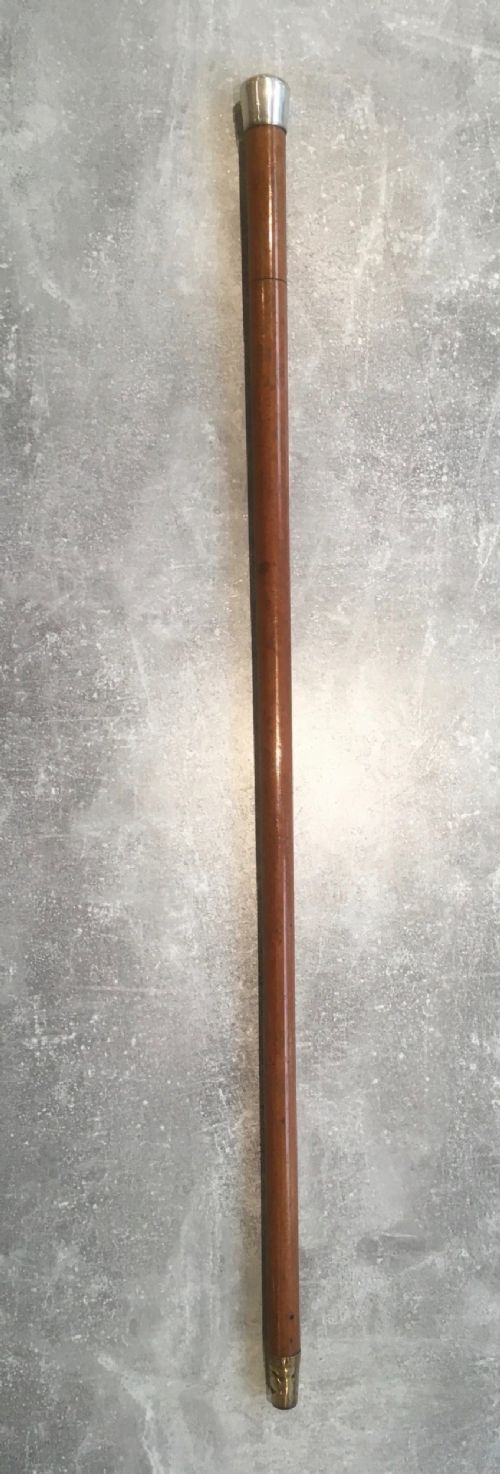

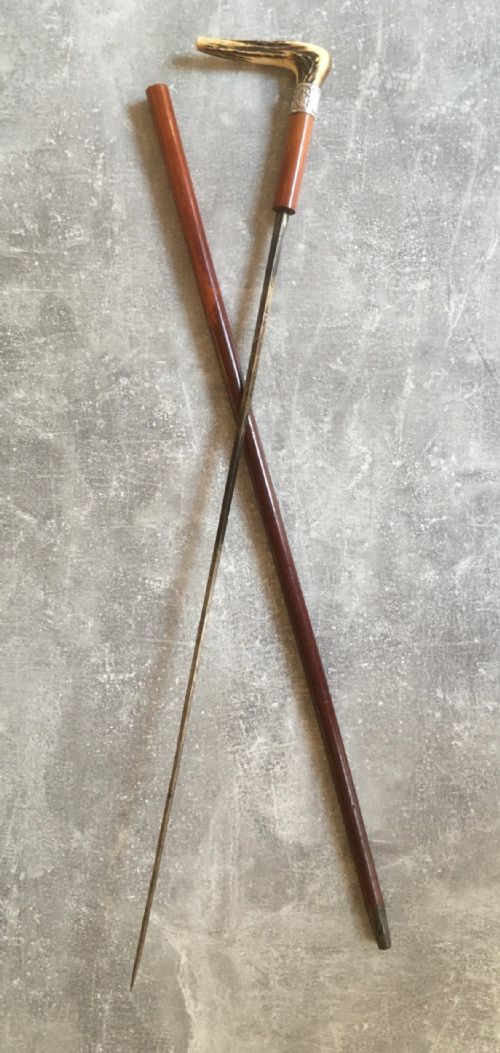
Malacca Walking Cane
A malacca walking cane is a distinguished gentleman's prop that combines sturdy natural cane with precious metal mounts or concealed blades.
Malacca Walking Cane
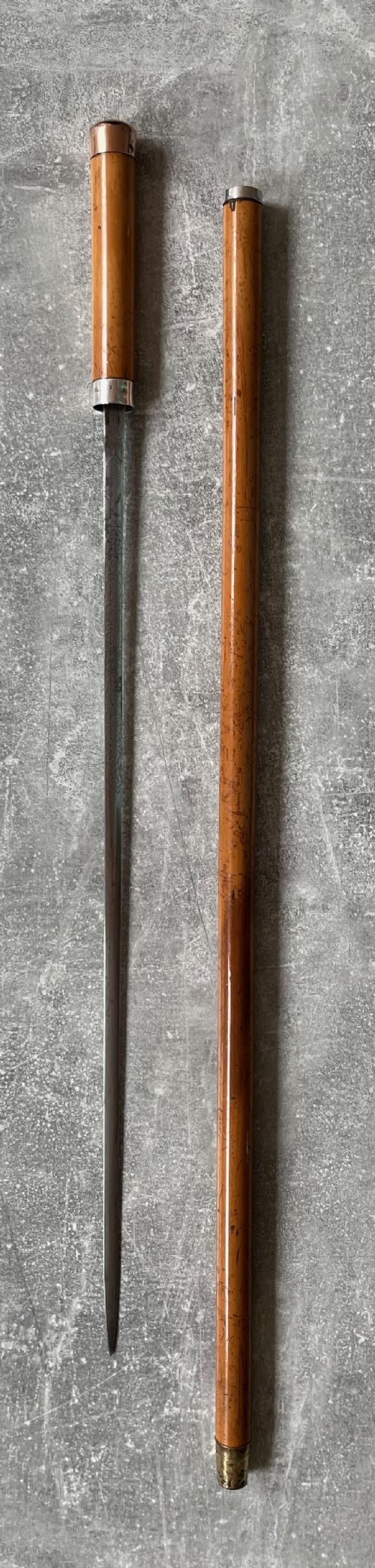
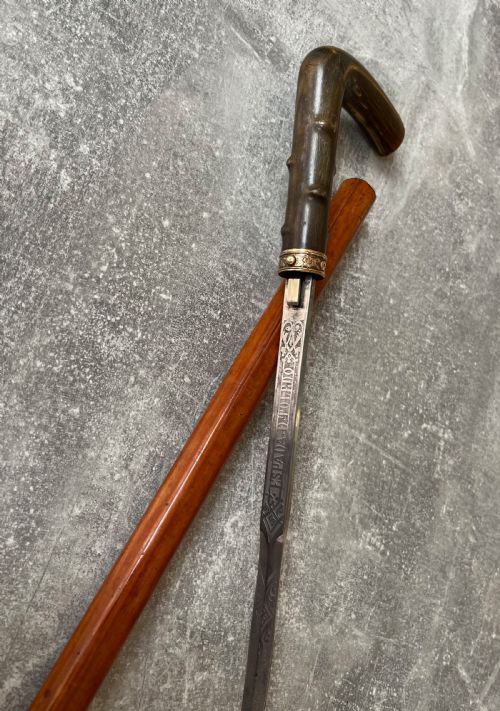
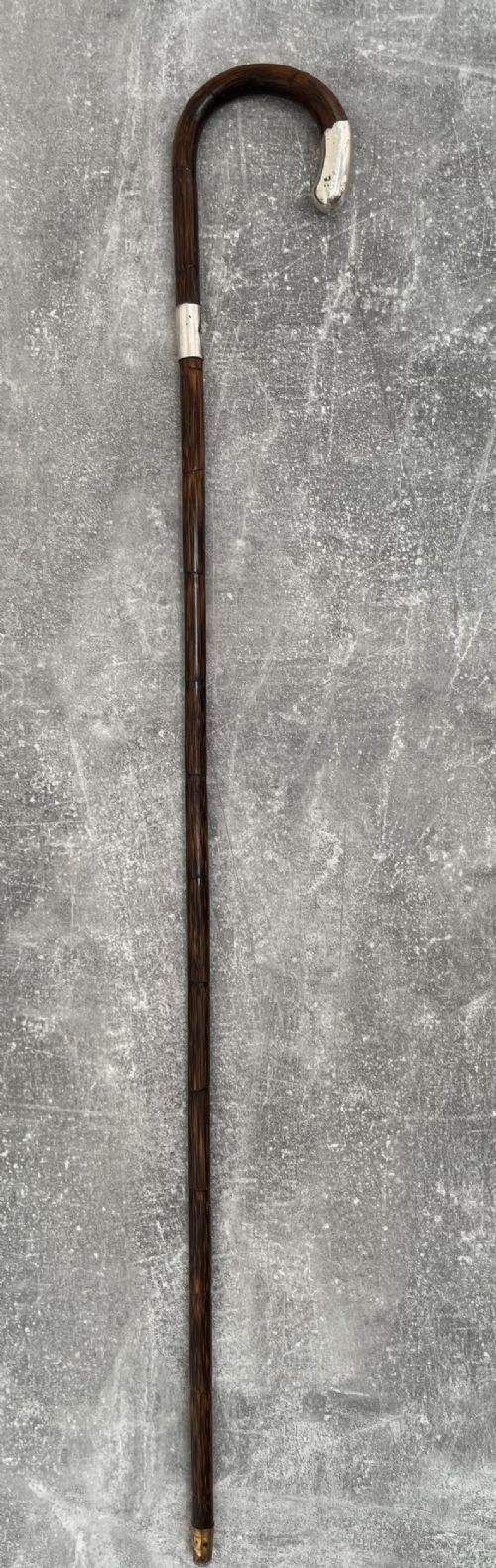
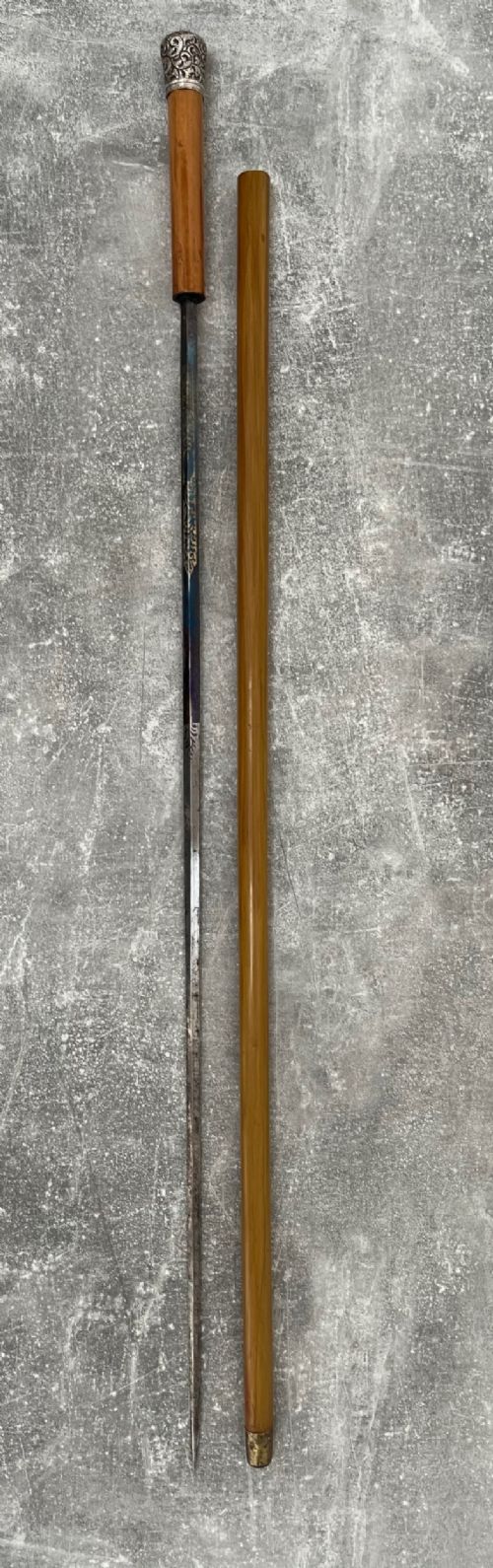
When you search for a malacca walking cane, you are looking at sophisticated nineteenth and early twentieth-century walking sticks fashioned from distinctively jointed stems. These items span Victorian, Edwardian, and earlier periods, originating from English workshops, Chinese Export trade, and other global centres. The most common examples you will meet on this page are sword sticks equipped with steel blades, alongside standard walking canes finished with silver collars and various handles.
Handles and tops vary greatly, ranging from simple crook shapes and horn grips to intricately carved ivory dog heads, horse heads, and heavy silver repousse knops. Many incorporate functional elements like corkscrews or button releases for concealed blades, reflecting the practical versatility expected by period users. Chinese Export pieces frequently display detailed silver mounts and calligraphy markings, while English examples often bear regional hallmarks and dates.
How They Were Made
Makers utilised the natural properties of the Calamus rotang palm, known as malacca, valued for its warm reddish-brown colour and characteristic scale-like nodes. These shafts were straightened, seasoned, and fitted with specialised grips fashioned from horn, bone, antler, or turned ivory. Metal components including silver, gold, brass, steel, and white metal were applied as collars, pommels, and crowns to reinforce the wood and add decorative weight.
Bladed variants incorporated high-grade steel components, such as Wilkinson and etched Toledo blades, secured within the hollowed interior of the cane. Silver mounts and collars were frequently hallmarked in London and other assay offices, displaying the year of manufacture and maker's marks. Metalwork techniques combined casting, embossing, and repousse work to create detailed ornamentation on the pommels and collars.
Listings feature pieces from the Victorian and Edwardian periods, alongside dated examples from the late nineteenth century.
What Varies in Quality
The standard of a malacca walking cane rests largely on the quality of its mounts and the precision of its concealed mechanisms. Superior pieces feature solid silver or gold tops with crisp hallmarks and detailed hand-engraving, whereas lesser examples rely on thin silver plating or plain white metal. The integration of the handle to the shaft demonstrates the maker's skill, with high-end items showing seamless joins and robust internal threading or button releases.
Blade quality and provenance also distinguish exceptional canes from ordinary ones. Blades signed by renowned makers like Wilkinson or forged with detailed Toledo etching elevate a piece significantly above standard mass-produced alternatives. Additionally, the condition of the malacca cane itself - its straightness, retention of original finish, and the clarity of any carved ivory or specialised pommels - dictates the overall standing of the object.
Wang Hing·J Wippell And Co Ltd·Peter Pilote·Wilkinson
The Malacca Walking Cane Glossary
- Malacca cane
- A walking stick made from the smooth, brownish stem of an Asian rattan palm, easily recognised by its spaced nodes. This material was prized for its resilience and distinctive mottled appearance.
- Sword stick
- A walking cane containing a concealed steel blade within its hollow shaft, typically released by a button mechanism or a pull-apart joint. These provided personal defence for period travellers.
- Knop
- A rounded knob or ornamental head forming the handle of a walking stick. They were often cast in silver or carved from bone, horn, and ivory.
- Repousse
- A metalworking technique where the silver or gold top is hammered into relief from the reverse side. This method created ornate, raised floral or figural designs on cane pommels.
- Hallmark
- An official stamp applied to precious metal mounts to indicate purity, the assay office, and the date of manufacture. English pieces frequently display these on the collar just beneath the handle.
Malacca Walking Cane: Frequently Asked Questions
What is a malacca walking cane?
A malacca walking cane is a traditional walking stick made from imported rattan palm, often finished with precious metal mounts, carved handles, or hidden blades.
These accessories served as fashionable daily companions for gentlemen and ladies during the nineteenth and early twentieth centuries.
How do you use a sword stick?
A sword stick functions primarily as a walking aid while housing a protected steel blade securely inside the wooden shaft.
Users access the hidden blade by pressing a release button or pulling the handle apart from the body of the cane.
How do you date a walking cane?
Dating a cane relies on examining the silver hallmarks for specific town marks and date letters, or checking the style of carved handles and mounts.
Victorian and Edwardian pieces often carry stamped assay marks that record the exact year of production.
What materials are used for handles?
Handles on these canes were fashioned from a wide variety of materials including sterling silver, gold, carved ivory, horn, bone, and antler.
Some feature figural carvings like dogs and horses, while others use simple metallic crowns or crook shapes.