


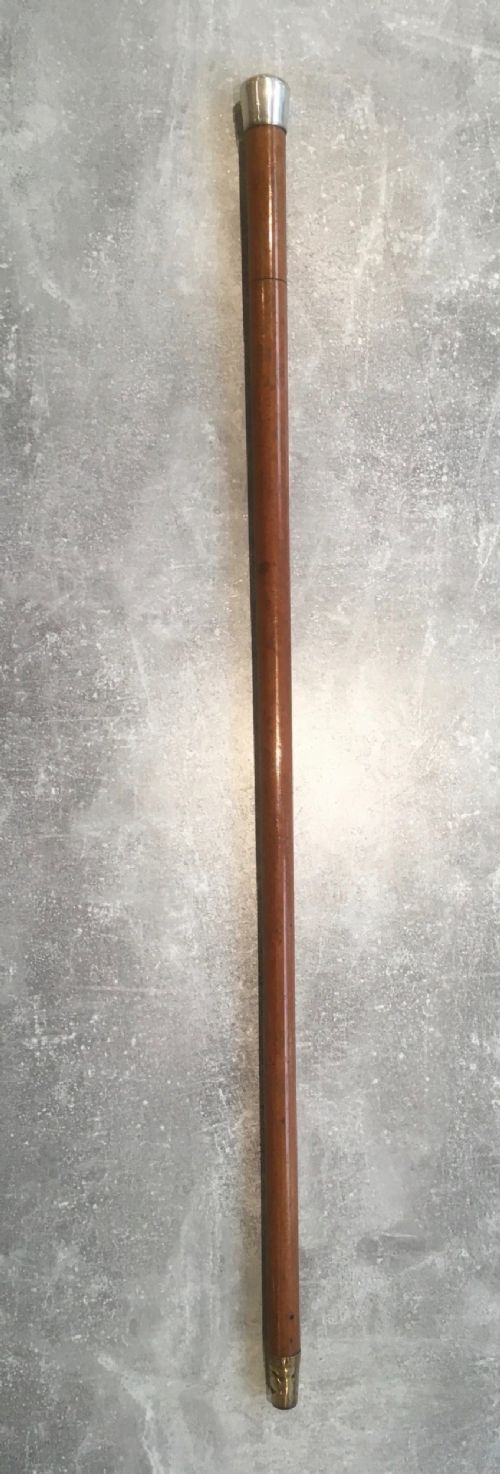

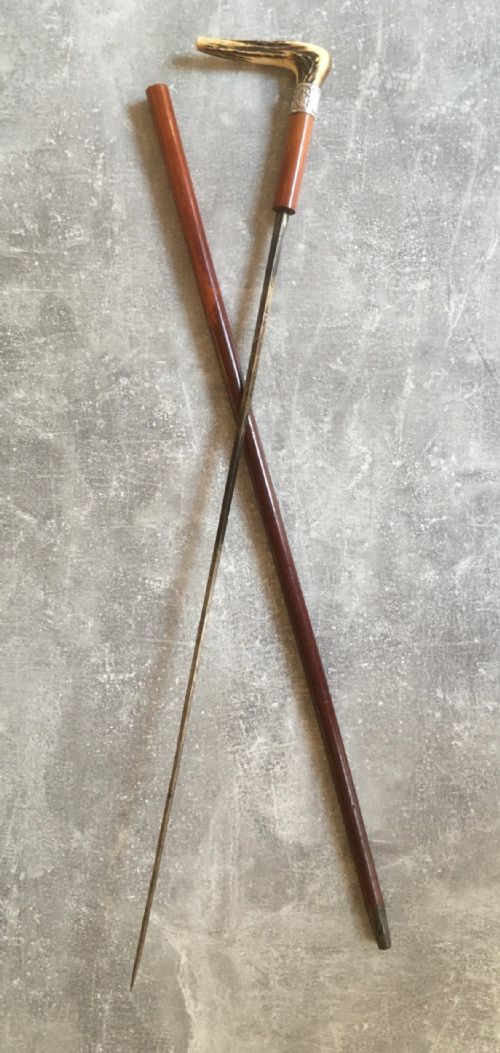
Malacca Cane Walking Stick
A malacca cane walking stick brings together a handsome natural stem and metal mounts or hidden blades from the nineteenth and early twentieth centuries.
Malacca Cane Walking Stick
When you search for a malacca cane walking stick, you encounter walking aids, swagger sticks, and concealed blade pieces dating from the Victorian and Edwardian eras. The material spans pieces produced in the nineteenth century, 1880, 1890, 1900, 1910, and the Edwardian period.
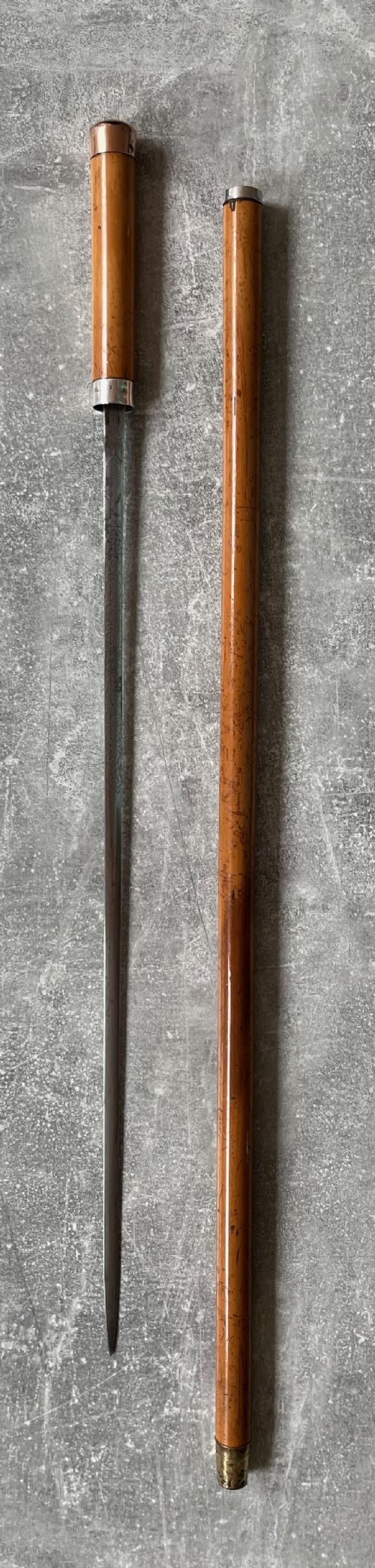
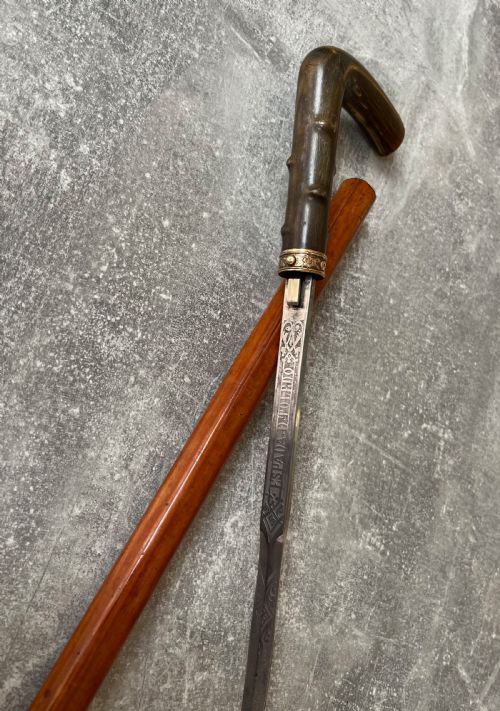
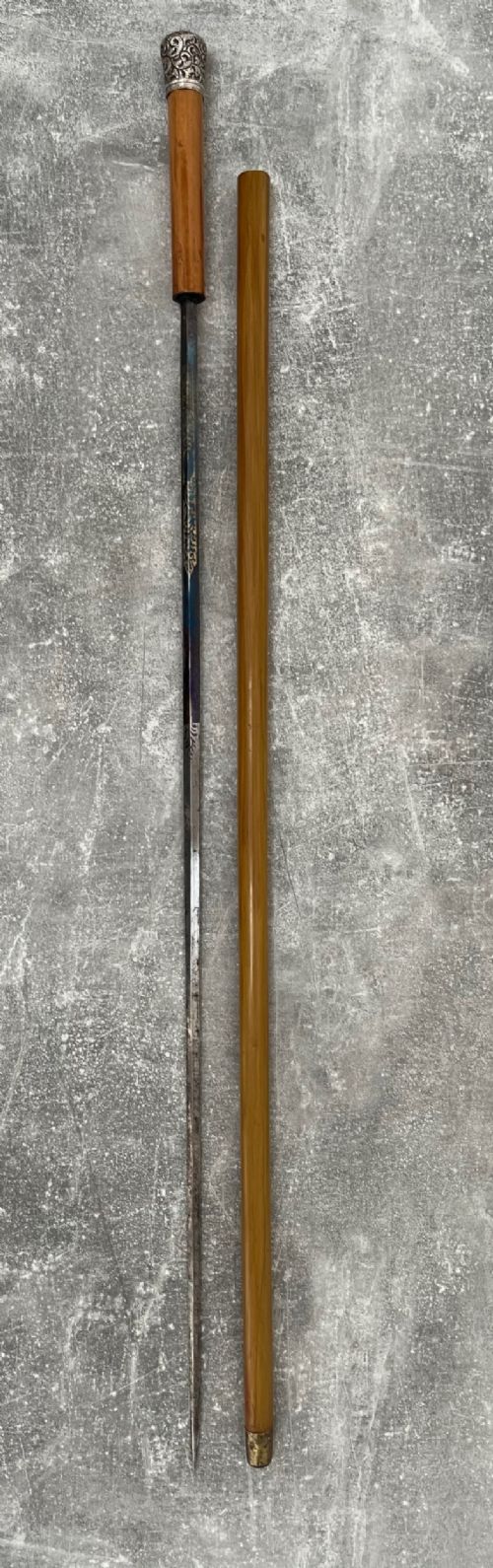
The form frequently appears with handles made from horn, bone, antler, or carved ivory, alongside simple crook handles and metal pommels. Many examples conceal steel blades inside the shaft, including Toledo blades and Wilkinson blades secured with button releases.
Chinese Export pieces appear regularly alongside English, Japanese, and Burmese items, often featuring distinctive silver repousse work or calligraphy marks. You also meet pieces fitted with functional additions such as corkscrews tucked into the shaft.
Materials and construction
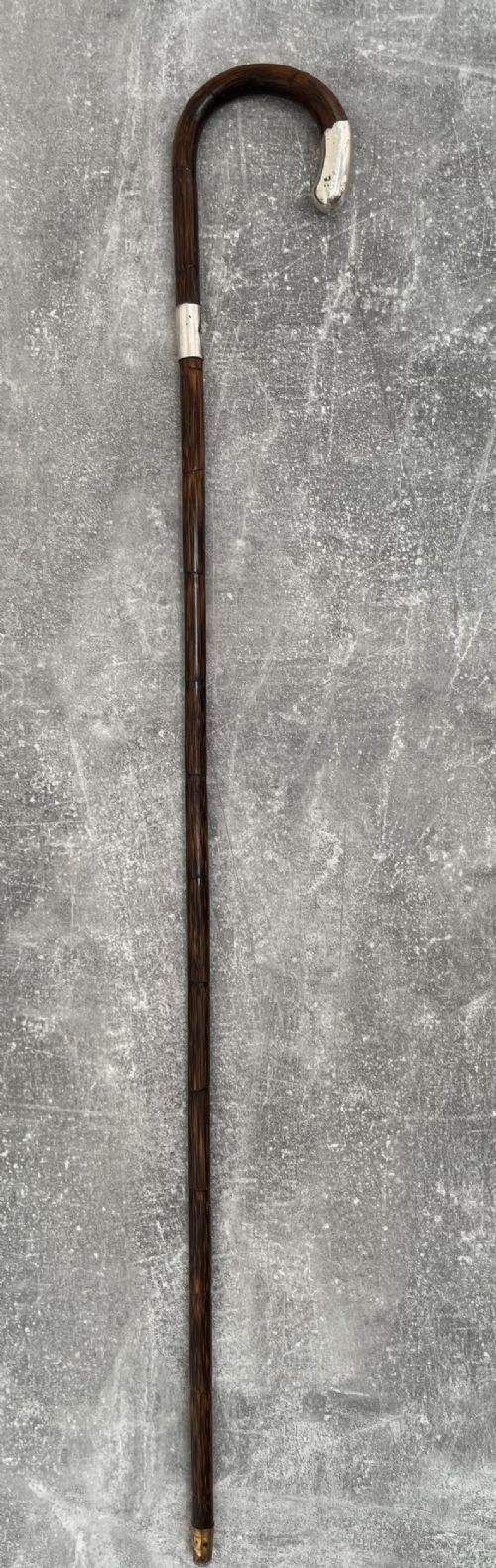
Makers utilised natural malacca cane for the main shaft, prized for its characteristic node rings and warm mottled brown finish. This flexible plant material is paired with collars and mounts cast from silver, silver plate, gold, brass, and steel.
Handles and knops incorporate carved ivory, horn, bone, and antler, attached securely to the top of the cane. Internal blades forged from steel are fitted precisely within the hollowed malacca stems, often secured by mechanical button releases.
Several walking sticks double as portable wine cellars by concealing a functional corkscrew right inside the shaft.
Distinctions in quality
The standard of a piece depends on the weight and clarity of the silver mounts, the crispness of any repousse work or hallmarks, and the integrity of the natural malacca cane. Pieces bearing maker marks or specific city stamps show a higher level of workshop provenance.
Blade quality forms a major distinction in sword sticks, where named makers such as Wilkinson or etched Toledo steel indicate superior forging. The carving detail on animal head pommels and ivory handles likewise separates standard production items from finer commissioned work.
Wang Hing·Franzi·J Wippell & Co Ltd·Peter Pilote
The Malacca Cane Walking Stick Glossary
- Malacca cane
- A sturdy plant stem imported from Southeast Asia, recognised by its distinct brown nodes and used as the shaft for walking sticks.
- Sword stick
- A walking cane designed with a hidden internal steel blade housed securely within the hollow shaft.
- Knop
- A rounded handle or ornamental knob fitted to the top of a walking stick.
- Repousse
- A metalworking technique where silver is hammered from the reverse side to form raised decorative designs.
- Toledo blade
- A steel blade produced in Toledo, Spain, known for its flexibility and historical sword-making standards.
Malacca Cane Walking Stick: Frequently Asked Questions
What is malacca cane?
Malacca cane is a natural stem material originating from Southeast Asia, prized for its strength and resilience. It is easily identified by its rich brown colour and distinct node rings spaced along the length of the shaft.
Craftsmen selected these stems for their straight growth and handsome grain, making them the preferred choice for nineteenth-century walking sticks.
How do I date these sticks?
Dating relies on silver hallmarks, stamps, and style markers associated with the Victorian and Edwardian periods. Pieces often carry city marks and date letters that pinpoint the exact year of manufacture.
Stylistic details like carved ivory animal heads or specific blade signatures also help narrow down the production era to the late nineteenth or early twentieth century.
Were these used as weapons?
Sword sticks served primarily as fashionable accessories for personal protection during the nineteenth century. Gentlemen and travellers carried them in urban environments where self-defence might occasionally prove necessary.
Despite their practical function, the exterior appearance remained indistinguishable from standard walking canes of the period.