
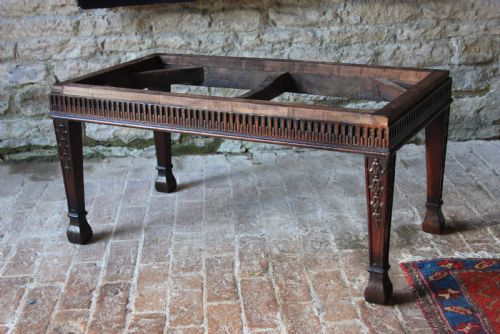
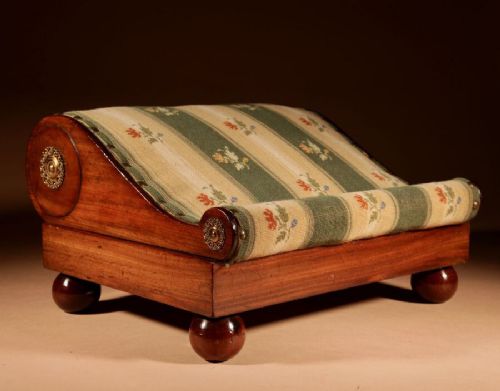
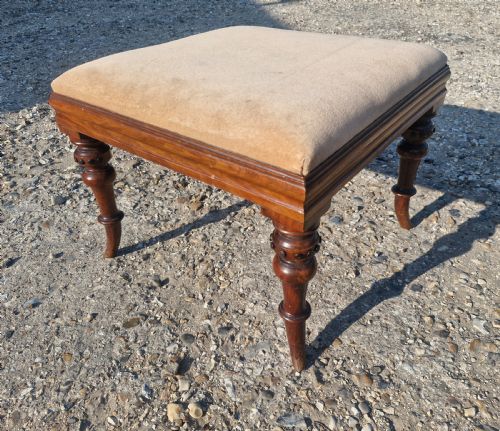
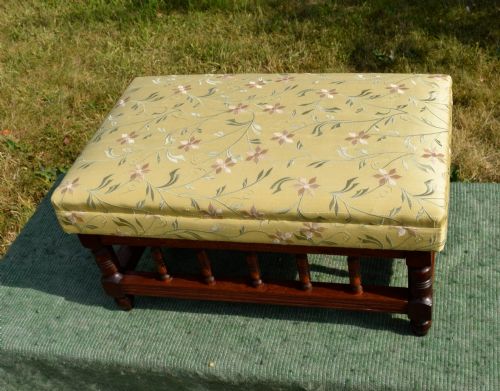
Mahogany Wooden Stool
Mahogany wooden stool forms span library steps, window seats and piano stools built across the eighteenth, nineteenth and twentieth centuries.
Mahogany Wooden Stool
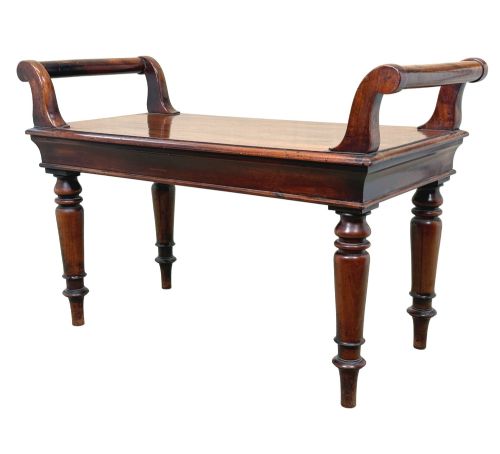
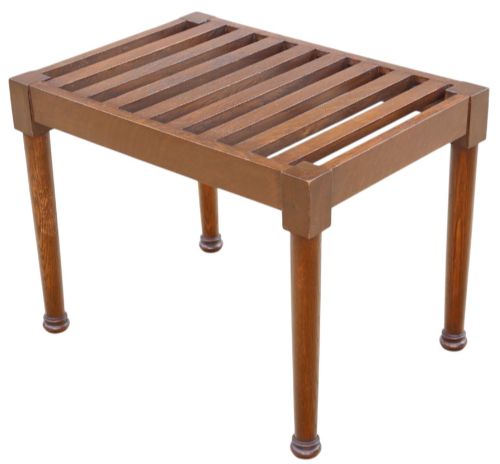
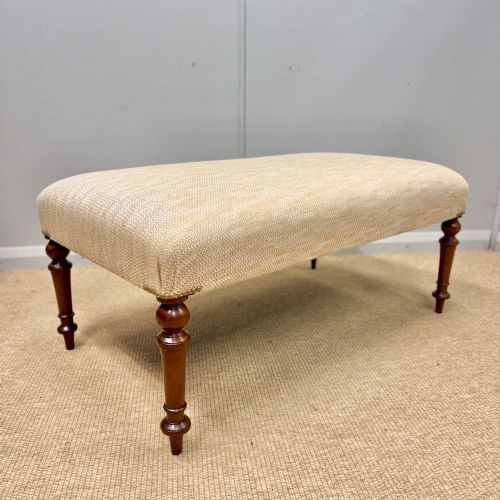
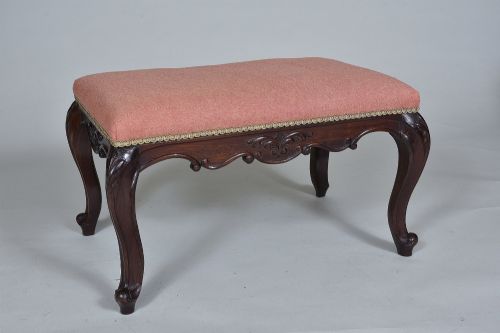
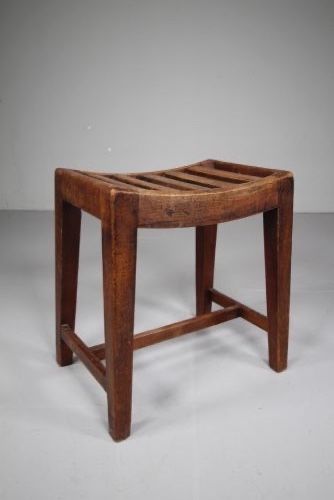
A mahogany wooden stool covers a diverse group of seating and functional stands designed for domestic utility. When searching for a mahogany wooden stool, buyers encounter forms ranging from piano stools and footstools to library steps and window seats. The nineteenth century yields the highest volume of examples on this page, alongside pieces from the eighteenth century and the early decades of the twentieth century.
Makers utilised dense timbers alongside specialised forms such as the X-frame window seat, the metamorphic chair ladder, and the revolving piano stool. Styles stretch from Georgian and Regency through to Victorian, Edwardian, Arts and Crafts, and Sheraton Revival. Many examples retain functional elements like leather treads, brass fittings, and cane or fabric upholstery.
What varies in quality
Quality rests upon the crispness of timber carving, the integrity of structural joints, and the retention of original brass or leather components. Pieces bearing maker stamps or attributed to notable workshops demonstrate superior provenance and refined proportions.
The choice of secondary timbers and the condition of period upholstery or leather treads distinguish standard utility items from finely detailed library steps and salon seating.
Listings span the eighteenth, nineteenth, and early twentieth centuries, featuring mahogany paired with leather, velvet, wool, and brass.
Jas Shoolbred·Liberty and Co·Gillows Lancaster
The Mahogany Wooden Stool Glossary
- Mahogany
- A durable tropical hardwood prized for its deep reddish-brown colour and fine grain. It served as the primary material for high-grade furniture throughout the eighteenth and nineteenth centuries.
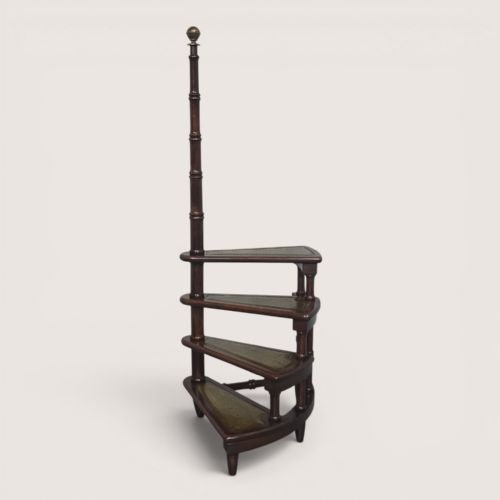
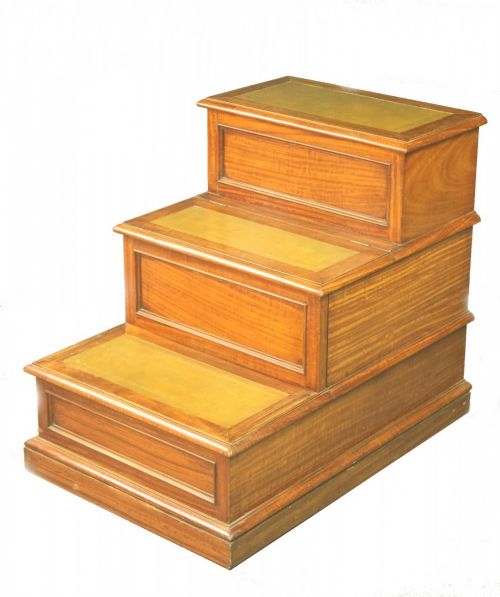
- Library steps
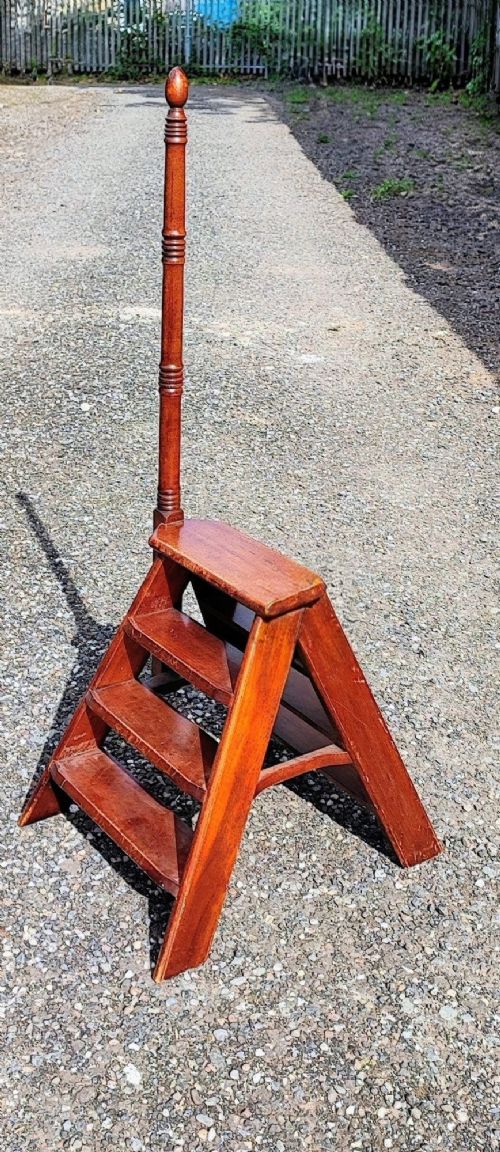
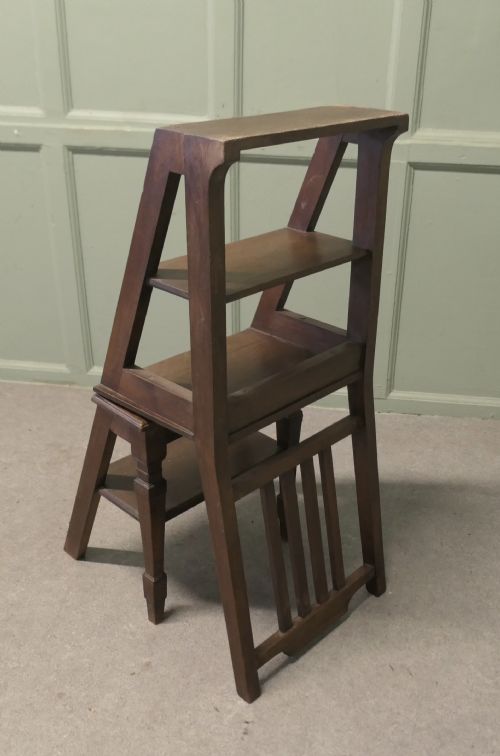
- Portable wooden stairs designed to reach high bookshelves, occasionally built to transform into chairs. These items frequently incorporate leather-topped treads and brass castors.
- Metamorphic
- Furniture engineered to transform from one form into another, such as library steps folding down into a seat. This ingenious mechanism required precise carpentry.
- Cabriole legs
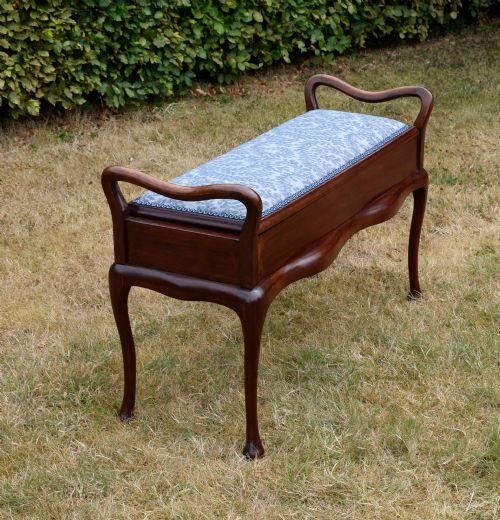
- S-shaped furniture legs curving outward at the knee and inward at the ankle, ending in a pad or claw foot. This style appeared frequently on eighteenth and nineteenth-century seating.
- X-frame
- A structural base formed by intersecting diagonal timbers resembling the letter X. This design provided robust support for grand window seats and benches.
Mahogany Wooden Stool: Frequently Asked Questions
What are mahogany library steps used for?
Library steps provided access to high bookshelves in domestic libraries and study rooms. They were constructed as rigid stair units or metamorphic pieces that folded into chairs.
Many examples feature leather-topped treads to ensure safe footing and brass fittings to handle daily adjustment.
How do I identify a Regency window seat?
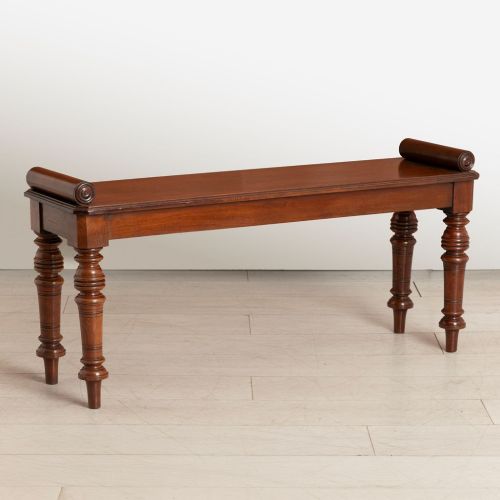
Regency window seats typically display classical proportions inspired by ancient Greek and Roman designs. They often utilise X-frame supports or scroll ends suited for placement beneath large windows.
Mahogany frames from this period show restrained carving and occasionally incorporate upholstered bolster arms.
What is a piano stool?
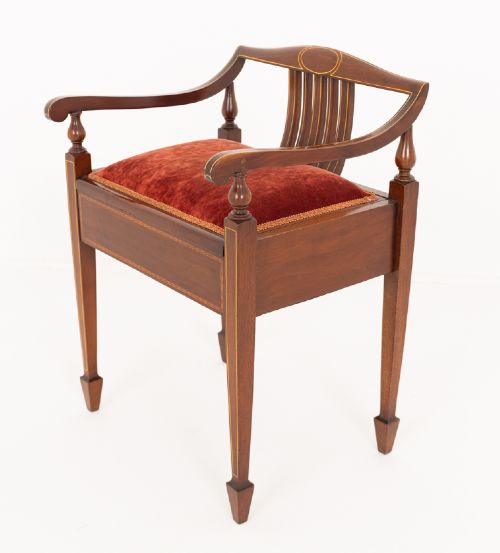
Piano stools provided adjustable or fixed seating for musicians at keyboard instruments. Victorian examples frequently utilise a revolving mechanism to alter the seat height.
Duet piano stools offered wider proportions to accommodate two players, sometimes including internal storage compartments for sheet music.
How should I care for antique mahogany furniture?
Antique mahogany benefits from stable indoor humidity levels away from direct heat sources and sunlight. Regular dusting with a dry lint-free cloth preserves the polish on the wood.
Leather treads and upholstered elements require periodic cleaning appropriate to their specific textile type to prevent degradation.