
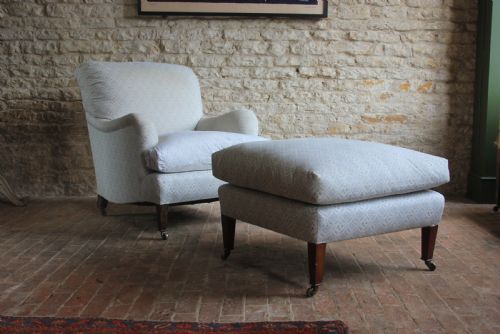


Country Mahogany Stool
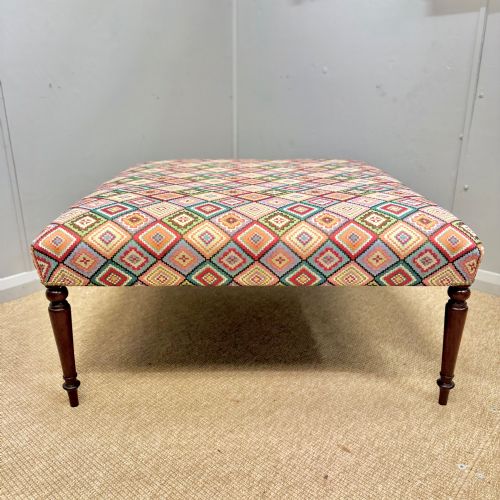
These country mahogany stool examples bring honest English domestic seating and footrests to a room, valued for solid timber and traditional upholstery.
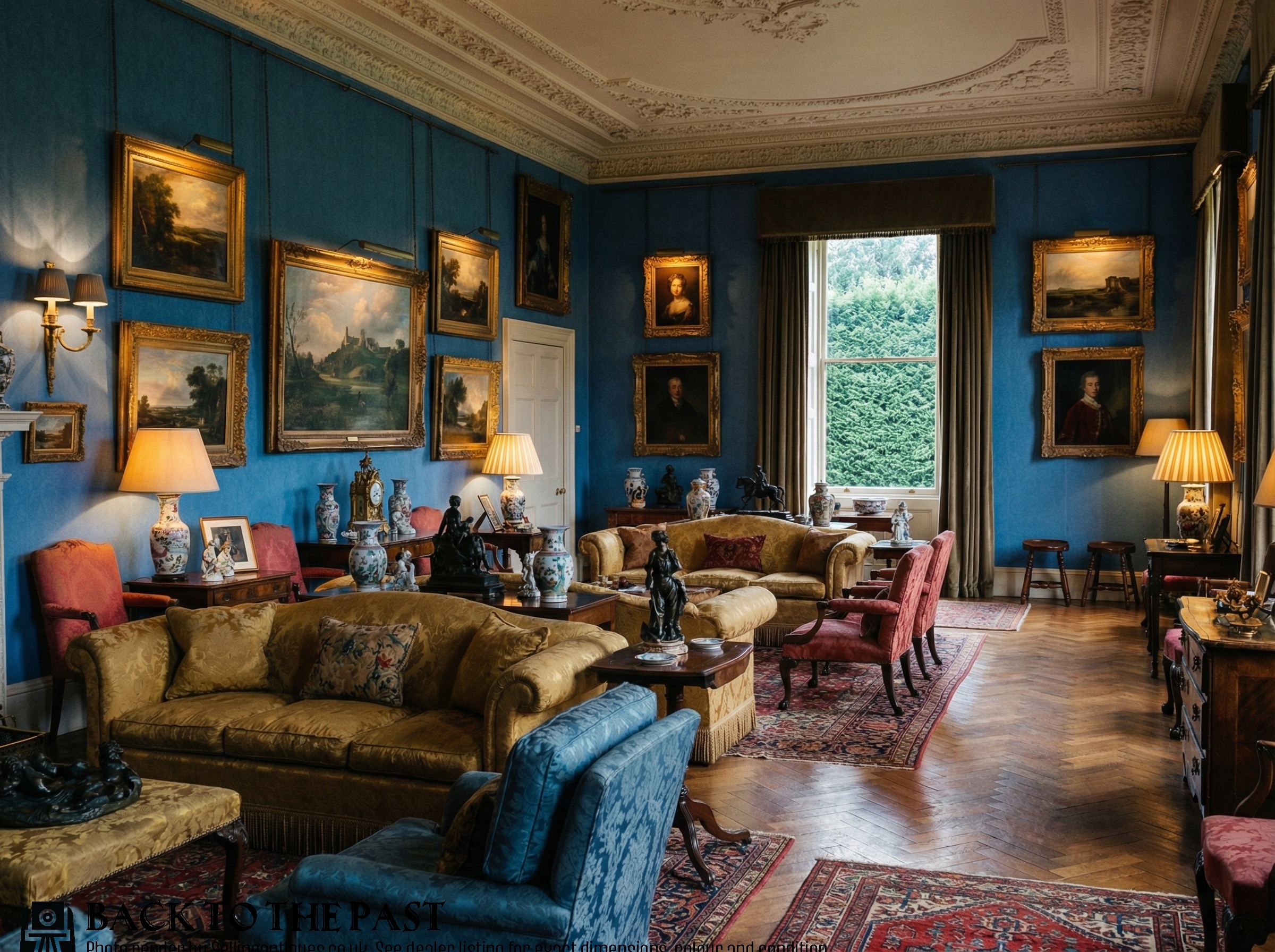
Country Mahogany Stool
A country mahogany stool represents a practical domestic seating form shaped by Georgian, Victorian, and Edwardian periods of British design. These pieces bridge the gap between formal cabinet-maker output and robust rural utility.
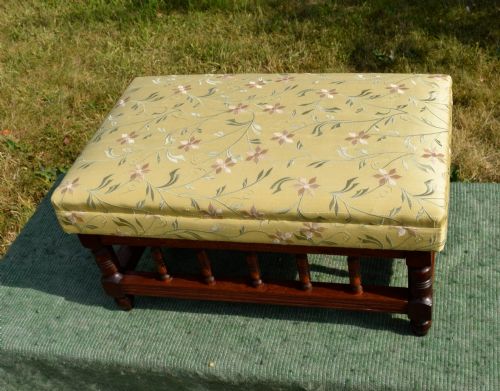
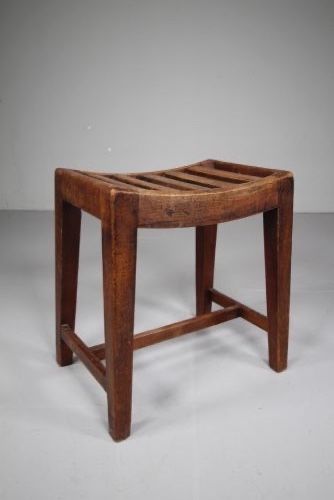
The selection here encompasses footstools, ottomans, window seats, and long benches alongside occasional library steps. Most examples rely on mahogany frames paired with various upholstered surfaces.
Buyers frequently encounter nineteenth-century pieces alongside eighteenth-century origins and early twentieth-century revivals. Each variation offers a distinct proportion suited to traditional interior schemes.
Materials and construction methods
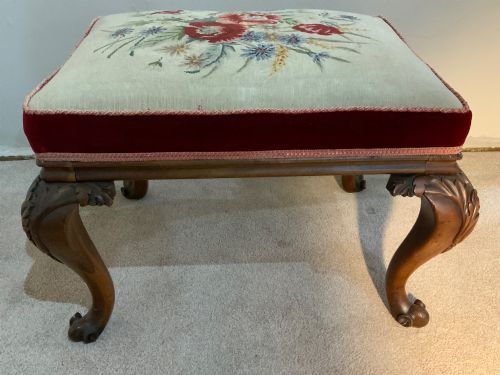
Makers constructed these frames predominantly from mahogany and related hardwoods, often shaping the timber into cabriole legs, ball and claw details, or straight supports. Joinery techniques ensured structural rigidity for daily weight-bearing use.
Upholstery historically involved fabric, wool, velvet, and tapestry laid over webbing and stuffing. Brass tacks frequently secured the textile margins to the wooden rails.
Surface finishing relied on natural polishes that emphasised the grain of the hardwood without obscuring its natural warmth.
Some stools hide secret blankets within deep box frames, ready for chilly nineteenth-century evenings.
Distinctions in craftsmanship and condition
Quality rests in the crispness of the timber carving and the integrity of the frame joints. Superior examples exhibit carefully selected mahogany grain and balanced proportions.
The grade of the upholstery materials and the execution of the foundational webbing separate standard domestic output from finer country house commissions.
Preservation of original wooden surfaces without excessive modern intervention dictates long-term character and desirability.
Howard & Sons·Hallett & Sons
The Country Mahogany Stool Glossary
- Cabriole leg
- A furniture leg that curves out and then in, mimicking an animal limb. This form appears frequently on Georgian and Victorian seating.
- Ottoman
- A low, upholstered seat or box without arms or back. These pieces often incorporate internal storage space beneath the hinged top.
- Tapestry
- A heavy hand-woven or machine-woven textile depicting pictorial scenes or geometric motifs. It serves as a durable covering for antique footstools.
- Window seat
- A long, narrow form designed to fit within a window recess. These seating pieces typically feature elegant side rails or upholstered ends.
- Library steps
- A set of portable wooden stairs used to reach high bookshelves. Leather-topped treads often cushion the ascent.
Country Mahogany Stool: Frequently Asked Questions
What is a country mahogany stool used for?
These items serve primarily as footrests, low seating options, or decorative benches in domestic reception rooms.
Historically, larger versions functioned as centre ottomans or window seats within English country houses.
How do I care for the wood and upholstery?
Keep mahogany timber away from direct heat sources and strong sunlight to prevent the grain from drying out and splitting.
Vacuum upholstered fabric gently and protect antique tapestry or velvet coverings from excessive friction.
How do I identify a Victorian piece?
Victorian examples often display heavier proportions, robust cabriole legs, or deep buttoned upholstery materials.
Look for the rich reddish-brown tone typical of nineteenth-century hardwood preparation.
Can I use these in modern interiors?
The understated timber frames blend easily with contemporary minimalist or eclectic decorating schemes.
Their compact scale allows them to function as flexible extra seating around a living space.