


Mahogany Wine Trough
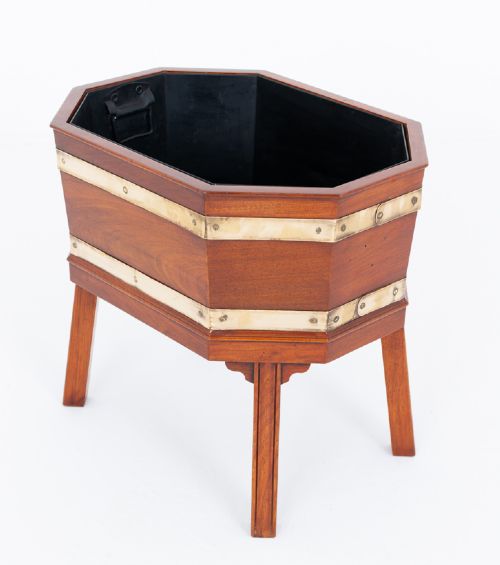
A mahogany wine trough is a sturdy serving vessel designed for cooling bottles or holding logs, combining fine timber with practical metal fittings.
Mahogany Wine Trough
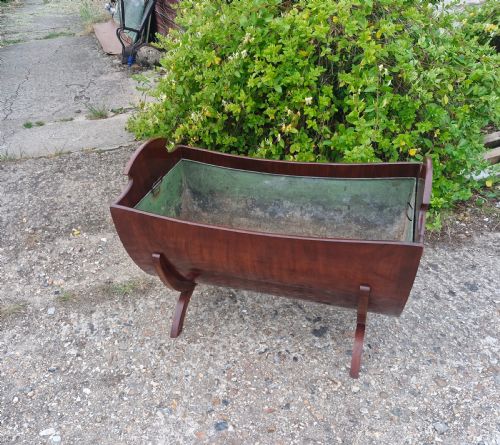
The pieces appearing on this page span the eighteenth century, the regency era, and the early twentieth century, including Edwardian interpretations and later replicas. Many double as jardinieres or planters, reflecting how these adaptable wooden vessels shifted in household use over time.
How they were made
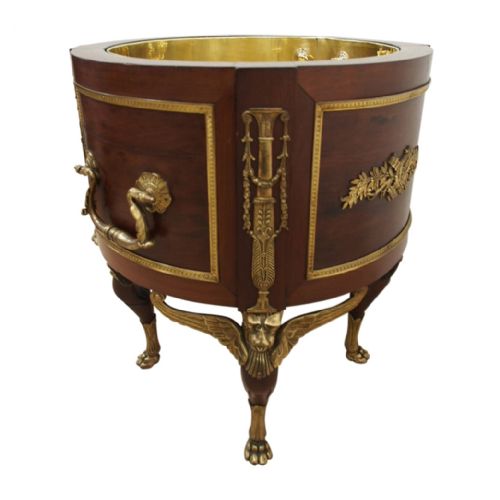
Joiners built these troughs from solid timber and selected veneers like flame mahogany or padouk, often reinforced with metal liners in zinc or plain metal to hold ice and moisture. Cabinetmakers then secured the construction with brass bands, drop handles, and sometimes ormolu or gilt metal mounts.
Details on these pieces point to traditional joinery methods, where tight stave construction or panel assembly kept the vessel watertight. Metal bands provided structural strength while accentuating the dark grain of the wood.
Some nineteenth-century dining tables came with matching wine troughs designed to slide gracefully across the floor to the next guest.
What varies in quality
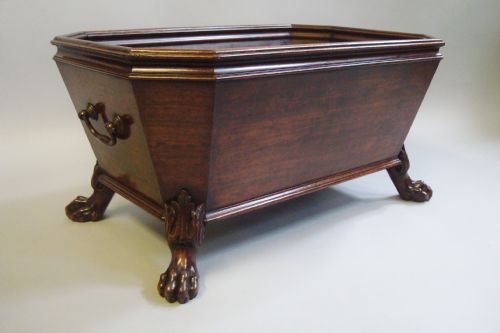
Quality rests in the selection of the timber and the crispness of the brass or ormolu mounts, where hand-beaten metalwork and rich grain figure distinguish superior examples. Troughs featuring original fitted interiors and well-preserved metal liners stand apart from later adaptations or replacements.
Proportion and execution define the hierarchy among these pieces, separating standard cabinet production from bespoke workshop commissions. A strong architectural silhouette combined with integrated brass carrying handles indicates a higher grade of manufacture.
Gillows of Lancaster
The Mahogany Wine Trough Glossary
- Cellarette
- A lockable container used for storing and cooling wine bottles near the dining table. These lidded boxes often featured internal divisions and lead linings.
- Jardiniere
- An ornamental stand or container designed to hold potted plants and flowers. In mahogany, these often share identical forms with open wine troughs.
- Ormolu
- Gilded bronze mounts applied to furniture and decorative objects for enrichment. This technique added bright metallic contrast against dark wood.
- Padouk
- A dense tropical hardwood with a reddish hue, utilised in cabinetmaking for durability and rich colour. It appears in regional British colonial furniture production.
Mahogany Wine Trough: Frequently Asked Questions
What is a mahogany wine trough?
A mahogany wine trough is a wooden container built to hold bottles with ice or water during dining. They frequently feature metal liners to protect the timber from moisture.
Over time, many of these vessels transitioned into domestic use as planters or log baskets. Their sturdy construction allowed them to adapt to different household tasks.
How do I tell periods apart?
Eighteenth-century examples often display restrained Georgian lines with substantial brass binding and handles. Later nineteenth-century and revival pieces introduce decorative ormolu mounts and varied veneers.
Examining the internal construction and metal components helps indicate the manufacturing era. Earlier items rely on hand-beaten brass, whereas later revivals show machine-finished hardware.
Can I use it for plants?
Many surviving troughs feature metal or zinc liners originally intended for ice, which suit potted plants well. This dual utility explains why planters and jardinieres share the same form.
Gardeners often place potted greenery inside these vessels to display them in living spaces. The protective metal lining prevents water damage to the surrounding mahogany.
How do I care for the wood?
Maintaining mahogany requires regular dusting with a dry cloth and occasional application of appropriate wax polish. Keeping the timber away from direct heat sources prevents warping.
When using the trough for cooling or plants, ensure the internal liner remains watertight. Wiping away standing moisture preserves both the metal insert and the surrounding wood.