
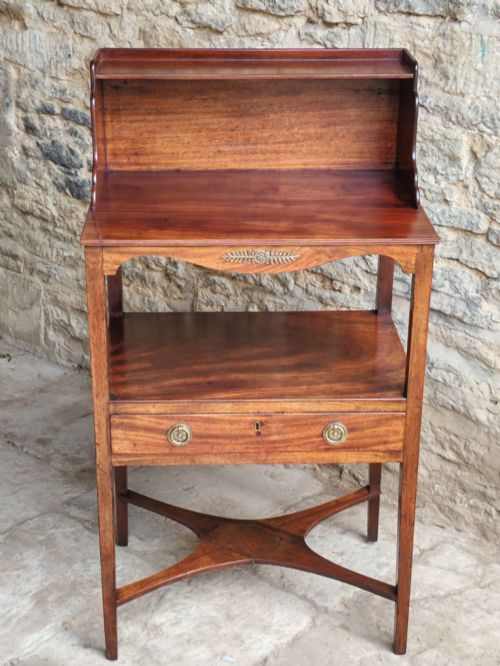


Mahogany Washstand with Drawer
A mahogany washstand with drawer offers practical bedroom furniture combining rich timber with functional storage, sought after for period interiors.
Mahogany Washstand with Drawer
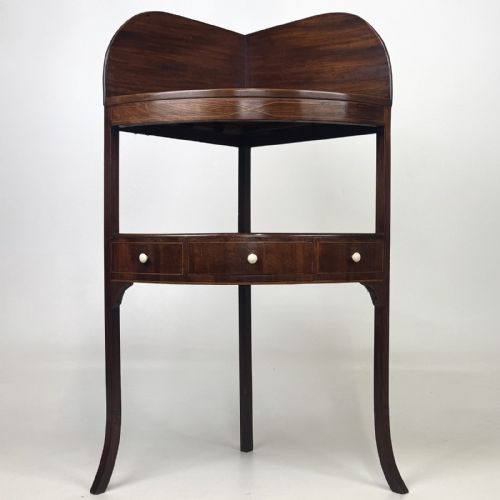
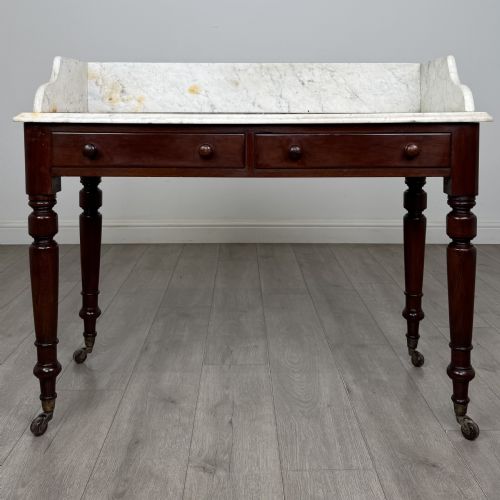
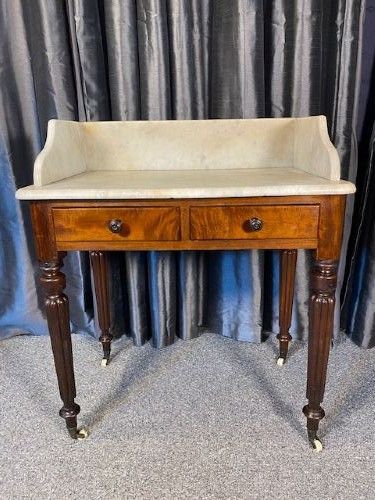
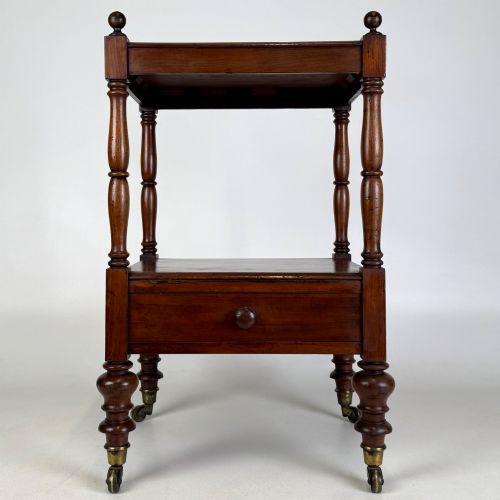
A mahogany washstand with drawer is a practical piece of bedroom or dressing furniture designed for daily use, combining solid timber construction with accessible storage. When exploring a mahogany washstand with drawer, buyers encounter various forms ranging from corner stands and bedside tables to side tables and dressing stands.
The pieces appearing on this page span several eras including the Georgian, Victorian, and Edwardian periods, alongside nineteenth-century and eighteenth-century examples. Alongside standard washstands, related forms such as wig stands, side tables, and serpentine-fronted tables with three-quarter galleries frequently appear under this classification.
Origins stretch across the eighteenth and nineteenth centuries up to the Edwardian era, showing stylistic influences like William IV, Regency, Victorian Rococo Revival, and Arts and Crafts. These diverse designs share a common reliance on mahogany timber, often enhanced by secondary woods and decorative inlays.
Construction and materials
Makers utilised solid mahogany as the primary timber for these washstands and tables, valued for its rich colour and durable grain. Secondary woods like satinwood and boxwood appear alongside boxwood inlay to create contrasting decorative details on drawer fronts and surfaces.
Hardware and fittings incorporate brass elements for handles and structural components, while surviving examples occasionally integrate glass and marble surfaces. Construction techniques range from traditional cabinet-making joins on eighteenth-century pieces to specialised adjustable mirrors found on later nineteenth-century dressing stands.
Object types include side tables, bedside tables, washstands, dressing tables, stands and pedestals, basin stands, and console tables.
Assessing quality and craftsmanship
Quality in these pieces rests upon the crispness of the cabinet work, the selection of figured mahogany timber, and the subtlety of any inlay work. Finer examples display meticulous attention to drawer linings, tight joinery, and well-executed galleries or surrounds designed to protect surfaces from water.
The integration of maker stamps, such as those found on Arts and Crafts examples, separates standard workshop production from documented pieces. Furthermore, the survival of original brass hardware and untouched timber patination distinguishes superior examples from heavily restored items.
J. Shoolbred
The Mahogany Washstand with Drawer Glossary
- Mahogany
- A durable tropical hardwood known for its deep reddish-brown tone and resistance to warping. It served as the primary material for high-end furniture throughout the Georgian and Victorian eras.
- Gallery
- A raised wooden or brass rim fitted around the top of a table or washstand. This feature prevented water jugs and basins from sliding off the surface during use.
- Satinwood
- A lustrous yellowish timber used primarily for decorative veneer and contrasting stringing. Cabinet makers paired it with mahogany to highlight drawer fronts and borders.
- Serpentine-fronted
- Describing a piece of furniture with a gently curved front profile that sweeps inward and outward. This shaping required advanced woodworking skill.
- Boxwood inlay
- Small pieces of pale boxwood inserted into recesses within the darker mahogany surface. It created geometric patterns and fine border lines.
Mahogany Washstand with Drawer: Frequently Asked Questions
What periods do these pieces come from?
The selection includes pieces originating from the eighteenth and nineteenth centuries, spanning Georgian, Victorian, William IV, Regency, and Edwardian eras. Each period brings distinct proportions and decorative vocabulary to the furniture.
Craftsmen of different decades adapted traditional forms like washstands and side tables to reflect contemporary tastes, incorporating styles ranging from Rococo Revival to Arts and Crafts.
How were washstands originally used?
These stands served a vital daily function in bedrooms before plumbed bathrooms became standard, holding washbasins, water jugs, and washing accessories. The built-in drawers provided storage for soap, cloths, and personal grooming items.
Surrounding galleries and marble tops protected walls and surrounding furniture from splashes during morning washing routines.
How do I spot an Edwardian washstand?
Edwardian examples often feature lighter construction methods and frequently incorporate satinwood banding alongside the primary mahogany timber. They reflect a shift towards brighter, more delicate bedroom furnishings.
These later pieces sometimes include integrated mirror stands and tiled splashbacks, distinguishing them from earlier Georgian and Victorian counterparts.
Can I use these tables in a modern hallway?
Their compact footprints and functional storage drawers make these tables well-suited for hallways, living rooms, or modern bedrooms as side tables. The built-in drawers offer convenient space for keys and small household items.
Placing a traditional washstand or side table in a contemporary space introduces texture through the rich mahogany grain and historical craftsmanship.