
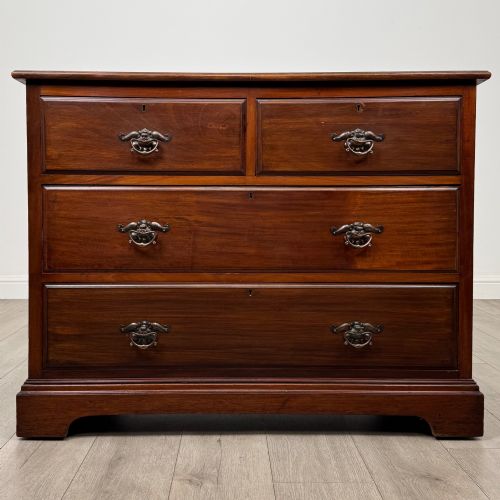
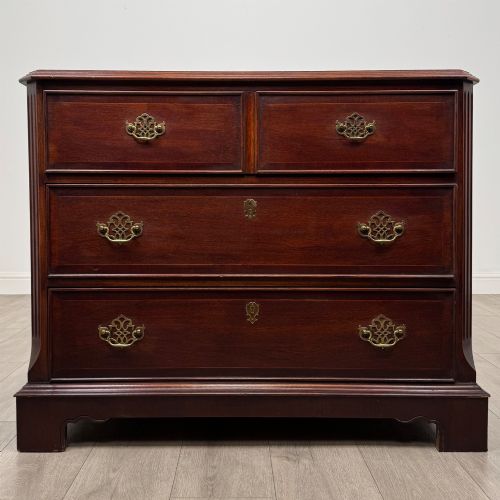
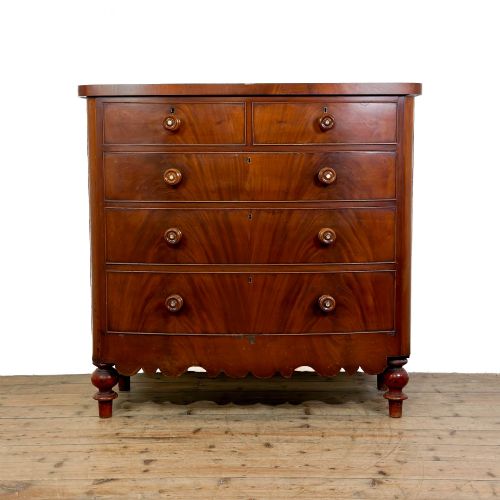
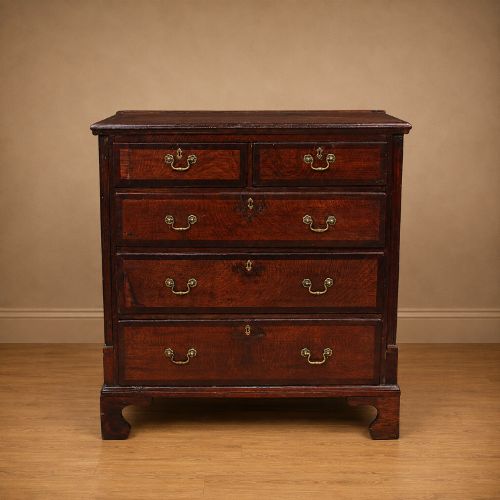
Mahogany Two Over Two
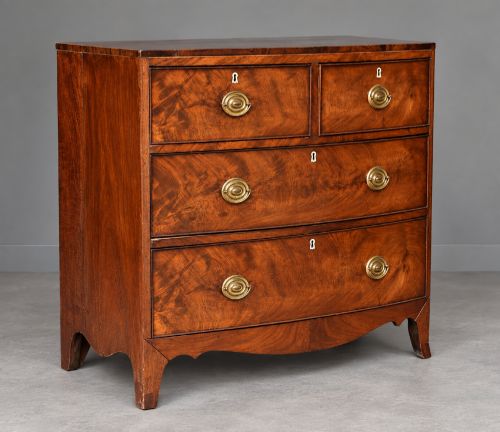
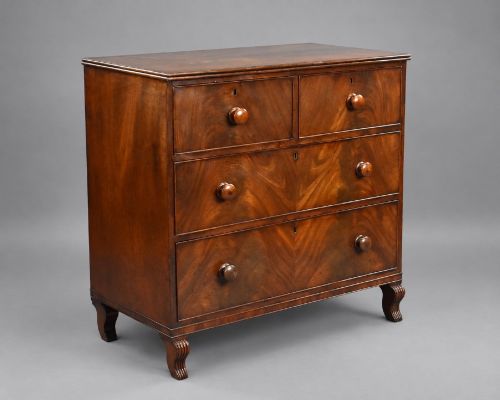
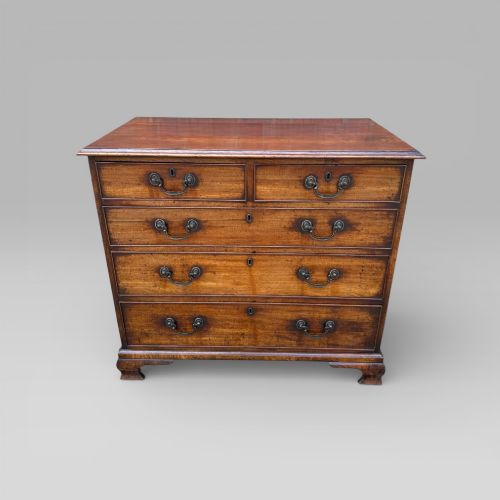
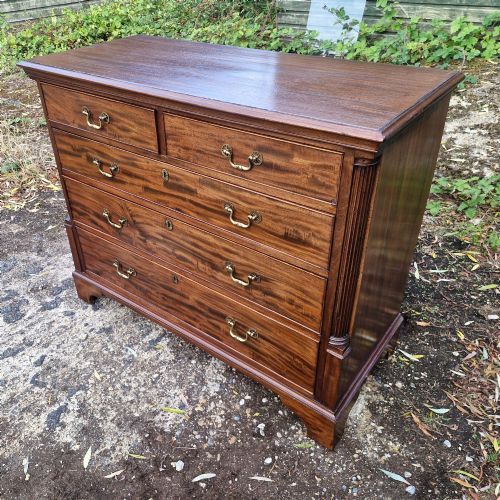
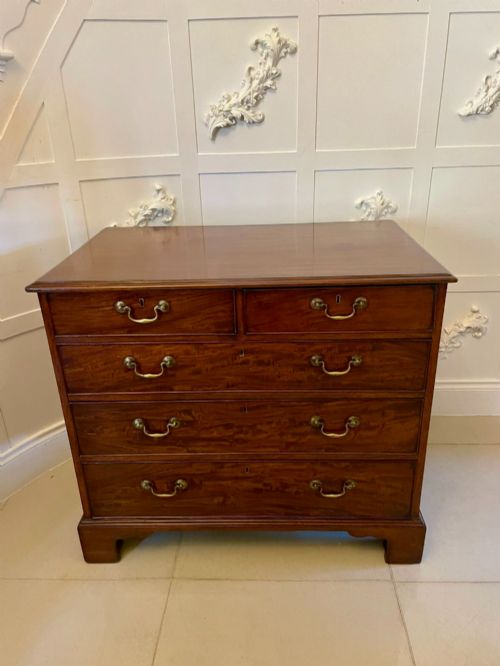
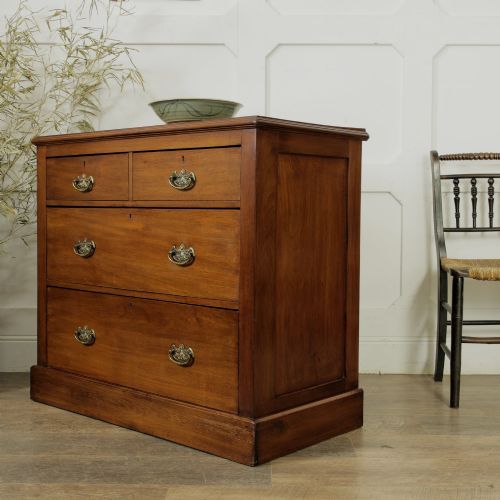
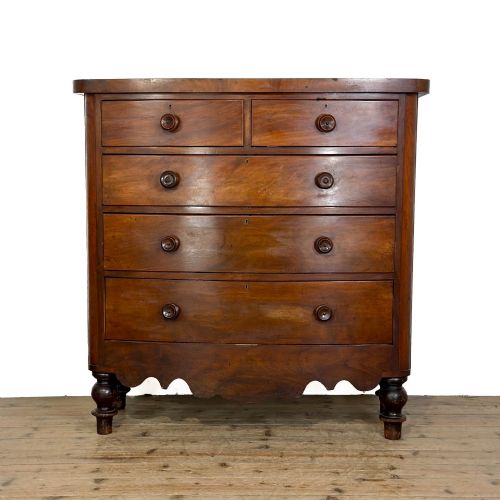
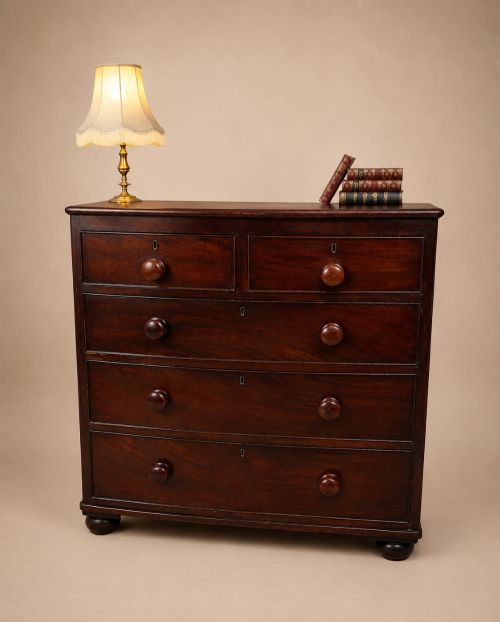
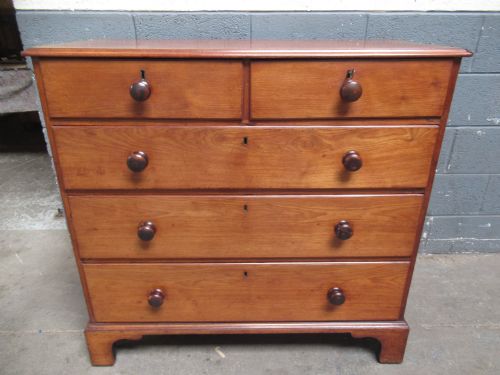
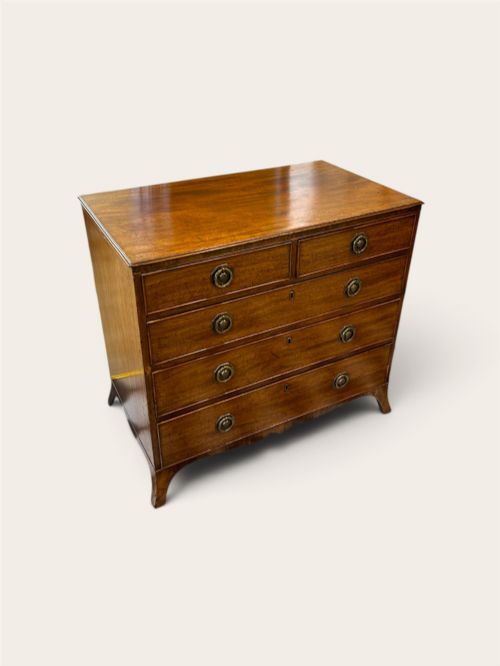
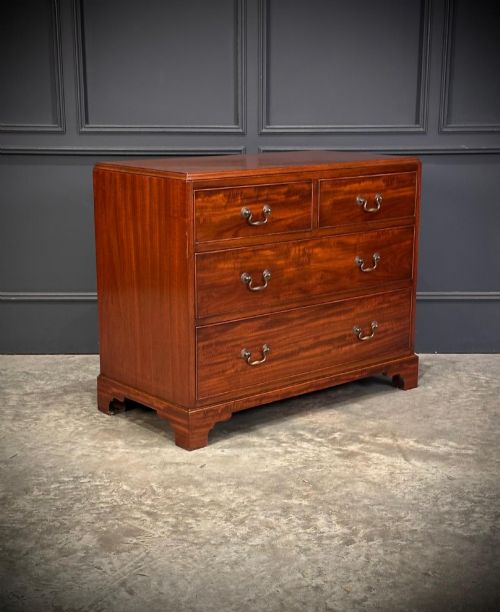
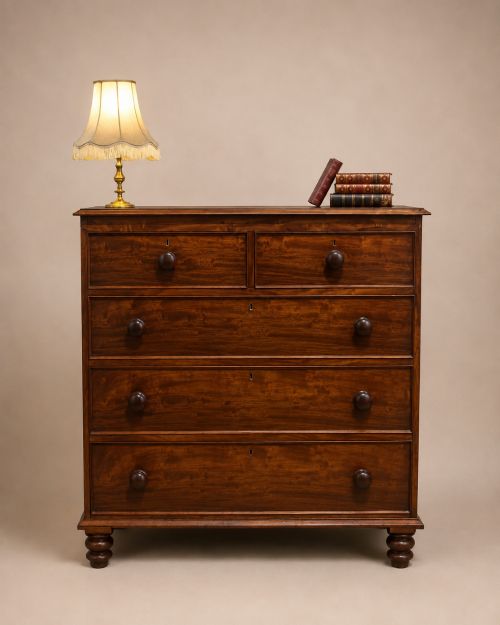
Mahogany two over two chests of drawers are traditional storage pieces built with two smaller upper drawers above two larger ones.
Mahogany Two Over Two
A mahogany two over two is a chest of drawers defined by its specific drawer configuration of two small drawers placed side by side over two wider full-width drawers below. These pieces appear frequently across Georgian, Regency and Victorian periods, offering a balanced facade that suited domestic bedchambers and parlours.
The versions met most often on this page are constructed from solid timber and veneers, taking the form of standard rectangular carcasses or bowfront shapes. Cabinetmakers from the eighteenth and nineteenth centuries utilised this specific layout to store smaller garments and linens in the upper tier while keeping bulkier items below.
Materials and construction methods
Cabinetmakers built these pieces using solid mahogany alongside secondary timbers such as oak and pine for internal drawer framing and carcase backs. Flame mahogany veneer provided highly figured grain patterns across the primary drawer fronts and top surfaces.
Brass hardware, including ring pulls, drop handles and escutcheons, secured the drawer fronts alongside hand-cut dovetail joints that bound the drawer boxes together. Crossbanding in contrasting woods and subtle inlay details occasionally outlined the primary mahogany surfaces.
Listings on this page span the Georgian, Regency, Victorian and Edwardian periods, utilising mahogany, flame veneer, brass, oak and pine.
Distinctions in craftsmanship
The upper tier of quality rests upon the selection of timber and the precision of the veneer work, where tightly figured flame mahogany displays deep visual movement across uniform surfaces. Lesser examples utilise plain wood stock with minimal grain contrast and heavier secondary timbers.
Construction subtleties such as fine hand-cut dovetails on drawer boxes and the original retention of brass hardware distinguish superior examples from pieces rebuilt with modern replacements. Proportions also govern the standard, with narrow or small-scale chests commanding greater attention for domestic placement.
J Moorcroft
The Mahogany Two Over Two Glossary
- Bowfront
- A convex curved cabinet front that swells outward in the centre, appearing frequently on Regency and Victorian chests.
- Crossbanding
- A narrow strip of veneer applied perpendicularly to the surrounding grain along the borders of drawer fronts or tops.
- Dovetail
- A traditional interlocking joint formed by wedge-shaped pins and tails, used primarily to join drawer corners securely.
- Escutcheon
- A protective brass plate fitted around a keyhole to prevent the wood from wearing down through repeated use.
- Patina
- The surface sheen and mellow colour developed naturally on wood over centuries of handling, exposure and polishing.
- Caddy top
- A raised or moulded tabletop profile with stepped edges, commonly found on eighteenth and early nineteenth-century case furniture.
Mahogany Two Over Two: Frequently Asked Questions
What is a two over two chest?
A two over two chest is a storage unit featuring two compact drawers positioned side by side at the top, placed directly above two wider drawers that span the full width of the piece below.
This specific arrangement creates a symmetrical facade that distinguishes it from other multi-drawer configurations while providing varied compartment sizes for organisation.
Which periods do these chests come from?
The listings encompass multiple eras, with pieces originating from the Georgian, Regency and Victorian periods, alongside later Edwardian examples.
Earlier pieces often display George III styling or refined crossbanding, whereas nineteenth-century versions frequently incorporate bowfront shapes and flame mahogany veneers.
How were these drawers used originally?
These chests served primarily as bedroom furniture for storing personal garments, linens and folded clothing.
The smaller upper drawers held accessories or smaller items, while the deeper lower drawers accommodated bulkier textiles.
How do I care for mahogany furniture?
Mahogany furniture requires stable indoor humidity levels and protection from direct sunlight to prevent the timber and veneers from drying out or fading.
Routine dusting with a soft, dry cloth preserves the polished surface and the natural patina developed over the decades.