

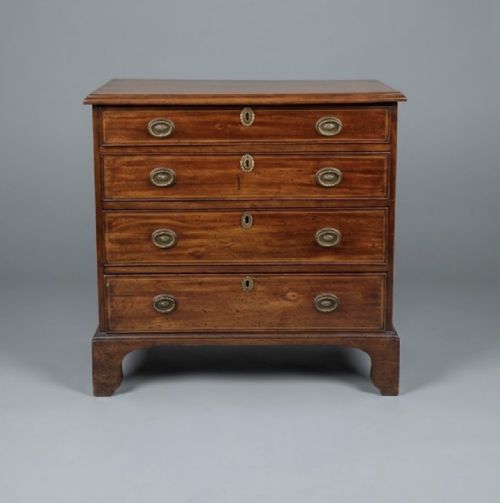
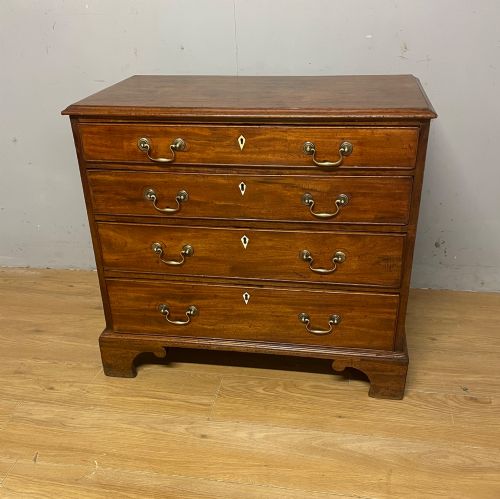
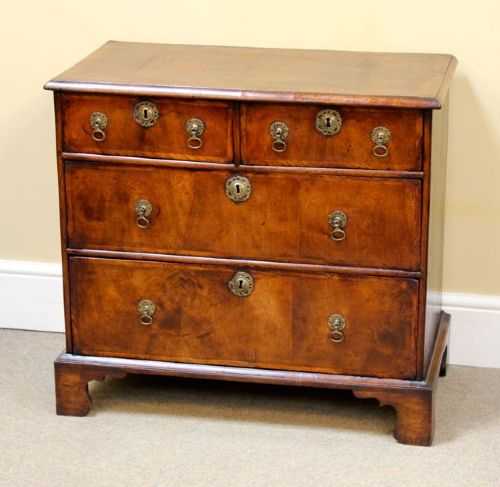
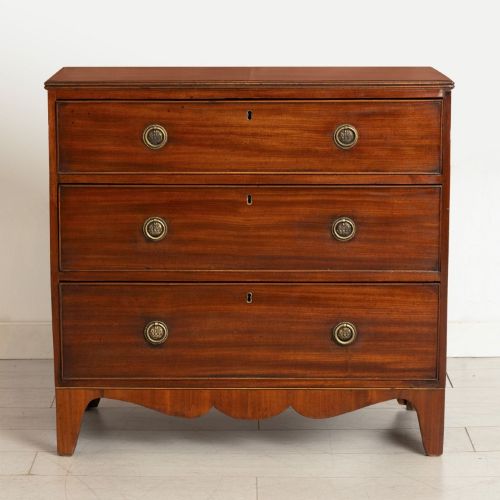
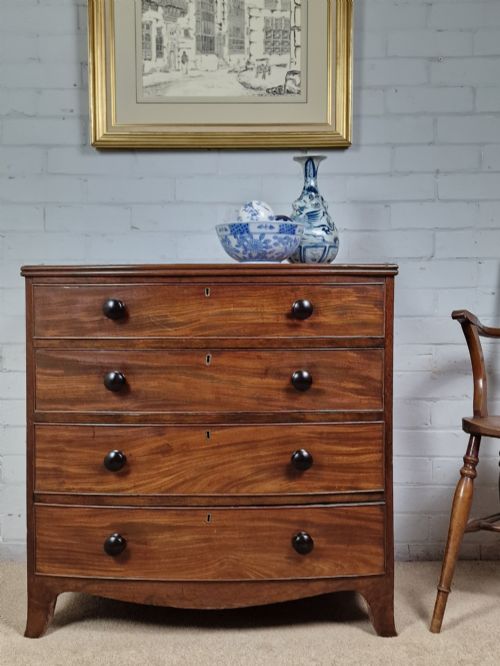
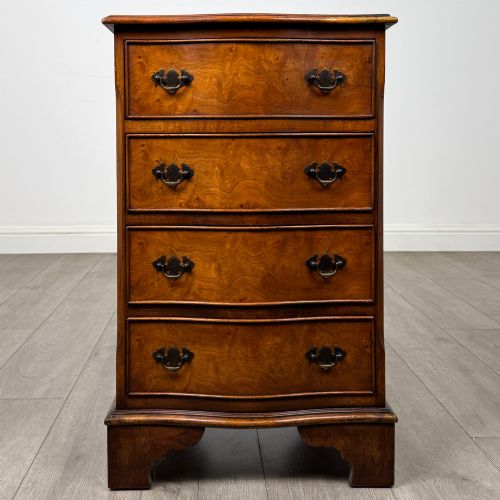
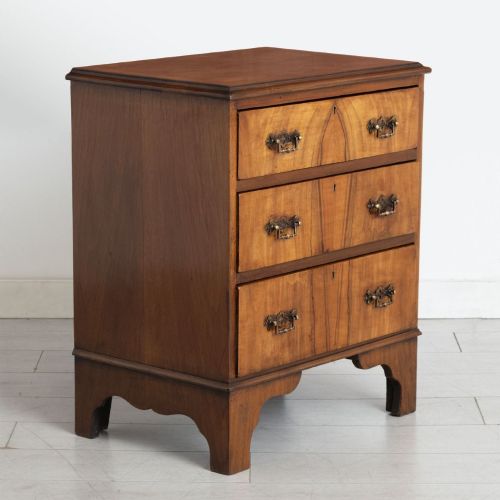
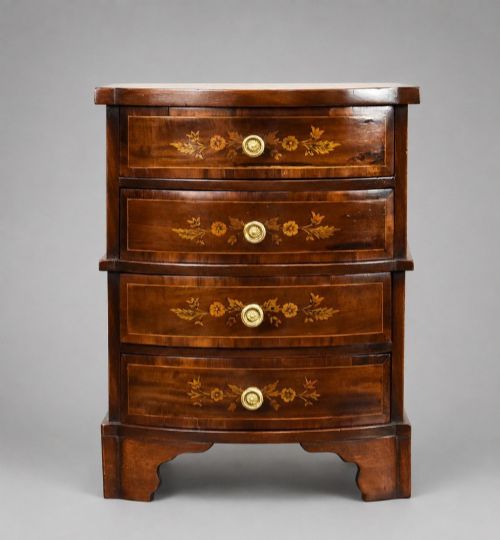
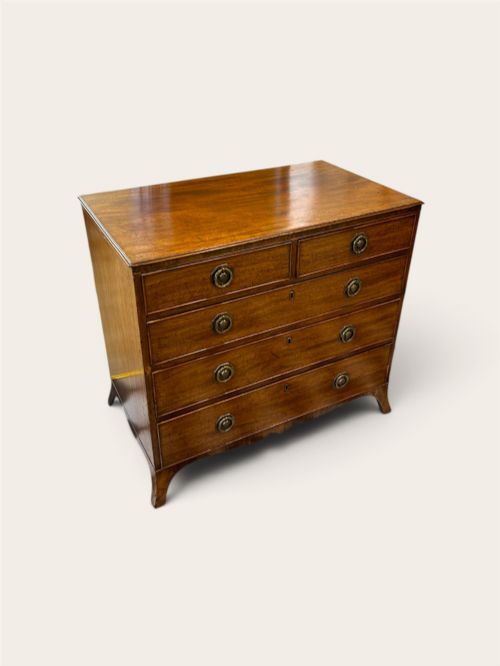
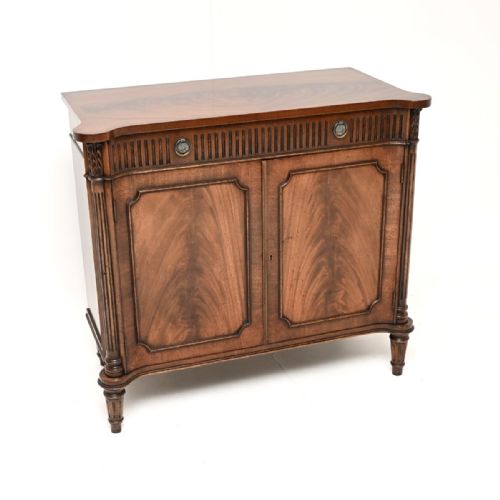
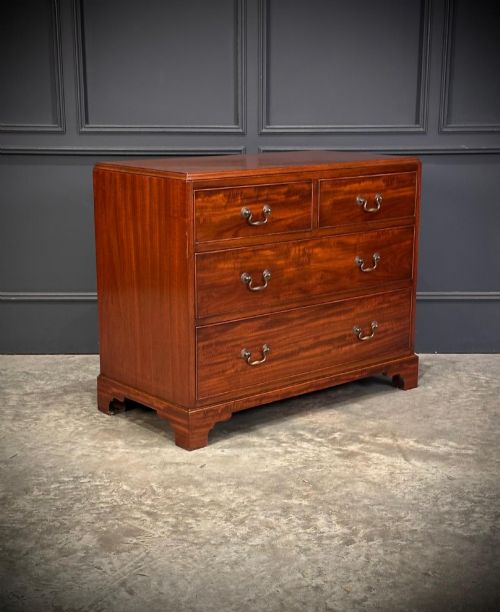
Small Wooden Commode
A small wooden commode brings compact storage and period character to a room, appearing most often as a mahogany or walnut chest of drawers.
Small Wooden Commode
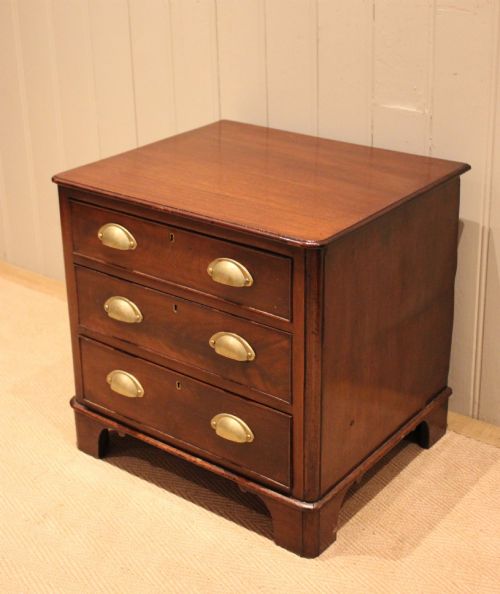
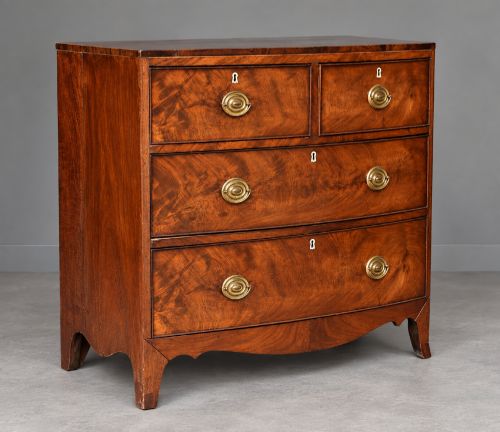
A small wooden commode encompasses low chests of drawers, bedside cabinets, miniature furniture, and close stools dating from the eighteenth century through to the twentieth century. When searching for a small wooden commode, buyers encounter Georgian bowfront designs, Edwardian walnut pieces, and Victorian mahogany examples built for compact spaces.
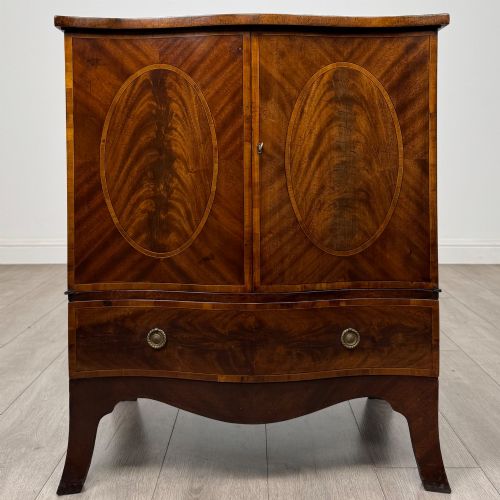
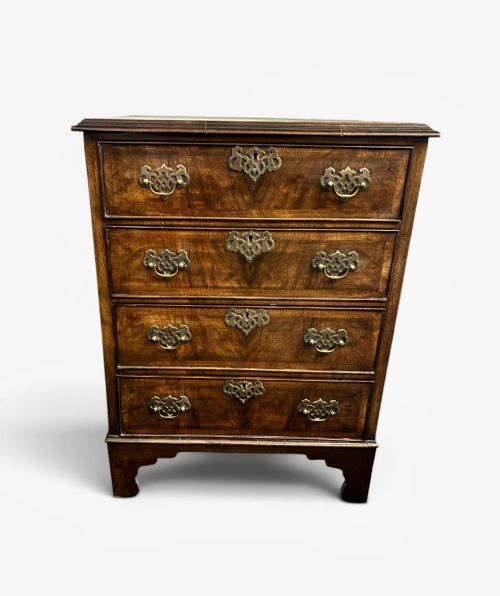
The forms vary from George III four-drawer chests and serpentine cupboards to French provincial commodes and oak close stools disguised as bedside chests. These items served functional domestic roles in bedrooms and dressing rooms, which dictates their modest dimensions and low profiles.
How they were made
Cabinetmakers constructed these pieces using solid timbers like mahogany, walnut, oak, elm, and pine, frequently applying flame mahogany veneer or burr walnut to drawer fronts and tops. Crossbanding and marquetry details appear on select pieces, adding visual depth to the wood grain.
Joinery techniques rely on dovetailed drawer construction and mortise and tenon frames, paired with brass handles and escutcheons. Secondary timbers line the interiors, while specific regional pieces utilise pine or fruitwoods alongside traditional polish and wax finishes.
Listings span the eighteenth, nineteenth, and twentieth centuries, incorporating Georgian, Victorian, Edwardian, and Art Deco periods in mahogany, walnut, oak, and pine.
What varies in quality
The refinement of the timber selection dictates the distinction between standard and superior pieces, particularly regarding figured veneers and well-matched wood grain patterns. Higher quality examples display crisp proportions, precise crossbanding, and hand-cut dovetails that remain tight and true.
Hardware and secondary details reveal the standard of original manufacture, with substantial brass handles and clean internal linings marking better workshops. The integration of decorative elements like marquetry or serpentine shaping requires high skill to avoid warping or distortion over time.
The Small Wooden Commode Glossary
- Bowfront
- A convex curved front cabinet or chest of drawers popular in the Georgian and Victorian periods. This shape softens the profile of a room.
- Serpentine
- A furniture front characterised by a concave centre flanked by two convex ends. It requires advanced woodworking skill to execute properly.
- Crossbanding
- A strip of veneer applied to the border of a top or drawer front with the grain running perpendicular to the main panel. This frames the primary timber.
- Close stool
- An eighteenth-century piece of furniture designed to enclose a chamber pot, often disguised as a small bedside chest or cabinet. Many utilise oak or elm.
- Marquetry
- Inlaid wood pieces arranged to form decorative patterns or pictures on a surface. It appears on select Edwardian and revival furniture.
Small Wooden Commode: Frequently Asked Questions
What is a small wooden commode used for today?
These pieces function effectively as bedside tables, hallway storage, or compact drawer units in smaller rooms. Their modest footprint allows them to fit spaces where standard furniture overwhelms the floor plan.
They provide practical enclosed storage for personal items while introducing period warmth and texture to modern interiors.
How do I identify a Georgian chest of drawers?
Georgian pieces typically feature solid mahogany or walnut construction with hand-cut dovetails and pegged joints. The proportions remain balanced, and the hardware consists of cast brass pull handles.
Later revival pieces often employ machine-cut elements or different secondary woods inside the drawers.
What is the difference between a commode and a chest of drawers?
Historically, a commode refers to a low cabinet or chest with doors or drawers, sometimes taking the form of a close stool or French serpentine bedside unit. A chest of drawers specifically designates a stacked series of pull-out drawers for clothing.
In modern terminology, the terms frequently overlap when describing low, compact eighteenth and nineteenth-century furniture.
How should I care for antique wood furniture?
Maintain stable indoor humidity levels and keep wooden furniture away from direct heat sources and strong sunlight. Regular dusting with a soft, dry cloth preserves the aged surface.
Occasional application of traditional beeswax feeds the timber and maintains the natural lustre without building up synthetic residues.