
Mahogany Tripod Base Table
A mahogany tripod base table combines practical versatility with a sturdy three-legged pedestal support, offering a timeless circular surface suited for various rooms.
Mahogany Tripod Base Table
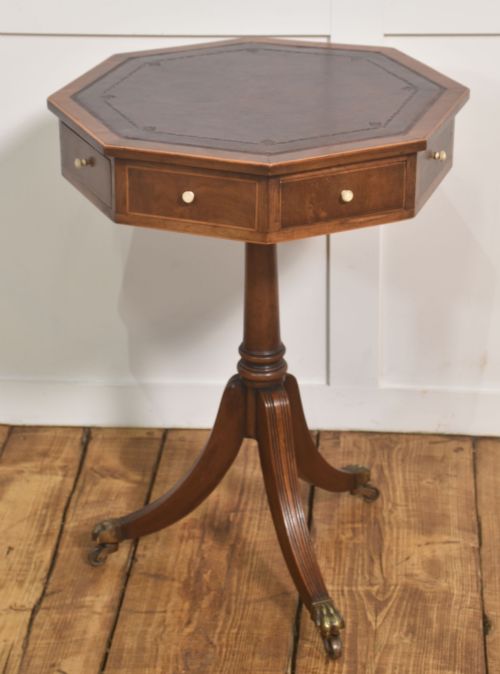
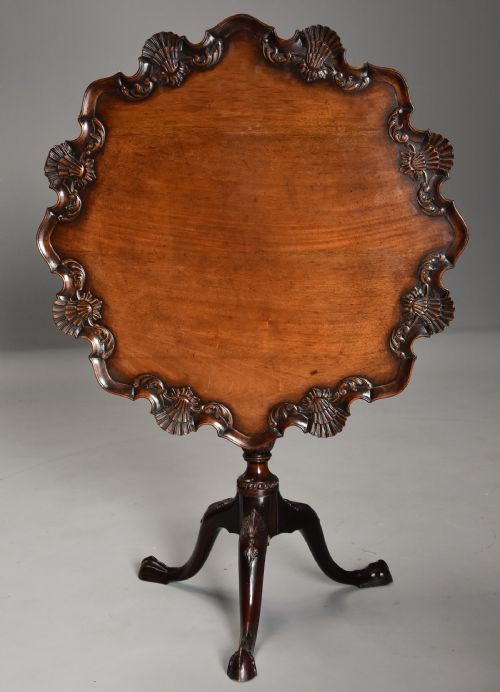
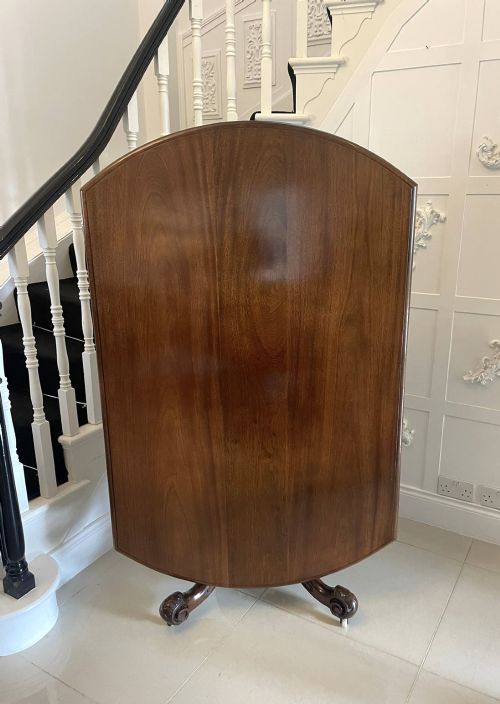
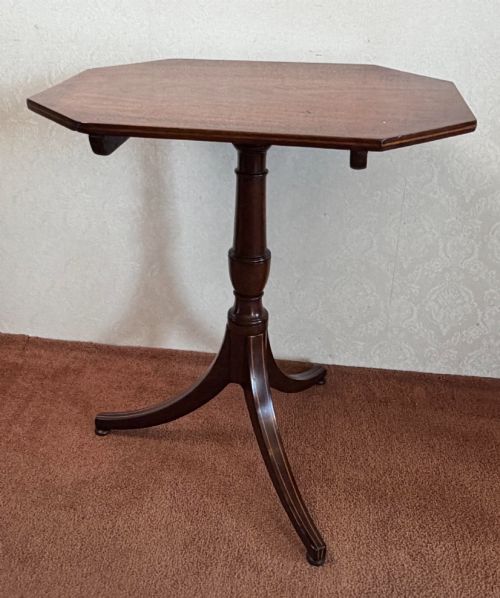
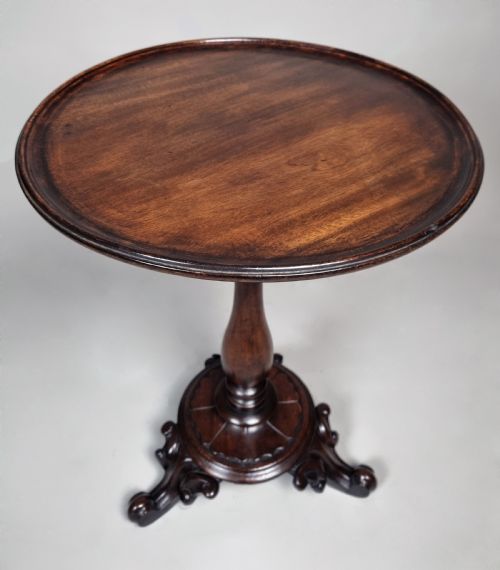
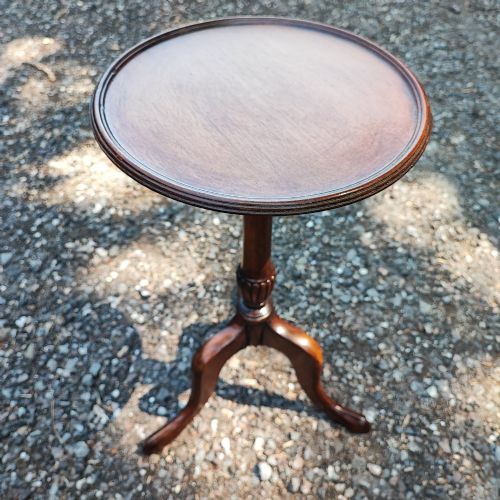
A mahogany tripod base table is a compact or occasional furnishing featuring a central pillar supported by three splayed legs, designed for stability on uneven historical flooring. These pieces appear frequently as small wine tables, tilt-top tea tables, and occasional side pieces originating from the eighteenth, nineteenth, and early twentieth centuries.
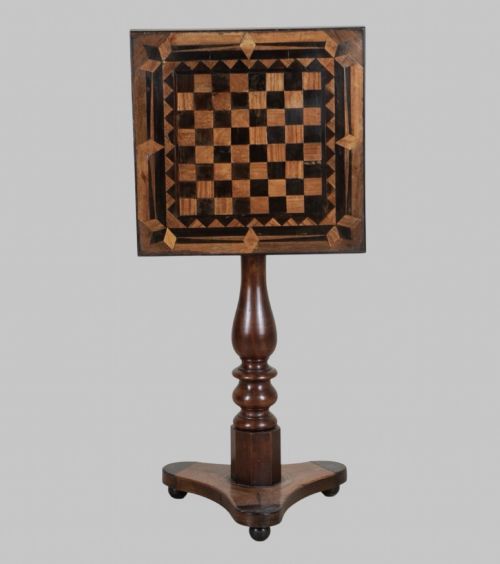
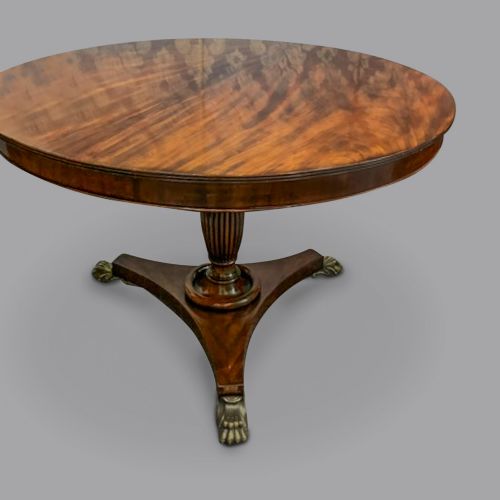
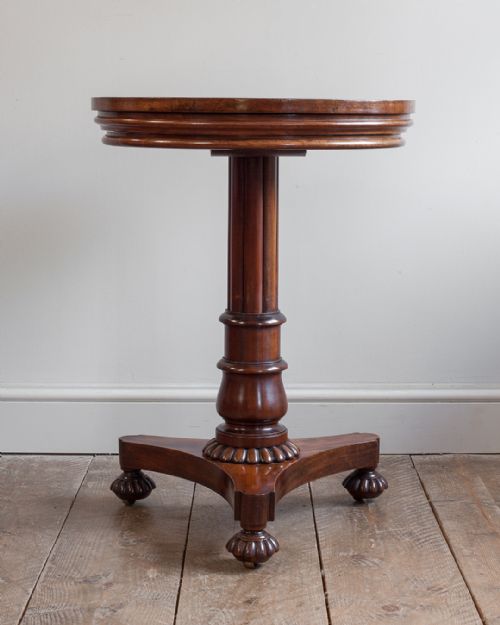
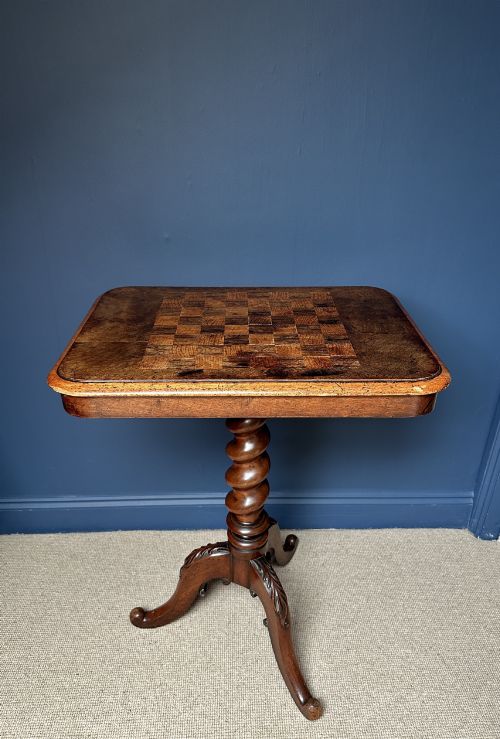
Buyers encounter numerous variations on this page, spanning Georgian snap-top designs, Regency pedestal models, and Edwardian examples. The selection ranges from plain circular tops to inlaid surfaces with boxwood and rosewood accents, alongside occasional tilt-top mechanisms.
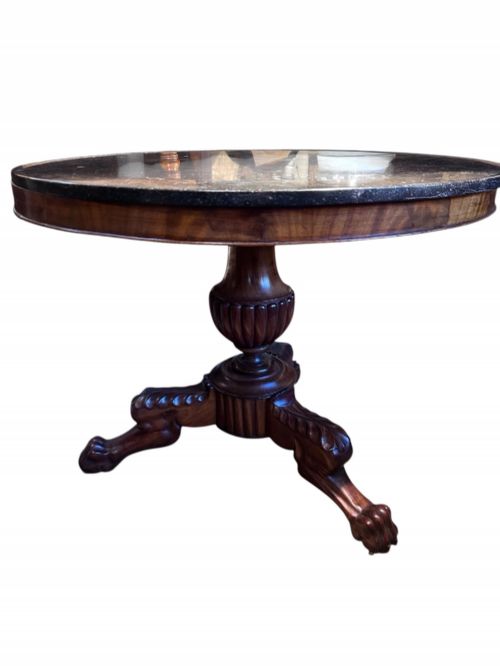
Originating predominantly from British cabinet-making traditions alongside continental gueridon forms, these tables served practical domestic functions such as holding drinks, books, or sewing equipment. Their enduring popularity lies in their compact footprint and sculptural pedestal base.
How they were made
Cabinet-makers constructed these tables primarily using solid mahogany or flame mahogany veneer laid over secondary timbers, occasionally incorporating rosewood, walnut, and boxwood for decorative inlay and banding. Tops were joined to turned or carved pillar columns, which met the three splayed legs through robust dovetail or tenon joints.
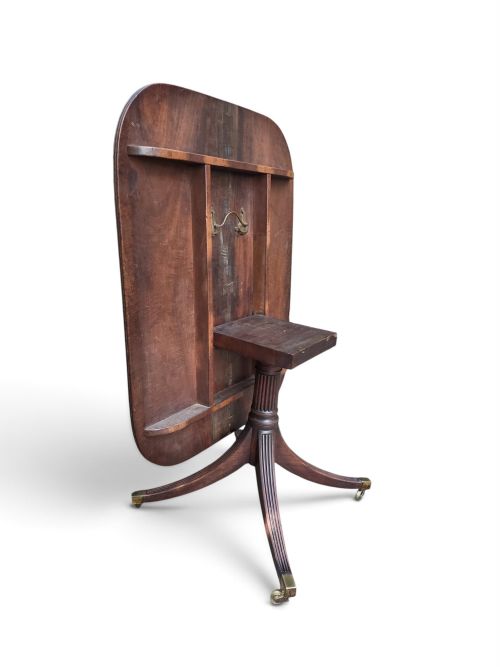
Many examples utilise a tilt-top or snap-top mechanism, allowing the surface to fold vertically against the pillar for convenient storage when not in use. Some pieces integrate brass mounts, galleries, or marble inserts into the surface design, reflecting the specific style period of construction.
Listings feature examples spanning the eighteenth, nineteenth, and early twentieth centuries, incorporating Georgian, Regency, Victorian, and Edwardian styles.
What varies in quality
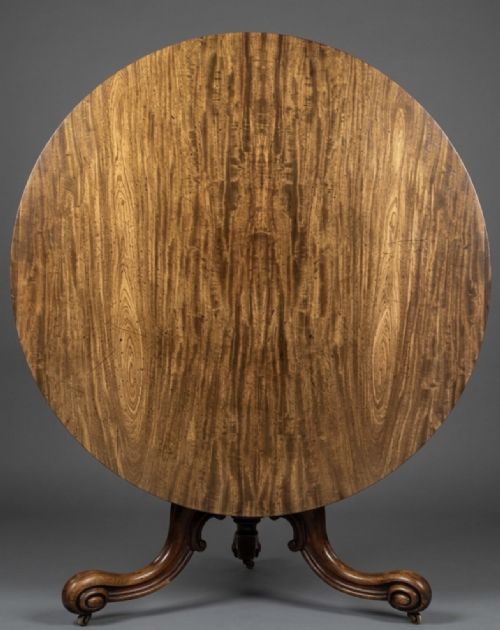
Quality in these tables depends on the selection of timber, particularly the grain figuration in flame mahogany veneers and the richness of the polished patina. The crispness of carved details on the pillar column and the precision of inlaid boxwood or stringing reveal the skill of the original workshop.
Structural integrity of the tripod mechanism also dictates standard, where firm joints in the leg block and a balanced, upright pillar ensure stability without wobble. Subtle proportions between the top diameter and the height of the central column separate standard production items from finer cabinet work.
Gillows of Lancaster
The Mahogany Tripod Base Table Glossary
- Tripod base
- A pedestal support featuring three splayed legs radiating from a central pillar. This configuration prevents rocking on uneven floors.
- Tilt-top
- A hinged table surface that pivots to a vertical position. This allows the piece to be stored flat against a wall when not in use.
- Snap-top
- A table top secured with a spring catch or latch mechanism. It locks the horizontal surface firmly onto the pedestal base during use.
- Gueridon
- A small ornamental French table supported by a column or figures. These pieces frequently feature marble tops and brass mounts.
- Dumb waiter
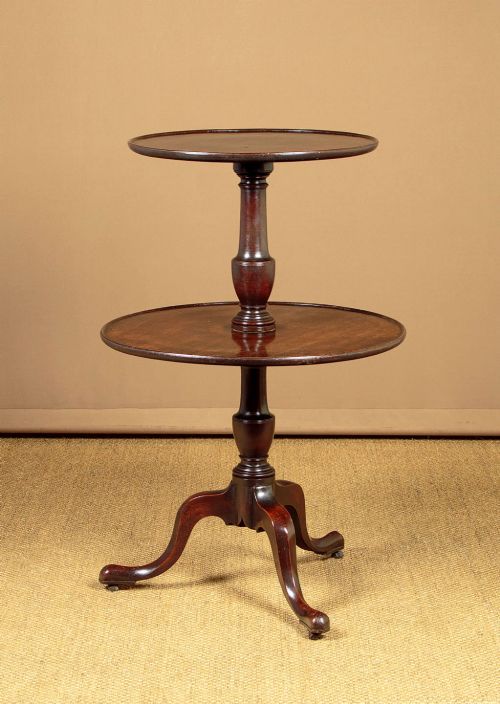
- A tiered serving table featuring multiple revolving or stationary trays on a central pillar. They were utilised in dining rooms for holding dishes.
Mahogany Tripod Base Table: Frequently Asked Questions
What were mahogany tripod base tables used for?
These tables served flexible domestic purposes in period homes, functioning as tea tables, wine stands, or general occasional surfaces. Their portable nature allowed servants to move them easily around sitting rooms and parlours.
Tilt-top variants provided an added advantage by folding away when space was required for other activities.
Where should I place a tripod table?
The compact footprint of a tripod table makes it ideal for awkward corners, beside armchairs, or as a lamp stand in hallways. Their three-legged base allows them to fit snugly into smaller spaces where four-legged tables might crowd a room.
Avoid placing them in direct sunlight to protect the polished mahogany finish from fading.
How do I distinguish Georgian from Victorian examples?
Georgian tables, produced during the eighteenth and early nineteenth centuries, often display restrained classical proportions, birdcage mechanisms, and finely carved cabriole legs. Victorian versions tend to feature heavier proportions, darker finishes, and more elaborate turnings or applied decorations.
Examining the construction methods and the depth of the mahogany patina helps clarify the era of manufacture.