


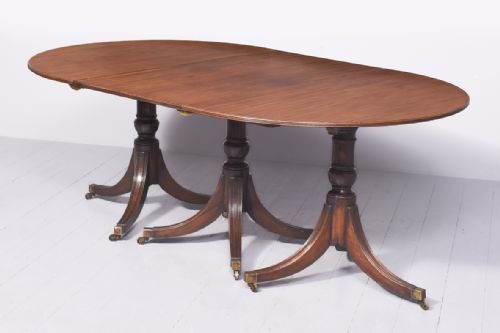


Traditional Mahogany Board Table
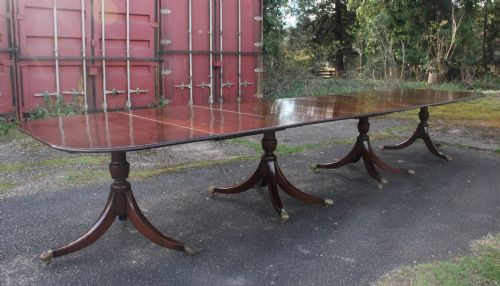
A traditional mahogany board table brings the rich grain and sturdy presence of Georgian and Regency craftsmanship directly into your dining room or games space.
Traditional Mahogany Board Table
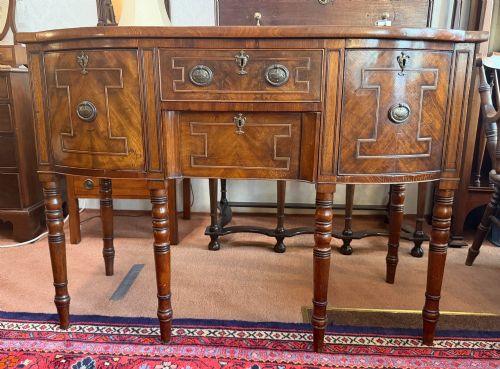
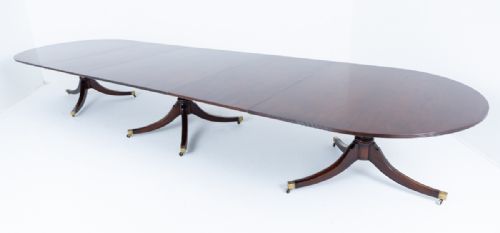
Buyers are most likely to encounter multi-pedestal dining tables featuring extensive seating capacities, alongside smaller items such as sideboards and specialised game boards. The forms range from twin and three pillar formats up to four pedestal dining tables.
Origins include genuine Georgian and Regency periods alongside later Regency revival interpretations and early twentieth century craftsmanship. Mahogany remains the defining material across these diverse object types.
Materials and construction
Timber selection centres on mahogany, often complemented by contrasting inlays and details in boxwood, bone and brass. Slate and timber construct the scoring and gaming apparatuses recorded in the listings.
Cabinet makers utilised sectional pillar structures to support expansive dining surfaces, allowing multi-pedestal configurations to extend securely. Joinery methods accommodated heavy daily use in dining rooms and billiard halls alike.
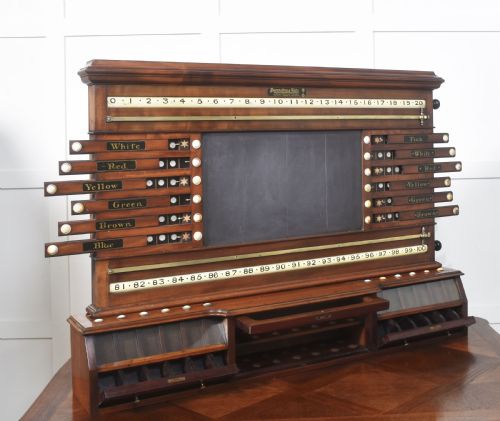
A nineteenth century billiard scoreboard hangs ready to settle disputes long after the cue sticks have been put away.
Distinctions in quality
The sophistication of the timber grain and the precision of the pillar supports dictate the standing of each piece. Tables designed for twenty or more seats demonstrate grand scale, whilst smaller boards show intricate detail in boxwood and bone.
Period authenticity separates original Georgian and Regency examples from later twentieth century revivals. The integration of brass fittings and timber construction integrity define the upper tier of these furnishings.
The Traditional Mahogany Board Table Glossary
- Mahogany
- A durable hardwood prized for its deep reddish brown colour and smooth grain. It forms the primary structure for the tables and sideboards listed here.
- Pedestal
- A central column support resting on feet that holds up the tabletop. Multi-pedestal formats allow large dining tables to remain stable.
- Boxwood
- A dense, pale wood frequently utilised for fine stringing and inlay work. It contrasts sharply against dark mahogany surfaces.
- Regency
- An English design period spanning the early nineteenth century known for classical restraint and proportion. Pieces from this era often feature distinct pillar and base designs.
Traditional Mahogany Board Table: Frequently Asked Questions
How many people can a large dining table seat?
Extended pillar formats accommodate large gatherings comfortably, with specific examples seating twenty to twenty-two guests.
These substantial dimensions suit formal dining rooms and require considerable floor space to allow proper movement around the perimeter.
What is the difference between Georgian and revival tables?
Original Georgian and Regency pieces date from the eighteenth and early nineteenth centuries, carrying genuine period construction methods.
Revival pieces adopt the same aesthetic vocabulary but date from later periods such as nineteen twenty, reflecting historical styles rather than contemporary manufacture.
Where were scoreboards and chess boards used?
Billiard scoreboards and chess boards served recreational spaces in large homes and dedicated club rooms during the nineteenth and early twentieth centuries.
They paired utilitarian function with quality timber construction, often incorporating slate and bone elements.
How do I care for mahogany surfaces?
Maintaining mahogany involves keeping timber away from direct heat sources and consistent moisture fluctuations to preserve the polish and grain.
Regular dusting with a soft cloth protects the finish without building up heavy wax layers over time.