
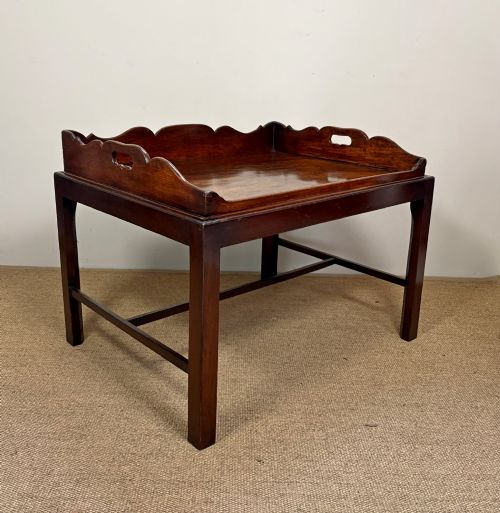
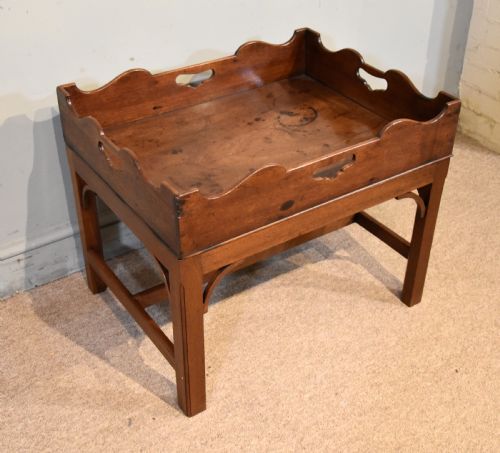


Mahogany Tray Coffee Table
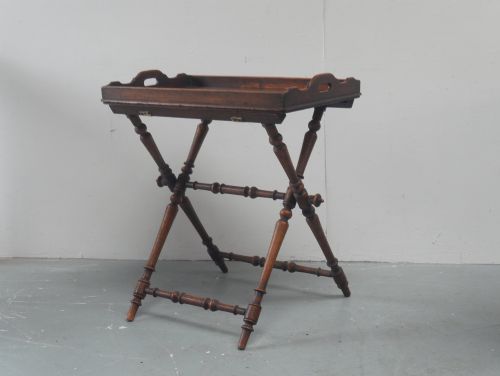
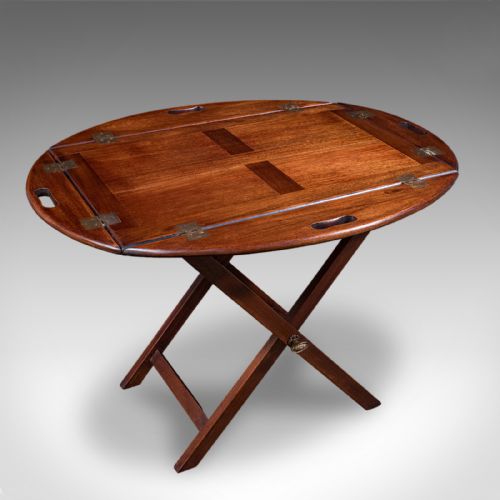
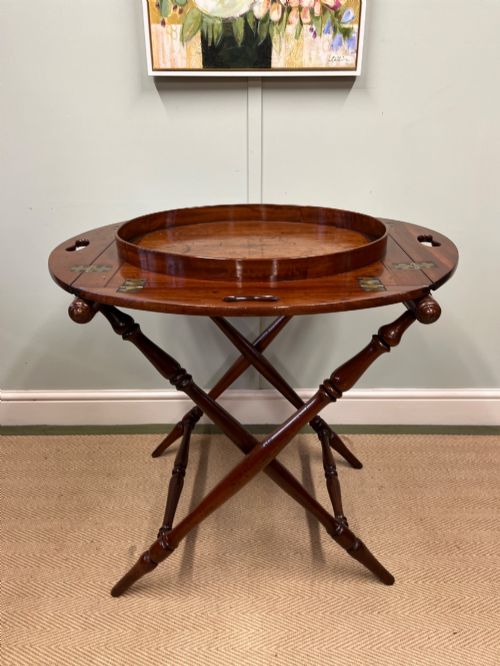
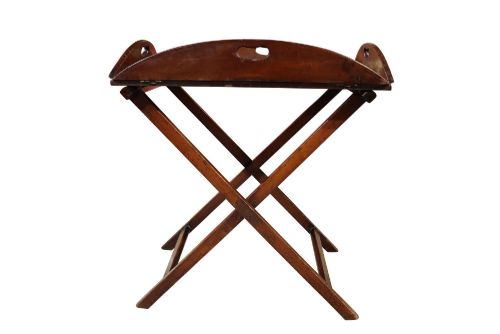
A mahogany tray coffee table brings portable serving heritage into modern living spaces, combining a removable tray top with a stable folding or fixed stand.
Mahogany Tray Coffee Table
A mahogany tray coffee table adapts traditional serving equipment into low reception furniture, uniting practical timber trays with dedicated stands. When you search for this phrase, you meet forms derived from domestic service items, particularly butler trays and serving units.
The pieces appearing here span the eighteenth, nineteenth, and early twentieth centuries, alongside later revivals. Georgian and Victorian examples predominate, showing how utilitarian dining furniture evolved into standard domestic tables.
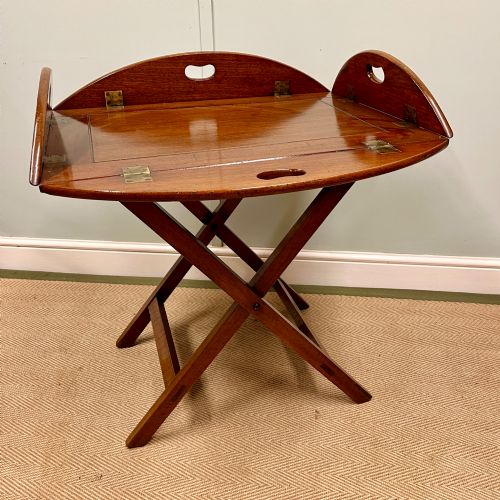
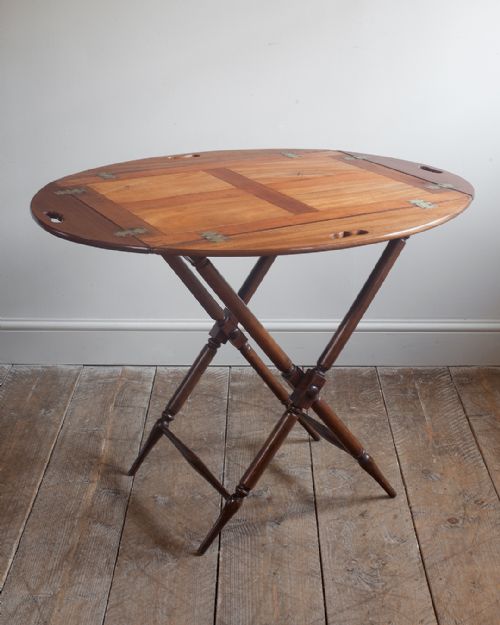
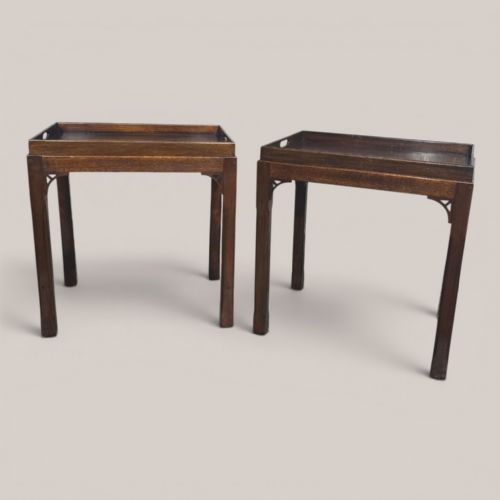
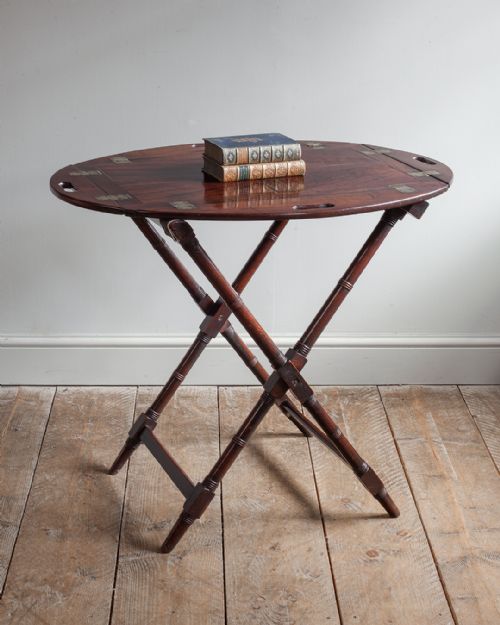
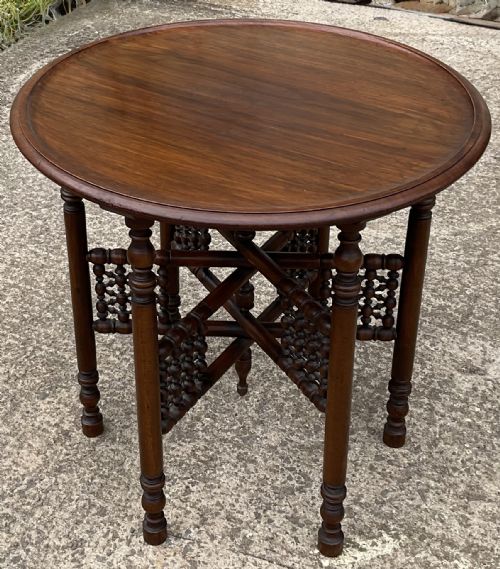
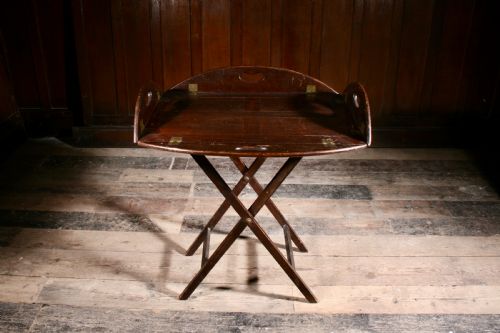
Most entries pair a rectangular or oval timber tray with a folding or pegged support framework. This dual construction allows the surface to lift off independently from its base structure.
Materials and construction
Makers utilised solid mahogany and dense Cuban mahogany, often selecting timber with rich grain patterns for the main tray surface. Brass hinges, handles, and bound decoration appear frequently to reinforce corners and support folding mechanisms.
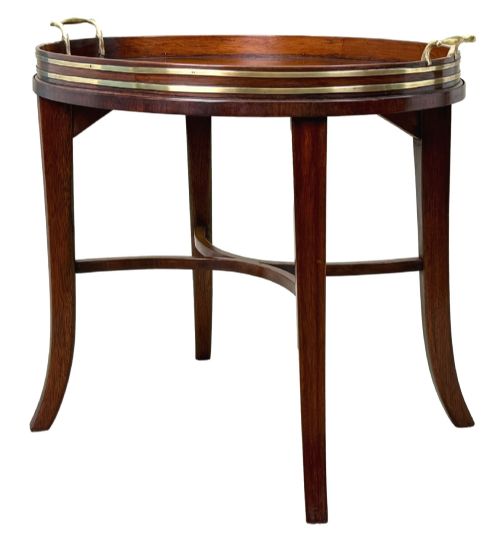
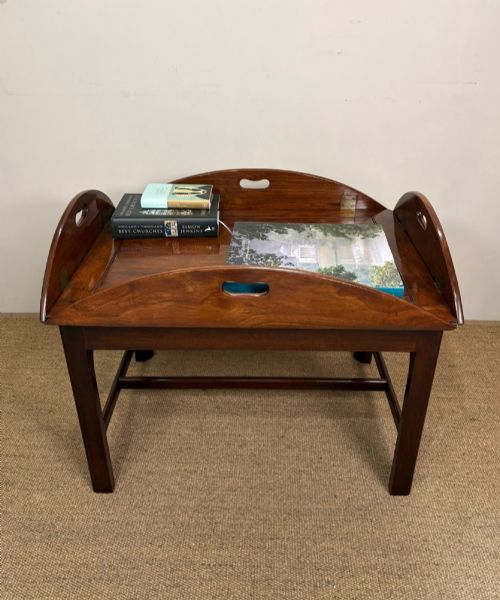
Stands incorporate folding X-frame designs or rigid four-legged supports connected by stretchers. Inlaid details in satinwood and contrasting timbers decorate select Edwardian and Georgian versions.
Edges often feature raised galleries, pierced handholds, or shaped mouldings to retain items during transit. Secondary woods such as oak appear in internal framing and structural supports.
Many a butler tray spent its youth carrying clinking claret decanters before retiring to a quiet life holding paperback novels.
What separates the best pieces
Quality rests upon timber selection and structural integrity, particularly the tightness of joints where tray walls meet the baseboard. Pieces cut from dense Cuban mahogany with pronounced figuring stand apart from plain domestic variants.
The refinement of hand-cut dovetails, brassbound corner brackets, and crisp mouldings distinguishes workshop production from simpler output. Original matching stands hold greater interest than later married combinations of trays and bases.
The Mahogany Tray Coffee Table Glossary
- Butler tray
- A portable wooden tray with hinged or fixed sides, designed for carrying china and glassware before resting on a folding stand.
- Gallery
- A raised wooden border surrounding the edge of a tray to prevent objects from sliding off during movement.
- Cuban mahogany
- A dense, dark timber harvested in the Caribbean, prized by cabinetmakers for its deep colour and durability.
- Folding stand
- A collapsible wooden support frame, often constructed with X-frame crossbars for compact storage.
- Brass bound
- Edges or corners reinforced with fitted brass strips secured by small pins or screws.
Mahogany Tray Coffee Table: Frequently Asked Questions
Can I use the tray separately from the stand?
Most trays lift off their support frames freely, allowing them to function as independent serving pieces. The stands themselves typically fold flat for convenient storage when not deployed.
Original tables maintain a stable fit between tray underside and stand rails, ensuring the surface does not wobble during normal use.
How do I care for antique mahogany surfaces?
Maintenance requires dry dusting with a soft cloth and occasional application of appropriate paste wax to nourish the timber. Avoid placing hot or wet items directly onto the wood to protect the polish.
Regular polishing preserves the deep reddish-brown tone characteristic of eighteenth and nineteenth-century furniture.
Are these tables sturdy enough for daily use?
The folding and fixed stands provide a stable base capable of supporting books, drinks, and everyday items. Their original purpose involved carrying heavy tableware, making them robust for modern living rooms.
Checking that hinges and leg joints remain secure ensures safe daily operation over time.
How do I distinguish eighteenth-century pieces from later revivals?
Examination of construction marks, timber density, and hand-cut joinery helps differentiate Georgian originals from twentieth-century reproductions. Earlier pieces often feature patination accumulated through generations of domestic service.
Revival pieces from the Edwardian era or 1930s display cleaner machine-cut uniformity and different internal secondary woods.